

The voice acting industry is experiencing a seismic shift. As global audiences demand content in their native languages and streaming platforms race to capture international markets, multilingual voice acting has transformed from a niche specialty into a mainstream necessity. In 2026, the question isn’t whether brands will invest in non-English voice talent—it’s which languages will dominate the growth curve and how voice actors can position themselves to capitalize on these expanding opportunities.
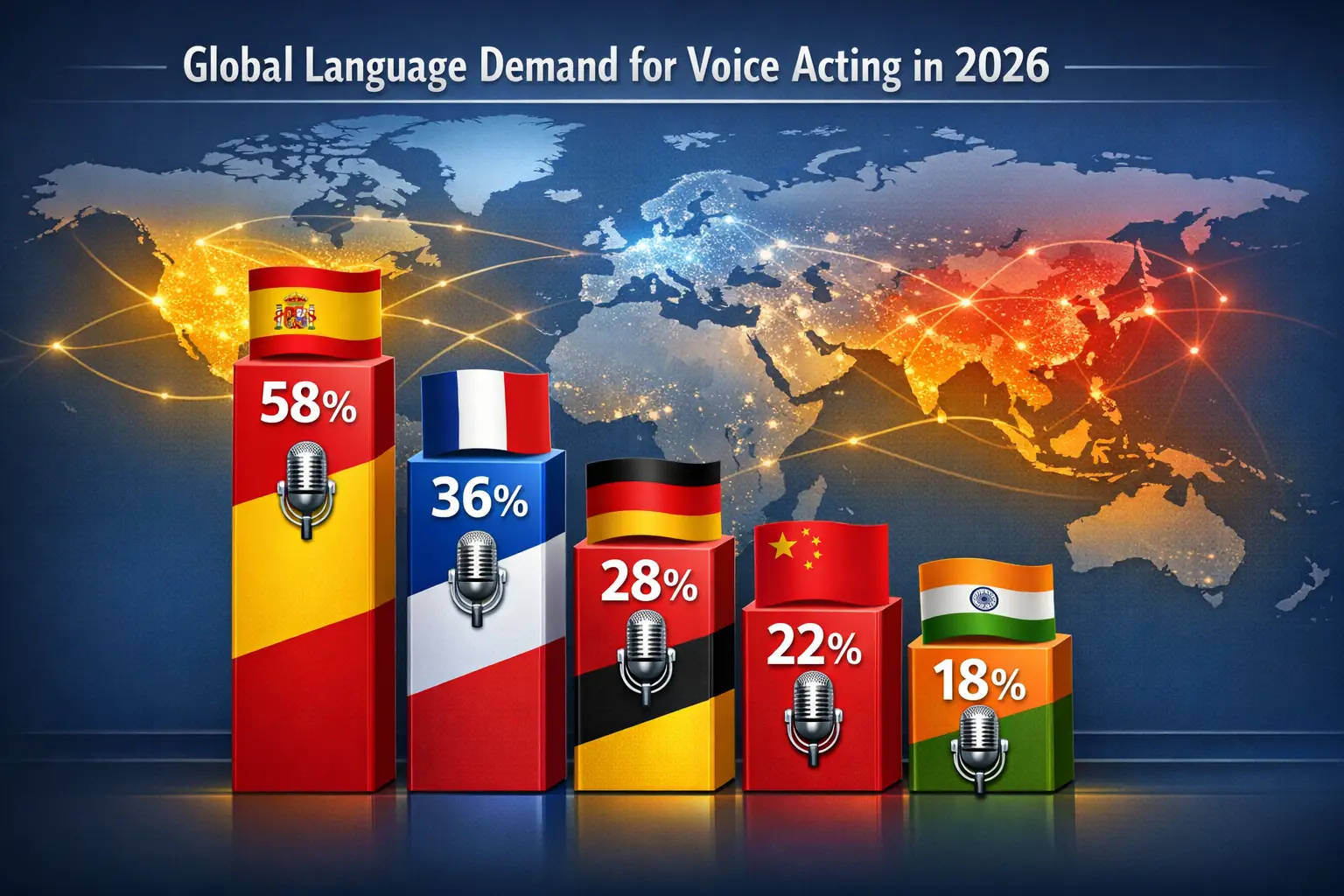
Multilingual Voice Acting: Spanish, French, German, Chinese, and Hindi—Where the Growth Opportunities Are represents more than just a trend; it signals a fundamental restructuring of the global content ecosystem. According to recent industry surveys, 58% of buyers have already worked with or plan to work with non-English voice acting talent[1], marking a decisive shift toward authentic, culturally-grounded audio content across multiple languages.
Key Takeaways
- 🌍 Spanish leads the pack: Spanish ranks as the most requested language after English, with the highest adoption rate among buyers seeking multilingual voice talent[1]
- 📈 Five languages drive sustained growth: Spanish, French, German, Chinese, and Hindi are identified as key expansion languages through 2026 and beyond[1]
- 🎯 Native authenticity commands premium rates: Businesses increasingly prioritize native speakers who understand cultural nuances, idioms, and local delivery styles[2]
- 💼 Multilingual proficiency = competitive advantage: Voice actors with authentic multi-language capabilities or regional accent expertise can position themselves for premium opportunities[1]
- 🤖 AI collaboration creates new workflows: Voice cloning technology enables authentic multilingual reach while human talent handles finesse and cultural authenticity[3]
The Global Shift: Why Multilingual Voice Acting Matters in 2026
The content localization revolution has reached a tipping point. What began as large corporations dabbling in international markets has evolved into a mainstream expectation across businesses of all sizes. From small e-learning startups to major streaming platforms, companies recognize that authentic voice acting in target languages isn’t optional—it’s essential for market penetration and audience engagement[2].
The Numbers Tell the Story
More than half of companies surveyed in 2025 planned to use real humanvoice actors for brand marketing, with significant portions also seeking multilingual talent for:
- 🎬 Animation and character work
- 📺 Broadcast and television content
- 💻 Online advertising campaigns
- 🎓 E-learning and corporate training
- 🎮 Gaming and interactive media
This surge reflects a broader cultural shift. Audiences no longer accept dubbed content that sounds foreign or disconnected from their lived experience. They demand voices that reflect their own languages, cultures, and local nuances[2]—a requirement that creates unprecedented opportunities for voice actors with authentic language skills.
Cultural Authenticity as Competitive Advantage
Brands have learned a crucial lesson: language proficiency alone doesn’t guarantee successful localization. Cultural authenticity requires conveying lived experience, understanding regional humor, and navigating subtle tonal variations that can make or break audience connection[1].
“Authenticity requires more than language proficiency—it means conveying lived experience and cultural nuance that resonates with local audiences.”
This insight has transformed hiring practices. Studios and brands now actively seek voices representing a wider range of cultures and dialects, prioritizing native speakers who bring inherent understanding of local idioms, pacing preferences, and cultural references[2].
Multilingual Voice Acting: Spanish, French, German, Chinese, and Hindi Market Analysis
Understanding where growth opportunities exist requires examining each language market’s unique characteristics, demand drivers, and positioning strategies.
Spanish: The Undisputed Growth Leader
Spanish dominates the multilingual voice acting landscape, ranking as the most requested language after English across all content categories[1]. This leadership position stems from multiple converging factors:
Market Size and Reach
- Over 500 million native speakers globally
- Primary language in 20+ countries across multiple continents
- Massive streaming and entertainment consumption in Latin America and Spain
- Growing Hispanic population in the United States driving domestic demand
Content Categories Driving Demand
- Streaming platform originals and dubbed content
- Corporate training and internal communications
- E-learning and educational content
- Video game localization
- Social media and branded content
Regional Variation Opportunities
Spanish isn’t monolithic. Voice actors who can authentically deliver regional variations—Castilian Spanish, Mexican Spanish, Argentine Spanish, Caribbean Spanish—position themselves for specialized, higher-paying projects. Brands increasingly recognize that a Mexican audience responds differently to Castilian pronunciation, creating demand for regionally-appropriate talent.
French: European and African Growth Markets
French ranks second in buyer demand[1], driven by both European markets and rapidly expanding African economies where French serves as an official or widely-spoken language.
Key Growth Drivers
- Strong European Union market with high content consumption
- Expanding African markets (Francophone Africa represents 29 countries)
- Canadian market (Quebec and bilingual requirements)
- Premium brand positioning in luxury and fashion sectors
Opportunities for Voice Actors
French voice work often commands premium rates due to the language’s association with luxury brands, high-end corporate content, and sophisticated marketing campaigns. Additionally, the distinction between European French and Canadian French creates specialization opportunities similar to Spanish regional variations.
German: Industrial and Technical Content Powerhouse
German represents a unique opportunity profile, with particularly strong demand in technical, industrial, and corporate sectors[1].
Market Characteristics
- Europe’s largest economy driving B2B content demand
- Strong automotive, engineering, and manufacturing sectors requiring technical voiceovers
- High-quality expectations and premium budget allocations
- Growing demand for e-learning and training content
Positioning Strategy
Voice actors with German language skills should emphasize technical vocabulary proficiency and the ability to handle complex, specialized content. The German market values precision and professionalism, often resulting in longer-term client relationships and recurring project opportunities.
Chinese: The Massive Expansion Opportunity
Chinese (Mandarin primarily, with Cantonese as a secondary market) represents one of the highest growth potential languages for voice acting expansion[1].
Why Chinese Matters in 2026
- World’s largest population and rapidly growing middle class
- Explosive growth in domestic streaming platforms and content production
- International brands prioritizing China market entry
- Gaming industry expansion requiring extensive localization
- Corporate training for multinational companies operating in China
Challenges and Opportunities
The Chinese market presents unique challenges—tonal language complexity, cultural sensitivities, and regulatory considerations—but these barriers also create premium opportunities for voice actors who can navigate them authentically. Native speakers with cultural fluency are particularly valuable as businesses seek to avoid costly localization mistakes.
Hindi: India’s Emerging Market Potential
Hindi rounds out the five key growth languages, representing access to India’s massive and rapidly digitalizing population[1].
Market Dynamics
- Over 600 million Hindi speakers (including second-language speakers)
- Booming streaming and OTT platform growth in India
- Increasing smartphone penetration driving digital content consumption
- Corporate expansion and multinational presence requiring localized content
- Growing gaming and entertainment industries
Unique Positioning Factors
India’s multilingual landscape means Hindi voice actors often work alongside regional language specialists (Tamil, Telugu, Bengali, etc.). However, Hindi serves as a lingua franca for pan-Indian content, making it the primary entry point for brands targeting the Indian market.
Where Multilingual Voice Acting Growth Opportunities Are Emerging
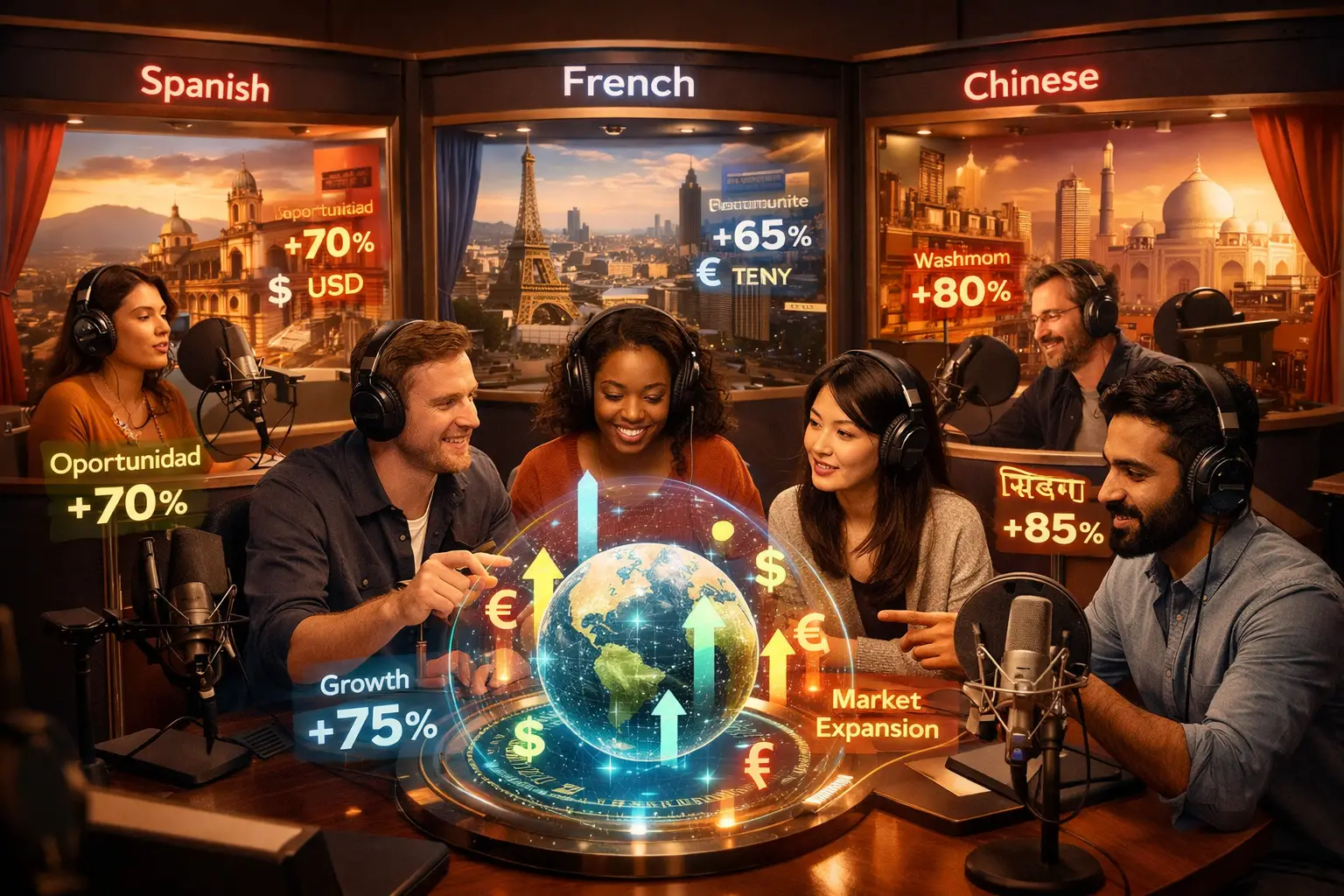
Beyond traditional dubbing and commercial work, several emerging categories are creating new revenue streams for multilingual voice actors in 2026.
Immersive and Interactive Media
Virtual reality (VR) and augmented reality (AR) environments are becoming mainstream, creating demand for voice actors who can work in immersive multilingual contexts[1]. These projects often require:
- Interactive dialogue trees with multiple response options
- Spatial audio considerations for 3D environments
- Cultural adaptation of interactive narratives
- Real-time performance capture in some cases
Voice actors positioned in these emerging formats—particularly those offering services in Spanish, French, German, Chinese, or Hindi—are commanding premium rates as companies compete for limited specialized talent.
Social Media and Short-Form Content
The explosion of social media clips, podcast intros, and branded explainers has created high-volume opportunities for quick-turnaround multilingual voice work[1]. While individual project rates may be lower, the volume and recurring nature of these projects create sustainable income streams.
Key Platforms Driving Demand:
- TikTok and Instagram Reels requiring multilingual voiceovers
- YouTube content localization for international audiences
- LinkedIn Learning and professional development platforms
- Podcast networks expanding into non-English markets
AI-Human Collaboration Models
Rather than replacing human voice actors, artificial intelligence is creating new workflow models that expand opportunities for multilingual talent[2]. The emerging standard involves:
- AI-generated rough drafts for low-stakes content or initial versions
- Human voice actors providing finesse, emotional authenticity, and cultural appropriateness
- Voice cloning technology allowing one actor’s authentic voice to reach multiple language markets while preserving recognizable vocal characteristics[3]
This collaboration model is particularly valuable for multilingual voice actors who can serve as the authentic source voice for AI-enhanced multilingual distribution. Companies can maintain brand voice consistency across languages while ensuring cultural authenticity through human oversight.
Voice Cloning for Authentic Multilingual Reach
AI dubbing technology in 2026 can analyze a speaker’s voice and recreate it across languages while preserving pitch, pace, and inflection[3]. This capability allows one recognizable voice—say, a brand spokesperson or celebrity—to reach multiple markets without losing authenticity.
Implications for Voice Actors:
Rather than threatening employment, this technology creates new service categories:
- Source voice provision for AI cloning projects
- Quality control and cultural consulting for AI-generated multilingual content
- Hybrid projects combining AI efficiency with human cultural expertise
- Premium positioning for actors who can authentically perform in multiple languages without AI assistance
Strategic Positioning: How to Capitalize on Multilingual Voice Acting Opportunities
Understanding market opportunities is only the first step. Successfully capitalizing on Multilingual Voice Acting: Spanish, French, German, Chinese, and Hindi—Where the Growth Opportunities Are requires deliberate positioning and skill development.
For Native Multilingual Speakers
Voice actors who authentically speak multiple languages should prominently feature this capability in all marketing materials, demo reels, and platform profiles[1]. Specific strategies include:
Portfolio Development
- Create separate demo reels for each language showcasing range and authenticity
- Include samples demonstrating cultural nuance, not just language translation
- Highlight regional variations and dialect capabilities
- Showcase different content types (commercial, narration, character work, technical)
Market Positioning
- Emphasize native speaker status and cultural fluency
- Highlight any specialized vocabulary (medical, legal, technical) in target languages
- Demonstrate understanding of regional preferences and cultural sensitivities
- Position as a cultural consultant, not just a voice provider
Rate Strategy
Multilingual capabilities justify premium pricing. Voice actors should research market rates for each language and consider package pricing for multi-language projects that provides client value while recognizing the specialized nature of authentic multilingual work.
For Single-Language Specialists Considering Expansion
Voice actors currently working in one language who want to expand into multilingual opportunities have several pathways:
Accent Coaching and Language Learning
Investing in professional accent coaching or formal language education can open new markets[1]. However, this path requires:
- Commitment to achieving authentic, native-level proficiency
- Cultural immersion and understanding beyond vocabulary
- Honest assessment of proficiency before marketing services
- Potential partnership with native speakers during learning phase
Strategic Partnerships
Rather than attempting to master new languages independently, consider collaborative partnerships with native speakers in target languages. These arrangements can:
- Provide authentic delivery while expanding service offerings
- Create referral networks and shared client bases
- Offer learning opportunities through collaboration
- Build toward eventual independent proficiency
Translator Collaboration
Working with professional translators ensures cultural and linguistic accuracy while allowing voice actors to focus on performance quality[1]. This approach works particularly well for projects requiring script adaptation rather than simple translation.
Building a Multilingual Voice Acting Business
Successfully capitalizing on growth opportunities requires treating multilingual voice acting as a strategic business, not just an expanded skill set.
Market Research and Specialization
Rather than attempting to serve all five growth languages, consider:
- Analyzing which language markets align with existing client base
- Identifying underserved niches within specific language markets
- Researching content categories with highest demand in target languages
- Monitoring industry trends and emerging opportunities
Technology Investment
Professional multilingual voice actors in 2026 require:
- Home studio capabilities meeting international broadcast standards
- Remote direction technology enabling real-time collaboration with global clients
- File management systems handling multiple language versions efficiently
- AI collaboration tools for hybrid workflow projects
Continuous Professional Development
Language and cultural contexts evolve constantly. Successful multilingual voice actors invest in:
- Ongoing language maintenance and cultural immersion
- Industry-specific vocabulary development
- Technology skill updates (particularly AI collaboration tools)
- Networking within target language markets
The Future Landscape: What’s Next for Multilingual Voice Acting
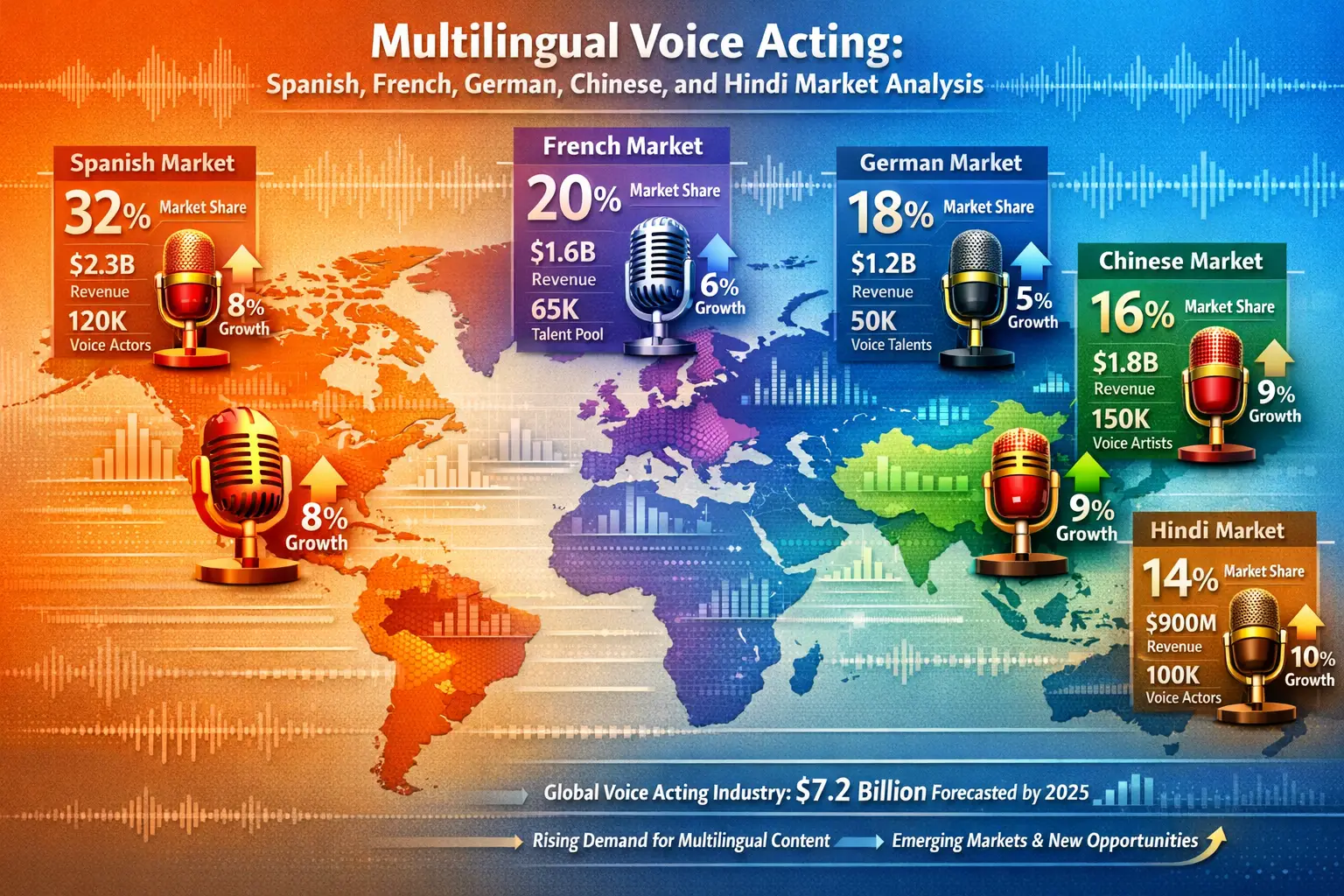
As we progress through 2026, several trends will shape the continued evolution of Multilingual Voice Acting: Spanish, French, German, Chinese, and Hindi—Where the Growth Opportunities Are.
Increasing Demand Across All Content Categories
The 58% of buyers already working with or planning to work with non-English voice talent[1] represents just the beginning. As global connectivity increases and audiences become more sophisticated in their expectations for authentic localized content, this percentage will continue rising.
Emerging Content Categories:
- Metaverse and virtual world experiences requiring multilingual interaction
- AI assistants and voice interfaces localized for global markets
- Educational technology expanding into developing markets
- Health and wellness applications requiring culturally-sensitive voice guidance
- Financial services and fintech apps serving multilingual user bases
Regional Accent and Dialect Specialization
Beyond the five primary growth languages, regional variations within these languages will create specialized high-value niches. Brands increasingly recognize that Mexican Spanish differs from Argentine Spanish, that Quebecois French requires different approaches than Parisian French, and that regional Chinese dialects serve specific market segments.
Voice actors who can authentically deliver these regional variations will command premium positioning as brands seek to avoid the “generic foreign voice” that fails to resonate with local audiences.
Sustainability and Long-Term Client Relationships
The multilingual voice acting market is maturing beyond one-off projects toward sustained partnerships. Brands investing in authentic localization seek consistent voices across campaigns, creating opportunities for:
- Retainer relationships providing stable income
- Brand ambassador roles spanning multiple languages
- Long-term character work for animated or gaming franchises
- Ongoing corporate narration for multinational companies
Technology-Enhanced Human Performance
Rather than replacing human voice actors, technology will continue enhancing capabilities and expanding reach. The most successful multilingual voice actors in 2026 embrace AI as a collaborative tool that:
- Handles repetitive or low-stakes content efficiently
- Extends authentic human performance across additional languages through voice cloning
- Enables rapid iteration and client feedback cycles
- Creates new revenue streams through hybrid service offerings
Conclusion: Seizing the Multilingual Voice Acting Opportunity
Multilingual Voice Acting: Spanish, French, German, Chinese, and Hindi—Where the Growth Opportunities Are isn’t just about identifying which languages are growing—it’s about strategically positioning to capitalize on a fundamental shift in how global audiences consume content.
The data is clear: Spanish leads with the highest buyer adoption rates, followed by French, German, Chinese, and Hindi as sustained growth languages through 2026 and beyond[1]. But opportunity extends beyond simply speaking these languages. Success requires authentic cultural fluency, strategic business positioning, technological adaptation, and commitment to continuous professional development.
Actionable Next Steps
For voice actors ready to capitalize on multilingual opportunities:
Assess Your Current Position: Honestly evaluate your authentic language capabilities and cultural fluency. Native-level proficiency is the minimum standard for professional multilingual work.
Develop Targeted Demo Reels: Create language-specific demos showcasing range, cultural understanding, and content variety within your target languages.
Research Market Rates: Understand pricing expectations in each target language market and position your services accordingly, recognizing that authentic multilingual capabilities justify premium rates.
Invest in Technology: Ensure your home studio meets international broadcast standards and you’re equipped for remote collaboration with global clients.
Build Strategic Partnerships: Connect with translators, cultural consultants, and other voice actors in target language markets to expand capabilities and referral networks.
Embrace AI Collaboration: Familiarize yourself with voice cloning and AI dubbing technologies, positioning yourself for hybrid workflow opportunities rather than resisting technological change.
Commit to Cultural Immersion: Language proficiency requires ongoing maintenance. Engage regularly with media, news, and cultural content in your target languages to maintain authentic contemporary delivery.
Specialize Strategically: Rather than attempting to serve all markets, identify specific niches (technical German, Latin American Spanish, Mandarin gaming content) where you can establish authority.
The multilingual voice acting landscape in 2026 offers unprecedented opportunities for voice actors willing to invest in authentic language capabilities, cultural understanding, and strategic business development. As global content consumption continues expanding and audiences demand authentic localized experiences, the voice actors positioned at the intersection of language proficiency, cultural fluency, and technological adaptation will thrive in this dynamic, growing market.
The question isn’t whether multilingual voice acting represents a growth opportunity—the data confirms it does. The question is whether you’re ready to position yourself to capitalize on it.
References
[1] Voice Acting In 2025 2026 Trends Insights And The Future – https://www.gravyforthebrain.com/voice-acting-in-2025-2026-trends-insights-and-the-future/
[2] Voice Over Trends For 2026 – https://www.voicecrafters.com/blog/voice-over-trends-for-2026/
[3] Ai Dubbing In 2026 – https://www.rws.com/blog/ai-dubbing-in-2026/