



Last updated: March 17, 2026
Key Takeaways
• Uta Hagen character history questions acting exercises help actors build authentic, lived-in characters through detailed backstory exploration
• The core questions focus on “What do I want?” and “What stands in my way?” to drive truthful action
• These exercises replace emotional display with genuine response and specific, observable behavior
• Character history work requires drawing from personal experience without replicating your actual life
• Transference is key—using your own sensory and emotional memories to activate truthful responses
• The methodology emphasizes action, listening, and genuine response over theatrical clichés
• Regular practice with these questions builds the foundation for all character work
• Success comes from specificity and self-awareness rather than general emotional states
Quick Answer
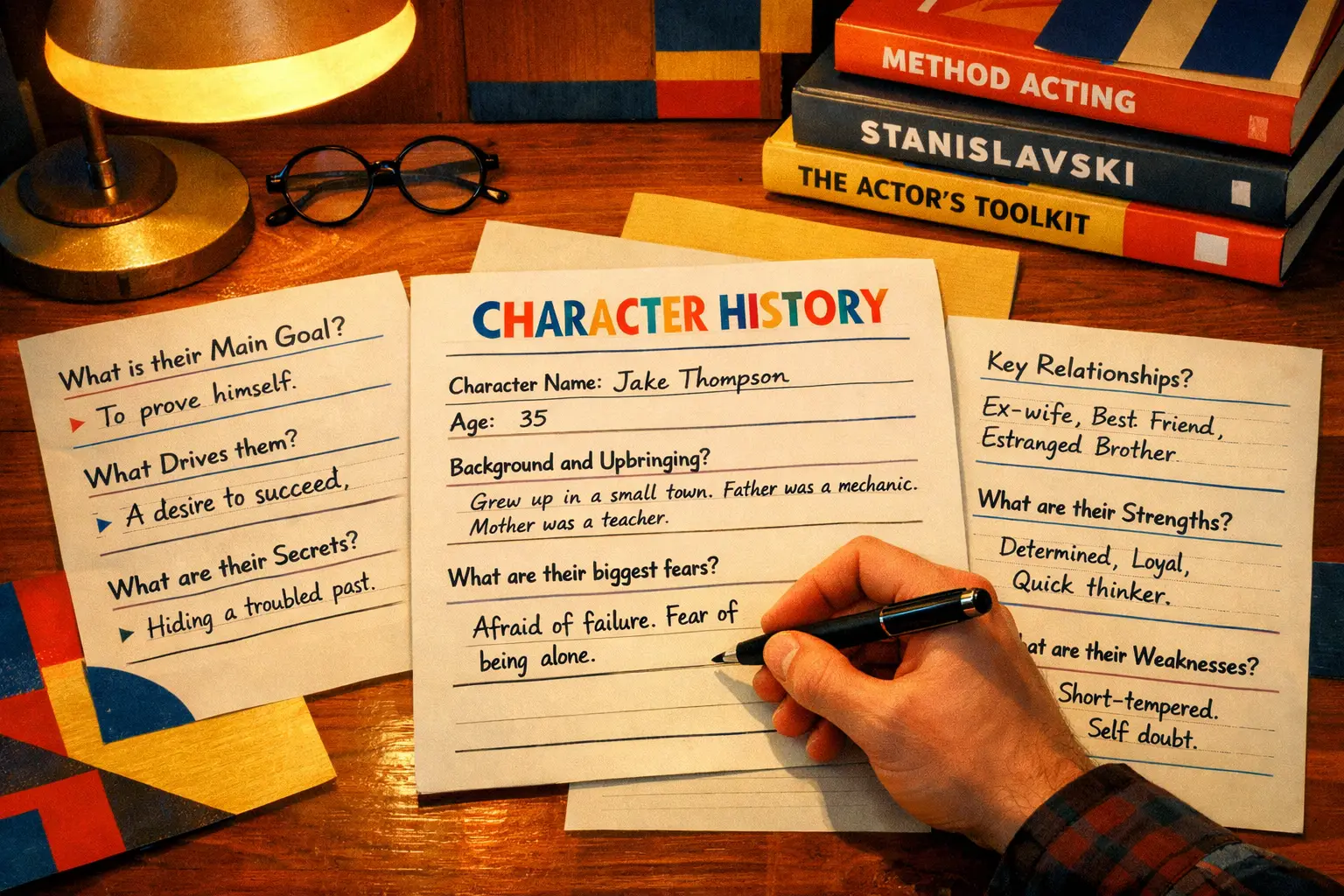
Uta Hagen character history questions acting exercises are structured techniques that help actors develop authentic characters by exploring detailed backstories through specific questions about motivation, obstacles, relationships, and circumstances. The core methodology focuses on two fundamental questions—”What do I want?” and “What stands in my way?”—while using personal transference to create truthful, observable behavior rather than theatrical displays of emotion.
What Are Uta Hagen Character History Questions Acting Exercises?
Uta Hagen character history questions acting exercises are systematic approaches to character development that require actors to investigate their character’s complete life story through detailed questioning. These exercises form the foundation of Hagen’s approach to truthful acting, which insists that authentic performance begins with the actor’s lived reality and concrete, observable behaviors[1].
The methodology centers on replacing clichés with specificity and self-awareness. Instead of playing general emotions or theatrical concepts, actors use these questions to discover particular, personal details that make their characters feel like real people with genuine histories.
Key components include:
• Detailed backstory exploration through structured questions
• Transference techniques using personal sensory and emotional experience
• Focus on action and genuine response rather than emotional display
• Investigation of lived circumstances and relationships
• Specific, observable behavior choices
The exercises work because they force actors to make concrete choices. When you know exactly why your character wants something and what specific obstacles they face, your performance naturally becomes more truthful and engaging.
How Do the Core Uta Hagen Character History Questions Work?
The foundation of Uta Hagen character history questions acting exercises rests on two essential questions that drive all character behavior: “What do I want?” and “What stands in my way?[3]. These questions create the engine of truthful performance by establishing clear objectives and obstacles.
“What do I want?” requires you to identify: • Immediate objectives in each scene • Long-term character goals and desires • Subconscious needs the character might not recognize • How these wants change and evolve throughout the story
“What stands in my way?” helps you discover: • External obstacles (other characters, circumstances, environment) • Internal obstacles (fears, habits, conflicting desires) • How these obstacles create conflict and drive action • Why the character can’t simply give up and walk away
I’ve seen too many actors try to play emotions instead of pursuing objectives. That’s like trying to drive a car by focusing on the speedometer instead of the road. The emotion comes naturally when you’re genuinely fighting for what you want against real obstacles.
Choose this approach if you find yourself indicating emotions or playing general states. Avoid this if you’re not willing to dig deep into personal experience—Hagen’s method requires genuine self-investigation.
What Additional Character History Questions Should You Explore?
Beyond the core questions, comprehensive Uta Hagen character history questions acting exercises include detailed exploration of your character’s complete life story. This investigation creates the foundation for truthful, specific choices in performance.
Essential character history areas to investigate:
Background and Origins:
• Where and when was your character born?
• What was their family situation growing up?
• What major events shaped their worldview?
• What education and life experiences formed their personality?
Current Circumstances:
• Where do they live and why?
• What’s their daily routine?
• Who are the important people in their life?
• What are their current pressures and responsibilities?
Relationships and Connections:
• How do they relate to each character in the play?
• What’s the history with each relationship?
• What do they need from other characters?
• What do others want from them?
Physical and Sensory Details:
• How do they move through the world?
• What are their physical habits and gestures?
• How do they respond to different environments?
• What sensory experiences affect them most?
The key is making these details personal and specific. Don’t just say your character had a “difficult childhood”—know exactly what happened, when, and how it affects their behavior today. This specificity is what separates professional character work from amateur generalizations.
For actors working on building detailed character profiles, these questions provide the roadmap for creating fully realized people rather than theatrical concepts.
How Do You Use Transference in Character History Work?
Transference is central to Uta Hagen character history questions acting exercises—it’s how actors draw from their own sensory and emotional experience to activate truthful responses under imagined circumstances, without simply replicating their actual lives[1]. This technique bridges the gap between your personal reality and your character’s fictional world.
Transference works through these steps:
Identify Emotional Parallels:
• Find moments in your life that connect to your character’s experiences
• Look for similar feelings, not identical situations
• Use the emotional truth while changing the circumstances • Focus on how the experience felt in your body and senses
Sensory Substitution:
• Replace your character’s specific details with your own sensory memories
• If your character lost a parent, use your experience of any significant loss
• Adapt the intensity and context to match your character’s situation
• Let your body remember the physical sensations
Circumstantial Adaptation:
• Take your emotional truth and place it in your character’s world
• Adjust the response to fit your character’s personality and background
• Consider how your character would handle emotions differently than you
• Maintain the authenticity while serving the story
Here’s a practical example: If your character is nervous about a job interview, don’t try to manufacture generic “nervousness.” Instead, remember how you felt before your first audition, a difficult conversation, or any high-stakes situation. Use that specific physical sensation—the tight stomach, shallow breathing, fidgeting hands—and let it live in your character’s circumstances.
Common mistake: Trying to feel what you think the character should feel instead of using your own authentic emotional experience as the foundation.
This approach connects directly to mastering stage presence because authentic emotional connection creates genuine audience engagement.
How Do You Practice Uta Hagen Character History Questions Effectively?

Effective practice of Uta Hagen character history questions acting exercises requires structured, consistent work that builds from personal exploration to character application. The key is developing a systematic approach that you can use for any role.
Daily Practice Structure:
Personal Investigation (10-15 minutes daily):
• Write detailed answers to character history questions about yourself first
• Practice identifying your own wants and obstacles in daily situations
• Develop awareness of your physical habits and emotional responses
• Build a vocabulary of personal sensory and emotional experiences
Character Work Sessions (20-30 minutes):
• Apply the same questions to your current character
• Write detailed responses, not just mental notes
• Compare and contrast your character’s answers with your own
• Identify specific moments where transference can be applied
Scene Application:
• Use character history discoveries in actual scene work
• Test how different backstory choices affect your performance
• Adjust and refine based on what creates the most truthful response
• Practice with scene partners who understand the methodology
Weekly Review:
• Assess which character choices are working and which feel forced
• Identify areas where you’re falling into clichés or generalizations
• Deepen your investigation of unclear or underdeveloped areas
• Connect character work to your overall performance goals
For actors developing consistent training habits, incorporating these exercises into daily 30-minute home practice routines creates steady improvement in character development skills.
Choose this practice schedule if you’re serious about developing professional-level character work. Avoid rushing through the questions—superficial answers create superficial performances.
What Common Mistakes Should You Avoid?
Many actors struggle with Uta Hagen character history questions acting exercises because they approach them as intellectual exercises rather than experiential investigations. Understanding these common pitfalls helps you develop more effective character work.
Major mistakes to avoid:
Playing Results Instead of Actions:
• Don’t try to show the audience how your character feels
• Focus on what your character is trying to accomplish
• Let emotions emerge from pursuing objectives, not from trying to display them
• Remember that real people don’t perform their feelings—they live them
Generic or Vague Answers:
• Avoid broad generalizations like “my character is sad” or “they had a hard life”
• Dig for specific details: what exactly happened, when, where, with whom
• Use concrete, sensory details rather than abstract concepts
• Make choices that you can actually use in performance
Forcing Inappropriate Personal Experiences:
• Don’t try to match your life experiences exactly to your character’s
• Focus on emotional and sensory truth rather than literal similarity
• Adapt your experiences to serve the character, not the other way around
• Respect both your personal boundaries and the character’s integrity
Neglecting Physical and Behavioral Details:
• Character history isn’t just emotional—it’s physical, social, and behavioral
• Investigate how your character moves, speaks, and interacts with their environment
• Consider how their history shows up in their body and habits
• Connect backstory discoveries to observable, playable actions
Working in Isolation:
• Character work must connect to scene partners and the overall story
• Test your choices in actual scene work, not just in isolation
• Be willing to adjust when your choices don’t serve the production
• Remember that character work supports storytelling, not the other way around
I’ve watched countless actors get so caught up in their character’s psychology that they forget to actually listen and respond to their scene partners. The most brilliant backstory is worthless if it doesn’t help you be more present and truthful in the moment.
This connects to broader skills in staying present when things go wrong because solid character work provides the foundation for authentic responses under pressure.
How Do Character History Questions Connect to Scene Work?
The ultimate purpose of Uta Hagen character history questions acting exercises is to create more truthful, engaging scene work. Your character investigation only matters if it helps you make stronger, more specific choices when you’re actually performing with scene partners.
Connecting backstory to scene work:
Objective Clarity:
• Use character history to understand why your character wants what they want
• Let backstory inform the urgency and importance of scene objectives
• Draw connections between past experiences and current needs
• Make choices that create clear, playable actions
Relationship Dynamics:
• Apply character history to understand your relationships with other characters
• Use shared or conflicting backgrounds to create authentic tension
• Let your character’s past inform how they approach each scene partner
• Build on established relationship patterns while allowing for growth and change
Moment-to-Moment Reality:
• Use sensory and emotional preparation to enter scenes truthfully
• Let character history inform your physical and vocal choices
• Stay open to genuine responses that emerge from solid preparation
• Trust that good preparation allows for spontaneous, authentic moments
Obstacle Navigation:
• Apply your understanding of character obstacles to scene conflicts
• Use backstory to understand why certain obstacles are particularly challenging
• Let character history inform your strategies for overcoming problems
• Create performances where the stakes feel genuinely important
The magic happens when your preparation becomes invisible—when your character history work is so solid that you can forget about it and just live truthfully in the imaginary circumstances. That’s when audiences stop seeing you “acting” and start believing in your character as a real person.
This foundation supports all other aspects of performance, from developing authentic physical choices to maintaining truthful vocal work throughout a performance.
FAQ
Q: How long should I spend on character history questions for each role? A: Spend at least 2-3 hours of detailed written work initially, then continue refining throughout the rehearsal process. The investment pays off in more confident, specific performances.
Q: Can I use Uta Hagen’s method for film and TV work? A: Absolutely. The principles of truthful action and specific character choices apply to all acting mediums. Adjust the scale and intensity for camera work, but the foundation remains the same.
Q: What if I can’t find personal experiences that match my character’s situation? A: Focus on emotional and sensory parallels rather than literal matches. Use your imagination to adapt your authentic experiences to your character’s circumstances.
Q: How do I know if my character choices are working? A: Test them in scene work. Good character choices make you feel more confident, help you listen better to scene partners, and create specific, playable actions.
Q: Should I share my character history work with directors and scene partners? A: Share what’s relevant to the work, but keep personal transference details private. Focus on how your choices affect your performance and relationships.
Q: How detailed should my character history be for smaller roles? A: Even small roles benefit from basic character investigation. Focus on the essential questions: what do you want and what stands in your way?
Q: Can beginners use these techniques effectively? A: Yes, but start simple. Master the basic questions before diving into complex psychological investigation. Build your skills gradually through consistent practice.
Q: What if my character history contradicts the script or director’s vision? A: Always serve the production. Use character history as a foundation, but be flexible enough to adjust when needed for the overall storytelling.
Q: How do I avoid over-intellectualizing the character work? A: Balance written investigation with physical and emotional exploration. Test your discoveries through improvisation and scene work, not just analysis.
Q: Should I create character history for characters I’m auditioning for? A: Basic character investigation helps with auditions, but don’t over-invest in detailed backstory until you book the role. Focus on clear objectives and obstacles.
Q: How does this method work with different acting styles and techniques? A: Hagen’s approach complements most other techniques. The emphasis on truthful action and specific choices enhances rather than conflicts with other methodologies.
Q: What’s the difference between character history and character biography? A: Character history focuses on experiences that directly affect current behavior and choices. Biography can include interesting details that don’t necessarily impact performance.
Conclusion
Mastering Uta Hagen character history questions acting exercises transforms your approach to character development from surface-level choices to deep, authentic performance. The methodology’s emphasis on truthful action, specific investigation, and personal transference creates the foundation for compelling, believable characters that audiences connect with on a genuine level.
The journey from asking “What do I want?” and “What stands in my way?” to creating fully realized characters takes consistent practice and honest self-investigation. But here’s what I’ve learned in 30 years of acting: actors who commit to this level of character work consistently book more roles and create more memorable performances than those who rely on general choices and theatrical clichés.
Your next steps:
• Start with personal investigation—practice these questions on yourself first
• Apply the core questions to your current character work
• Develop a consistent practice routine that includes both written investigation and scene application
• Test your character choices in actual performance, adjusting based on what creates truthful responses
Remember, character history work isn’t about creating elaborate backstories that no one will ever see. It’s about building the foundation for truthful, specific choices that make your performances more engaging and authentic. When you know your character’s history this deeply, you can trust yourself to respond truthfully to whatever happens in the scene.
The actors who master these techniques don’t just perform characters—they become fully realized people who happen to be living through the circumstances of the play. That’s the difference between acting and truth, and it’s what separates working professionals from talented amateurs.
Start with one character, one question at a time. Your audience will feel the difference, even if they can’t explain why your performance feels so real.
References
[1] The Uta Approach – https://www.hbstudio.org/hagen-institute/the-uta-approach/ [2] Uta Hagen 9 Questions – https://avkin.com/uta-hagen-9-questions/