
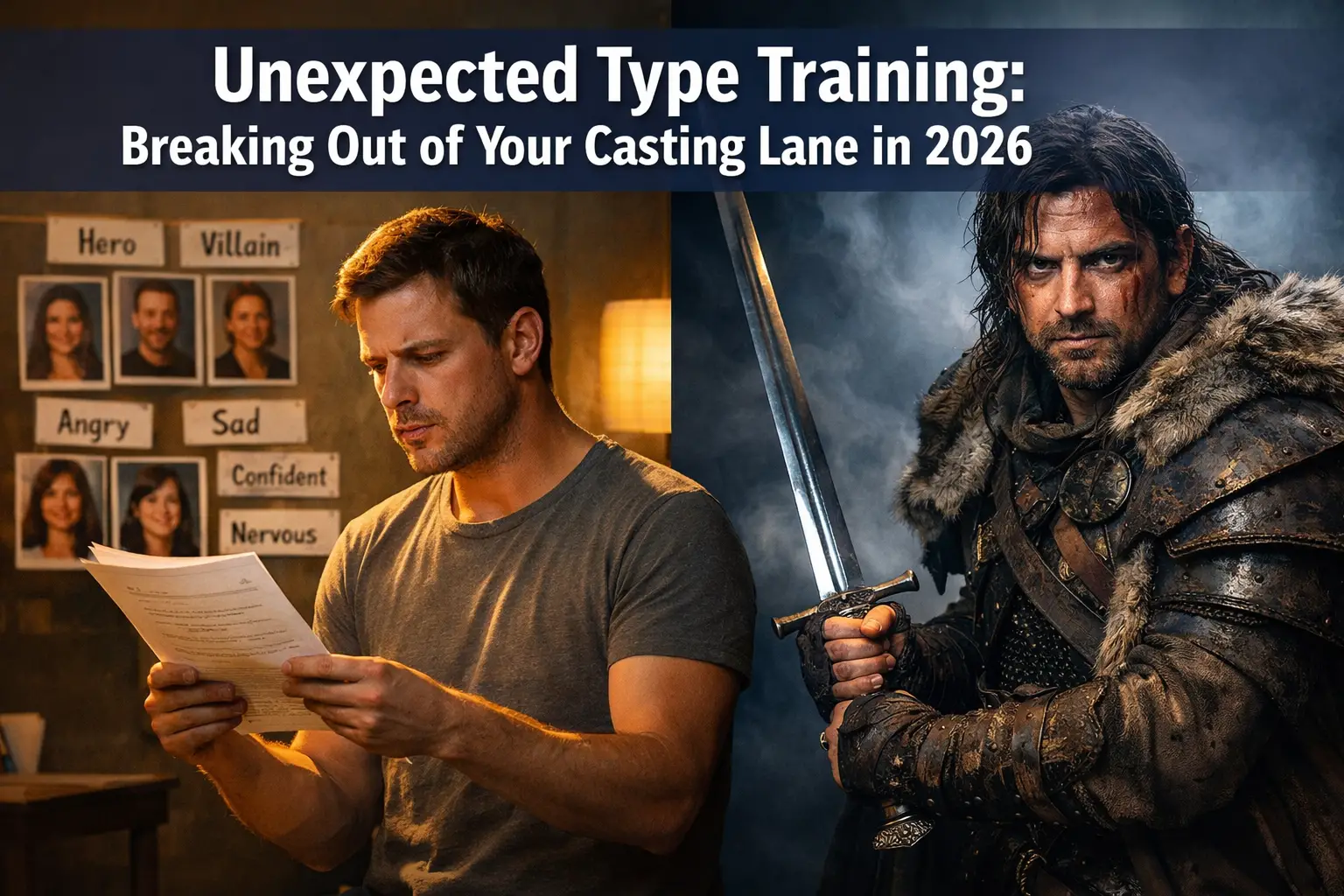
The entertainment industry has long operated on a simple principle: actors get cast based on their “type.” But what happens when that type becomes a cage rather than a calling card? In 2026, the most successful performers are those who refuse to be boxed in, embracing Unexpected Type Training: Breaking Out of Your Casting Lane in 2026 as a strategic career move that transforms limitations into opportunities.
The traditional casting paradigm is shifting. Directors and producers increasingly seek actors who can deliver nuanced, unexpected performances that defy stereotypes. Whether you’ve been pigeonholed as the “quirky best friend,” the “corporate executive,” or the “tough guy,” breaking free from these constraints requires intentional training, strategic preparation, and a willingness to explore characters that feel completely foreign to your established persona.
This comprehensive guide explores how actors can leverage Unexpected Type Training: Breaking Out of Your Casting Lane in 2026 to expand their range, increase their marketability, and access roles they’ve never been considered for before.
Key Takeaways
- 🎭 Curated character boards featuring off-type roles like haunted baristas or stoic detectives help actors visualize and embody characters outside their typical casting range
- 💪 Scenario-based training exercises mirror modern Evidence-Based Training principles used in aviation, focusing on dynamic, unscripted situations rather than rigid technical demonstrations
- 📚 Strategic monologue selection from contrasting genres and character types builds demonstrable versatility for film and television auditions
- 🎯 Competency-based development replaces traditional “checking the box” approaches, emphasizing authentic transformation over surface-level character work
- 🚀 Type-breaking success in 2026 requires consistent practice, professional coaching, and documented range through diverse demo reel content
Understanding Your Current Casting Lane
Before breaking out of your casting lane, actors must first understand where they currently sit in the industry’s perception. Type in the entertainment industry refers to the specific category of roles for which casting directors naturally consider an actor based on physical appearance, energy, previous work, and perceived personality.
Identifying Your Default Type
Most actors fall into recognizable categories:
- The Girl/Guy Next Door: Approachable, relatable, often cast in romantic comedies or family dramas
- The Authority Figure: Executives, doctors, lawyers, politicians
- The Comic Relief: Sidekicks, quirky neighbors, eccentric friends
- The Villain: Intimidating, mysterious, morally complex characters
- The Romantic Lead: Conventionally attractive, emotionally available characters
- The Character Actor: Distinctive features or energy that fits specific niche roles
Understanding your current type isn’t about accepting limitations—it’s about recognizing your starting point for strategic expansion. Just as Evidence-Based Training in aviation recognizes that “emergency situations are dynamic and no two are ever exactly the same,” actors must acknowledge that authentic character work requires flexibility beyond rigid categorization.[6]
The Cost of Type-Casting
Remaining in a single casting lane creates several professional challenges:
| Challenge | Impact on Career |
|---|---|
| Limited Audition Opportunities | Casting directors only consider you for 10-20% of available roles |
| Career Stagnation | Repeating similar characters leads to creative burnout |
| Industry Perception | Becomes difficult to be seen as capable of range |
| Financial Ceiling | Type-specific roles often have predetermined pay scales |
| Competitive Disadvantage | Actors with demonstrated versatility access more opportunities |
The Philosophy Behind Unexpected Type Training: Breaking Out of Your Casting Lane in 2026
The principles driving Unexpected Type Training: Breaking Out of Your Casting Lane in 2026 draw inspiration from cutting-edge training methodologies across multiple industries. Modern pilot training, for instance, has evolved from traditional “checking” to “coaching and developing,” using unscripted scenarios to develop management strategies rather than just technical skills.[1][6]
Evidence-Based Approach to Character Development
The Evidence-Based Training (EBT) model used in aviation provides a powerful framework for actors. Rather than simply demonstrating that they can perform specific techniques, pilots now train for competency in handling unexpected, dynamic situations. This approach addresses the reality that “human factors have played a role in 70-80% of airline accidents and serious incidents over the past thirty years.”[1]
Similarly, actors face a landscape where emotional authenticity and adaptive performance matter more than technical perfection. The ability to respond truthfully to unexpected circumstances in a scene—whether during auditions, rehearsals, or filming—separates competent actors from exceptional ones.
“The training recognizes that emergency situations are dynamic and no two are ever exactly the same.” – This principle applies equally to character work and unexpected moments in performance.[6]
Competency Over Compliance
Traditional acting training often emphasizes compliance—hitting marks, delivering lines as written, matching the director’s initial vision. While these skills remain important, 2026’s most successful actors demonstrate competency—the ability to make bold choices, offer unexpected interpretations, and bring depth to characters that transcend the page.
This shift mirrors the transition in military and aviation training toward “proficiency-based, phase-driven models” that blend traditional instruction with advanced simulation and adaptive learning.[5]
Building Your Off-Type Character Board
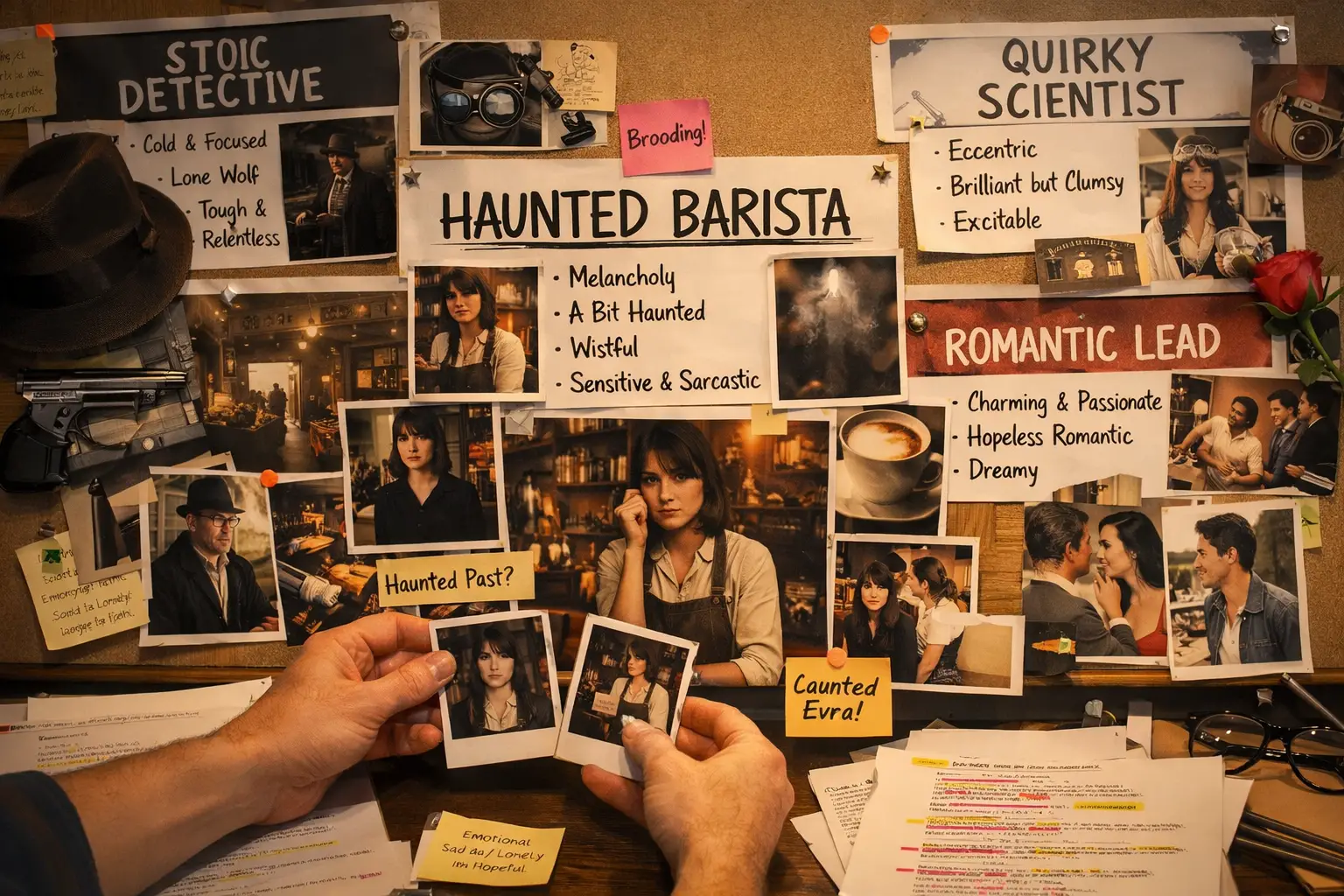
The cornerstone of Unexpected Type Training: Breaking Out of Your Casting Lane in 2026 involves creating curated character boards that challenge your established persona. These visual and conceptual collections serve as research laboratories for exploring roles that feel completely foreign.
The Haunted Barista: A Case Study
Consider the haunted barista—a character archetype that combines mundane contemporary setting with psychological depth and emotional complexity. This role works particularly well for actors typically cast in high-energy or authoritative roles.
Character Board Elements:
- Visual References: Images of independent coffee shops, vintage espresso machines, worn aprons with stains
- Emotional Palette: Melancholy, quiet desperation, fleeting moments of connection, underlying trauma
- Physical Life: Repetitive movements, muscle memory of craft, exhaustion in posture, moments of dissociation
- Backstory Prompts: What haunts this character? Lost love? Missed opportunities? Literal supernatural experience?
- Vocal Quality: Softer volume, measured pace, occasional vulnerability breaking through professional demeanor
For an actor typically cast as confident professionals or comedic characters, embodying the haunted barista requires surrendering control and embracing stillness—qualities that may feel uncomfortable but expand performative range.
The Stoic Detective: Contrasting Energy
The stoic detective represents another valuable off-type exploration, particularly for actors usually cast in emotionally expressive or vulnerable roles.
Character Board Components:
- Physical Presence: Controlled movements, economy of gesture, observant stillness
- Emotional Restraint: Feelings contained beneath surface, micro-expressions only
- Intellectual Energy: Analytical thinking visible in eyes, processing information constantly
- Professional Detachment: Boundaries maintained, personal life compartmentalized
- Unexpected Vulnerability: Rare moments when facade cracks, making them more impactful
Training Exercise: Spend one full day embodying stoic detective energy in daily life. Notice how restraint in expression affects interactions, how observation replaces reaction, and how silence creates power.
Creating Your Personal Off-Type Portfolio
Develop 3-5 character boards representing roles completely different from your typical casting:
- Choose contrasting archetypes (if you’re typically the hero, explore the villain; if you’re comedic, explore tragedy)
- Gather visual references (Pinterest boards, magazine clippings, film stills)
- Develop detailed backstories for each character type
- Identify physical and vocal adjustments required for each
- Find monologues and scenes that showcase these character types
Exercises for Film and Television Versatility

Unexpected Type Training: Breaking Out of Your Casting Lane in 2026 requires consistent, deliberate practice. The following exercises build competency in off-type character work specifically designed for camera acting.
Scenario-Based Transformation Drills
Inspired by scenario-based pilot training that develops “crew management strategies rather than just technical skills,”[1] these exercises focus on authentic response to unexpected circumstances.
Exercise 1: The Emotional Pivot
- Set up a simple scene (ordering coffee, waiting for a bus, reading a letter)
- Begin in your typical emotional register
- At a random moment (use a timer), pivot to an off-type emotional state
- Example: Confident executive type suddenly experiences profound grief; comedic actor suddenly becomes threatening
- Film yourself and review for authenticity of transition
Exercise 2: The Genre Swap
- Select a monologue you perform well in its intended genre
- Perform the same text as a completely different genre
- Example: Deliver a dramatic monologue as comedy; perform a romantic scene as horror
- This develops flexibility and reveals new interpretative possibilities
Exercise 3: The Opposite Energy
- Identify your default energy (high/low, fast/slow, loud/quiet, open/closed)
- Prepare a contemporary monologue using the opposite energy in every dimension
- Maintain truthfulness while working against your natural tendencies
- This exercise builds range by strengthening underutilized performative muscles
Physicality and Presence Work
Type-breaking often requires significant physical transformation beyond costume and makeup.
The Posture Protocol:
- Document your neutral posture (video from multiple angles)
- Study postures of off-type characters (film research, people-watching)
- Practice embodying contrasting postures for 30-minute sessions
- Integrate new physicality into daily activities until it feels natural
- Film self-tape auditions using off-type physicality
Vocal Transformation Techniques:
- Pitch exploration: If you typically use higher register, practice sustained work in lower range (and vice versa)
- Pace variation: Fast talkers practice deliberate slowness; measured speakers practice rapid delivery
- Accent and dialect work: Even if not performing the accent, studying different speech patterns expands flexibility
- Emotional coloring: Practice delivering neutral text with contrasting emotional undertones
Camera-Specific Off-Type Training
Film and television acting requires subtle adjustments that differ from theatrical work.
Micro-Expression Mastery:
- Study Paul Ekman’s facial action coding system
- Practice expressing complex emotions using minimal facial movement
- Particularly valuable for stoic character types where restraint is key
- Film close-ups and review for authenticity versus indication
Thought-Life Development:
- The camera captures internal life more than external demonstration
- Practice scenes where you think opposite thoughts from what you’re saying
- Example: Deliver reassuring dialogue while thinking suspicious thoughts
- This creates layered performances that read as complex on camera
Strategic Monologue Selection for Range Demonstration
Your monologue repertoire serves as evidence of your versatility. Unexpected Type Training: Breaking Out of Your Casting Lane in 2026 requires strategic selection of contrasting material.
Building a Versatile Monologue Portfolio
Maintain 6-8 prepared monologues across different categories:
The Range Matrix:
| Category | Your Type Example | Off-Type Example |
|---|---|---|
| Contemporary Drama | Monologue that fits your typical casting | Monologue requiring opposite energy |
| Contemporary Comedy | Your natural comedic voice | Comedy requiring different timing/style |
| Classical | Shakespeare/classical in your wheelhouse | Classical role you’d never be cast in |
| Genre-Specific | Thriller, horror, or sci-fi in your range | Genre piece challenging your type |
Monologue Recommendations by Off-Type Goal
For Comedic Actors Seeking Dramatic Range:
- “The Pillowman” by Martin McDonagh (dark, disturbing)
- “Doubt” by John Patrick Shanley (moral complexity)
- “August: Osage County” by Tracy Letts (family dysfunction)
For Dramatic Actors Seeking Comedic Range:
- “The Lifespan of a Fact” by Jeremy Kareken, David Murrell, Gordon Farrell (intellectual comedy)
- “She Kills Monsters” by Qui Nguyen (genre comedy with heart)
- “The Thanksgiving Play” by Larissa FastHorse (satirical comedy)
For “Nice” Types Seeking Edge:
- “Killer Joe” by Tracy Letts (dangerous, morally compromised)
- “Bug” by Tracy Letts (paranoid, intense)
- “Blackbird” by David Harrower (complex, uncomfortable)
For “Tough” Types Seeking Vulnerability:
- “Rabbit Hole” by David Lindsay-Abaire (grief, loss)
- “The Humans” by Stephen Karam (family, anxiety)
- “The Height of the Storm” by Florian Zeller (aging, memory)
Preparing Off-Type Monologues
The 30-Day Off-Type Monologue Process:
Week 1: Research and Analysis
- Study the complete play (never perform monologues out of context)
- Research productions and performances of this character
- Identify what makes this role different from your type
- Create character board specific to this role
Week 2: Physical and Vocal Exploration
- Experiment with physicality that serves the character
- Explore vocal choices (pitch, pace, rhythm, accent if appropriate)
- Practice the monologue in different physical states (standing, sitting, moving)
- Record audio only to focus on vocal choices
Week 3: Emotional and Psychological Depth
- Identify the character’s objective, obstacle, and tactics
- Explore emotional preparation techniques
- Practice with different emotional starting points
- Film yourself and review for authenticity
Week 4: Polish and Performance
- Refine choices for camera (subtle, internal, truthful)
- Practice in audition conditions (slate, monologue, thank you)
- Film final version for demo reel
- Get feedback from coaches or trusted colleagues
Implementing Your Type-Breaking Strategy
Knowledge without application remains theoretical. Successfully executing Unexpected Type Training: Breaking Out of Your Casting Lane in 2026 requires systematic implementation.
The 90-Day Type-Breaking Plan
Month 1: Foundation and Exploration
- Week 1-2: Create 3-5 off-type character boards; research extensively
- Week 3: Select 2-3 off-type monologues; begin memorization and analysis
- Week 4: Start daily physical and vocal exercises targeting off-type qualities
Month 2: Skill Development
- Week 5-6: Deep work on off-type monologues; film weekly progress
- Week 7: Take a class or workshop outside your comfort zone (improv if you’re dramatic; Meisner if you’re technical)
- Week 8: Begin scene work with partners in off-type roles
Month 3: Professional Application
- Week 9-10: Film professional-quality self-tapes of off-type material
- Week 11: Update headshots if necessary to reflect expanded range
- Week 12: Submit for roles outside your typical casting lane; update representation about expanded range
Updating Your Professional Materials
Your headshots, resume, and demo reel must reflect your expanded range.
Headshot Strategy:
- Maintain your primary type headshot (your “bread and butter”)
- Add 1-2 range shots showing different energy or character types
- Ensure all shots are current, professional, and castable
Demo Reel Requirements:
- 60-90 seconds maximum for general reel
- Include contrasting scenes demonstrating range
- Lead with your strongest work, but ensure variety
- Update every 6-12 months with new off-type material
Resume Presentation:
- Highlight roles that demonstrate versatility
- Include training specific to range expansion
- List special skills that support off-type casting (accents, physical abilities, unique talents)
Working with Representation
Agents and managers may initially resist your type-breaking efforts, particularly if you’ve been successfully booking in your established lane.
Communication Strategies:
- Present type-breaking as expanding opportunities, not abandoning what works
- Provide evidence (new demo reel footage, monologue recordings)
- Identify specific roles or projects you’re now qualified for
- Be patient; industry perception shifts gradually
Measuring Success and Adjusting Course
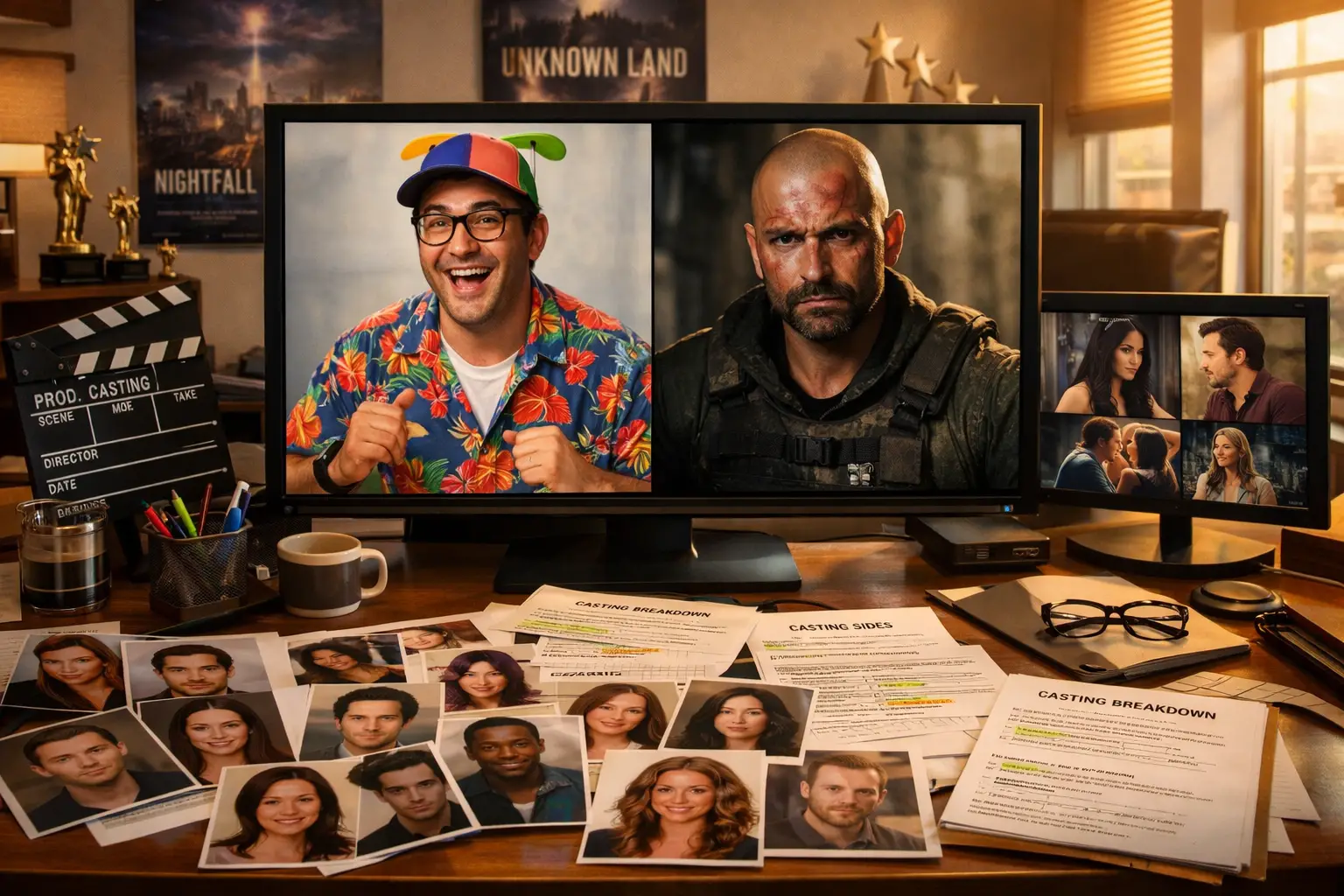
Unexpected Type Training: Breaking Out of Your Casting Lane in 2026 requires ongoing assessment and refinement.
Success Metrics
Track these indicators of progress:
✅ Audition Diversity: Are you being called in for a wider range of roles?
✅ Callback Rate: Are casting directors responding positively to off-type submissions?
✅ Industry Feedback: What are directors and coaches saying about your range?
✅ Booking Patterns: Are you landing roles outside your traditional type?
✅ Professional Growth: Do you feel more confident tackling diverse characters?
Common Challenges and Solutions
Challenge: “I feel inauthentic in off-type roles”
Solution: This discomfort is normal and temporary. Authenticity develops through repetition and deeper character work. Continue training; the feeling will shift.
Challenge: “Casting directors still only see me as my type”
Solution: Industry perception changes slowly. Consistently submit off-type self-tapes, update materials regularly, and be patient. Consider working with a new casting director through workshops.
Challenge: “I’m losing opportunities in my established lane”
Solution: Never abandon what works while building new skills. Maintain your type work while gradually introducing range. This is expansion, not replacement.
Challenge: “I don’t know which off-types to pursue”
Solution: Research roles you’re passionate about but have never been considered for. Let genuine interest guide your choices rather than market trends alone.
Conclusion: Your Path Forward in 2026
The entertainment industry of 2026 rewards actors who refuse to be limited by traditional casting categories. Unexpected Type Training: Breaking Out of Your Casting Lane in 2026 isn’t about rejecting your natural strengths—it’s about expanding your professional toolkit to access opportunities that would otherwise remain closed.
Just as modern pilot training has evolved to emphasize adaptability and competency in dynamic situations rather than rigid technical demonstrations, actors must develop the flexibility to embody characters that challenge industry expectations and their own comfort zones.[1][6]
The haunted barista, the stoic detective, and countless other off-type characters await actors willing to do the deep work of transformation. Through curated character boards, scenario-based exercises, strategic monologue selection, and consistent practice, performers can demonstrate the versatility that casting directors increasingly seek.
Your Next Steps
This Week:
- Create your first off-type character board
- Select one monologue completely outside your typical casting
- Film yourself in your current “type” to establish a baseline
This Month:
- Develop 3-5 complete character boards
- Begin the 30-day off-type monologue process
- Implement daily physical and vocal exercises
This Quarter:
- Complete the 90-day type-breaking plan
- Update professional materials (headshots, reel, resume)
- Submit for roles outside your established casting lane
- Assess progress and adjust strategy
The actors who thrive in 2026 and beyond will be those who view their type as a starting point rather than a destination. By embracing Unexpected Type Training: Breaking Out of Your Casting Lane in 2026, performers position themselves for greater creative fulfillment, expanded opportunities, and career longevity in an increasingly competitive industry.
The question isn’t whether you can break out of your casting lane—it’s whether you’re willing to do the work required to make it happen. Your expanded range awaits. 🎭
References
[1] Expect The Unexpected Evidence Based Training – https://ops.group/blog/expect-the-unexpected-evidence-based-training/
[3] Mandatory Training To Prevent Upsets – https://baatraining.com/blog/mandatory-training-to-prevent-upsets/
[5] Us Army Flight School Next – https://theaviationist.com/2026/01/10/us-army-flight-school-next/
[6] How Do Airline Pilots Train For The Unexpected – https://pilotbible.com/how-do-airline-pilots-train-for-the-unexpected/