



Last updated: April 14, 2026
Key Takeaways
• The basic object exercise teaches actors to find truth in simple, everyday activities by performing them first as themselves, then as their character
• Choose familiar tasks like making coffee, getting dressed, or preparing breakfast that you do regularly without thinking • Focus on authentic details including the weight of objects, timing of movements, and your genuine relationship with each item
• Perform the exercise twice – once as yourself in your real circumstances, then as your character with their specific emotional and physical state
• Write detailed descriptions of your chosen activity before performing to deepen your observation and awareness
• Build on Hagen’s nine questions including “Who am I?”, “Where am I?”, and “What do I want?” to create truthful circumstances
• Practice regularly to develop the muscle memory of truthful behavior that transfers to all your acting work
Uta Hagen’s Basic Object Exercise
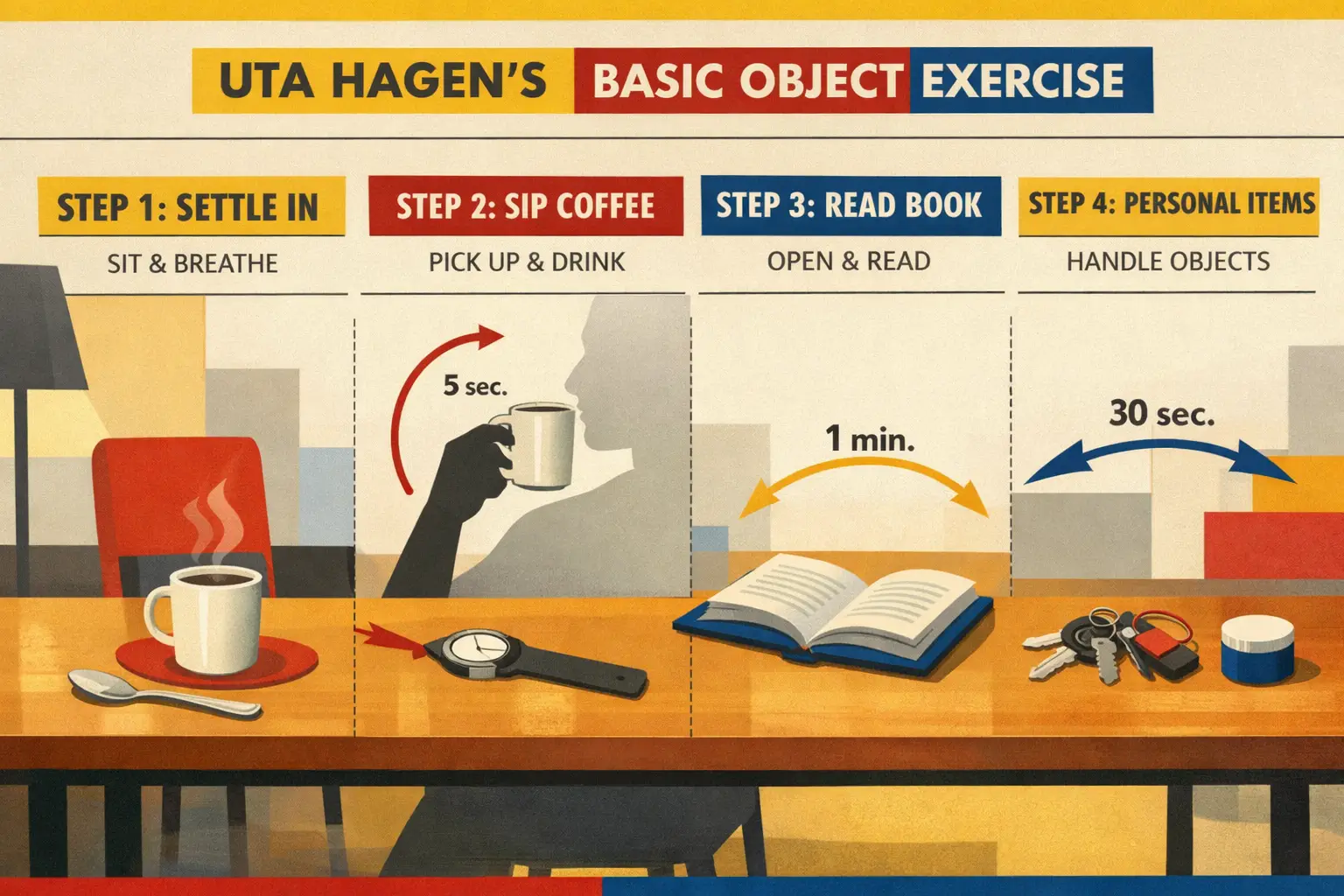
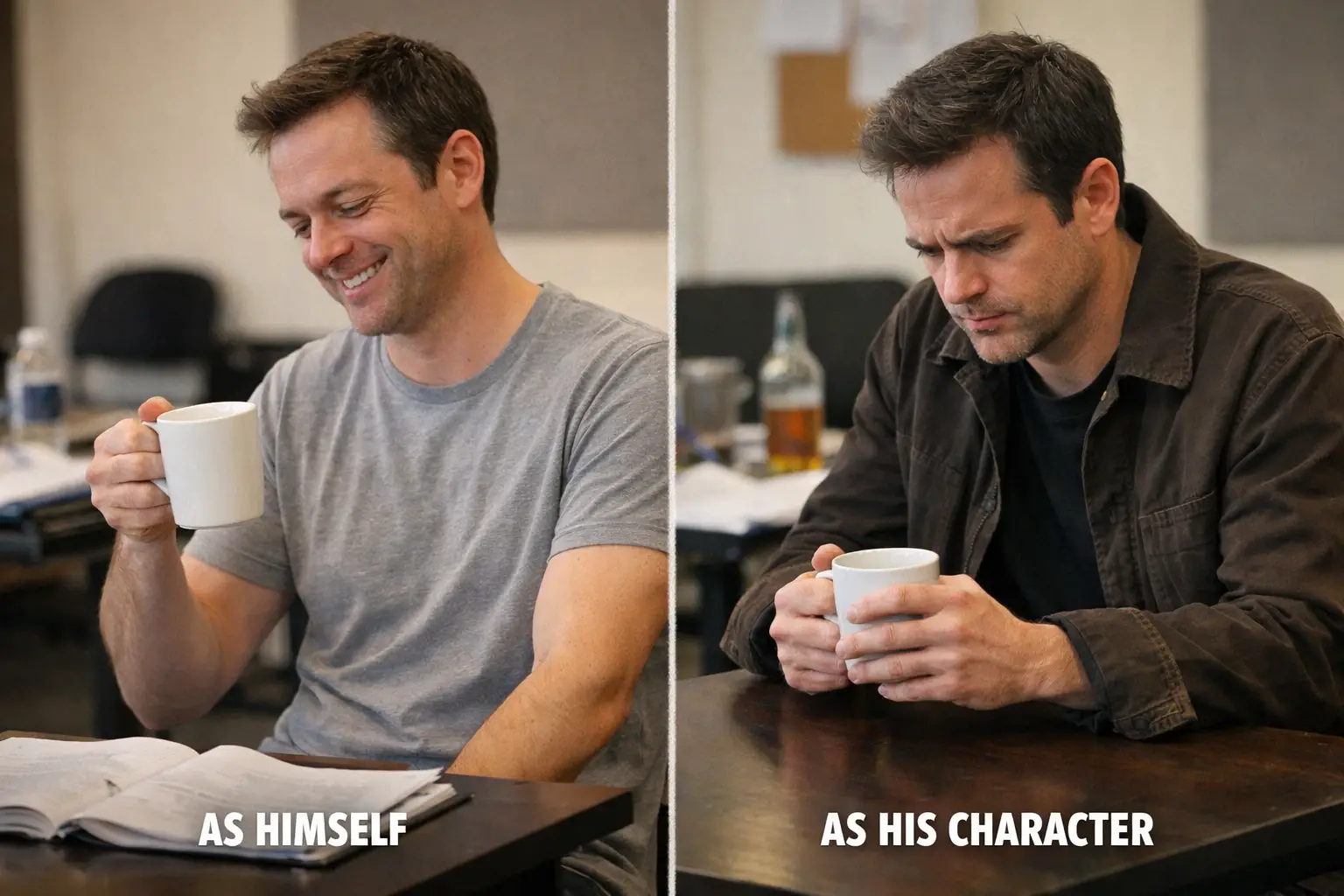
Uta Hagen’s basic object exercise trains actors to find authentic behavior by performing simple daily activities twice – first as themselves, then as their character. Choose a familiar task like making tea or getting dressed, perform it naturally, then repeat it with your character’s specific circumstances and emotional state, paying close attention to how every detail changes.
What Is Uta Hagen’s Basic Object Exercise?
The basic object exercise is a foundational acting technique that develops truthful behavior through interaction with everyday objects. Also known as “Two Minutes of Daily Life,” this exercise helps actors discover the difference between indicating emotions and actually experiencing them through authentic physical actions.
I’ve watched countless students transform their acting when they truly grasp this exercise. It’s like watching someone discover they’ve been trying to swim while wearing concrete boots – suddenly everything becomes fluid and natural.
The exercise works by:
- Creating genuine moments of truth through familiar activities
- Developing awareness of unconscious behaviors and habits
- Building the foundation for all character work
- Teaching actors to trust their instincts rather than force results
Think of it this way: when you make your morning coffee at home, you don’t “act” like someone making coffee – you just make coffee. That’s the quality of truth we’re after in all our acting work.
How to Choose the Right Activity for Your Uta Hagen Basic Object Exercise
Select an activity you perform regularly and know intimately. The best choices are simple, routine tasks that involve multiple objects and take about two to five minutes to complete.
Ideal activities include:
- Making your morning coffee or tea
- Getting dressed for work
- Preparing a simple breakfast
- Wrapping a gift
- Organizing your desk or workspace
- Doing evening skincare routine
Avoid these common mistakes:
- Choosing activities you rarely do (you won’t have authentic muscle memory)
- Picking overly complex tasks with too many steps
- Selecting activities that require props you don’t actually own
- Using tasks that make you self-conscious or uncomfortable
I remember one student who chose “checking social media” as her activity. While it was certainly something she did daily, it didn’t involve enough physical objects to create the rich sensory experience the exercise requires. We switched to her morning routine of making overnight oats, and the difference was remarkable.
For those just starting their stage acting techniques journey, this exercise provides crucial groundwork for more advanced character work.
Step-by-Step Uta Hagen Basic Object Exercise Instructions for Beginners
Phase 1: Preparation and Writing
- Choose your activity based on the criteria above
- Write a detailed description of exactly what you do, including:
- The order of your actions
- How objects feel in your hands
- Your typical emotional state during this activity
- Any thoughts that usually cross your mind
- Gather your props – use the actual objects when possible
Phase 2: First Performance (As Yourself)
- Set up your space exactly as it would be in real life
- Take a moment to connect with your genuine circumstances
- Perform the activity naturally, as you normally would
- Pay attention to:
- The weight and texture of each object
- Your breathing and physical tension
- Where your mind wanders
- How you actually move through space
Phase 3: Second Performance (As Your Character)
- Establish your character’s circumstances using Hagen’s fundamental questions
- Consider how your character’s situation affects their relationship to this activity
- Perform the same activity but allow your character’s circumstances to influence every choice
- Notice the differences in timing, care, urgency, or emotional connection to objects
The magic happens in that comparison. When I first learned this exercise thirty years ago, I chose making scrambled eggs. As myself, I was relaxed and methodical. As my character (a single mother rushing to get her kids to school), every movement had urgency, I cracked eggs more aggressively, and I kept glancing toward where the children would be. Same activity, completely different truth.
Common Mistakes When Learning Uta Hagen Basic Object Exercise Instructions for Beginners
Forcing emotional results instead of trusting the circumstances. Many beginners think they need to “show” their character’s emotions rather than simply living truthfully in the character’s situation.
Rushing through the activity without genuine attention to detail. This isn’t about speed – it’s about authentic interaction with your environment.
Choosing unfamiliar objects or activities that don’t allow for genuine muscle memory and habitual behavior.
Skipping the writing phase because it seems unnecessary. The detailed written description deepens your observation skills and reveals unconscious behaviors.
Performing for an imaginary audience rather than truly doing the activity for its own purpose.
Making the character version too dramatically different from your personal version. The changes should be organic, not theatrical.
I once had a student who turned her simple tea-making exercise into a melodrama worthy of a soap opera. Her character was supposed to be sad, so she added sighs, dramatic pauses, and exaggerated movements. When we stripped all that away and simply let her character’s sadness live quietly in her body while she genuinely made tea, the truth was far more powerful.
This connects beautifully with building character from detailed profiles, where authentic details create believable people.
Building Your Foundation: The Nine Questions That Support Object Work
Before diving into character-based object work, you need solid answers to Hagen’s fundamental questions. These create the circumstances that naturally influence your behavior.
The Essential Questions:
- Who am I? (Your character’s identity, background, personality)
- What time is it? (Year, season, day, hour)
- Where am I? (Country, city, neighborhood, specific location)
- What surrounds me? (Weather, atmosphere, other people)
- What are the given circumstances? (What’s happened before this moment)
- What is my relationship? (To other characters, to this place)
- What do I want? (Your character’s objective)
- What’s in my way? (The obstacles to getting what you want)
- What do I do to get what I want? (Your tactics and actions)
These aren’t intellectual exercises – they’re the foundation that makes your character’s version of the activity authentic and specific. When your character makes coffee while worried about a job interview versus celebrating a promotion, every gesture changes organically.
For actors developing their daily practice routines, incorporating these questions into object work creates a solid foundation for all character development.
Progressing Beyond Basic Object Work
Once you’ve mastered the fundamental exercise, you can expand your practice in several directions.
Advanced variations include:
- Emotional preparation exercises where specific circumstances heighten the stakes
- Sense memory work recreating sensory experiences without the actual objects
- Substitution exercises using personal experiences to fuel character emotions
- Moment-to-moment reality extending the exercise into full scene work
Integration with other techniques:
- Combining object work with physical movement and body language development
- Using truthful object interaction during line memorization practice
- Applying these principles to self-tape auditions for more natural performances
The goal isn’t to become obsessed with objects, but to develop such truthful behavior that audiences never question the reality of what they’re watching. After three decades in this business, I can tell you that casting directors and audiences can spot fake behavior from a mile away, but they’re drawn like magnets to authentic truth.
FAQ
How long should I spend on each performance of the object exercise? Each performance should take 2-5 minutes, the natural length of your chosen activity. Don’t artificially extend or rush the timing.
Can I use imaginary objects instead of real props? For beginners, always use real objects when possible. The authentic weight, texture, and resistance of actual props helps create genuine responses.
What if I can’t find differences between my personal and character versions? This usually means your character’s circumstances aren’t specific or urgent enough. Deepen your answers to the nine fundamental questions.
How often should I practice this exercise? Daily practice for 10-15 minutes will build your foundation quickly. Consistency matters more than duration.
Should I perform this exercise in front of others? Start alone to build confidence, then gradually work with scene partners or in class settings as you become more comfortable.
What if I feel self-conscious during the exercise? Self-consciousness is normal initially. Focus completely on accomplishing your activity’s purpose rather than on how you look doing it.
Can this exercise help with auditions? Absolutely. The truthful behavior you develop transfers directly to audition situations, making your performances more natural and believable.
How do I know if I’m doing the exercise correctly? You’ll feel the difference between the two performances organically, without forcing changes. The character version should feel natural but distinctly different.
Should I use the same activity repeatedly or vary my choices? Start with one activity until you master the technique, then expand to different activities to broaden your skills.
What’s the connection between this exercise and scene work? Object work teaches the foundation of truthful behavior that supports all acting. Every moment on stage involves authentic interaction with your environment.
Can I modify activities to be more dramatic? Resist this urge. The power comes from finding truth in ordinary moments, not from artificially heightening the drama.
How does this relate to other acting methods? Hagen’s approach complements most acting techniques by providing a solid foundation of truthful behavior that supports any method’s specific tools.
Conclusion
Mastering Uta Hagen’s basic object exercise creates the foundation for all truthful acting work. By learning to find authentic behavior in simple daily activities, you develop the skills to bring genuine life to any character or situation.
Your next steps:
- Choose a familiar daily activity and write a detailed description of how you normally perform it
- Practice the exercise daily for at least two weeks, using the same activity to build consistency
- Gradually introduce character circumstances that organically change how you approach the task
- Expand to different activities once you feel confident with your first choice
- Apply these truthful behavior principles to your scene work and audition preparation
Remember, this isn’t about becoming a better coffee maker or getting dressed more efficiently. It’s about developing the actor’s most essential skill: the ability to live truthfully in imaginary circumstances. Every professional actor I know who’s built a lasting career has this foundation of authentic behavior supporting their work.
The beauty of Hagen’s approach is its simplicity and accessibility. You don’t need expensive classes or elaborate setups – just your willingness to observe yourself honestly and trust in the power of authentic human behavior. In a world full of indicated emotions and forced performances, genuine truth will always make you stand out.
Start today with something simple. Make your morning coffee as yourself, then as your character. Pay attention to the differences. Trust what you discover. Your future audiences will thank you for it.