
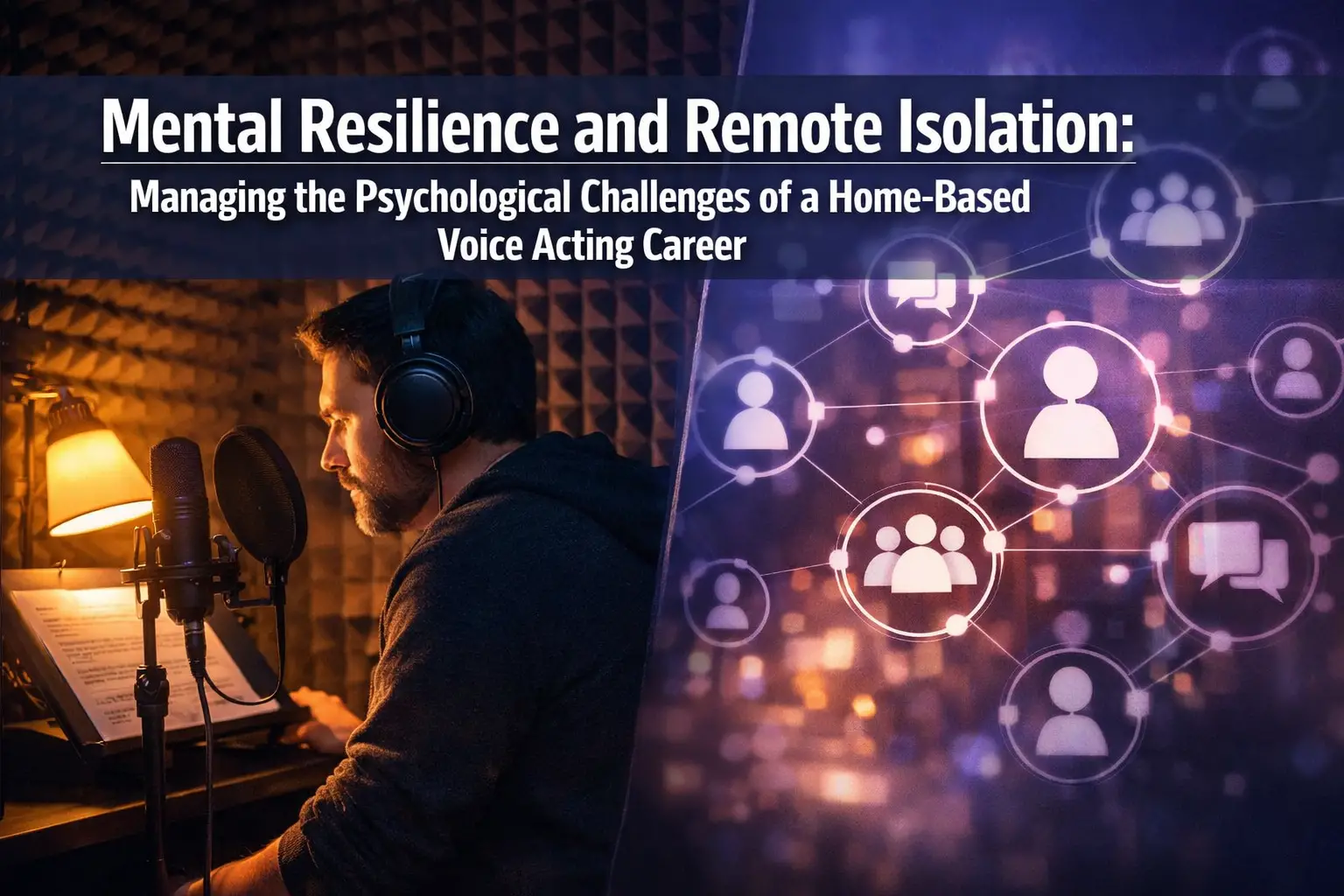
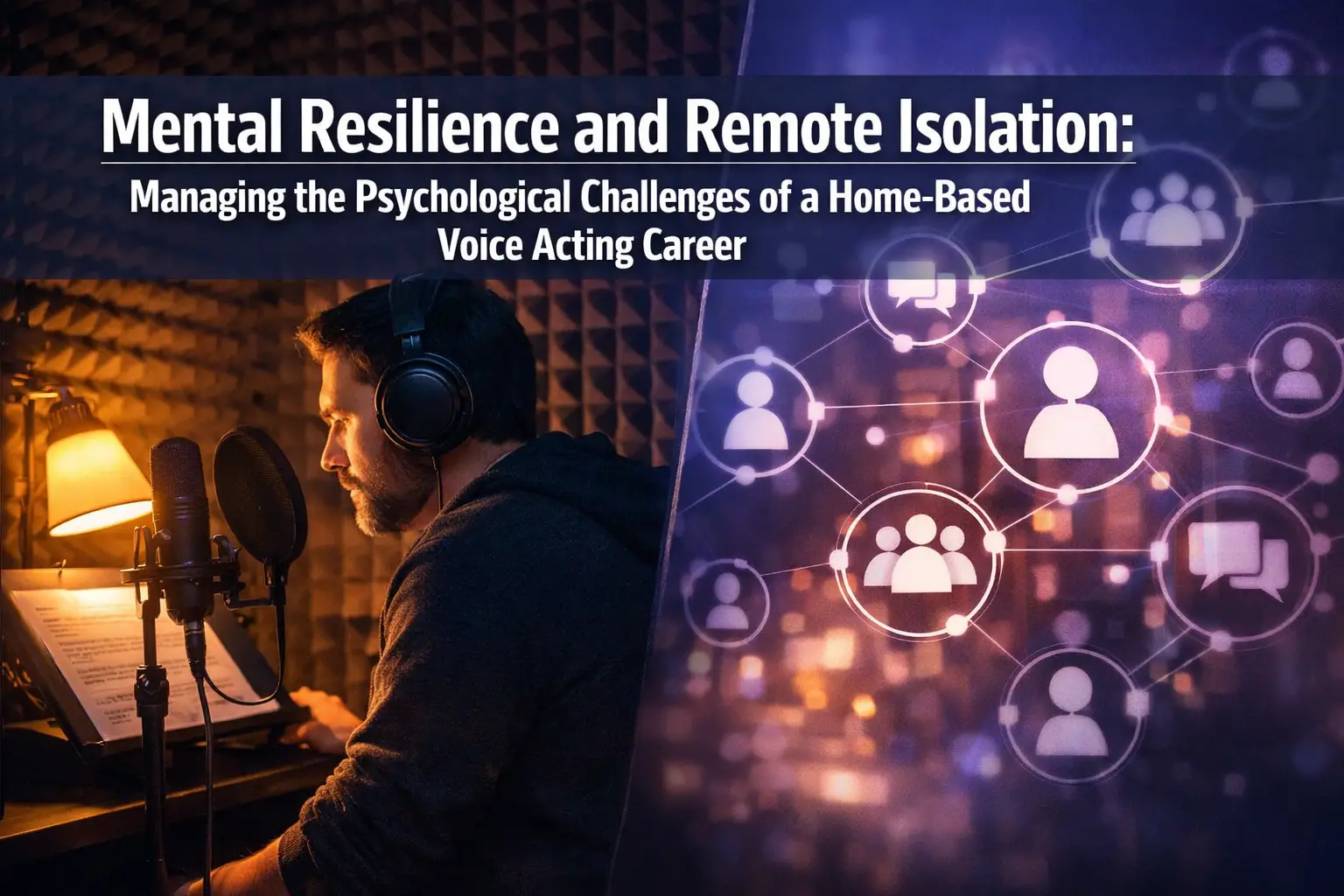
Picture this: It’s 3 PM on a Tuesday, and you’re sitting in your home studio—a converted closet lined with acoustic foam—recording your fifth audition of the day. The silence between takes is deafening. Your phone hasn’t buzzed with a text from another human in hours. You haven’t left the house in two days. Welcome to the reality of modern voice acting, where the dream of working from home can sometimes feel more like solitary confinement than creative freedom.
Mental Resilience and Remote Isolation: Managing the Psychological Challenges of a Home-Based Voice Acting Career has become one of the most critical—yet often overlooked—aspects of succeeding in this industry. As someone who’s spent three decades navigating the entertainment world, I’ve watched voice acting transform from a studio-based profession to a predominantly home-based career. While this shift offers incredible flexibility and opportunity, it also presents unique psychological challenges that can derail even the most talented performers if left unaddressed.
Remote work has become the norm in voice acting, with voice actors increasingly operating home studios rather than visiting traditional recording facilities[2]. In 2026, this trend shows no signs of reversing. But here’s what the industry doesn’t always talk about: the mental toll of working in isolation, the challenge of maintaining motivation without external structure, and the very real risk of burnout when your bedroom doubles as your workplace.
Key Takeaways
- Isolation is a documented challenge: Over 28% of remote workers report they “don’t get out enough,” and more than 40% of hybrid workers feel less connected to colleagues[1]—challenges that voice actors face in amplified form
- Mental health strategies are non-negotiable: Building sustainable routines, establishing boundaries, and prioritizing psychological well-being are essential skills for long-term career success
- Community connection combats isolation: Intentional relationship-building with other voice actors, accountability partners, and industry peers provides crucial support systems
- Professional visibility requires proactive effort: 16% of remote workers worry about being “invisible” to decision-makers[1]—voice actors must actively maintain industry presence despite working from home
- Resilience is a skill, not a trait: Mental toughness can be developed through specific practices, self-awareness, and ongoing adjustment to the unique demands of home-based creative work
Understanding the Unique Psychological Landscape of Home-Based Voice Acting
Let me be straight with you: Mental Resilience and Remote Isolation: Managing the Psychological Challenges of a Home-Based Voice Acting Career isn’t just about feeling a little lonely sometimes. It’s about confronting a fundamentally different work environment that challenges our basic human needs for connection, structure, and validation.
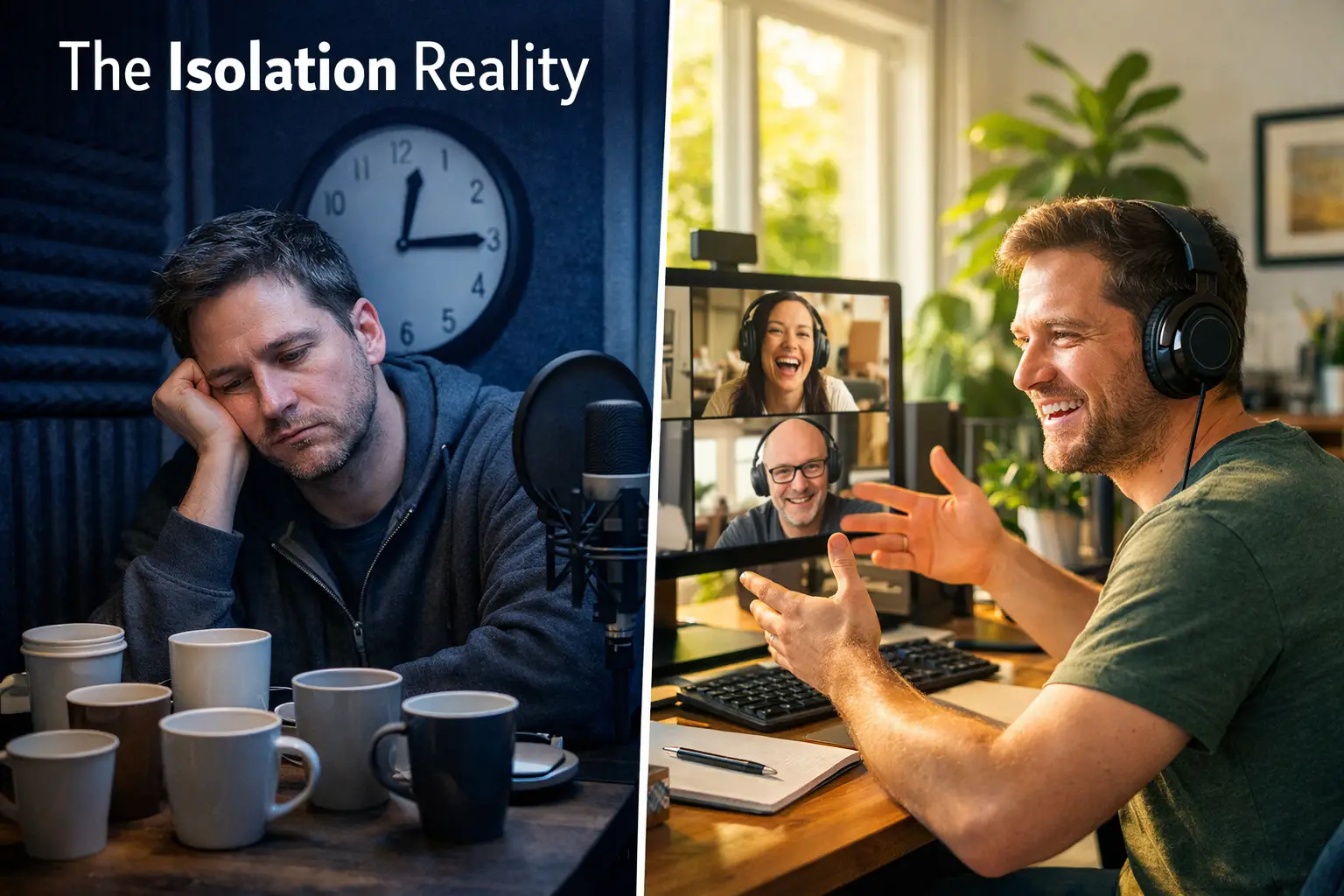
The Isolation Reality
When I started in this business thirty years ago, voice work meant showing up at a studio. You’d chat with the engineer, maybe run into other actors in the lobby, grab coffee with your agent afterward. These weren’t just social niceties—they were psychological anchors that reminded you that you were part of a larger creative community.
Today’s voice actors work differently. Research shows that 28% of remote workers report they “don’t get out enough”[1], and for voice actors, this percentage is likely even higher. Your commute is ten steps from your bedroom to your booth. Your “colleagues” are digital waveforms on a screen. Your feedback comes through emails and revision requests, not face-to-face conversations.
This isolation isn’t just uncomfortable—it’s psychologically challenging in specific ways:
- Lack of immediate validation: Without a director nodding appreciatively or an engineer giving you a thumbs-up, you’re left guessing whether your performance hit the mark
- Reduced creative collaboration: The spontaneous brainstorming and energy exchange that happens in shared spaces simply doesn’t translate to solo work
- Absence of social rituals: No water cooler conversations, no lunch breaks with peers, no casual encounters that build professional relationships
- Blurred work-life boundaries: When your studio is in your home, you’re never truly “away” from work
The Visibility Paradox
Here’s something that keeps many home-based voice actors up at night: the fear of being forgotten. Data shows that 16% of remote workers worry about being “invisible” to managers or decision-makers[1]. For voice actors, this translates into anxiety about being overlooked for opportunities, losing connections with casting directors, or simply fading from the industry’s collective memory.
Think about it like this: When you’re not physically present in studios, you’re not having those casual conversations that lead to referrals. You’re not bumping into producers who remember your face when they’re casting their next project. You’re competing in a digital marketplace where standing out requires intentional, sustained effort.
The Asynchronous Communication Challenge
Voice acting in 2026 relies heavily on asynchronous communication—you submit auditions into the void, wait for responses, receive feedback (if you’re lucky) hours or days later, and rarely have real-time conversations with clients. Research indicates that 18% of remote workers report reduced cross-functional communication challenges[1], but for voice actors, this asynchronous pattern is the default, not the exception.
This creates a unique psychological strain. You’re constantly performing without immediate feedback, making creative decisions in a vacuum, and second-guessing yourself because there’s no one to bounce ideas off in the moment.
Building Mental Resilience Through Sustainable Routines and Boundaries
Now, let’s talk solutions. Mental Resilience and Remote Isolation: Managing the Psychological Challenges of a Home-Based Voice Acting Career requires deliberate strategies, not just willpower. After three decades in this business—including plenty of failures and hard-won lessons—here’s what actually works.
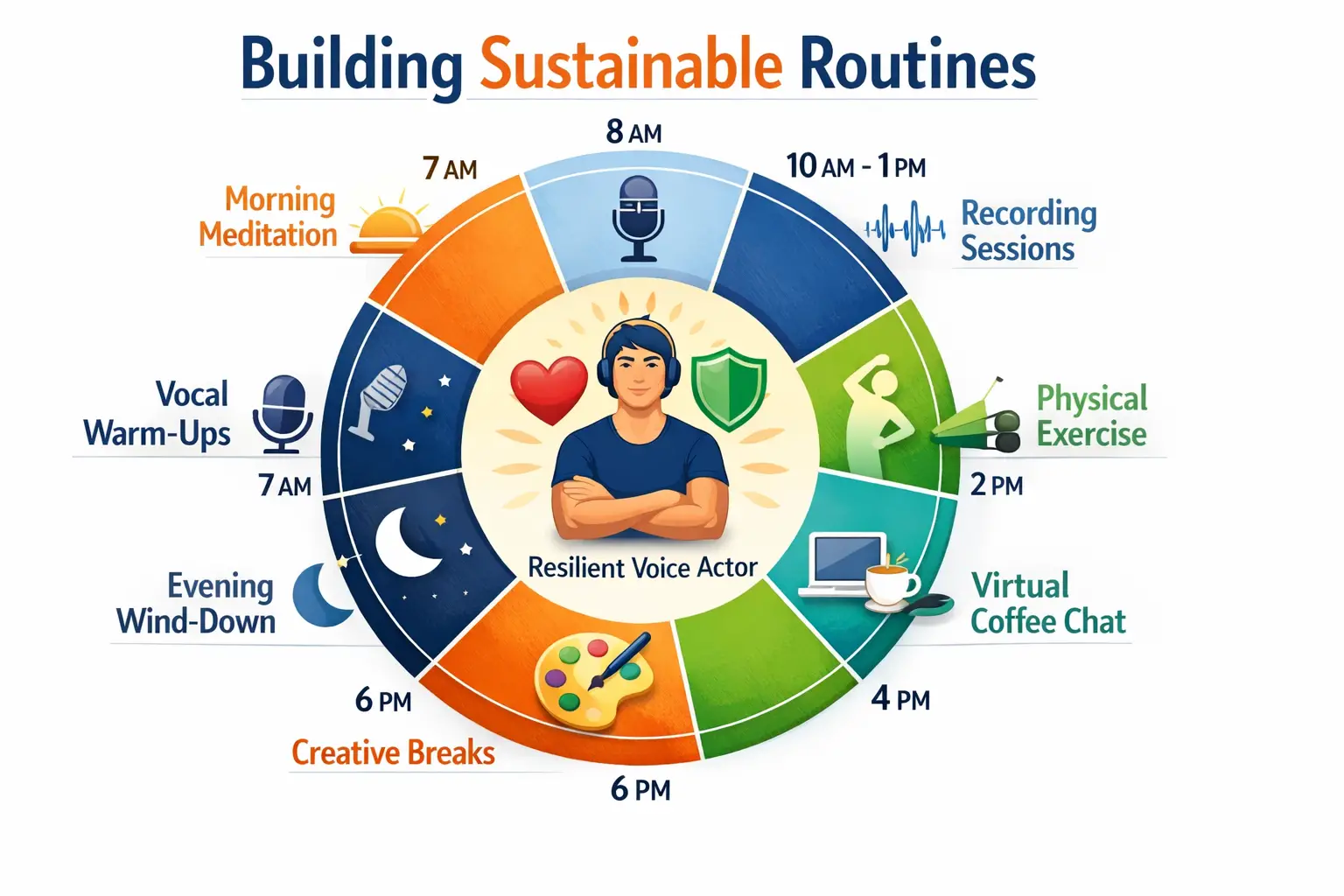
Create Structure Where None Exists
One of the biggest psychological challenges of home-based work is the absence of external structure. No one’s telling you when to start, when to take breaks, or when to call it a day. This freedom is intoxicating at first, but it quickly becomes overwhelming.
Here’s what I recommend:
Morning Rituals That Signal “Work Mode” 🌅
- Get dressed (yes, actually dressed—not just changing from pajamas to sweatpants)
- Create a “commute” ritual, even if it’s just a walk around the block before entering your studio
- Review your daily intentions and goals before touching any equipment
- Do vocal warm-ups at the same time each day to establish rhythm
Time-Blocking for Different Activities ⏰
- 9-11 AM: Auditions and new recordings (when your voice and energy are freshest)
- 11 AM-12 PM: Administrative work (emails, invoicing, marketing)
- 12-1 PM: Actual lunch break away from your workspace
- 1-3 PM: Client revisions and technical work
- 3-4 PM: Professional development (training, script practice, industry research)
- After 4 PM: Studio is closed (seriously, close the door)
Weekly Patterns That Create Predictability
- Monday: Planning and goal-setting for the week
- Wednesday: Mid-week check-in and adjustment
- Friday: Week review and celebration of wins (yes, even small ones)
Establish Non-Negotiable Boundaries
Here’s a hard truth I learned the painful way: if you don’t set boundaries, your home-based career will consume your entire life. Your studio is always there, always available, always whispering that you should be doing “just one more audition.”
Physical Boundaries 🚪
- Designate a specific workspace that you can physically leave
- Install a door (even a curtain works) that you can close
- Create a shutdown ritual—turn off equipment, close the door, literally walk away
- If possible, avoid working in your bedroom (sleep hygiene matters for mental health)
Temporal Boundaries ⏱️
- Set specific work hours and communicate them to clients
- Turn off work-related notifications after hours
- Schedule “office closed” days for rest and recovery
- Resist the urge to check audition results or emails before bed
Emotional Boundaries 💭
- Separate your self-worth from individual audition results
- Create mental distance between “you the person” and “you the voice actor”
- Practice rejection resilience (more on this below)
- Give yourself permission to have “off” days without guilt
Develop Rejection Resilience
Let’s address the elephant in the booth: voice acting involves massive amounts of rejection. You might audition for 50 roles and book one. In a traditional workplace, you’d have colleagues to commiserate with. At home, you’re processing this rejection alone, which amplifies its psychological impact.
Reframe Rejection as Data, Not Judgment 📊
Create a simple tracking system:
| Month | Auditions Submitted | Callbacks | Bookings | Conversion Rate |
|---|---|---|---|---|
| January | 45 | 8 | 2 | 4.4% |
| February | 52 | 12 | 3 | 5.8% |
| March | 48 | 10 | 4 | 8.3% |
When you see rejection as a numbers game rather than personal failure, it loses some of its sting. An 8% booking rate isn’t “92% rejection”—it’s “consistent professional performance.”
Build a Rejection Recovery Ritual 🔄
- Acknowledge the disappointment (don’t suppress it)
- Spend exactly 5 minutes feeling whatever you feel
- Do something physical (stretch, walk, dance)
- Review something you’re proud of (a great recent booking, positive client feedback)
- Move to the next audition or task
Prioritize Physical Health as Mental Health
Your body and mind aren’t separate systems—they’re intimately connected. The sedentary nature of voice acting, combined with isolation, creates a perfect storm for both physical and mental decline.
Movement Breaks 🏃♀️
- Set a timer for every 45 minutes of studio work
- Stand, stretch, walk around for 5-10 minutes
- Do vocal and physical warm-ups between sessions
- Consider a standing desk or balance board for variety
Nutrition and Hydration 🥗
- Keep water at your desk (vocal health and mental clarity)
- Prepare meals in advance to avoid decision fatigue
- Avoid working through lunch (your brain needs breaks)
- Limit caffeine dependency (it amplifies anxiety)
Sleep Hygiene 😴
- Maintain consistent sleep schedule (even on weekends)
- Avoid screens one hour before bed
- Keep your bedroom separate from work if possible
- Prioritize 7-9 hours of quality sleep
Community Connection: The Antidote to Remote Isolation in Voice Acting
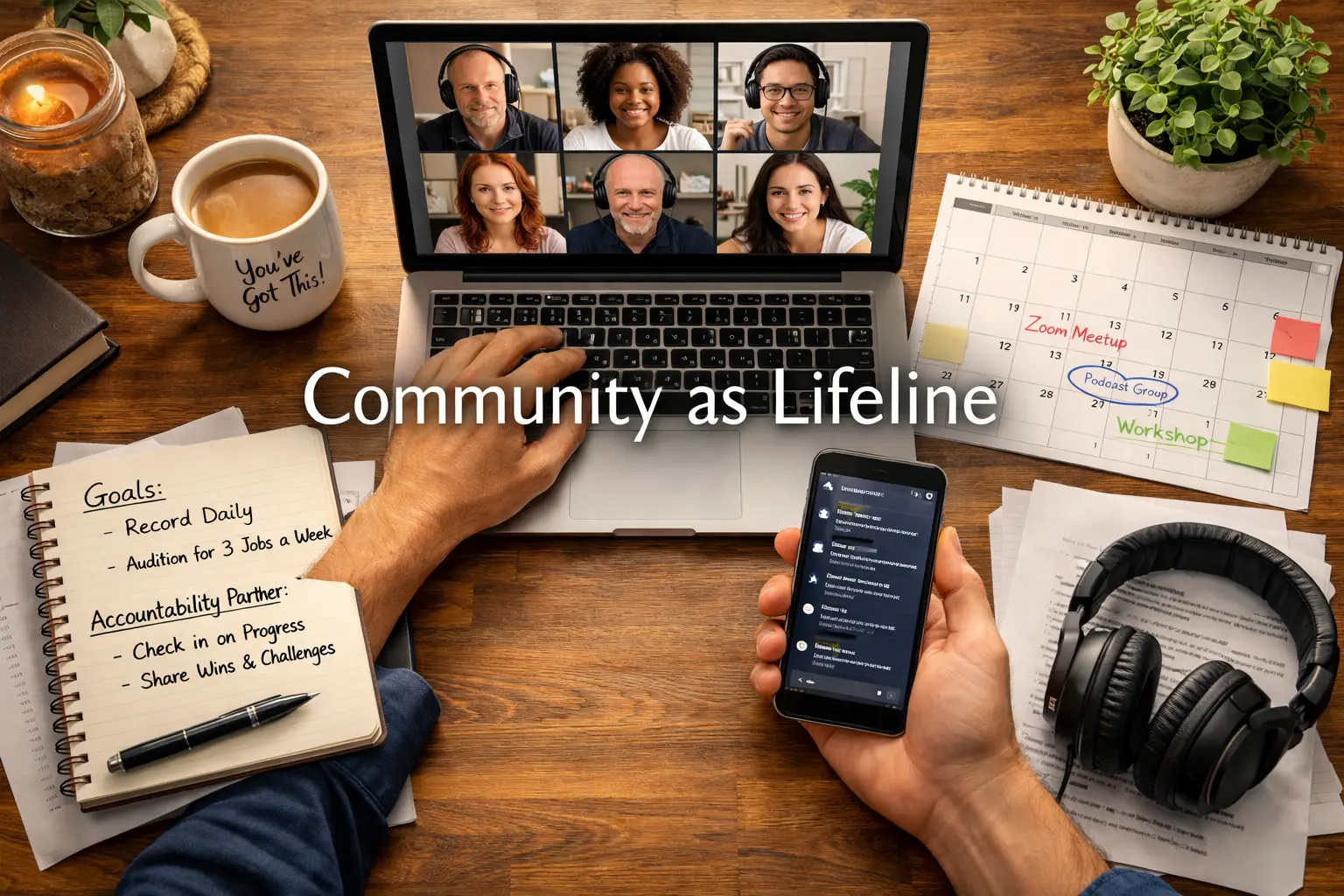
Here’s something I wish someone had told me earlier in my career: Mental Resilience and Remote Isolation: Managing the Psychological Challenges of a Home-Based Voice Acting Career cannot be solved alone. Trying to tough it out in isolation is like trying to fill your own cup from an empty well—it simply doesn’t work.
Despite the challenges, research shows that a significant percentage of professionals report that remote work is better for their mental well-being[1], suggesting that with the right strategies, voice actors can thrive in home-based environments. The key is intentional community building.
Create Your Voice Actor Support Network
The demand for authentic human voice talent remains strong, with over 50% of companies planning to use real human voice actors for brand marketing in 2025[2]. This means there’s a thriving community of professionals facing the same challenges you are. Your job is to find them and build genuine connections.
Online Communities That Actually Work 💻
- Join voice acting Discord servers or Slack channels with active daily engagement
- Participate in Facebook groups focused on specific niches (audiobook narrators, commercial VO, etc.)
- Engage authentically—don’t just lurk, contribute value and ask questions
- Schedule regular virtual coffee chats with other voice actors (video on, casual conversation)
Accountability Partnerships 🤝
Find 1-3 other voice actors at similar career stages and create structured accountability:
- Weekly check-ins (15-30 minutes each)
- Share goals, challenges, and wins
- Celebrate each other’s successes genuinely
- Provide honest, constructive feedback when requested
In-Person Connections 🎭
Yes, you work from home, but that doesn’t mean you can’t leave it:
- Attend voice acting conferences and workshops (at least 1-2 annually)
- Join local acting or improv classes for creative community
- Organize meetups with voice actors in your area
- Participate in theater or community performances to maintain live performance skills
Professional Visibility Strategies
Remember that 16% of remote workers who worry about being invisible[1]? Don’t be one of them. Proactive visibility is essential.
Social Media Presence 📱
- Share behind-the-scenes content (not just promotional posts)
- Engage with casting directors and producers’ content authentically
- Provide value through tips, insights, or entertainment
- Be consistent but not overwhelming (quality over quantity)
Industry Engagement 🎤
- Comment thoughtfully on industry blogs and podcasts
- Participate in online panels or webinars
- Share your expertise through guest posts or interviews
- Maintain relationships with agents, casting directors, and producers through periodic check-ins
Collaborative Projects 🎨
- Participate in collaborative audio dramas or podcasts
- Offer to mentor newer voice actors
- Create content with other voice professionals
- Join or create mastermind groups for mutual growth
The Power of Non-Industry Relationships
Here’s something crucial that’s easy to overlook: you need relationships outside the voice acting world. When your entire social circle is industry-focused, every conversation becomes about work, competition, and comparison.
Maintain “Normal” Friendships 👥
- Schedule regular time with friends who have nothing to do with entertainment
- Join clubs or groups based on hobbies (book clubs, sports, gaming, crafts)
- Volunteer in your community for perspective and connection
- Cultivate relationships that remind you that you’re more than your career
Practical Mental Health Strategies for Long-Term Career Success
Let’s get tactical. Mental Resilience and Remote Isolation: Managing the Psychological Challenges of a Home-Based Voice Acting Career requires specific, actionable mental health practices that you can implement starting today.
Mindfulness and Mental Reset Practices
Voice acting requires intense focus and emotional availability. Without mental reset practices, you’ll burn out faster than a cheap microphone.
Daily Mindfulness Practices 🧘♂️
- Morning meditation (even 5 minutes): Set intentions, clear mental clutter, prepare for creative work
- Breathing exercises between sessions: Box breathing (4-4-4-4) to reset nervous system
- Body scan before recording: Release physical tension that affects vocal performance
- Evening reflection: Journal about wins, challenges, and lessons learned
Emotional Regulation Techniques 🎭
As actors, we’re trained to access emotions on demand. But we also need to release them:
- Practice emotional “shaking off” after intense character work
- Use visualization to compartmentalize work stress
- Develop a “neutral state” you can return to between performances
- Seek therapy or counseling when needed (this is professional development, not weakness)
Combat Decision Fatigue
Home-based work involves countless micro-decisions that drain mental energy: What should I wear? When should I eat? Which audition should I do first? Should I take a break now or later?
Reduce Daily Decisions 🤔
- Create a “uniform” for work days (simplify wardrobe choices)
- Meal prep on weekends (eliminate daily food decisions)
- Establish default routines (same wake time, same warm-up sequence)
- Use templates for common tasks (email responses, audition organization)
Prioritization Systems ✅
Use simple frameworks to avoid decision paralysis:
- Eisenhower Matrix: Urgent/Important, Important/Not Urgent, Urgent/Not Important, Neither
- Three Daily Priorities: Identify your top three tasks each morning
- Time-Boxing: Assign specific time blocks to specific activities
- “Hell Yes or No” Rule: For new opportunities, if it’s not a “hell yes,” it’s a “no”
Manage Comparison and Imposter Syndrome
Social media has created a highlight reel culture where everyone appears to be booking more work, earning more money, and living better lives than you. This comparison trap is poison for mental health.
Reality Check Practices 👁️
- Remember that social media shows curated successes, not daily struggles
- Unfollow or mute accounts that trigger comparison anxiety
- Focus on your own progress, not others’ achievements
- Celebrate small wins consistently (booked an audition? That’s worth acknowledging!)
Imposter Syndrome Combat 💪
Even after 30 years, I still sometimes feel like I don’t belong. Here’s what helps:
- Keep a “wins folder” of positive feedback, great performances, and client praise
- Review your journey objectively—you’ve earned your place through work and growth
- Recognize that feeling like an imposter often means you’re challenging yourself (that’s good!)
- Talk about these feelings with trusted peers (you’ll discover you’re not alone)
Know When to Seek Professional Help
There’s a difference between normal career stress and clinical mental health concerns. Please understand this: seeking professional mental health support is not weakness—it’s professional excellence.
Warning Signs to Watch For ⚠️
- Persistent feelings of hopelessness or despair lasting more than two weeks
- Loss of interest in voice acting or other activities you previously enjoyed
- Significant changes in sleep patterns or appetite
- Difficulty concentrating or making decisions
- Physical symptoms (headaches, digestive issues, chronic fatigue)
- Thoughts of self-harm or suicide
Resources Available 🆘
- Licensed therapists specializing in creative professionals or performers
- Online therapy platforms (BetterHelp, Talkspace) for convenience
- Performers’ mental health organizations and hotlines
- Health insurance often covers mental health services
- Sliding scale therapy options for budget constraints
Creating a Sustainable, Fulfilling Home-Based Voice Acting Career
Let’s bring this all together. The voice acting landscape in 2026 offers unprecedented opportunities. You can work with clients worldwide, build a thriving career from anywhere, and enjoy flexibility that previous generations of performers could only dream about.
But these opportunities come with real psychological challenges. The isolation is real. The lack of structure is real. The mental health risks are real.
The good news? Mental Resilience and Remote Isolation: Managing the Psychological Challenges of a Home-Based Voice Acting Career are completely manageable when you approach them with intention, strategy, and self-compassion.
Your Action Plan for Mental Resilience
Here’s what I want you to do this week—not eventually, not when you have time, but this week:
Immediate Actions (This Week) 📝
- Establish one non-negotiable boundary: Choose one thing (work hours, studio closure time, no-work weekends) and commit to it
- Schedule one social connection: Reach out to one other voice actor for a virtual coffee chat
- Create a shutdown ritual: Design a 5-10 minute routine that signals the end of your workday
- Start a wins journal: Each day, write down one thing that went well, no matter how small
Short-Term Goals (This Month) 📅
- Build your support network: Join at least one active online voice acting community
- Establish daily routines: Create morning and evening rituals that bookend your workday
- Implement movement breaks: Set up a system (timer, app) to ensure regular physical activity
- Assess your workspace: Make one improvement to your studio environment for mental health
Long-Term Commitments (This Year) 🎯
- Develop accountability partnerships: Find 1-3 peers for regular check-ins
- Attend in-person events: Register for at least one conference or workshop
- Prioritize professional development: Invest in both craft training and mental health resources
- Build sustainable practices: Create systems that support long-term career health, not just short-term productivity
Remember: You’re Not Alone
I’ve been in this business for three decades, and I can tell you with absolute certainty: every successful voice actor has struggled with the psychological challenges of this career. The ones who thrive aren’t the ones who never experience isolation, self-doubt, or burnout—they’re the ones who develop strategies to manage these challenges effectively.
You’re reading this article because you care about building a sustainable career. That self-awareness is already a competitive advantage. Most people ignore mental health until they’re in crisis. You’re being proactive, which means you’re already ahead of the curve.
The home studio revolution has democratized voice acting in beautiful ways. More people than ever can pursue this career. But it’s also created new challenges that require new solutions. Mental Resilience and Remote Isolation: Managing the Psychological Challenges of a Home-Based Voice Acting Career isn’t about eliminating these challenges—it’s about developing the skills, systems, and support networks to navigate them successfully.
Conclusion
The reality of voice acting in 2026 is this: remote work is the norm, isolation is a genuine challenge, and mental health strategies are non-negotiable for long-term success. But with intentional practices, community connection, and sustainable routines, you can build not just a successful career, but a fulfilling one.
Your talent got you into this business. Your mental resilience will keep you here.
Start small. Pick one strategy from this article and implement it today. Then build from there. Create structure where none exists. Establish boundaries that protect your well-being. Connect with other voice actors who understand your challenges. Prioritize your mental health as seriously as you prioritize your vocal health.
And remember: asking for help isn’t weakness. Building community isn’t optional. Taking care of your mental health isn’t indulgent. These are professional skills that separate sustainable careers from burnout stories.
You’ve got this. And you don’t have to do it alone.
Now close this article, step away from your computer, and go do something that reminds you that you’re a whole person, not just a voice in a booth. Your career—and your mental health—will thank you.
References
[1] Remote Work Statistics – https://archieapp.co/blog/remote-work-statistics/
[2] Voice Acting In 2025 2026 Trends Insights And The Future – https://www.gravyforthebrain.com/voice-acting-in-2025-2026-trends-insights-and-the-future/