


The voice acting industry is experiencing a profound transformation. For decades, the same voices dominated commercials, animations, video games, and audiobooks—often lacking the cultural, linguistic, and demographic diversity of the audiences they addressed. In 2026, that narrative is changing. Diversity in Voice Acting: Opportunities for Underrepresented Voices in 2026 represents not just a moral imperative but a strategic business priority, as brands actively seek gender-diverse, ethnically diverse, and age-diverse voices to authentically connect with global audiences.
This shift creates unprecedented opportunities for voice actors who have historically been excluded from mainstream work. From multilingual content creators to performers bringing authentic cultural perspectives, the demand for diverse talent has never been stronger. Understanding these opportunities—and how to capitalize on them—can open doors for emerging voices ready to make their mark in this evolving industry.
Key Takeaways
✅ Market demand is strong: More than half of companies plan to use real human voice actors, with 58% actively working with or planning to work with non-English voice talent[1]
✅ Cultural authenticity matters: Brands now prioritize voices with lived experience and cultural nuance, not just language proficiency, creating advantages for underrepresented performers[1]
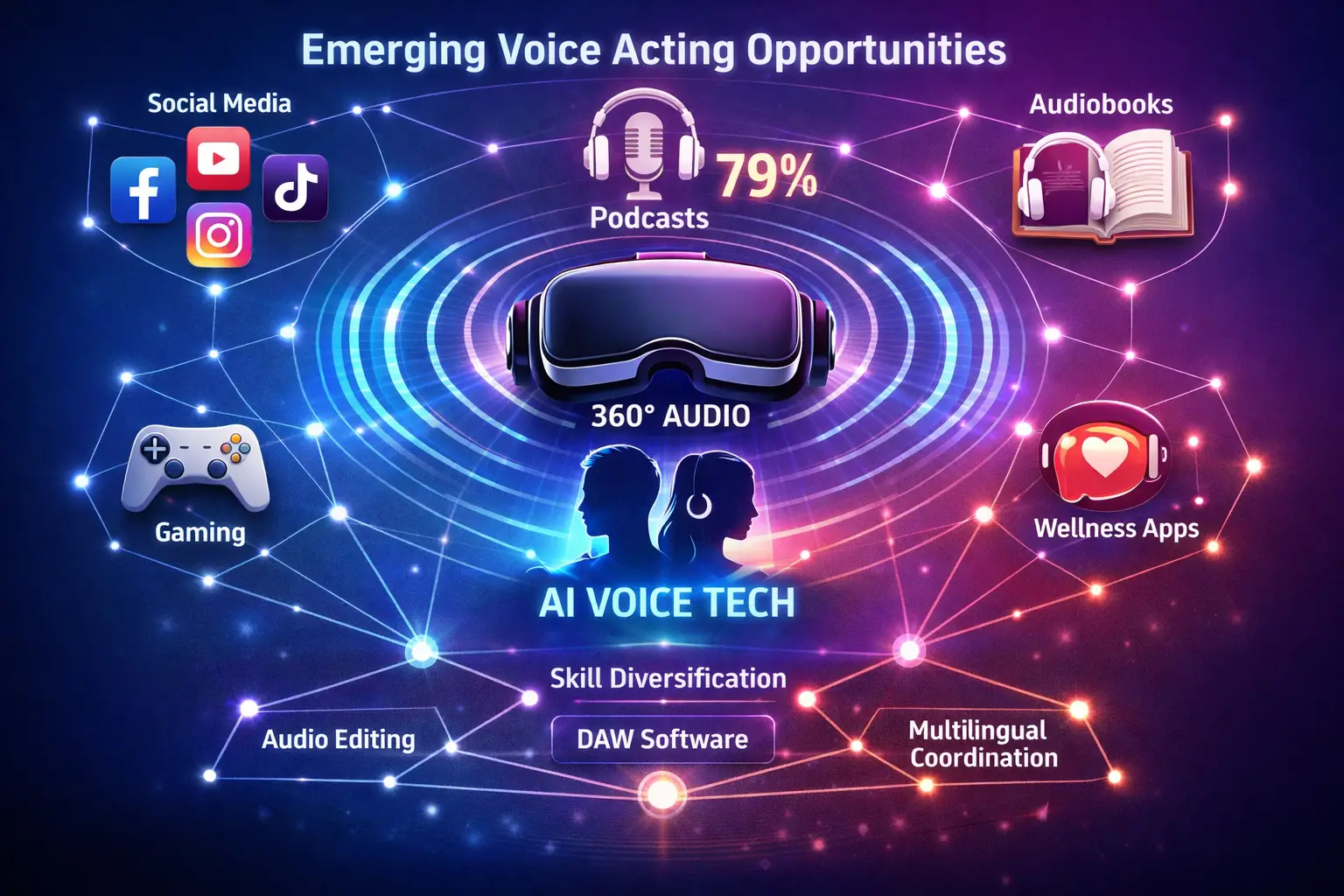
✅ Technology creates new opportunities: VR, AR, AI voice development, and interactive media are expanding roles for diverse voice talent rather than replacing them[1][4]
✅ Multilingual capabilities are valuable: Spanish, French, Chinese, and Hindi represent priority growth languages with expanding opportunities for native speakers[1]
✅ Skills beyond performance matter: Voice actors who understand audio editing, DAWs, and project coordination gain competitive advantages in 2026’s marketplace[1]
Understanding the Current Landscape of Diversity and Inclusion in Voice Acting

The Business Case for Diverse Voices
The voice acting industry in 2026 operates at the intersection of artistic expression and commercial strategy. Brands recognize that authentic representation drives consumer engagement, builds trust, and expands market reach. This understanding has transformed diversity from a checkbox exercise into a competitive necessity.
According to recent industry research, more than half of surveyed companies planned to use real human voice actors for brand marketing, with 58% of buyers having worked with or planning to work with non-English voice acting talent[1]. This sustained commitment to linguistic and cultural diversity reflects a fundamental shift in how businesses approach audience connection.
The emphasis extends beyond language alone. In 2026, brands and businesses are adopting more gender-diverse, ethnically diverse, and age-diversevoices across marketing and customer experiences, with this focus expected to extend across video, TV, radio, and audio description work[2]. This represents a departure from the narrow casting patterns that previously dominated the industry.
What Diversity Means in Voice Acting Today
Diversity in voice acting encompasses multiple dimensions:
- 🌍 Linguistic diversity: Native speakers of languages beyond English, including regional dialects and variations
- 🎭 Cultural authenticity: Performers with lived experience in the communities they represent
- 👥 Demographic representation: Gender diversity, ethnic diversity, age diversity, and disability representation
- 🗣️ Vocal variety: Different vocal qualities, accents, speech patterns, and delivery styles
- 🌐 Geographic diversity: Voices from different regions bringing local knowledge and perspectives
The concept of cultural authenticity has evolved significantly. Brands increasingly seek voices representing a wider range of cultures and dialects to better represent target audiences, where authenticity encompasses “lived experience and cultural nuance” rather than language alone[1]. This shift recognizes that effective communication requires more than technical proficiency—it demands genuine understanding of cultural context.
The DEI Backlash and Its Impact
Despite strong market demand, the path forward isn’t without challenges. A January 2026 analysis notes that the pushback on DEI initiatives “has an impact on minority voiceover talent as it has been a gateway for having our voices heard in the last few years”[3]. This creates uncertainty even as commercial demand for diverse talent continues to grow.
Understanding this tension is crucial for voice actors from underrepresented backgrounds. While some organizations may retreat from explicit DEI commitments, the underlying business drivers—authentic audience connection, global market expansion, and consumer preference for genuine representation—remain powerful forces supporting diverse talent.
Language and Cultural Opportunities in Voice Acting for Underrepresented Voices
The Multilingual Advantage
Language diversity is expanding beyond traditional markets in 2026, creating substantial opportunities for multilingual voice actors. Spanish ranks as the most requested language after English, followed by French, with Chinese and Hindi flagged as priority growth languages[1]. This represents a significant opportunity for voice actors with multilingual capabilities.
The demand extends beyond simple translation. Native speakers are increasingly prioritized in dubbing work specifically because they understand “local idioms and cultural nuances in tone, pace, and delivery”[2]. This expertise cannot be easily replicated by non-native speakers, regardless of their language proficiency.
Priority Language Markets for 2026
| Language | Market Position | Key Opportunities |
|---|---|---|
| Spanish | Most requested after English | Marketing, localization, entertainment dubbing |
| French | Second most requested | Corporate content, Canadian markets, European expansion |
| Chinese | Priority growth language | E-learning, business expansion, entertainment |
| Hindi | Priority growth language | Bollywood dubbing, tech tutorials, global marketing |
| Regional dialects | Emerging demand | Authentic local marketing, cultural content |
Cultural Authenticity as Competitive Advantage
In 2026, cultural authenticity has become a competitive advantage rather than a secondary consideration. Brands recognize that audiences can distinguish between performers who understand cultural context and those who merely perform scripts technically well.
This creates opportunities for voice actors who can bring:
- Lived cultural experience to character performances
- Understanding of cultural references that inform delivery choices
- Authentic pronunciation of names, places, and culturally specific terms
- Tonal awareness of how different cultures communicate respect, humor, or urgency
- Regional knowledge that prevents cultural missteps in localized content
“Authenticity encompasses lived experience and cultural nuance rather than language alone.” — Industry Research[1]
Localization and International Expansion
As businesses expand into new markets—from e-learning platforms targeting bilingual learners to global marketing campaigns requiring regional variations—demand for localized, culturally authentic content is described as “only set to grow in the coming year”[2].
This international localization investment creates opportunities across multiple sectors:
- 📚 E-learning platforms requiring culturally appropriate educational content
- 🎮 Gaming localization for global releases
- 🎬 Entertainment dubbing for streaming platforms
- 💼 Corporate training for multinational organizations
- 🛍️ Marketing campaigns tailored to regional audiences
Emerging Technologies and New Opportunities for Diverse Voice Talent in 2026
AI Voice Technology: Opportunity, Not Threat
Contrary to fears that artificial intelligence would eliminate voice acting jobs, AI voice technology in 2026 is creating new opportunities for underrepresented talent. The key lies in understanding how AI voices are developed and what business leaders value.
According to recent research, 79% of business leaders say it’s important that AI voices come from real voice actors, and 78% rate emotional expressiveness as critical—a quality only trained talent can deliver consistently[4]. This positions underrepresented voice actors as essential to emerging AI voice technology rather than competitors to it.
The AI voice development process requires:
- Original voice recordings from diverse performers to create authentic AI voice models
- Emotional range samples demonstrating nuanced performance capabilities
- Cultural authenticity in base recordings to ensure AI outputs sound genuine
- Ongoing updates as language and cultural expressions evolve
- Quality control from human performers reviewing AI-generated content
The Value of Voice Exclusivity
Business leaders prioritize voice exclusivity for brand identity, with 77% of business leaders valuing exclusive voice licensing to stand out in a crowded AI landscape[4]. This creates opportunities for distinctive voices to command premium positioning.
For underrepresented voice actors, this means:
- 💎 Unique vocal qualities can become valuable brand assets
- 🔒 Exclusive licensing agreements provide stable income streams
- 🎯 Niche positioning based on cultural or linguistic specialization
- 📈 Long-term partnerships with brands seeking consistent representation
Immersive Media and Interactive Content
Emerging technology creates new opportunities beyond traditional voice work. Virtual reality (VR), augmented reality (AR), and immersive media are creating new roles for voice talent in training, entertainment, and wellness applications[1].
Voice actors who can deliver compelling performances in 360-degree environments will be in high demand for:
- 🥽 VR training simulations requiring realistic character interactions
- 🎮 Interactive gaming experiences with branching dialogue options
- 🧘 Wellness and meditation apps featuring diverse guide voices
- 📱 AR marketing experiences blending digital and physical environments
- 🏫 Educational VR content requiring culturally appropriate instructors
Short-Form and Social Content
Beyond traditional gaming and audiobooks, voice work is growing in social media clips, podcast intros, branded explainers, and interactive content—lower barriers to entry for emerging voices[1].
These platforms offer advantages for underrepresented talent:
- ⚡ Faster production cycles allowing more experimentation
- 💰 Lower initial investment required to start working
- 🌟 Direct audience connection building personal brands
- 📊 Portfolio development demonstrating range and capability
- 🔄 Frequent opportunities for consistent work and skill development
Consumer Preference for Human Authenticity
Audiences increasingly respond better to peer-to-peer conversational reads that sound like a “trusted friend or advisor,” with some advertisers explicitly marketing content as “AI-free” to signal commitment to employing real human voice talent[1].
This consumer preference creates sustained demand for:
- Genuine emotional connection that AI struggles to replicate
- Cultural authenticity from performers with lived experience
- Spontaneity and improvisation in performance
- Ethical considerations around representation and employment
- Trust and credibility associated with human performers
Building Skills and Positioning for Success in the Diverse Voice Acting Market
Essential Technical Competencies
Skill diversification is enhancing professional value in 2026. Clients increasingly seek voice actors who understand audio editing, professional digital audio workstations (DAWs), basic sound design, or can coordinate multilingual projects—additional competencies that elevate professional profiles and market competitiveness[1].
Key technical skills for competitive positioning:
- Audio editing proficiency: Understanding of editing software to deliver clean, production-ready files
- DAW knowledge: Familiarity with industry-standard recording platforms
- Home studio setup: Professional recording environment meeting technical specifications
- File management: Proper naming conventions, formats, and delivery protocols
- Basic sound design: Understanding of effects, noise reduction, and audio enhancement
- Remote collaboration tools: Proficiency with directed session platforms and communication software
Developing Cultural Competency
For voice actors from underrepresented backgrounds, cultural competency represents both an inherent advantage and a skill to continuously develop. This includes:
- 📖 Cultural research: Staying informed about community developments, language evolution, and cultural trends
- 🎭 Performance authenticity: Connecting personal experience to character development
- 🗣️ Dialect maintenance: Preserving authentic speech patterns while ensuring clarity
- 🤝 Community connection: Maintaining ties to cultural communities for ongoing learning
- 📚 Historical context: Understanding cultural history that informs contemporary expression
Creating a Competitive Demo Reel
A professional demo reel remains the primary marketing tool for voice actors. For underrepresented talent, the demo reel should strategically highlight:
- Cultural authenticity through appropriate material selection
- Language capabilities demonstrating native fluency and range
- Vocal variety within cultural context
- Professional production quality meeting industry standards
- Targeted content aligned with desired opportunities
Demo reel best practices for 2026:
- ⏱️ Keep total length under 90 seconds for commercial demos
- 🎯 Lead with strongest, most distinctive material
- 🌐 Create separate reels for different languages or specializations
- 🔄 Update regularly to reflect current capabilities and trends
- 💼 Tailor versions for specific market segments
Networking and Community Building
Strategic networking opens doors to opportunities that never reach public job boards. For underrepresented voice actors, community connections provide:
- 🤝 Mentorship opportunities from established professionals
- 📢 Job referrals within cultural and linguistic communities
- 💡 Industry insights about emerging opportunities
- 🛡️ Support networks navigating industry challenges
- 🎓 Skill development through community workshops and resources
Positioning for Premium Opportunities
To command higher rates and secure better projects, voice actors should:
- Specialize strategically: Develop expertise in high-demand niches (medical narration in Spanish, gaming characters with authentic cultural backgrounds, corporate training in Mandarin)
- Build a professional brand: Establish online presence showcasing cultural expertise and professional capabilities
- Demonstrate business acumen: Understand licensing, usage rights, and industry standard rates
- Invest in ongoing training: Continuous skill development in both performance and technical areas
- Document success: Collect testimonials, case studies, and metrics demonstrating value delivered
Navigating Challenges and Maximizing Opportunities
Addressing the DEI Backlash
The current uncertainty around DEI initiatives requires strategic navigation. Voice actors from underrepresented backgrounds can:
- Focus on business value: Emphasize authentic audience connection and market expansion benefits
- Build direct client relationships: Reduce dependence on intermediaries who may retreat from diversity commitments
- Diversify income streams: Develop multiple revenue sources across different market segments
- Document results: Collect data on campaign performance, audience response, and business outcomes
- Connect with committed partners: Identify and prioritize relationships with organizations maintaining diversity commitments
Overcoming Barriers to Entry
Common challenges for underrepresented voice actors include:
Challenge: Limited industry connections
- Solution: Join professional organizations like NAVA (National Association of Voice Actors), attend virtual networking events, engage in online communities
Challenge: Financial barriers to training and equipment
- Solution: Start with affordable USB microphones, utilize free training resources, seek scholarships and grants for professional development
Challenge: Lack of representation in decision-making roles
- Solution: Support and seek out diverse casting directors, producers, and content creators; build relationships with companies committed to authentic representation
Challenge: Imposter syndrome and confidence issues
- Solution: Connect with peer support groups, work with coaches familiar with underrepresented talent challenges, celebrate small wins and progress
Leveraging Authentic Representation Trends
Smart positioning strategies for 2026 include:
- 🎯 Target growth sectors: Focus on industries with demonstrated commitment to diversity (streaming platforms, global tech companies, educational publishers)
- 📊 Quantify your value: Understand and articulate the business case for authentic representation
- 🌟 Build thought leadership: Share insights about cultural authenticity, language trends, and representation through blogs, social media, and industry publications
- 🤝 Collaborate strategically: Partner with other diverse talent for projects requiring multiple perspectives
- 📈 Track industry trends: Stay informed about market developments, emerging opportunities, and shifting priorities
Creating Sustainable Careers
Long-term success requires:
- Financial planning: Understanding irregular income patterns and building financial stability
- Health considerations: Protecting vocal health through proper technique and rest
- Business infrastructure: Establishing professional systems for invoicing, contracts, and client management
- Continuous learning: Staying current with technology, trends, and industry developments
- Work-life balance: Maintaining boundaries and preventing burnout in a competitive industry
The Future of Diversity and Inclusion in Voice Acting: Opportunities for Underrepresented Voices in 2026 and Beyond
Sustained Market Drivers
The forces supporting diversity in voice acting extend beyond temporary trends. Fundamental market drivers ensuring continued opportunities include:
- 🌍 Globalization: Businesses expanding into new markets requiring authentic local voices
- 👥 Demographic shifts: Changing consumer populations demanding representative content
- 💻 Technology democratization: Lower barriers to content creation increasing demand for voice talent
- 📱 Content proliferation: Exponential growth in audio and video content across platforms
- 🎯 Personalization trends: Brands seeking distinctive voices that connect with specific audiences
Emerging Opportunity Areas
High-growth sectors for diverse voice talent in 2026 and beyond:
- AI voice development: Contributing voice samples for next-generation AI systems
- Wellness and mental health apps: Providing calming, culturally appropriate guidance
- Educational technology: Creating engaging learning experiences for diverse student populations
- Corporate diversity training: Voicing scenarios and characters for workplace education
- Accessibility services: Providing audio description and accessible content for disability communities
- Podcast production: Hosting and narrating content for niche cultural audiences
- Gaming localization: Bringing authentic cultural perspectives to global game releases
Skills for Future Success
Preparing for continued evolution requires developing:
- 🎤 Performance versatility: Ability to work across multiple formats and styles
- 💻 Technical adaptability: Comfort with emerging recording and collaboration technologies
- 🌐 Cultural fluency: Deep understanding of multiple cultural contexts
- 📊 Business intelligence: Understanding market trends and positioning strategically
- 🤝 Collaboration skills: Working effectively with diverse creative teams
- 🎓 Learning agility: Quickly adapting to new formats, platforms, and opportunities
Conclusion: Taking Action on Diversity and Inclusion in Voice Acting Opportunities

The landscape of Diversity and Inclusion in Voice Acting: Opportunities for Underrepresented Voices in 2026 presents both unprecedented opportunities and ongoing challenges. The business case for authentic representation has never been stronger, with more than half of companies committed to using real human voice actors and 58% actively working with non-English talent[1]. Cultural authenticity, multilingual capabilities, and diverse perspectives have evolved from nice-to-have attributes to competitive necessities.
For voice actors from underrepresented backgrounds, success requires strategic positioning at the intersection of authentic cultural knowledge and professional excellence. The demand exists—brands actively seek gender-diverse, ethnically diverse, and age-diverse voices to connect with global audiences. The technology landscape, rather than threatening human voice actors, creates new opportunities for those who can deliver the emotional expressiveness and cultural authenticity that AI cannot replicate.
Actionable Next Steps
For aspiring voice actors from underrepresented backgrounds:
- ✅ Assess your unique value proposition: Identify your linguistic, cultural, and vocal strengths that differentiate you in the marketplace
- ✅ Invest in foundational skills: Develop both performance capabilities and technical competencies (audio editing, DAW proficiency, home studio setup)
- ✅ Create a professional demo reel: Showcase your range and cultural authenticity with production-quality samples
- ✅ Build strategic networks: Connect with professional organizations, cultural communities, and industry professionals
- ✅ Target growth opportunities: Focus on high-demand languages (Spanish, French, Chinese, Hindi) and emerging platforms (VR, AR, interactive content)
- ✅ Stay informed: Monitor industry trends, market developments, and opportunities through professional resources
- ✅ Document and share your value: Collect testimonials, track results, and build thought leadership around authentic representation
For industry professionals and decision-makers:
- ✅ Prioritize authentic casting: Match voice talent to characters and content based on lived experience and cultural knowledge
- ✅ Expand talent networks: Actively seek voice actors from underrepresented backgrounds for all projects
- ✅ Support skill development: Provide training, mentorship, and resources to emerging diverse talent
- ✅ Measure representation: Track diversity metrics across projects and identify gaps
- ✅ Maintain commitments: Sustain diversity initiatives despite broader DEI backlash, focusing on business value and audience connection
The future of voice acting belongs to those who can authentically connect with diverse global audiences. For underrepresented voices, 2026 offers a window of opportunity to establish careers, build reputations, and contribute to an industry that increasingly values the perspectives and experiences that only genuine diversity can provide.
The door is open. The demand is real. The time to act is now.
References
[1] Voice Acting In 2025 2026 Trends Insights And The Future – https://www.gravyforthebrain.com/voice-acting-in-2025-2026-trends-insights-and-the-future/
[2] Voice Over Trends For 2026 – https://www.voicecrafters.com/blog/voice-over-trends-for-2026/
[3] The Dei Backlash What It Means For Minority Voiceover Talent – https://danereidmedia.com/2026/01/19/the-dei-backlash-what-it-means-for-minority-voiceover-talent/
[4] Amplified 2026 The State Of Voice Report – https://www.voices.com/blog/amplified-2026-the-state-of-voice-report/