

The theater world is experiencing a revolution. Gone are the days when aspiring actors could follow a single, predictable path from drama school to professional stage. In 2026, young theater creators are changing the game by embracing multiple roles simultaneously—performing on stage while designing costumes, directing while managing social media, and teaching while creating digital content. This shift isn’t just a trend; it’s the new reality of how beginner actors can build sustainable, fulfilling careers in the performing arts.
The concept of “Young Theater Creators Are Changing the Game: How Beginner Actors Can Build a Multi-Hyphenate Career” represents more than just survival tactics in a challenging industry. It reflects a fundamental transformation in how the theater community values diverse skill sets and creative versatility. The industry has shifted away from dismissing young creatives for lack of experience, instead actively utilizing emerging voices who often serve as both actors and technicians, bringing diverse skill sets to productions[1].
For beginner actors entering the field today, understanding this landscape is essential. The traditional career ladder has collapsed, but new opportunities have emerged for those willing to wear multiple hats and develop skills across various creative disciplines.
Key Takeaways
- 🎭 Multi-hyphenate careers are now essential: Theater professionals must develop skills across acting, technical production, digital media, and adjacent creative fields to remain competitive and financially stable
- 📉 Traditional entry-level pathways have disappeared: Paid internships and structured career ladders that existed before 2020 have largely vanished, requiring new strategies for career entry
- 🌐 Cross-industry opportunities are expanding: Young theater creators find work in video games, themed entertainment, fashion, and digital content creation—expanding beyond traditional theater venues
- 💪 Skill flexibility trumps specialization: Success comes from stepping outside comfort zones and pursuing opportunities in adjacent creative fields rather than waiting for traditional theater roles
- 🎯 Non-linear career paths lead to breakthroughs: Unexpected opportunities through digital platforms, teaching, and cross-disciplinary projects often create more career momentum than traditional audition circuits
The Changing Landscape: Why Young Theater Creators Are Changing the Game
The Collapse of Traditional Career Pathways
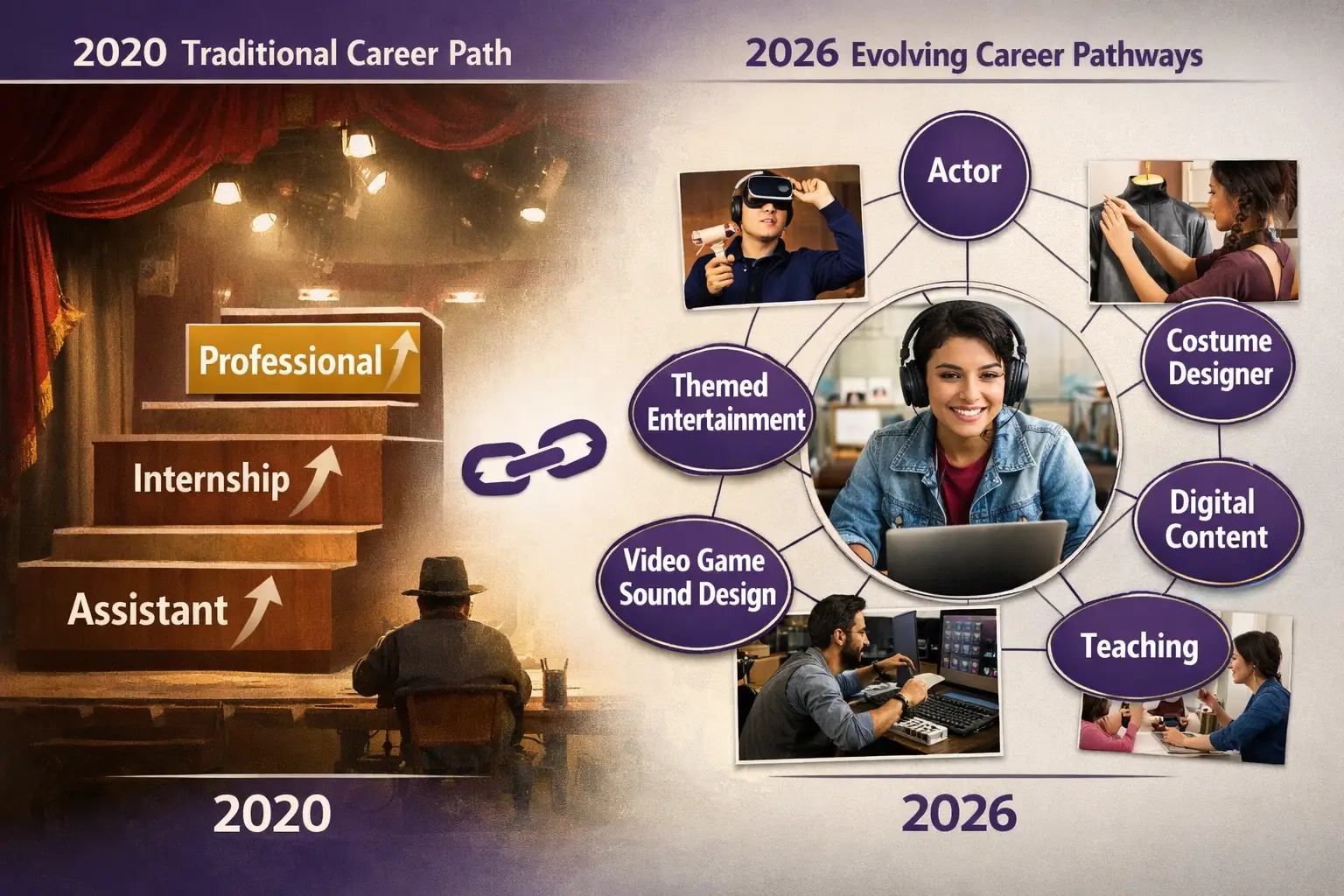
The theater industry of 2026 looks dramatically different from just five years ago. The conventional sequential pathway for building a theater career no longer exists in its traditional form. According to Creative Lives in Progress, which has tracked industry trends over seven years, paid internships and structured entry pathways that existed in 2020-2021 have largely disappeared[2].
This transformation stems from multiple converging factors:
Economic Pressures: Post-Covid funding mechanisms that previously supported emerging talent—including the UK’s Kickstart program and widespread paid internships—have evaporated[2]. Theater companies focused on organizational survival rather than building emerging talent pipelines, leaving an entire generation without structured advancement routes.
Industry Contraction: Some positions that appeared promising to graduating students no longer exist due to industry shrinkage. Theater professionals describe a fundamental shift in “the building blocks of the reality that I understood the theatre ecosystem to be”[4]. Entry-level opportunities have substantially decreased compared to the pre-pandemic era.
Increased Competition: Youth unemployment has risen to its highest level since 2021, intensifying competition for the limited opportunities that remain[2]. Career entry has become increasingly randomized, with success depending heavily on whether specific opportunities that fit an individual’s skill set happen to exist at the right moment[2].
The Rise of the Multi-Hyphenate Theater Professional
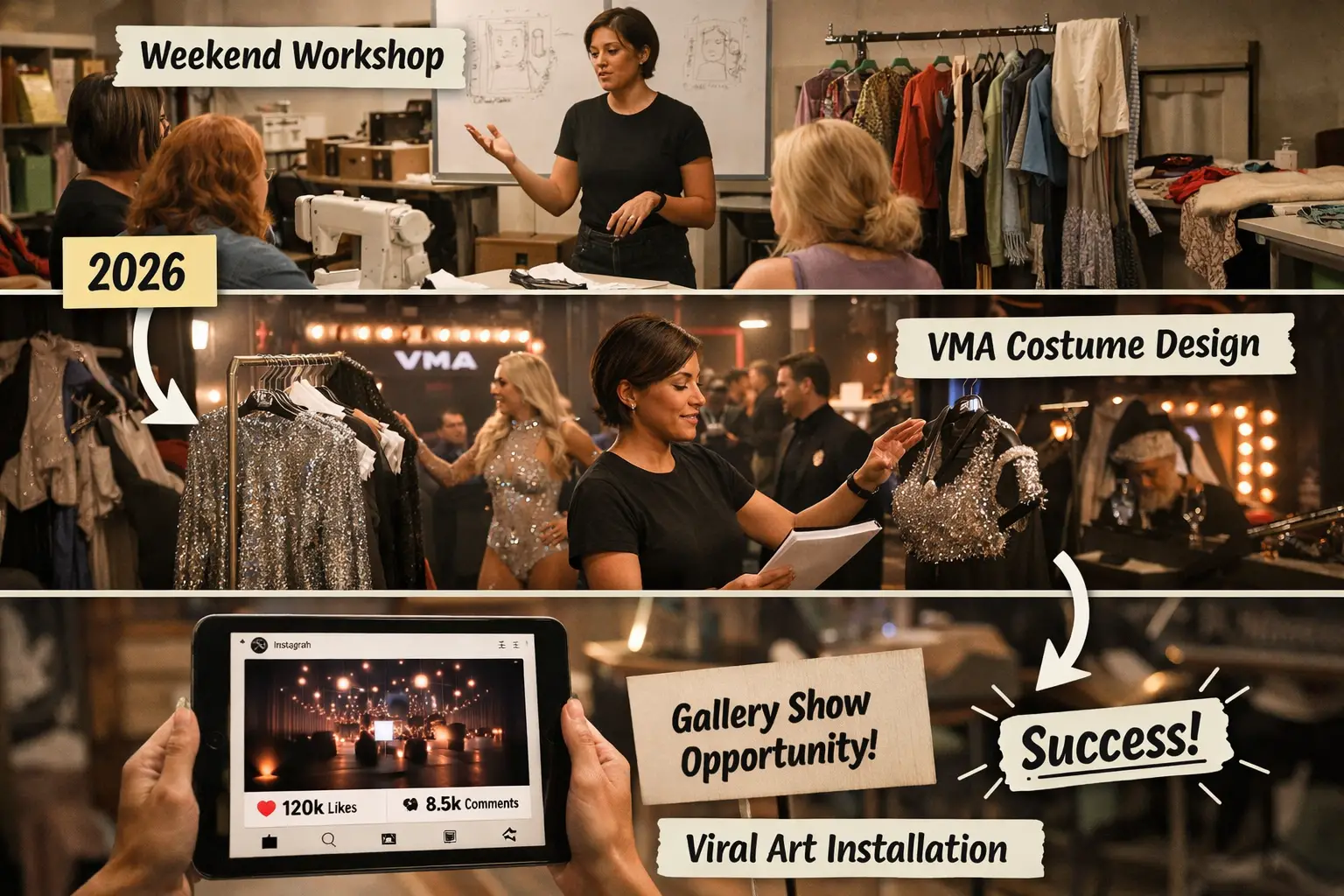
In response to these challenges, a new model has emerged. Recent theater graduates are building careers across multiple income streams and disciplines. One recent graduate reported combining costume design work for electronic dance music artists and MTV Video Music Awards production with weekend teaching at the New York Sewing Center[4].
This multi-hyphenate approach offers several advantages:
| Traditional Single-Track Career | Multi-Hyphenate Career |
|---|---|
| One primary income source | Multiple revenue streams |
| Narrow skill specialization | Diverse skill portfolio |
| Linear career progression | Non-linear opportunities |
| Limited to theater venues | Cross-industry mobility |
| High vulnerability to industry shifts | Built-in resilience |
| Dependent on gatekeepers | Multiple entry points |
The theater industry now actively embraces young multifaceted creators, recognizing that diverse skill sets strengthen productions and bring fresh perspectives[1].
How Beginner Actors Can Build a Multi-Hyphenate Career: Essential Skills to Develop
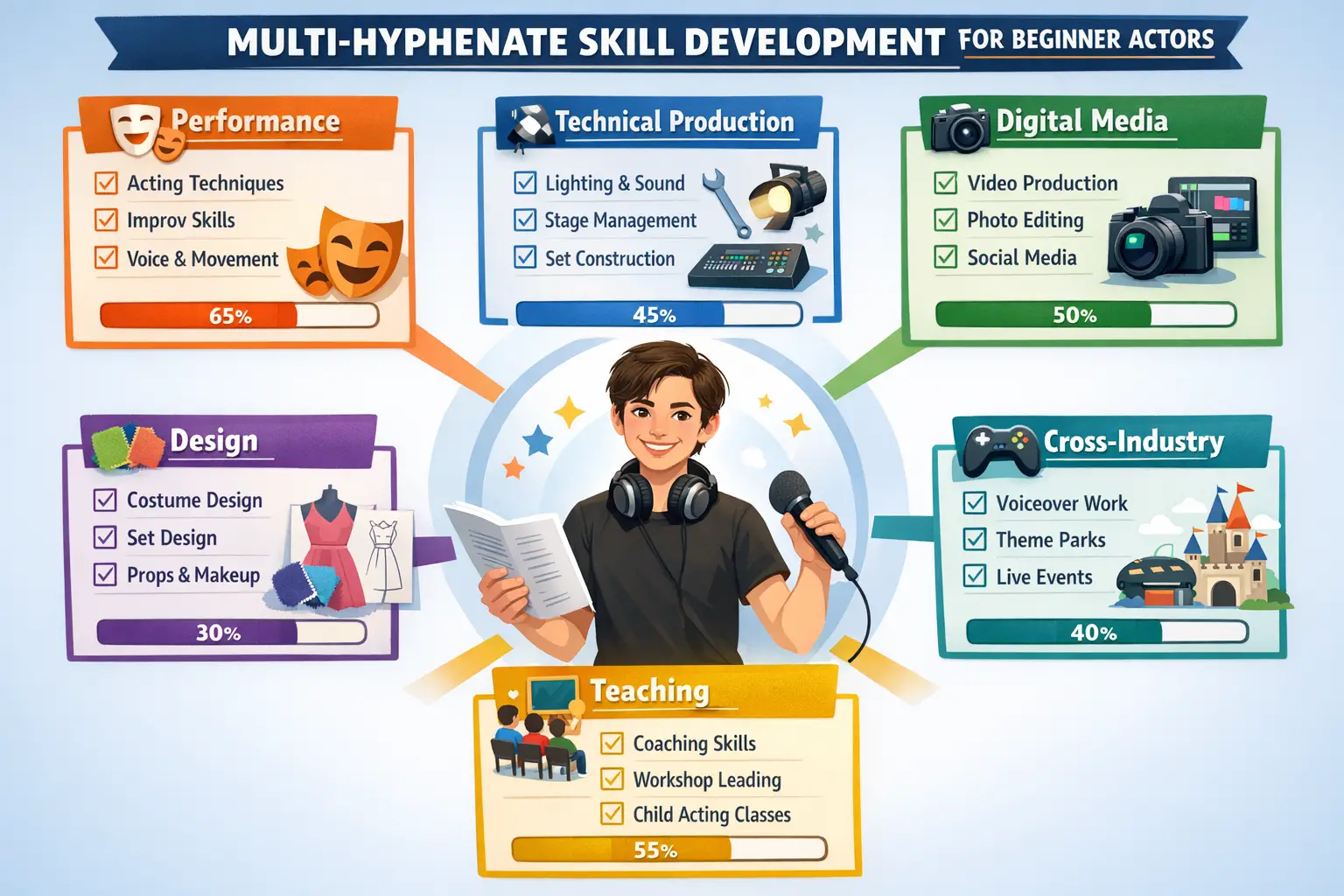
Performance Skills: The Foundation
While the industry demands versatility, strong performance skills remain the essential foundation for any theater career. Beginner actors should focus on:
- Acting technique mastery: Study multiple approaches (Meisner, Stanislavski, Practical Aesthetics) to develop range
- Voice and movement training: Develop physical expressiveness and vocal control
- Improvisation skills: Build adaptability and spontaneous creativity
- Character development: Learn to create compelling, nuanced performances
- Audition technique: Master the specific skills needed for successful auditions
These core competencies provide credibility and open doors, even as actors expand into other areas.
Technical Production Capabilities
Understanding the technical side of theater makes actors more valuable and employable. Recent graduates emphasize the value of stepping outside comfort zones and developing production skills[4].
Essential technical skills include:
- 🎨 Lighting design and operation: Understanding how lighting shapes performance
- 🎵 Sound design and engineering: Creating and managing audio elements
- 🎭 Set construction and design: Building and conceptualizing physical spaces
- 👗 Costume design and construction: Creating character through wardrobe
- 🎬 Stage management: Coordinating all production elements
These skills not only provide additional income opportunities but also deepen artistic understanding. An actor who understands lighting can better position themselves on stage; one who knows costume construction can collaborate more effectively with designers.
Digital Media and Content Creation
In 2026, theater practitioners are increasingly incorporating digital fluency as essential components of their creative toolkit[6]. Digital skills have become non-negotiable for career sustainability.
Critical digital competencies:
- Video creation and editing: Producing audition tapes, promotional content, and artistic projects
- Social media management: Building personal brand and audience engagement
- Voice acting: Recording for podcasts, audiobooks, and games
- Online presence management: Maintaining professional websites and portfolios
- Live streaming and virtual performance: Engaging audiences in digital spaces
One recent graduate’s breakthrough came through posting a video art piece on Instagram that led to a gallery installation rather than through traditional theater directing channels[4]. This demonstrates how digital platforms create alternative pathways to creative success.
Cross-Industry Transferable Skills
Young theater creators are increasingly finding work outside traditional theater venues—in themed entertainment, video game design, fashion, and live entertainment production[4]. Developing skills that translate across industries provides crucial career resilience.
Valuable cross-industry skills:
- Project management: Coordinating complex creative projects with deadlines and budgets
- Collaboration and communication: Working effectively in diverse team environments
- Teaching and facilitation: Sharing knowledge through workshops and classes
- Writing and dramaturgy: Creating and analyzing scripts and narratives
- Marketing and promotion: Understanding audience development and engagement
These capabilities allow theater professionals to pivot between industries while maintaining creative fulfillment.
Young Theater Creators Are Changing the Game: Practical Strategies for Building Your Career
Strategy 1: Create Multiple Revenue Streams
Financial sustainability requires diversification. Rather than relying on a single source of income, successful multi-hyphenate creators build portfolios of complementary work.
Example revenue stream combinations:
Performance + Teaching + Digital Content
- Weekend acting workshops for beginners
- Weeknight performances in local productions
- YouTube channel with acting tips and technique videos
Technical Production + Freelance Design + Consulting
- Sound design for theater productions
- Audio editing for podcasts and video games
- Consulting for small theaters on technical setups
Acting + Costume Design + Fashion Industry Work
- Performing in regional theater
- Costume design for independent productions
- Wardrobe styling for music videos and photo shoots
The key is finding combinations where skills complement rather than compete with each other, creating synergies that enhance overall career development.
Strategy 2: Pursue Adjacent Creative Fields
Adaptable career paths have replaced predetermined trajectories as the route to success[4]. Beginner actors should actively explore opportunities in fields that value theatrical skills.
Adjacent fields to explore:
- 🎮 Video game industry: Voice acting, motion capture performance, narrative design
- 🎪 Themed entertainment: Character performance at theme parks, immersive experiences
- 🎬 Film and television: On-camera acting, background work, production assistance
- 🎨 Visual arts: Performance art, video installations, multimedia exhibitions
- 📚 Education: Teaching artist programs, school residencies, private coaching
- 🎉 Events and experiences: Corporate training theater, interactive events, brand activations
These fields often offer more stable employment and higher pay than traditional theater while still providing creative satisfaction.
Strategy 3: Build a Strong Digital Presence
In 2026, your online presence is your calling card. A professional digital footprint opens doors and creates opportunities that traditional networking alone cannot provide.
Essential digital presence elements:
✅ Professional website: Showcase resume, headshots, demo reels, and portfolio
✅ Active social media: Regular engagement on platforms where industry professionals gather
✅ Video portfolio: High-quality performance clips and behind-the-scenes content
✅ Professional networking profiles: Updated LinkedIn and industry-specific platforms
✅ Email newsletter: Direct connection with supporters and collaborators
“One recent grad’s breakthrough came through posting a video art piece on Instagram that led to a gallery installation rather than through traditional theater directing channels.” [4]
This example illustrates how digital platforms can create unexpected career opportunities that bypass traditional gatekeepers.
Strategy 4: Invest in Continuous Skill Development
The multi-hyphenate career requires ongoing learning. As industries evolve and new technologies emerge, successful creators commit to expanding their capabilities.
Effective learning strategies:
- Workshops and short courses: Focused skill development without degree program commitment
- Online learning platforms: Affordable access to technical and creative training
- Mentorship relationships: Learning directly from established multi-hyphenate professionals
- Collaborative projects: Skill development through hands-on experience
- Cross-training: Volunteering in unfamiliar roles to build new competencies
The investment in diverse skills pays dividends throughout a career, creating resilience against industry changes and economic downturns.
Strategy 5: Network Across Disciplines
Traditional theater networking focused on connections within the industry. Multi-hyphenate careers require networks that span creative disciplines and industries.
Networking strategies for 2026:
- Attend events outside traditional theater circles (tech meetups, design conferences, gaming conventions)
- Join online communities for specific skills (sound design forums, costume construction groups)
- Collaborate with creators from different backgrounds (visual artists, musicians, filmmakers)
- Participate in interdisciplinary creative projects and festivals
- Maintain relationships with classmates who pursue different career paths
These diverse connections create opportunities that wouldn’t emerge from theater-only networking.
Overcoming Challenges: What Beginner Actors Need to Know
Challenge 1: The Scarcity of Entry-Level Opportunities
As of 2026, there are substantially fewer entry-level roles available compared to the pre-pandemic era[2]. This reality requires strategic thinking about career entry.
Solutions:
- Create your own opportunities: Produce your own work rather than waiting for permission
- Start small and local: Build experience and reputation in community theater and small venues
- Offer value before asking for payment: Volunteer strategically to build skills and relationships
- Look beyond major markets: Smaller cities often have more accessible entry points
- Be willing to start in adjacent roles: Technical positions and administrative work provide industry access
Challenge 2: Financial Instability
Multiple income streams help, but financial uncertainty remains a significant challenge for emerging theater professionals.
Financial management strategies:
💰 Develop a financial cushion: Save during higher-earning periods for lean times
💰 Track all income and expenses: Understand your financial patterns and needs
💰 Diversify income timing: Balance project-based work with steady teaching or part-time employment
💰 Invest in skills that command higher rates: Technical expertise often pays better than performance alone
💰 Consider flexible day jobs: Remote work and gig economy jobs that accommodate auditions and rehearsals
Challenge 3: Identity and Artistic Focus
Some beginner actors worry that pursuing multiple disciplines will dilute their artistic identity or prevent them from achieving excellence in any single area.
Reframing the multi-hyphenate identity:
- View diverse skills as complementary: Each discipline informs and strengthens the others
- Maintain a primary artistic focus: Choose one area as your core identity while developing supporting skills
- Embrace the Renaissance artist model: Historical artists were often multi-talented (Shakespeare acted, wrote, and produced)
- Recognize that depth comes from breadth: Understanding multiple aspects of production creates more sophisticated artistry
- Define success on your own terms: Career fulfillment doesn’t require fitting traditional molds
“Rather than following predetermined trajectories, emerging artists are finding success through non-linear paths.” [4]
Challenge 4: Burnout and Overextension
Pursuing multiple career streams simultaneously can lead to exhaustion if not managed carefully.
Sustainability practices:
- ⚡ Set clear boundaries: Establish work hours and protect rest time
- ⚡ Choose projects strategically: Not every opportunity deserves a “yes”
- ⚡ Build in recovery periods: Schedule downtime between intensive projects
- ⚡ Develop efficient systems: Streamline administrative tasks and workflows
- ⚡ Prioritize physical and mental health: Career longevity depends on wellness
Success Stories: How Young Theater Creators Are Changing the Game in Practice
The Actor-Designer-Educator
One recent graduate exemplifies the multi-hyphenate approach by combining costume design work for electronic dance music artists and MTV Video Music Awards production with weekend teaching at the New York Sewing Center[4]. This combination provides:
- Creative variety: Shifting between high-profile entertainment work and intimate teaching
- Financial stability: Multiple income sources reduce vulnerability
- Skill development: Each role strengthens capabilities in the others
- Industry connections: Different networks create diverse opportunities
- Personal fulfillment: Teaching provides meaning while commercial work provides resources
The Digital-First Theater Artist
Another emerging creator found breakthrough success by posting a video art piece on Instagram that led to a gallery installation[4]. This non-traditional path demonstrates:
- Platform leverage: Social media as career launchpad
- Cross-disciplinary thinking: Theater skills applied to visual art
- Audience building: Direct connection with supporters
- Alternative validation: Success outside traditional theater gatekeepers
- New creative possibilities: Digital platforms enable experimentation
The Cross-Industry Sound Designer
Young theater creators are pursuing opportunities in sound design for video games and themed entertainment[4], creating careers that blend theatrical training with emerging industries:
- Higher compensation: Gaming and themed entertainment often pay better than traditional theater
- Cutting-edge technology: Access to advanced tools and techniques
- Transferable skills: Experience that enhances theater work
- Industry credibility: Professional credits that open doors
- Creative innovation: Applying theatrical storytelling to new mediums
The Future: Where Young Theater Creators Are Changing the Game Is Heading
Emerging Trends for 2026 and Beyond
The multi-hyphenate theater career will continue evolving. Key trends shaping the future include:
- Increased integration of technology: Virtual reality, augmented reality, and AI tools becoming standard in theatrical production
- Hybrid performance models: Blending live and digital experiences for broader audience reach
- Entrepreneurial theater-making: More artists producing their own work outside institutional structures
- Global collaboration: Digital tools enabling international creative partnerships
- Wellness and sustainability focus: Industry-wide recognition of burnout prevention and work-life balance
Skills That Will Matter Most
Looking ahead, beginner actors should prioritize developing:
- Technological literacy: Comfort with emerging creative technologies
- Entrepreneurial capabilities: Business skills for self-produced work
- Global cultural competency: Understanding diverse artistic traditions and audiences
- Environmental design thinking: Creating sustainable production practices
- Mental health awareness: Supporting healthy creative communities
Opportunities on the Horizon
Despite current challenges, exciting opportunities are emerging:
- Growing demand for immersive and experiential entertainment
- Expansion of streaming platforms creating new performance opportunities
- Increased corporate investment in creative content and branded experiences
- Educational institutions seeking teaching artists with diverse skills
- Community-based theater addressing social issues and local stories
Conclusion: Your Multi-Hyphenate Career Starts Now
Young theater creators are changing the game by refusing to accept limitations and embracing versatility. The traditional single-track career path may have disappeared, but the opportunities available to multi-hyphenate professionals are more diverse and potentially more fulfilling than ever before.
For beginner actors, building a multi-hyphenate career requires:
✨ Developing strong foundational performance skills while expanding into technical, digital, and cross-industry capabilities
✨ Creating multiple revenue streams that provide financial stability and creative variety
✨ Building a strong digital presence that showcases diverse talents and creates unexpected opportunities
✨ Networking across disciplines to access opportunities beyond traditional theater circles
✨ Embracing non-linear career paths and remaining open to unexpected directions
The journey won’t always be easy. The lack of structured pathways and the scarcity of entry-level opportunities create real challenges. Financial instability and the risk of burnout are genuine concerns that require careful management.
However, the multi-hyphenate approach also offers remarkable advantages: creative freedom, resilience against industry changes, diverse income sources, and the ability to define success on your own terms.
Actionable Next Steps
Ready to begin building your multi-hyphenate career? Start with these concrete actions:
- Assess your current skills: Create an honest inventory of your performance, technical, digital, and transferable capabilities
- Identify one new skill to develop: Choose something that complements your existing strengths and interests you
- Build your digital presence: Create or update your website and social media profiles this week
- Network outside theater: Attend one event in an adjacent creative field within the next month
- Create your own project: Don’t wait for permission—produce something small that showcases your unique combination of skills
- Find a multi-hyphenate mentor: Connect with someone successfully navigating a diverse creative career
- Develop a financial plan: Calculate your minimum income needs and map potential revenue streams
The theater industry of 2026 rewards those who bring diverse skills, entrepreneurial spirit, and creative flexibility. Young theater creators are changing the game not by following the old rules, but by writing new ones.
Your multi-hyphenate career begins with a single step outside your comfort zone, a willingness to learn something new, and the courage to define success on your own terms. The stage is set—it’s time to make your entrance. 🎭
References
[1] The Future Of Theatre Emerging Trends In The Industry – https://onthestage.com/blog/the-future-of-theatre-emerging-trends-in-the-industry/
[2] What Emerging Creatives Should Know 2026 – https://creativelivesinprogress.com/articles/what-emerging-creatives-should-know-2026
[3] Top Theatre Education Trends 2026 For Kids In Brooklyn – https://triplepromise.com/top-theatre-education-trends-2026-for-kids-in-brooklyn/
[4] Grad Expectations – https://www.americantheatre.org/2026/02/16/grad-expectations/
[5] Young Actors Are Reshaping Hollywoods Future Heres How Theyre Redefining The Spotlight – https://explore.st-aug.edu/exp/young-actors-are-reshaping-hollywoods-future-heres-how-theyre-redefining-the-spotlight
[6] Membership Spotlight January 2026 – https://www.tyausa.org/tya-today/membership-spotlight-january-2026/
[7] Young Company 2026 – https://queenslandtheatre.com.au/young-company-2026