

The casting director leans forward, eyes fixed on the audition. Two actors deliver the same monologue. One possesses undeniable charisma and raw emotional depth—natural talent radiating from every gesture. The other demonstrates precise vocal control, nuanced character choices, and flawless technique honed through years of training. Which actor books the role? In 2026, the answer increasingly favors the trained performer. Building Your Acting Foundation: Why Classes Matter More Than Natural Talent isn’t just a philosophical debate—it’s a practical reality shaping successful acting careers across the industry.
While natural ability provides an excellent starting point, the harsh truth is that raw talent alone rarely sustains a professional acting career. The entertainment industry demands versatility, consistency, and technical mastery that only structured training can provide. Whether aspiring to Broadway stages, Hollywood productions, or streaming platform series, actors who invest in foundational education consistently outperform their untrained counterparts in both booking rates and career longevity.
Key Takeaways
- Technical training dramatically improves industry placement: Specialized conservatory programs achieve 80-90% placement rates for graduates in full-time work, compared to significantly lower rates for self-taught actors[2]
- Natural talent has limitations without technique: Even gifted performers struggle with role range and consistency when lacking formal training in voice, movement, and character development[5]
- Structured programs provide essential industry connections: Intensive training programs offer networking opportunities and professional relationships that self-taught actors rarely access
- Investment in education pays long-term dividends: While training costs average $9,600-$33,000 annually, 31.9% of working actors hold bachelor’s degrees or higher, demonstrating education’s career advantages[2]
- Both elements matter, but training is controllable: Acting comprises inborn and learned elements—talent provides potential, but classes build stable, successful careers[1][3]
The Myth of Natural Talent in Acting 🎭
What Natural Talent Actually Means
Natural talent in acting typically refers to innate qualities: emotional availability, physical expressiveness, vocal resonance, and the ability to connect authentically with audiences. Some individuals naturally command attention when entering a room. Others instinctively understand emotional nuances and can access genuine feelings on demand. These gifts are valuable and shouldn’t be dismissed.
However, natural talent represents only the foundation, not the complete structure of a successful acting career. Think of it as raw materials waiting for skilled craftsmanship. A person might possess beautiful timber, but without carpentry knowledge, that wood never becomes a functional, beautiful piece of furniture.
The Limitations of Untrained Talent
Many actors with natural abilities struggle without technical skills and a defined process for creating character behavior[5]. This manifests in several critical ways:
- Inconsistent performances: Unable to reliably recreate strong choices across multiple takes or performances
- Limited emotional range: Relying only on personal experiences rather than accessing broader human emotions through technique
- Physical restrictions: Lacking body awareness and movement training that expands physical expressiveness
- Vocal limitations: Unable to project properly, vary pitch and tone effectively, or maintain vocal health during demanding roles
- Character development gaps: Missing systematic approaches to analyzing scripts and building complex characters
Even naturally gifted actors become limited in role range without proper training to develop craft[5]. An actor might excel at playing versions of themselves but struggle when roles demand accents, period-specific mannerisms, or character types far removed from their personal experience.
Famous Examples: The Exception, Not the Rule
Jennifer Lawrence reported taking no acting classes before her Oscar-winning performance, and Quvenzhané Wallis earned a Best Actress nomination at age 9[3]. These remarkable success stories often fuel the myth that training is unnecessary. However, these cases represent exceptional outliers, not reproducible career paths.
For every Jennifer Lawrence, thousands of naturally talented actors never break through because they lack the technical foundation to compete professionally. Moreover, many “overnight successes” actually possess hidden training—childhood theater programs, school drama classes, or intensive on-set coaching that provided foundational skills.
Building Your Acting Foundation: Why Classes Matter More Than Natural Talent in Career Success
The Statistical Reality of Training Outcomes
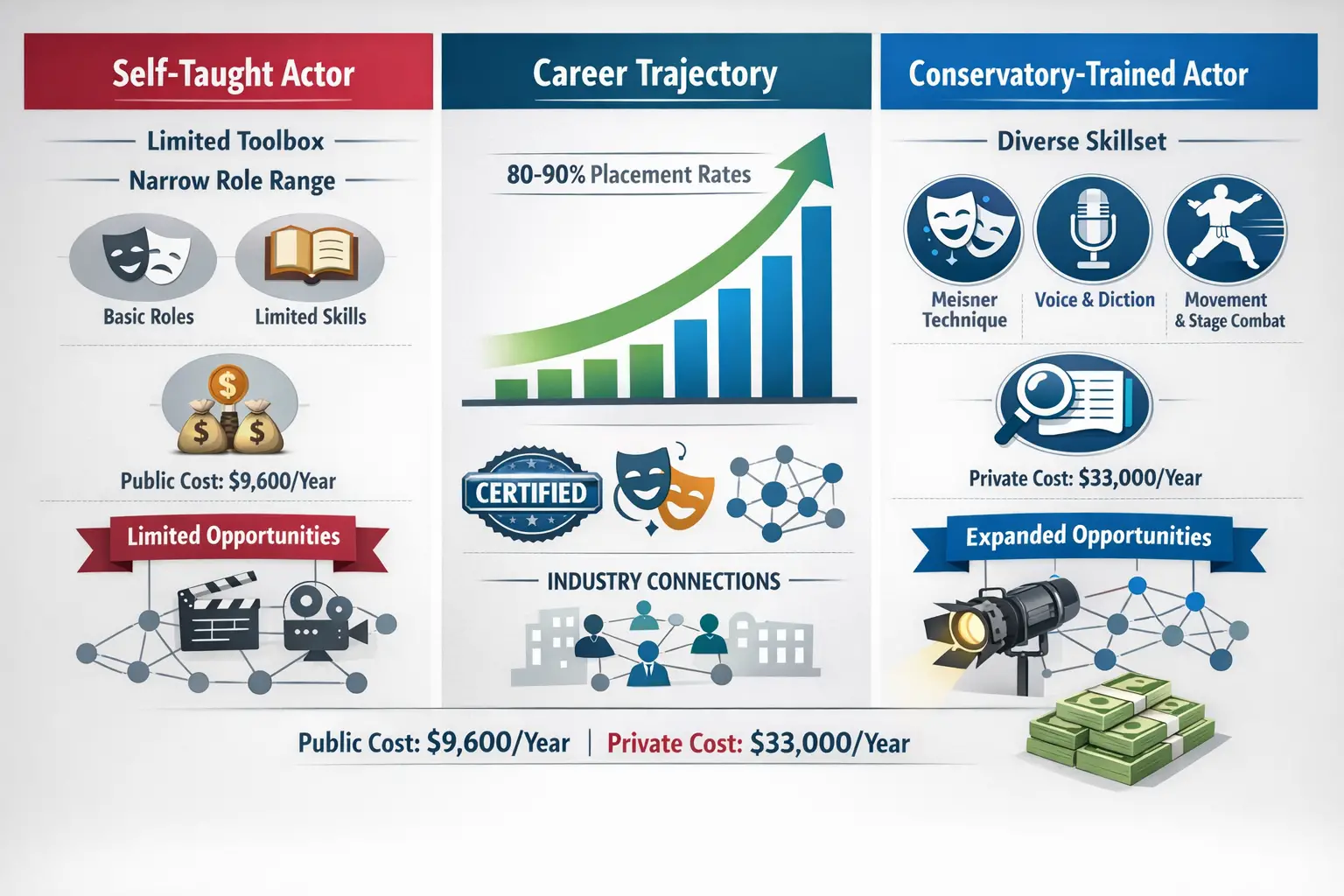
The numbers tell a compelling story about the value of formal education. Specialized conservatory programs demonstrate placement rates of 80-90%—Made in NY programs place 80% of graduates in full-time work within three months, while Carnegie Mellon places 90% within six months[2]. These exceptional outcomes reflect the intensive nature of quality training.
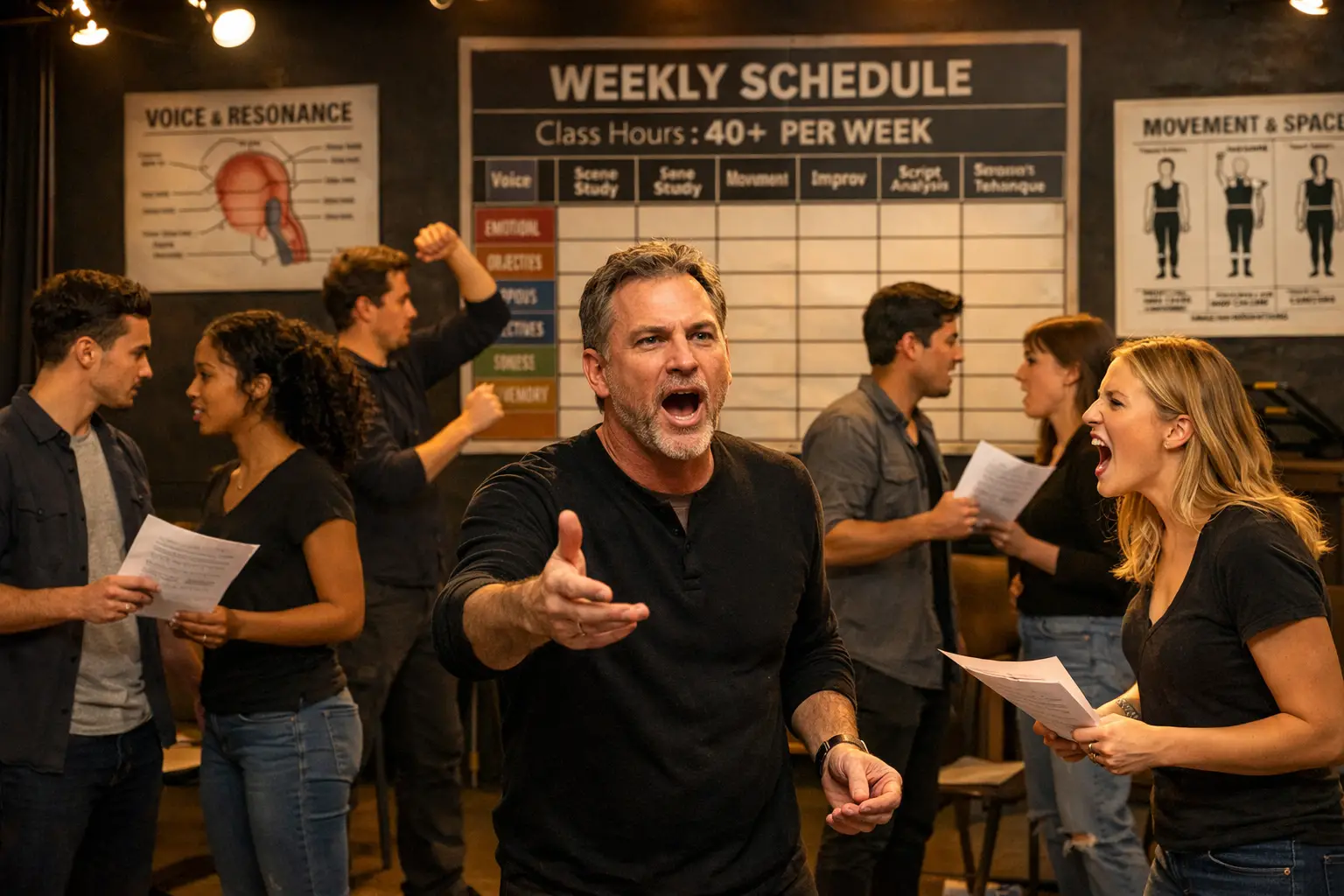
Conservatory programs dedicate 75% or more of coursework to performance skills, requiring 22-45 hours weekly compared to 14-18 hours in traditional college programs[2]. This immersive approach develops muscle memory, refines instincts, and builds the stamina required for professional work.
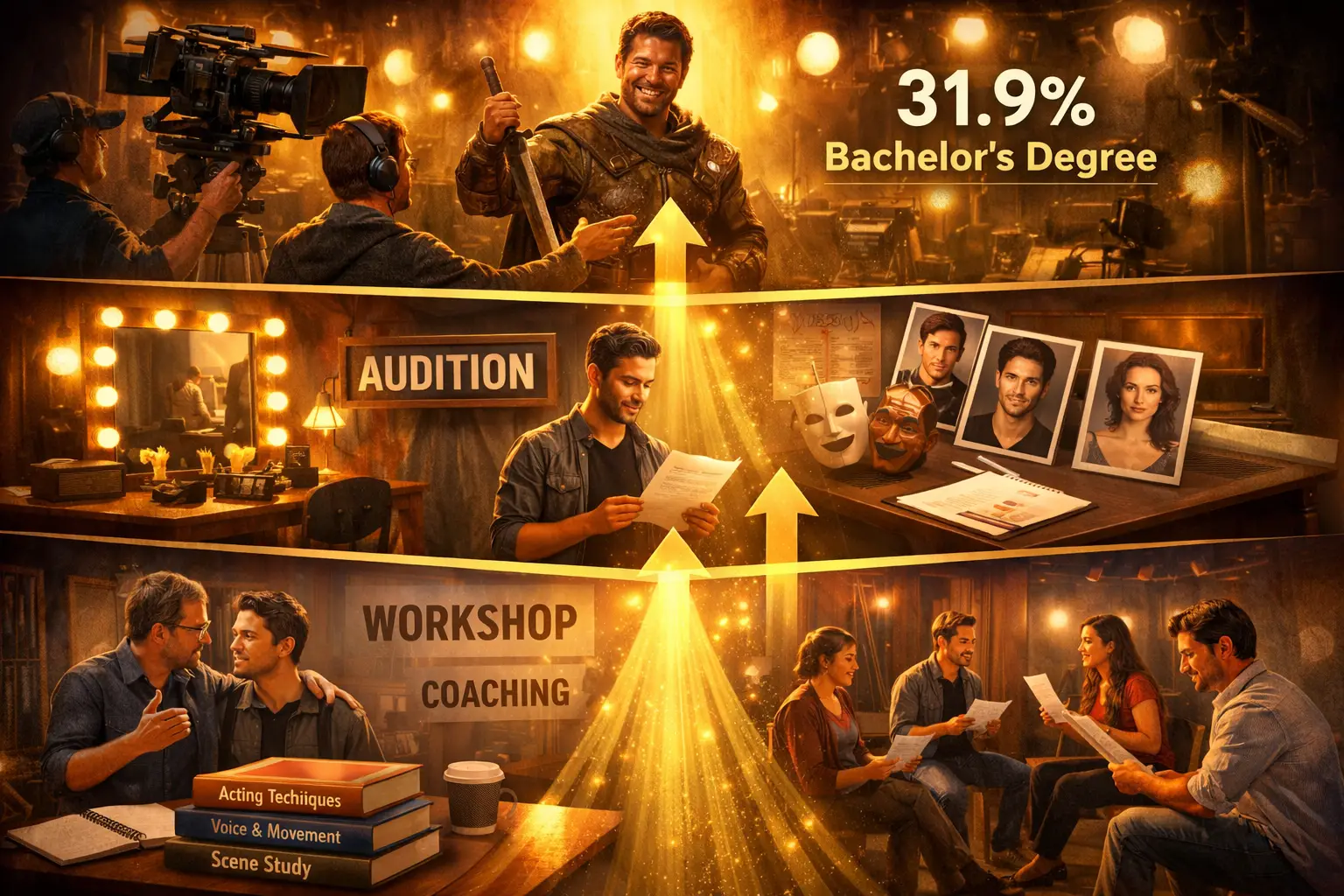
Furthermore, 31.9% of working actors hold bachelor’s degrees or higher[2], suggesting formal education provides measurable career advantages. While correlation doesn’t equal causation, this statistic indicates that successful actors recognize education’s value and invest accordingly.
What Quality Training Actually Teaches
Foundational acting classes provide systematic skill development across multiple essential areas:
| Training Component | Skills Developed | Career Impact |
|---|---|---|
| Voice & Speech | Projection, articulation, accent work, vocal health | Enables stage work, voice-over opportunities, character versatility |
| Movement & Physicality | Body awareness, period styles, stage combat, dance | Expands castability, prevents injury, enhances physical storytelling |
| Scene Study | Script analysis, character development, relationship building | Creates depth and nuance in performances |
| Audition Technique | Cold reading, self-taping, handling nerves, making strong choices | Directly impacts booking rates |
| Acting Methods | Meisner, Stanislavski, Strasberg techniques | Provides reliable process for any role |
| Industry Knowledge | Professional conduct, union rules, networking | Ensures career sustainability |
Jeff Goldblum credits Sanford Meisner technique training with developing improvisation skills applicable beyond acting[3]. This illustrates how quality training provides transferable skills that enhance all aspects of performance and professional interaction.
The Technical Skills Gap
Many casting directors can immediately identify untrained actors during auditions. The tells are unmistakable:
- Indicating rather than experiencing: Showing emotions superficially instead of genuinely living them
- Unnatural blocking: Moving without purpose or awareness of spatial relationships
- Vocal monotony: Limited range in pitch, pace, and volume
- Script dependency: Unable to make material their own or adapt when redirected
- Camera unawareness: Not understanding frame size, eyeline, or technical requirements
These technical deficiencies eliminate actors from consideration regardless of natural charisma. In competitive markets, casting directors see hundreds of submissions per role. Technical excellence becomes the baseline requirement, not the differentiator.
Selecting Quality Acting Classes and Workshops
Understanding Different Training Pathways
Not all acting education delivers equal value. Understanding program types helps actors make informed investments:
Conservatory Programs offer intensive, focused training with strong industry connections. These programs typically:
- Require full-time commitment (22-45 hours weekly)[2]
- Focus 75%+ of curriculum on performance skills[2]
- Provide showcase opportunities for industry professionals
- Cost $33,000+ annually at private institutions[2]
- Deliver 80-90% placement rates within 3-6 months[2]
Traditional College Programs provide broader liberal arts education alongside theater training:
- Require 14-18 hours weekly in theater coursework[2]
- Include general education requirements
- Cost approximately $9,600 annually at public institutions[2]
- Support longer-term career development through diverse knowledge
- Offer networking with alumni across industries
Private Studios and Workshops deliver flexible, targeted training:
- Allow working actors to continue training while auditioning
- Focus on specific techniques (Meisner, Strasberg, etc.)
- Vary widely in quality and cost
- Provide ongoing skill refinement
- Offer community and networking opportunities
Evaluating Program Quality 🔍
When researching acting classes, examine these critical factors:
Instructor credentials: Are teachers working professionals with current industry experience? Do they have formal training themselves?
Alumni success: Where are graduates working? What percentage book professional work within a year?
Curriculum comprehensiveness: Does training cover voice, movement, scene study, audition technique, and industry knowledge?
Performance opportunities: Are students performing for audiences and industry professionals regularly?
Industry connections: Does the program facilitate agent meetings, industry showcases, or professional networking?
Class size: Are classes small enough for individual attention and feedback?
Philosophy alignment: Does the teaching approach resonate with your learning style and career goals?
Red Flags to Avoid ⚠️
Beware of programs that:
- Guarantee career outcomes: No legitimate program can promise specific bookings or representation
- Focus primarily on headshots and marketing: While important, these shouldn’t dominate foundational training
- Lack clear curriculum: Vague descriptions suggest unstructured teaching
- Feature only non-working instructors: Teachers should have current industry experience
- Charge excessive fees without clear value: Research typical costs in your market
- Discourage outside training or perspectives: Quality programs welcome diverse approaches
- Emphasize “discovering your star quality”: Professional training develops craft, not just confidence
The Reality of Building Your Acting Foundation: Why Classes Matter More Than Natural Talent
The Unemployment Paradox
Here’s the sobering reality: despite high program placement rates, 90% of actors overall remain unemployed[2]. This statistic might seem to contradict the value of training, but it actually reinforces why systematic skill development matters more than ever.
The acting profession is extraordinarily competitive. In this environment, training doesn’t guarantee success—nothing can. However, it dramatically improves odds by:
- Expanding role range: Trained actors compete for more parts
- Improving audition success: Technical skills increase booking percentages
- Enabling consistent work: Reliability leads to repeat hiring
- Building professional networks: Training programs connect actors with industry professionals
- Developing resilience: Structured education prepares actors for rejection and career challenges
Both Elements Matter: Finding the Balance
Acting comprises both inborn and learned elements—natural talent provides a starting point, but classes build stable, successful careers[1][3]. The most successful actors combine both:
Natural gifts provide:
- Emotional accessibility
- Physical presence
- Vocal quality
- Instinctive timing
- Authentic connection
Training develops:
- Technical reliability
- Expanded range
- Professional discipline
- Systematic approaches
- Industry knowledge
“Talent is the starting line. Training determines how far you run.” – Industry wisdom
The actors who thrive recognize that talent without training is potential without realization. They invest in education not because they lack natural ability, but because they understand that professional acting demands mastery of craft.
The Long-Term Career Perspective
Program effectiveness depends on type: conservatory graduates show higher immediate industry placement due to intensive training and direct industry connections, while college graduates benefit from broader education supporting longer-term career development[2].
This distinction matters when considering career trajectories. Immediate placement is valuable, but sustainable careers require adaptability, business acumen, and resilience that broader education can provide. Many successful actors combine approaches—completing conservatory training after college, or pursuing college degrees mid-career.
The entertainment industry constantly evolves. New platforms, formats, and technologies create opportunities while eliminating others. Actors with strong foundational training adapt more readily because they possess transferable skills rather than narrow specialization.
Practical Steps for Building Your Acting Foundation 📋
For Beginning Actors
Start with foundational classes covering:
- Introduction to acting technique: Learn basic methods and approaches
- Voice and speech fundamentals: Develop vocal strength and clarity
- Movement basics: Build body awareness and physical expressiveness
- Script analysis: Understand how to break down scenes and characters
- Audition technique: Practice the specific skills needed for booking work
Seek quality instruction by:
- Auditing classes before committing financially
- Requesting trial sessions or introductory workshops
- Researching instructor backgrounds and student reviews
- Asking working actors for recommendations
- Starting with reputable studios with established track records
For Intermediate Actors
Deepen technique through:
- Intensive method training: Commit to Meisner, Stanislavski, or other comprehensive approaches
- Specialized skills: Add stage combat, dialects, improvisation, or voice-over training
- Scene study programs: Work on complex material with experienced teachers
- On-camera technique: Master the specific requirements of film and television acting
- Professional workshops: Train with casting directors and industry professionals
Evaluate progress by:
- Recording and reviewing performances objectively
- Seeking honest feedback from instructors and peers
- Tracking audition-to-booking ratios
- Identifying recurring challenges or limitations
- Adjusting training focus based on career goals
For Advanced Actors
Continue refinement through:
- Master classes with renowned teachers and working professionals
- Specialized coaching for specific roles or auditions
- Teaching opportunities that deepen understanding of craft
- Cross-training in related disciplines (directing, writing, producing)
- Ongoing technique maintenance to prevent skill deterioration
Invest strategically by:
- Focusing on training that addresses specific career gaps
- Building relationships with teachers who understand your work
- Balancing training costs with career earnings
- Seeking programs that provide industry access
- Maintaining regular practice even during busy working periods
The Financial Investment in Training
Understanding Costs and Value
Acting training averages $9,600 annually for public institutions and $33,000 for private colleges[2]. These substantial costs require careful consideration and planning.
When evaluating training investments, consider:
- Return on investment: Will this training increase booking rates enough to justify costs?
- Opportunity costs: What else could you do with this time and money?
- Financial aid options: Are scholarships, grants, or payment plans available?
- Career stage appropriateness: Is this the right training for your current level?
- Alternative options: Could private coaching or workshops provide similar value at lower cost?
Making Training Affordable
Strategies for accessing quality training on limited budgets:
- Public university programs: State schools offer excellent training at significantly lower costs
- Scholarship opportunities: Many programs offer merit-based or need-based financial aid
- Community theater: Free or low-cost performance opportunities build experience
- Online classes: Digital platforms provide access to renowned teachers at reduced prices
- Workshop intensives: Short-term programs offer concentrated training without long-term commitment
- Teaching assistantships: Advanced students often receive reduced tuition for helping with classes
- Group classes: Shared instruction costs less than private coaching while still providing value
Remember that the most expensive program isn’t necessarily the best. Quality instruction, not price tag, determines training value.
Beyond the Classroom: Supplementing Formal Training
Self-Directed Learning
While formal classes provide essential structure, successful actors supplement training with independent work:
- Reading plays and scripts: Exposure to diverse material expands artistic vocabulary
- Watching performances critically: Analyze what works and why in professional productions
- Practicing regularly: Daily voice work, movement exercises, and scene study maintain skills
- Recording self-tapes: Regular practice with camera builds comfort and reveals areas for improvement
- Studying related arts: Dance, music, visual arts, and literature inform acting choices
Performance Opportunities
Training means little without application. Seek regular opportunities to perform:
- Community theater productions: Build experience and resume credits
- Student films: Gain on-camera experience and create demo reel material
- Showcase events: Perform for industry professionals and potential representatives
- Reading series: Practice cold reading and new material interpretation
- Improv groups: Develop spontaneity and collaborative skills
- Web series: Create original content demonstrating range and initiative
Each performance opportunity provides practical experience that reinforces classroom learning and reveals areas needing additional focus.
Building Professional Networks
Quality training programs provide invaluable networking opportunities. Maximize these connections by:
- Maintaining relationships with classmates who become industry colleagues
- Staying connected with instructors who can provide recommendations
- Attending alumni events and industry showcases
- Supporting fellow actors’ projects and performances
- Building genuine relationships rather than transactional networking
- Following up professionally after making new connections
The entertainment industry operates significantly on relationships and reputation. Training programs accelerate network building that might otherwise take years to develop independently.
Addressing Common Objections to Formal Training
“But I Can’t Afford Classes”
Financial limitations are real and valid. However, lack of funds doesn’t eliminate training options:
- Start with free resources: library books, online tutorials, community programs
- Prioritize one quality class over multiple mediocre ones
- Seek work-study arrangements or volunteer opportunities in exchange for training
- Save specifically for intensive workshops that provide concentrated value
- Remember that training is a career investment, not an expense
“I Learn Better by Doing”
Experience is invaluable, but unguided experience often reinforces bad habits. Actors who skip training frequently:
- Develop technical problems that later require correction
- Miss opportunities because of preventable skill gaps
- Struggle with roles outside their comfort zone
- Face career plateaus without understanding why
Quality training provides frameworks for learning from experience rather than simply accumulating it.
“Successful Actors Didn’t Need Classes”
As mentioned earlier, Jennifer Lawrence and others succeeded without formal training[3]. However:
- These cases represent extreme outliers, not typical paths
- Many “untrained” actors actually received informal coaching or childhood exposure
- Success despite lack of training doesn’t mean success because of it
- Most working actors have substantial training backgrounds
- The industry has become increasingly competitive, raising baseline skill requirements
Using exceptions to justify avoiding training is like skipping medical school because some healers are self-taught—possible but dramatically reducing success probability.
“I’m Too Old to Start Training”
Acting careers begin at all ages. Training benefits actors regardless of when they start:
- Mature actors bring life experience that enriches performances
- Many roles specifically require older actors
- Technical skills matter at every age
- Career changes into acting are increasingly common
- Quality training adapts to students’ experience levels
The best time to start training was years ago. The second-best time is now.
The Future of Acting Training in 2026 and Beyond
Evolving Training Models
The acting education landscape continues evolving with:
- Hybrid programs: Combining online instruction with in-person intensives
- Specialized streaming content training: Techniques specific to new platforms and formats
- Technology integration: Virtual reality rehearsal spaces and AI scene partners
- Accessibility improvements: Remote learning expanding access beyond major markets
- Shorter intensive formats: Condensed programs for working actors
These innovations expand training access while maintaining quality standards, making professional education available to more aspiring actors than ever before.
The Increasing Importance of Formal Training
As the industry grows more competitive, formal training becomes increasingly essential:
- Casting directors expect technical proficiency as baseline
- Self-tape auditions require strong on-camera technique
- Diverse role requirements demand versatile skills
- Professional sets move quickly, requiring consistent, reliable performances
- Union membership often requires demonstrable training or experience
The days when natural charisma alone could launch careers are largely past. Modern acting careers require the foundation that only quality training provides.
Conclusion: Investing in Your Acting Foundation
Building Your Acting Foundation: Why Classes Matter More Than Natural Talent isn’t about dismissing innate ability—it’s about recognizing that talent provides potential while training realizes it. The most successful actors combine natural gifts with systematic skill development, creating careers that sustain across decades rather than burning brightly and fading quickly.
The statistics speak clearly: specialized conservatory programs achieve 80-90% placement rates[2], working actors disproportionately hold formal degrees[2], and technical skills separate professionals from amateurs[5]. While 90% of actors remain unemployed regardless of training[2], educated actors occupy the working 10% at significantly higher rates.
Your next steps toward building a strong acting foundation:
Assess your current skill level honestly: Identify specific gaps in technique, not just general “need more experience”
Research training options thoroughly: Compare programs based on curriculum, instructor credentials, alumni success, and cost
Start with foundational classes: Build core skills in voice, movement, and basic technique before specializing
Commit to consistent practice: Training requires regular application, not just class attendance
Seek performance opportunities: Apply classroom learning in practical settings regularly
Build your professional network: Develop relationships with classmates, instructors, and industry professionals
Invest strategically in ongoing education: Continue training throughout your career, not just at the beginning
Balance training with auditioning: Don’t hide in classes—apply skills in professional contexts
Track your progress objectively: Record performances, monitor booking rates, and adjust training focus accordingly
Remember that training is investment, not expense: Quality education pays dividends throughout a career
The entertainment industry offers extraordinary opportunities for trained, dedicated actors willing to develop their craft systematically. Natural talent opens doors, but professional technique keeps them open. Whether you’re just beginning your acting journey or seeking to elevate an established career, investing in quality training remains the most reliable path to sustainable success.
The choice is clear: rely solely on natural ability and hope for exceptional luck, or build a strong foundation through quality training that prepares you to seize opportunities when they arise. In 2026 and beyond, the actors who thrive will be those who recognized that classes don’t replace talent—they multiply it.
References
[1] Acting Classes Vs Natural Talent What Matters More For Success – https://sitindia.com/acting-classes-vs-natural-talent-what-matters-more-for-success/
[2] Hollywood Acting Industry Statistics – https://bernardhiller.com/hollywood-acting-industry-statistics/
[3] Is Acting A Skill Or Talent 75131 – https://www.backstage.com/magazine/article/is-acting-a-skill-or-talent-75131/
[4] Is Acting Right For Your Child 7 Signs Of Natural Talent – https://www.ipmaa.com/ipm-blog/is-acting-right-for-your-child-7-signs-of-natural-talent
[5] What Education Is Needed To Become An Actor – https://www.maggieflaniganstudio.com/post/what-education-is-needed-to-become-an-actor
[6] Working Actors Teaching Their Craft College Those Who Can Do Teach – https://howlround.com/working-actors-teaching-their-craft-college-those-who-can-do-teach