


The stage lights dim, the audience quiets, and your heart pounds as you step into the spotlight for the first time. For countless aspiring actors, this transformative moment doesn’t happen on Broadway or in Hollywood—it happens on the humble stage of a local community theater. Community theater as your training ground: how to get experience as a beginning actor represents one of the most accessible, practical, and effective pathways into the performing arts. Unlike expensive acting schools or exclusive professional productions, community theaters open their doors to beginners, offering real stage time, mentorship from experienced performers, and the invaluable opportunity to learn by doing.
In 2026, as the entertainment industry continues to evolve and competition for professional roles intensifies, community theater remains a vital cornerstone for actor development. With the Bureau of Labor Statistics projecting little to no growth in actor employment through 2034[3], aspiring performers need every advantage they can get. Community theater provides exactly that—a low-risk, high-reward environment where mistakes become learning opportunities and every production builds your resume, skills, and professional network.
Key Takeaways
- 🎭 Community theater offers accessible entry points for beginning actors without requiring formal training or expensive tuition, making it ideal for skill development through hands-on experience
- 📈 Real stage time is invaluable for building confidence, learning technical skills, and understanding the collaborative nature of theater production
- 🤝 Networking opportunities abound in community theater, connecting beginners with directors, experienced actors, and industry professionals who can open doors to future opportunities
- 💪 Multiple productions accelerate growth, allowing actors to experiment with different roles, genres, and performance techniques in a supportive environment
- 🎯 Community theater builds professional habits including discipline, memorization skills, character development, and the ability to take direction—all essential for a successful acting career
Why Community Theater as Your Training Ground Works for Beginning Actors

The Accessibility Advantage
Unlike formal acting programs that can cost thousands of dollars annually, community theater productions typically charge minimal or no fees for participation. While formal education isn’t required to become an actor, aspiring performers benefit greatly from performing arts classes and years of practice[3]. Community theater bridges this gap by providing practical experience without the financial burden.
Community theaters democratize the performing arts by welcoming participants regardless of their background, training level, or financial resources. This inclusive approach means that anyone with passion and commitment can audition, get cast, and begin building their craft. The nonprofit theatre sector, which includes community theaters, contributed over $2.8 billion to the U.S. economy[8], demonstrating the substantial institutional presence and stability of these organizations.
Learning Through Real Production Experience
There’s a fundamental difference between studying acting in a classroom and performing in front of a live audience. Community theater provides:
- Immediate feedback from audiences during performances
- Technical skill development including blocking, stage movement, and projection
- Collaborative experience working with directors, stage managers, and fellow actors
- Production timeline management from auditions through closing night
- Character development under the guidance of experienced directors
The hands-on nature of community theater means beginners don’t just learn about acting—they actively practice their craft in realistic conditions that mirror professional productions.
Building Your Performance Resume
Every community theater production adds a credit to your acting resume. For beginning actors, these credits serve multiple purposes:
✅ Demonstrate commitment to the craft
✅ Show range across different roles and genres
✅ Provide audition material for future opportunities
✅ Create networking references from directors and fellow performers
✅ Build confidence for professional auditions
Community theaters present more performances than any other performing art form[7], providing abundant opportunities for beginners to accumulate meaningful experience quickly.
How to Get Started with Community Theater as Your Training Ground
Finding Community Theater Opportunities Near You
The first step in using community theater as your training ground: how to get experience as a beginning actor involves identifying local organizations. Here’s a systematic approach:
| Search Method | Description | Best For |
|---|---|---|
| Online Directories | Search “community theater near me” or visit state theater association websites | Finding multiple options quickly |
| Social Media | Follow local theater groups on Facebook, Instagram, and community forums | Staying updated on auditions |
| Arts Councils | Contact your city or county arts council for theater listings | Discovering lesser-known groups |
| Word of Mouth | Ask at libraries, community centers, and arts venues | Finding welcoming beginner-friendly theaters |
| University Partnerships | Check if local colleges have community outreach programs | Accessing higher production values |
Most community theaters maintain websites with audition announcements, production schedules, and information about how to get involved. Subscribe to their mailing lists to receive notifications about upcoming opportunities.
Preparing for Your First Community Theater Audition
Walking into your first audition can feel intimidating, but preparation builds confidence. Here’s what beginning actors should know:
Before the Audition:
- Research the production and understand the story
- Prepare a 1-2 minute monologue (unless otherwise specified)
- Bring a headshot and resume (even if minimal)
- Dress appropriately—neat, comfortable, and suitable for movement
- Arrive 15-20 minutes early to complete paperwork
During the Audition:
- Introduce yourself clearly and professionally
- Follow all directions from the audition panel
- Make bold, confident choices in your performance
- Stay positive even if you make mistakes
- Thank the panel before leaving
After the Audition:
- Send a brief thank-you email to the director
- Be patient—casting decisions take time
- Accept rejection gracefully and try again
- If cast, respond promptly and enthusiastically
“The audition is where you show not just your talent, but your professionalism, coachability, and commitment. Community theater directors value enthusiasm and reliability as much as raw skill.”
Understanding the Commitment Required
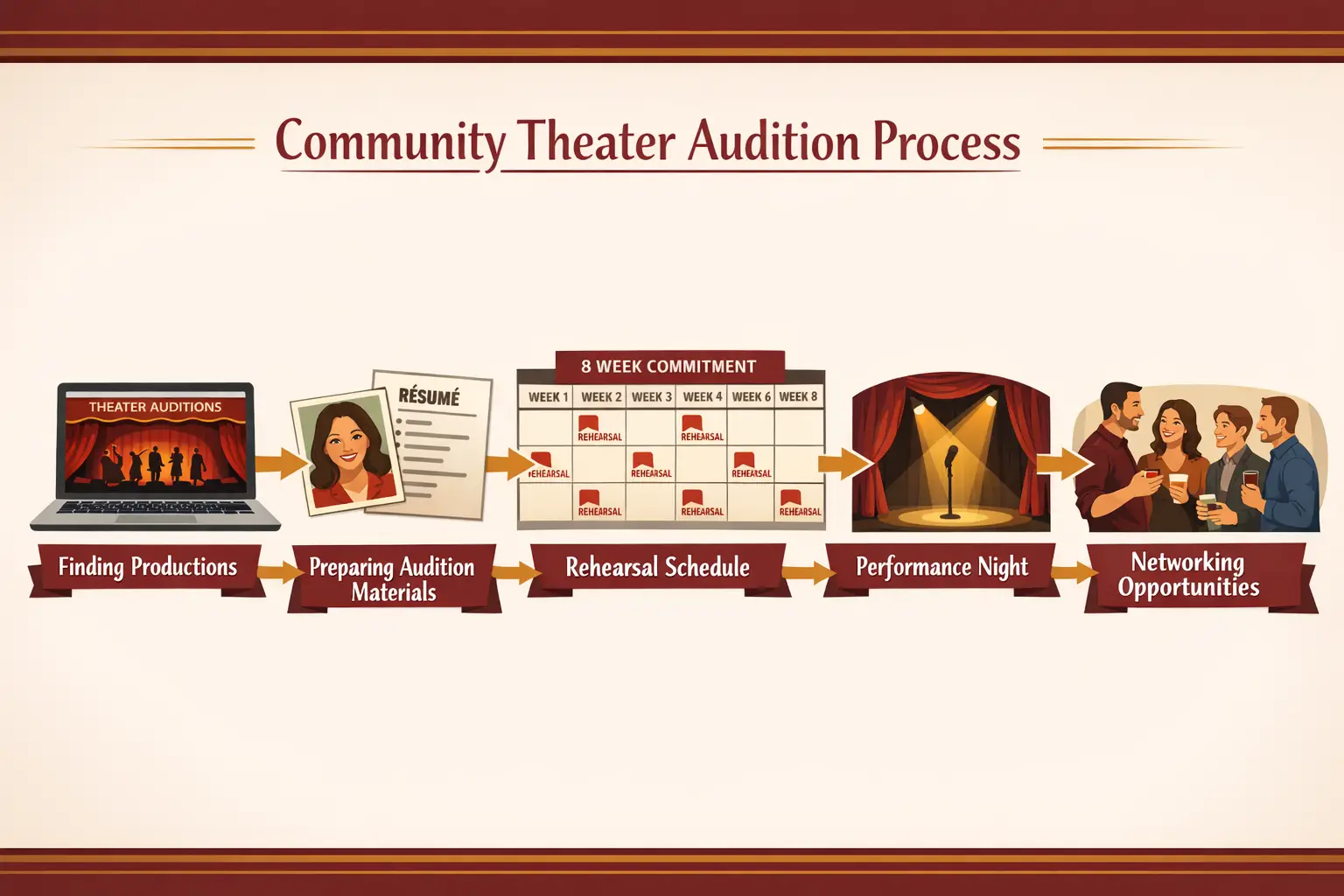
Community theater productions typically require significant time commitments. Beginning actors should understand expectations before auditioning:
Typical Rehearsal Schedule:
- 3-5 rehearsals per week
- 2-4 hours per rehearsal
- 6-10 weeks of rehearsal before opening
- Additional time for costume fittings and tech rehearsals
Performance Run:
- 1-3 weekends of performances
- Arrival 1-2 hours before curtain
- Post-show strike (set teardown) after closing
Additional Responsibilities:
- Line memorization outside of rehearsal
- Character research and development
- Possible participation in promotional activities
- Volunteer hours for set building or other production needs
This substantial commitment teaches professional discipline—one of the most valuable skills for aspiring actors in any medium.
Maximizing Community Theater as Your Training Ground: How to Get Experience as a Beginning Actor
Choosing the Right Roles for Skill Development
Not every role will advance your skills equally. Strategic role selection accelerates growth:
For Your First Production:
- Consider smaller supporting roles to learn the process
- Focus on roles within your current range
- Prioritize learning over starring
As You Gain Experience:
- Challenge yourself with lead roles
- Explore different genres (comedy, drama, musical)
- Try roles outside your comfort zone
- Seek roles that showcase different aspects of your ability
Role Diversity Benefits:
🎭 Comedy roles develop timing and physical expression
🎭 Dramatic roles deepen emotional range
🎭 Musical roles add singing and dancing to your skill set
🎭 Period pieces teach dialect and historical movement
🎭 Contemporary plays connect to modern audiences
Each production type offers unique learning opportunities that contribute to becoming a well-rounded performer.
Learning from Directors and Experienced Actors
Community theater brings together performers with varying experience levels. Beginning actors should actively leverage this diversity:
Working with Directors:
- Ask questions about character motivation
- Request specific feedback on your performance
- Observe how directors communicate with experienced actors
- Study their rehearsal techniques and apply them to self-directed practice
- Build relationships that may lead to future casting
Learning from Veteran Performers:
- Watch their preparation and warm-up routines
- Notice their professionalism and work ethic
- Ask for advice on specific challenges
- Observe their interactions with directors and fellow actors
- Request mentorship for skill development
The ensemble environment of community theater creates natural mentorship opportunities that would cost hundreds of dollars per hour with private coaches.
Developing Technical Skills Beyond Acting
Community theater as your training ground: how to get experience as a beginning actor extends beyond performance skills. Productions teach valuable technical knowledge:
Stage Craft:
- Understanding stage directions (upstage, downstage, stage left/right)
- Blocking and spatial awareness
- Working with props and set pieces
- Quick changes and costume management
- Stage combat and choreography basics
Technical Theater Exposure:
- Lighting and how it affects performance
- Sound design and microphone technique
- Set construction and design principles
- Costume design and character development
- Stage management and production coordination
Many community theaters encourage actors to participate in technical aspects between productions. Volunteering for crew positions provides insights that make you a more informed, versatile performer.
Building Your Professional Network
The relationships formed in community theater often prove as valuable as the skills developed. Every production expands your network:
Fellow Actors:
- Share audition information
- Form practice groups
- Recommend each other for roles
- Provide moral support through the journey
Directors and Producers:
- Offer future casting opportunities
- Provide professional references
- Connect you with regional theater opportunities
- Recommend you to industry contacts
Production Staff:
- Photographers for headshots
- Costume designers for wardrobe advice
- Marketing professionals for self-promotion guidance
- Technical directors for backstage opportunities
Audience Members:
- Potential agents or casting directors
- Local media contacts
- Business sponsors who may support your career
- Fellow theater enthusiasts who become supporters
“Your network is your net worth in the entertainment industry. Community theater provides the perfect low-pressure environment to build genuine relationships with people who share your passion.”
Transitioning from Community Theater Training to Professional Opportunities
Using Community Theater Experience to Build Your Acting Career
The skills, credits, and connections gained through community theater as your training ground: how to get experience as a beginning actor create pathways toward professional work:
Resume Building Strategy:
- List all community theater credits with role, production, and theater name
- Highlight lead roles and notable productions
- Include special skills developed (dialects, stage combat, musical abilities)
- Reference directors as professional contacts
- Showcase range through diverse role selection
Leveraging Experience for Professional Auditions:
- Use community theater performances as audition material
- Reference specific productions when discussing experience
- Demonstrate understanding of production processes
- Show commitment through consistent participation
- Highlight collaborative skills developed
With approximately 6,300 annual openings for actors expected through 2034[3], primarily from worker replacement rather than growth, every competitive advantage matters. Community theater experience demonstrates dedication, reliability, and practical skill development.
Supplementing Community Theater with Additional Training
While community theater provides excellent practical experience, well-rounded actors often combine it with other learning methods:
Complementary Training Options:
📚 Acting Classes and Workshops
- Technique-specific training (Meisner, Stanislavski, etc.)
- On-camera acting for film and television
- Voice and speech coaching
- Movement and physical theater
🎬 Self-Directed Learning
- Online acting courses and tutorials
- Script analysis and character development study
- Watching and analyzing professional performances
- Reading plays and dramatic literature
🎭 Other Performance Opportunities
- Student films and independent productions
- Improv comedy groups
- Showcase theaters and black box productions
- Corporate training and educational theater
The combination of community theater’s practical experience with targeted skill development creates a comprehensive training program without the cost of formal conservatory education.
Recognizing When to Pursue Professional Representation
As you accumulate experience through community theater, certain indicators suggest readiness for professional representation:
Signs You’re Ready:
✓ Consistent casting in lead or significant supporting roles
✓ Positive feedback from multiple directors
✓ Comfortable with cold readings and audition processes
✓ Professional headshots and updated resume
✓ Understanding of the business side of acting
✓ Willingness to audition frequently and handle rejection
✓ Financial stability to pursue acting opportunities
Next Steps Toward Professional Work:
- Research agents and casting directors in your region
- Attend industry networking events and showcases
- Consider moving to larger markets if appropriate
- Invest in professional-quality headshots and demo reels
- Join professional actor organizations
- Transition to paid community theater or semi-professional productions
- Audition for regional theater companies
Community theater provides the foundation, but transitioning to professional work requires strategic career planning and continued skill development.
Maintaining Community Theater Involvement as Your Career Grows
Even as actors advance professionally, many maintain connections with community theater:
Benefits of Continued Involvement:
- Testing new material in a supportive environment
- Maintaining skills during professional dry spells
- Giving back through mentorship and teaching
- Staying connected to the local arts community
- Enjoying the pure love of performance without commercial pressure
Ways to Stay Engaged:
- Direct or assistant direct productions
- Teach workshops for beginning actors
- Serve on theater boards or committees
- Participate in special events or fundraisers
- Guest perform in select productions
The community theater that served as your training ground can remain a valuable part of your artistic life throughout your career.
Common Challenges and How to Overcome Them
Dealing with Rejection and Casting Disappointments
Not every audition results in casting, and not every role will be the one you wanted. Building resilience is essential:
Healthy Perspectives on Rejection:
- Casting decisions involve many factors beyond talent
- Directors have specific visions that may not match your type
- Every audition is practice for the next opportunity
- Rejection is universal—even successful actors face it constantly
- Not being cast doesn’t reflect your worth or potential
Productive Responses to Disappointment:
- Allow yourself to feel disappointed, then move forward
- Ask for feedback if the director is willing to provide it
- Attend the production to support the theater and learn
- Audition for the next production
- Use the time to develop skills or try other theaters
Remember: Community theaters present numerous productions annually[7], ensuring that one disappointment doesn’t close all doors.
Balancing Community Theater with Other Life Commitments
The substantial time commitment of community theater can challenge beginners juggling work, family, and other responsibilities:
Time Management Strategies:
- Review the full rehearsal schedule before accepting roles
- Communicate scheduling conflicts immediately
- Prioritize productions that fit your availability
- Involve family members in the theater experience
- Use rehearsal breaks efficiently for other tasks
- Consider smaller roles during particularly busy life periods
Setting Boundaries:
- Be honest about your availability during auditions
- Don’t overcommit to multiple simultaneous productions
- Protect time for rest and personal relationships
- Recognize when to take breaks between shows
Successful actors develop discipline and time management skills that serve them throughout their careers—skills that community theater naturally cultivates.
Navigating Different Skill Levels in Community Productions
Community theater ensembles include everyone from absolute beginners to semi-professional actors. This diversity creates both opportunities and challenges:
Working with More Experienced Actors:
- Observe and learn from their techniques
- Don’t be intimidated—everyone started somewhere
- Ask questions and seek mentorship
- Match their professionalism and work ethic
- Appreciate the opportunity to raise your game
Working with Less Experienced Actors:
- Be patient and supportive
- Share knowledge without being condescending
- Lead by example in professionalism
- Remember your own beginning journey
- Focus on the collaborative nature of theater
The mixed-skill environment mirrors professional productions where actors of varying experience levels work together toward a common goal.
Conclusion: Your Journey Starts on the Community Theater Stage
Community theater as your training ground: how to get experience as a beginning actor offers an unparalleled combination of accessibility, practical experience, and professional development. Unlike expensive acting programs or exclusive professional productions, community theater welcomes beginners with open arms, providing the stage time, mentorship, and real-world experience that transform aspiring actors into skilled performers.
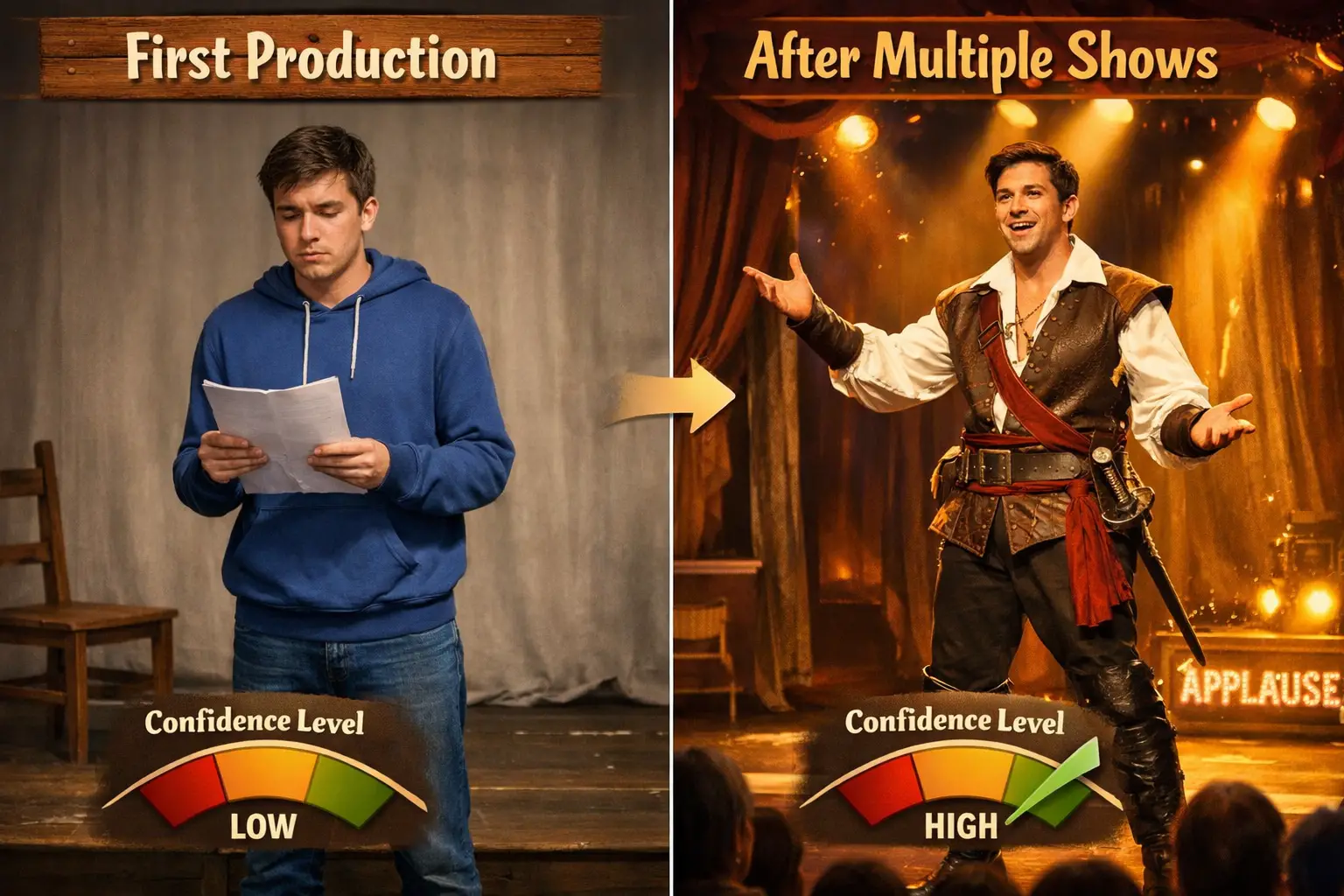
The path from nervous first audition to confident performer unfolds one production at a time. Each role teaches new skills, every director offers different insights, and each performance builds the foundation for a potential acting career. In an industry where the Bureau of Labor Statistics projects limited employment growth[3], the practical experience, professional network, and demonstrated commitment gained through community theater provide crucial competitive advantages.
Take Action: Your Next Steps
Ready to begin your acting journey? Here’s your action plan:
- This Week: Research community theaters within 30 minutes of your location
- This Month: Attend a community theater production to experience the environment
- Next Audition Season: Prepare audition materials and attend your first audition
- After Your First Production: Evaluate your experience and plan your next role
- Ongoing: Build relationships, develop skills, and accumulate diverse credits
The stage is waiting, the community is welcoming, and your transformation from beginning actor to skilled performer starts with a single audition. Community theater provides the training ground where dreams meet reality, where passion transforms into skill, and where the next generation of actors discovers their voice.
Don’t wait for permission, perfect training, or ideal circumstances. The beauty of community theater lies in its accessibility and immediacy. Your acting career begins the moment you walk through those theater doors. 🎭
References
[1] Theatre Counts – https://www.aep-arts.org/theatre-counts/
[2] Online Acting Education Market – https://www.mordorintelligence.com/industry-reports/online-acting-education-market
[3] Actors – https://www.bls.gov/ooh/entertainment-and-sports/actors.htm
[4] Theatre Education Trends – https://schooltheatre.org/advocacy/theatre-education-trends/
[5] Performing Arts Companies – https://www.anythingresearch.com/industry/Performing-Arts-Companies.htm
[6] Benefits Of Theatre Ed – https://www.aate.com/benefits-of-theatre-ed
[7] Community Theatres Impact – https://aact.org/community-theatres-impact
[8] Theatre Facts 2019 Theatre Communications Group – https://culturaldata.org/learn/data-at-work/2020/theatre-facts-2019-theatre-communications-group/