
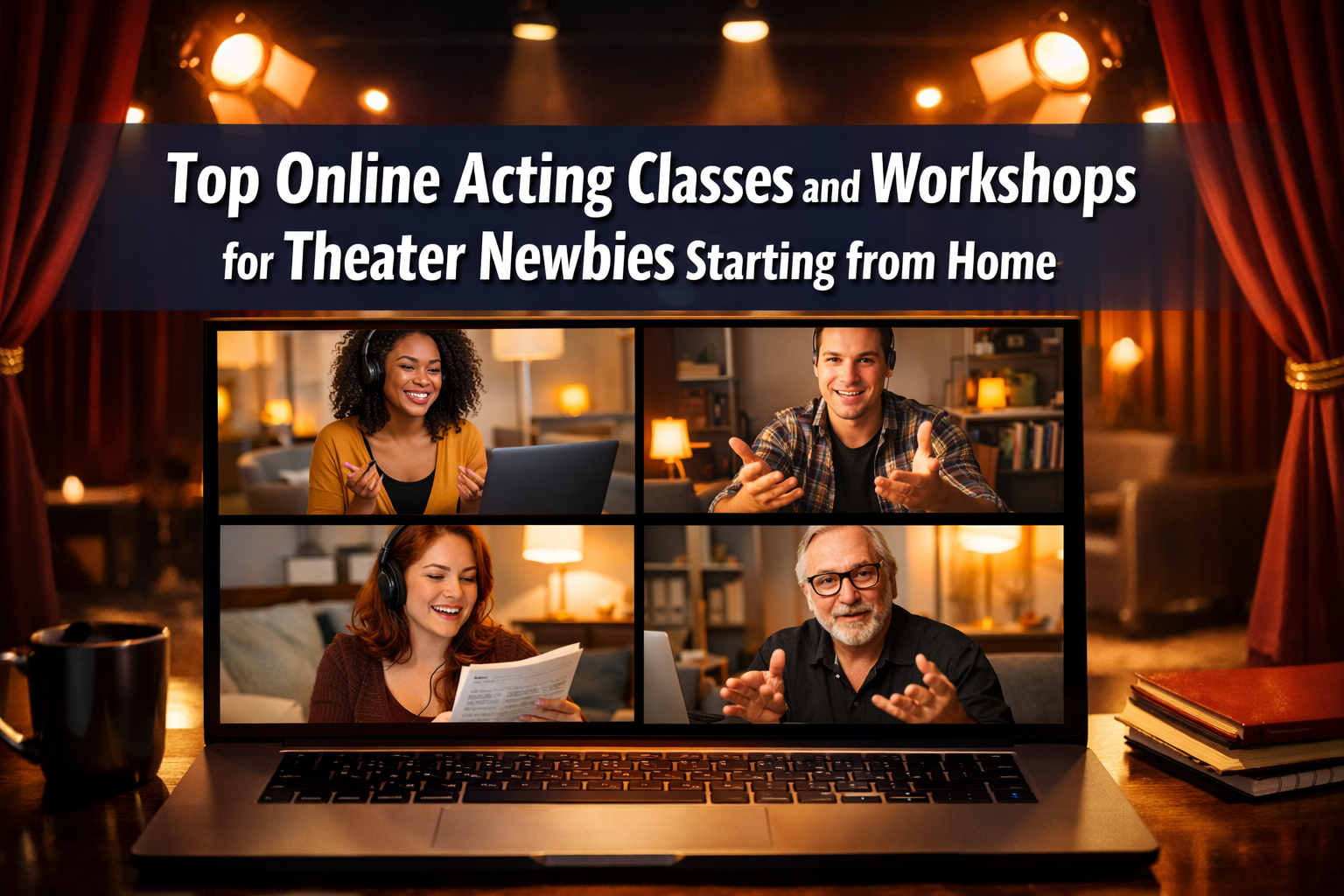
The dream of stepping onto a stage, commanding an audience with powerful performances, and bringing characters to life no longer requires moving to New York or Los Angeles. In 2026, aspiring actors can launch their theater careers from the comfort of their living rooms, accessing world-class instruction that once existed only in prestigious studio spaces. The Top Online Acting Classes and Workshops for Theater Newbies Starting from Home have revolutionized how beginners develop foundational skills, offering accessible pathways to theatrical excellence without the traditional barriers of location, cost, or intimidating audition processes.
Whether someone dreams of community theater productions, professional stage work, or simply wants to build confidence through performance skills, virtual training platforms now deliver comprehensive instruction in voice projection, physical blocking, character development, and stage presence. These programs combine the convenience of remote learning with the rigor of professional theater training, creating opportunities for newcomers to explore their passion before committing to expensive in-person programs or competitive local theater scenes.
Key Takeaways
- Affordable trial options like Green Room Acting Studio’s $55 introductory class allow beginners to test their interest before major financial commitments[3]
- Professional-quality instruction from studios like Michelle Danner and Stella Adler brings Oscar-winning film techniques and renowned theater methods directly to home students[1][2]
- Realistic skill development timelines show basic improvement within 4-6 weeks, solid foundations in 3-6 months, and professional-level abilities within one year of consistent training[4]
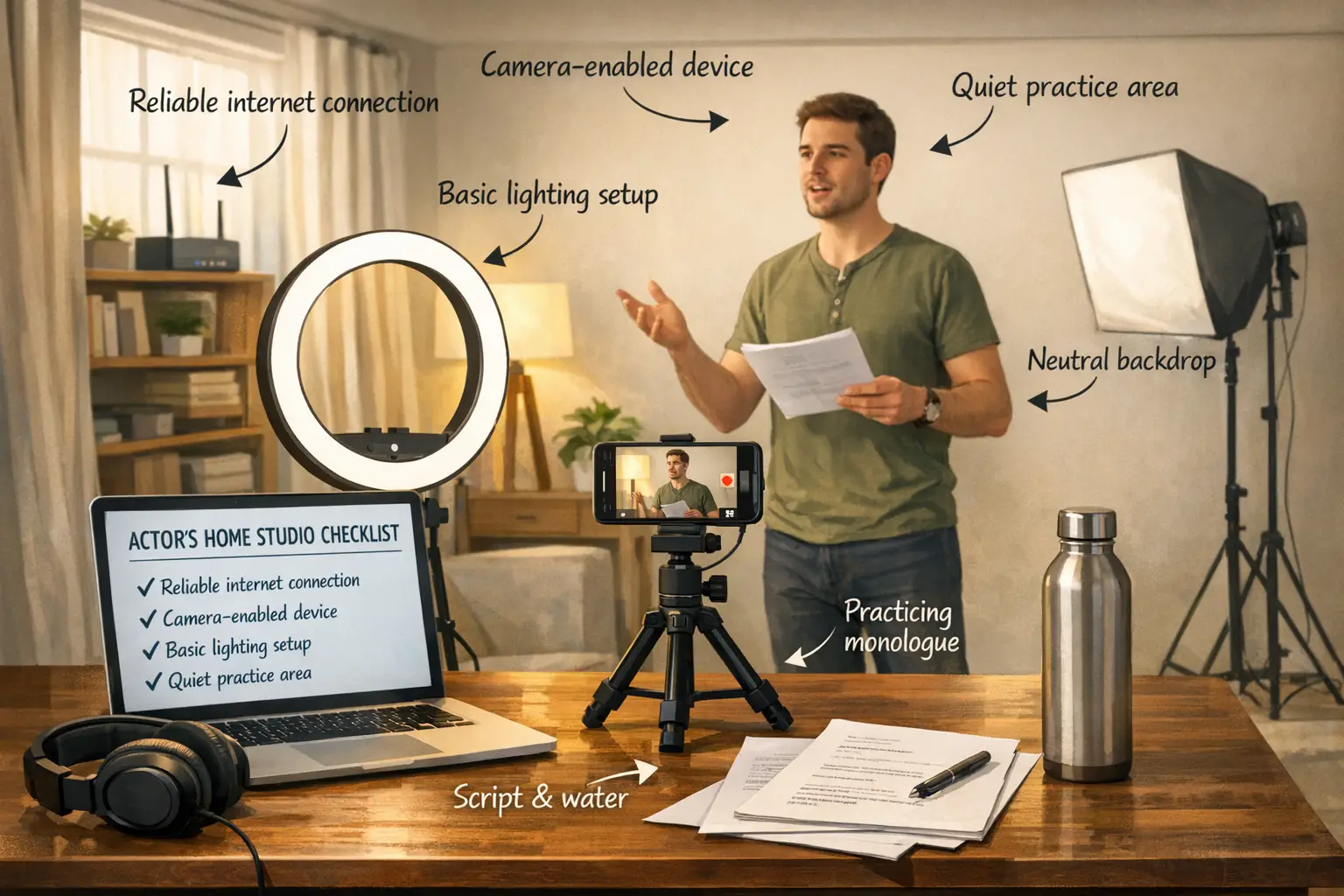
- Minimal equipment requirements mean beginners need only reliable internet, a camera-enabled device, basic lighting, and a quiet practice space to begin their journey[4]
- Flexible scheduling with weekly 2-hour sessions and 4-8 week enrollment periods accommodates working professionals and students balancing multiple commitments[1]
Why Online Acting Training Works for Theater Beginners in 2026

The Evolution of Virtual Performance Education
The landscape of actor training has transformed dramatically. What once seemed impossible—teaching the physical, spatial art of theater through screens—has become not just viable but advantageous for specific skill development. Modern Top Online Acting Classes and Workshops for Theater Newbies Starting from Home emphasize camera awareness, self-tape mastery, and virtual audition skills that align perfectly with contemporary casting processes for streaming platforms like Netflix, Amazon, Hulu, and HBO Max[4].
This shift reflects industry realities. Even theater productions now frequently request self-taped auditions before in-person callbacks. Learning to perform effectively on camera translates directly to stage work, as actors develop heightened awareness of facial expressions, vocal clarity, and physical precision that serves them across all performance mediums.
Advantages Over Traditional In-Person Classes
Online learning provides unique benefits for beginners that traditional studio classes cannot match:
🎭 Immediate playback review allows students to watch their performances instantly, identifying areas for improvement with precision[4]
🎭 Real-world audition preparation through practicing self-tape techniques that mirror actual casting processes
🎭 Reduced performance anxiety as beginners practice in familiar, comfortable environments before facing live audiences
🎭 Geographic accessibility connecting students worldwide with top-tier instructors from major theater centers[1][2]
🎭 Flexible scheduling that accommodates diverse lifestyles and commitments
🎭 Cost savings by eliminating commute time, parking fees, and relocation expenses
Building Confidence Before Local Theater Commitment
Many acting coaches now recommend that complete beginners develop foundational skills through online classes before auditioning for local community theater. This approach allows newcomers to:
- Learn basic terminology and techniques without the pressure of immediate performance
- Develop confidence in a supportive, small-group virtual environment
- Understand their genuine interest level before committing significant time
- Build a skill foundation that makes local auditions less intimidating
- Practice consistently without the scheduling constraints of rehearsal commitments
This preparatory approach reduces the overwhelming nature of jumping directly into community theater productions, where beginners often feel lost among more experienced performers.
Comprehensive Guide to Top Online Acting Classes and Workshops for Theater Newbies Starting from Home
Premium Studio Programs with Professional Instruction
Michelle Danner Acting Studio: Film Technique Meets Theater Fundamentals
Michelle Danner Acting Studio offers beginner, intermediate, and advanced online classes featuring high-quality material from Oscar-winning and nominated films[1]. This prestigious program brings Hollywood-caliber instruction to home students, with particular emphasis on:
Core Curriculum Elements:
- Scene study using professionally written material
- Self-tape auditioning techniques
- Improvisation fundamentals
- Character development methods
- Cold reading skills for auditions
Classes typically meet once per week for 2-hour sessions, with flexible options of 4-week or 8-week enrollment periods[1]. This structure allows beginners to commit to manageable timeframes while building consistent practice habits.
The studio emphasizes small, intimate group settings with personal feedback from industry coaches rather than passive video-based learning[1]. Students receive individualized attention despite the virtual format, with instructors providing detailed notes on performances and specific techniques for improvement.
What Makes It Stand Out:
- Material from actual Oscar-winning films provides professional-level training content
- Instructors with active industry experience offer current, relevant guidance
- Progressive curriculum allows advancement from beginner through advanced levels
- Accessible from anywhere in the world through Zoom platforms[1]
Stella Adler Studio of Acting: Legendary Theater Technique Online
The Stella Adler Studio of Acting brings one of theater’s most respected training methods to virtual students through comprehensive online programs[2]. This institution offers both Actor Workshops (18+) and dedicated Teen Courses (14-18), taught by faculty from the New York studio and Los Angeles’s Art of Acting Studio[2].
The Stella Adler technique emphasizes:
- Imagination and script analysis
- Physical characterization
- Emotional authenticity through circumstances
- Voice and speech fundamentals
- Movement and blocking for stage
Program Structure:
- Multiple class formats including scene study, monologue work, and technique foundations[2]
- Age-appropriate instruction for teens and adults
- Faculty with direct lineage to Stella Adler’s teaching methods
- Emphasis on theater traditions adapted for contemporary performance
The studio’s virtual programs maintain the rigor of their renowned in-person training while accommodating students who cannot relocate to New York or Los Angeles. Beginners gain access to a century of theater knowledge distilled into accessible, structured lessons that build progressively.
Green Room Acting Studio: Affordable Entry Point with Trial Options
For beginners uncertain about financial commitment, Green Room Acting Studio offers a $55 trial acting class for new students, providing an accessible entry point into professional instruction[3]. This low-risk option allows newcomers to experience quality training before investing in longer programs.
The studio’s beginner Method Acting courses provide foundational training in one of theater’s most influential techniques. Method Acting emphasizes:
- Emotional memory and personal connection to characters
- Sense memory exercises
- Relaxation and concentration techniques
- Objective-based performance
- Authentic emotional expression
Key Benefits:
- Affordable trial pricing removes financial barriers for exploration
- Regular beginner course schedules with clear start dates
- Method Acting foundation applicable across all performance styles
- Supportive environment specifically designed for newcomers
The trial class format allows students to assess instructor compatibility, teaching style, and personal interest before committing to multi-week programs. This approach reduces the intimidation factor that prevents many potential actors from beginning their training.
Specialized Online Acting Programs and Workshops
New York Film Academy: Intensive Short-Term Workshops
The New York Film Academy offers Acting for Film online workshops that condense professional training into intensive formats[5]. While primarily film-focused, these workshops teach camera techniques that translate directly to contemporary theater auditions and self-tape requirements.
Workshop formats include:
- Weekend intensive sessions
- One-week immersive programs
- Multi-week structured courses
- Self-paced learning modules
The condensed nature suits beginners who want to test their commitment before longer-term enrollment or those seeking specific skills like self-tape technique.
The Barrow Group: Comprehensive Online Theater Training
The Barrow Group provides online acting, directing, playwriting, and screenwriting courses that give beginners a holistic understanding of theatrical production[6]. This comprehensive approach helps actors understand the collaborative nature of theater and develop appreciation for all aspects of performance.
Their curriculum includes:
- Acting technique fundamentals
- Script analysis from an actor’s perspective
- Character development workshops
- Scene study with professional material
- Integration of directing concepts for better performance understanding
USC School of Dramatic Arts: Academic Excellence Online
The University of Southern California offers online courses through their School of Dramatic Arts, providing academic rigor combined with practical performance training[7]. These programs suit beginners who value structured, university-level instruction and seek credentials alongside skill development.
Benefits include:
- Academic framework with clear learning objectives
- University-affiliated instruction quality
- Potential for continuing education credits
- Structured curriculum with measurable outcomes
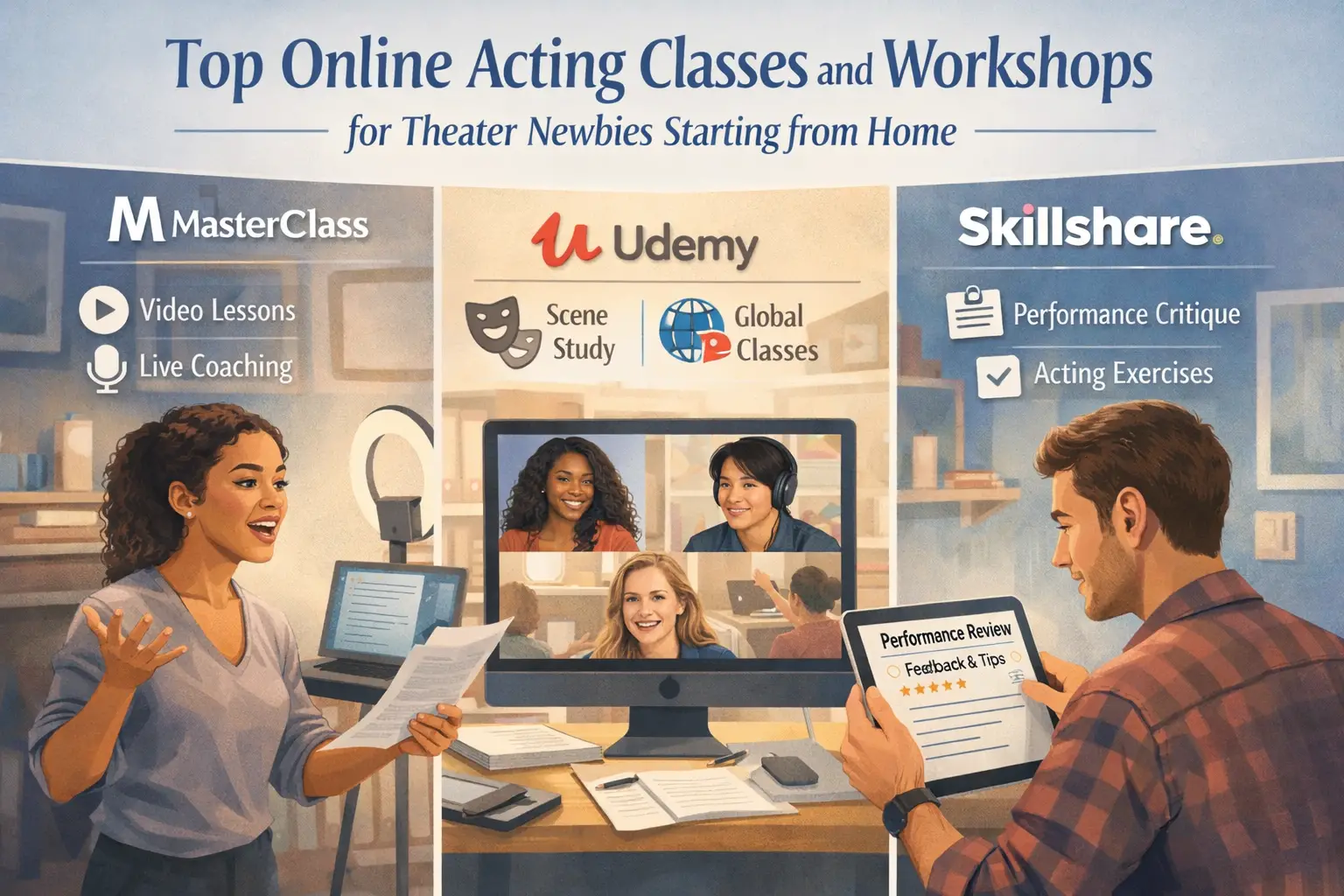
Skillshare: Budget-Friendly Introductory Classes
For absolute beginners on tight budgets, Skillshare offers acting courses that provide foundational knowledge at minimal cost[8]. While less intensive than studio programs, these classes introduce basic concepts and help newcomers determine their interest level.
Skillshare advantages:
- Subscription model allows access to multiple courses
- Self-paced learning without scheduling pressure
- Variety of instructors and teaching approaches
- Low financial risk for exploration
Essential Skills Taught in Top Online Acting Classes and Workshops for Theater Newbies Starting from Home
Foundational Theater Techniques
Voice Projection and Vocal Control
Voice projection remains fundamental to theater performance, even when training online. Quality programs teach:
- Breath support techniques using diaphragmatic breathing
- Resonance development to amplify natural vocal power
- Articulation exercises for clarity and precision
- Vocal warm-ups to prevent strain and maintain health
- Pitch and tone variation for emotional expression
Online instruction allows students to record vocal exercises and compare their progress over time, providing concrete evidence of improvement that motivates continued practice.
Physical Blocking and Stage Movement
Understanding blocking—the precise physical movements and positioning on stage—translates surprisingly well to virtual instruction. Teachers guide students through:
- Spatial awareness even in limited home practice spaces
- Gesture economy and purposeful movement
- Physical characterization techniques
- Stage pictures and visual composition
- Movement vocabulary common in theater direction
Students practice blocking in their home spaces, learning to work within constraints that actually build stronger spatial awareness than expansive studio floors where imprecise movement goes unnoticed.
Scene Breakdown and Analysis
Scene breakdown teaches actors to dissect scripts systematically, identifying:
- Objectives (what the character wants)
- Obstacles (what prevents them from getting it)
- Tactics (how they pursue their objective)
- Beats (shifts in emotional or tactical approach)
- Subtext (underlying meaning beneath dialogue)
This analytical skill forms the foundation for all character work and separates trained actors from untrained performers who rely solely on instinct.
Contemporary Performance Skills
Cold Reading Mastery
Cold reading—performing material with minimal preparation—is essential for auditions. Online classes teach:
- Quick script analysis techniques
- Making strong initial choices rapidly
- Maintaining focus under pressure
- Adjusting performances based on direction
- Professional audition behavior and etiquette
Virtual platforms allow repeated practice with immediate feedback, accelerating skill development in this crucial area[1].
Self-Tape Audition Techniques
In 2026, self-tape auditions dominate casting processes for both theater and screen work. Training includes:
- Framing and composition for camera
- Lighting basics using household equipment
- Audio quality optimization
- Background selection and setup
- File formatting and submission protocols
- Multiple take strategies for best performance capture
Online acting classes inherently build these skills since students regularly record and submit work for instructor review[4].
Monologue Development
Monologue work allows actors to showcase range and skill independently. Comprehensive training covers:
- Selecting age-appropriate, type-appropriate material
- Memorization techniques for retention
- Building emotional arcs within solo pieces
- Physical life and movement during monologues
- Adapting monologues for different audition contexts
Students develop a repertoire of contrasting monologues (dramatic and comedic, classical and contemporary) that serve them throughout their careers.
What Beginners Need to Start: Equipment and Preparation
Technical Requirements
Starting Top Online Acting Classes and Workshops for Theater Newbies Starting from Home requires minimal investment. Essential equipment includes[4]:
| Equipment | Requirement | Budget Option |
|---|---|---|
| Internet Connection | Reliable broadband (25+ Mbps) | Home WiFi or mobile hotspot |
| Device | Computer, tablet, or smartphone with camera | Existing smartphone (most have adequate cameras) |
| Lighting | Basic key light for visibility | Natural window light + $20 clip lamp |
| Audio | Clear microphone for dialogue | Device built-in mic or $15 earbuds |
| Space | Quiet, private area for practice | Bedroom, home office, or cleared corner |
| Background | Neutral, non-distracting backdrop | Plain wall or inexpensive backdrop paper |
Creating an Effective Practice Space
Even small apartments can accommodate acting practice with thoughtful setup:
Lighting Tips:
- Position near windows for natural light during day sessions
- Add one adjustable desk lamp as key light at 45-degree angle
- Avoid overhead-only lighting that creates unflattering shadows
- Test lighting on camera before class to ensure visibility
Sound Considerations:
- Choose rooms away from street noise, appliances, or household traffic
- Use soft furnishings (curtains, rugs, cushions) to reduce echo
- Schedule practice during quieter household times
- Consider inexpensive acoustic foam panels for persistent echo issues
Space Optimization:
- Clear a 6×6 foot area minimum for movement exercises
- Ensure camera can capture full body when standing
- Position device at eye level (use books or boxes to elevate if needed)
- Keep props, scripts, and water within easy reach but off-camera
Mental and Emotional Preparation
Beyond physical setup, beginners should prepare psychologically:
✅ Embrace vulnerability – Acting requires emotional openness that feels uncomfortable initially
✅ Accept imperfection – Every professional actor started as a beginner; mistakes are essential learning tools
✅ Commit to consistency – Regular practice matters more than intensive cramming
✅ Stay curious – Approach exercises with genuine interest rather than performance anxiety
✅ Build resilience – Rejection and critique are inherent to acting; developing thick skin early helps long-term success
Realistic Timelines: What to Expect from Online Acting Training
Short-Term Progress (4-6 Weeks)
Within the first month of consistent training, beginners typically experience[4]:
- Basic comfort with performing on camera
- Fundamental vocabulary understanding (objectives, beats, tactics)
- Initial script analysis abilities
- Improved self-awareness about physical and vocal habits
- Reduced performance anxiety in supportive class environments
This early stage focuses on building confidence and establishing foundational concepts. Students should not expect polished performances but rather growing comfort with the acting process.
Medium-Term Development (3-6 Months)
With three to six months of quality training, actors develop[4]:
- Solid technique foundations in chosen methods (Meisner, Stella Adler, Method, etc.)
- Consistent script analysis skills applicable to any material
- Reliable emotional access through various techniques
- Professional self-tape capabilities
- Expanded repertoire of monologues and scene work
- Constructive self-evaluation abilities
At this stage, beginners transition to intermediate skill levels and can participate meaningfully in community theater auditions or student film projects.
Long-Term Mastery (1+ Years)
After one year of consistent, quality training, actors typically achieve[4]:
- Bookable skills for professional auditions
- Versatile technique across multiple styles and genres
- Strong audition presence and professional behavior
- Developed artistic voice and type awareness
- Network connections through class communities
- Confidence to pursue professional opportunities
“With quality training, actors develop bookable skills within one year, but the journey of artistic growth continues throughout an entire career.” – Industry standard timeline[4]
Choosing the Right Program: Evaluation Criteria
Instructor Credentials and Experience
Research instructors’ backgrounds thoroughly:
- Professional performance credits in theater, film, or television
- Teaching experience specifically with beginners
- Training lineage connecting to respected acting traditions
- Current industry involvement ensuring relevant, contemporary guidance
- Student success stories and career outcomes
Quality instructors balance professional achievement with teaching ability—great actors don’t automatically make great teachers.
Class Size and Interaction Format
Effective online acting training requires small, intimate group settings with personal feedback[1]. Evaluate:
- Maximum class size (ideal: 8-12 students for adequate individual attention)
- Student-to-instructor ratio during exercises
- Feedback frequency and detail level
- Live interaction versus pre-recorded content
- Peer collaboration opportunities for scene work
Avoid programs offering only passive video watching without live instruction and personalized feedback.
Curriculum Structure and Progression
Look for programs with:
- Clear learning objectives for each session and course level
- Progressive skill building from foundational to advanced
- Diverse exercise types (vocal, physical, analytical, performance)
- Practical application through scene work and monologues
- Assessment methods to track improvement
Well-designed curricula balance technique instruction with practical application, ensuring students understand concepts and can execute them.
Cost and Value Proposition
Compare programs across multiple factors beyond simple price:
Budget-Friendly Options:
- Green Room Acting Studio: $55 trial class[3]
- Skillshare: ~$30/month for unlimited courses[8]
- Community college online programs: $100-300 per course
Mid-Range Investment:
- Michelle Danner Acting Studio: 4-week courses[1]
- The Barrow Group: Semester-length programs[6]
- Independent instructor workshops: $200-500 for 4-8 weeks
Premium Programs:
- Stella Adler Studio: Comprehensive multi-month programs[2]
- USC School of Dramatic Arts: University-level courses[7]
- NYFA intensive workshops: $500-2000+ depending on length[5]
Calculate cost per contact hour and instructor attention rather than total price alone. A $500 course with 20 hours of personalized instruction ($25/hour) offers better value than a $200 course with 4 hours of generic content ($50/hour).
Trial Options and Money-Back Guarantees
Minimize risk by prioritizing programs offering:
- Single-class trials like Green Room’s $55 option[3]
- Money-back guarantees within first 1-2 sessions
- Free introductory workshops or orientation sessions
- Audit options to observe before enrolling
- Flexible payment plans for longer programs
These options allow beginners to assess compatibility before significant financial commitment.
Building Your Acting Practice Beyond Classes
Supplemental Training Resources
Maximize progress by combining formal classes with:
Reading Materials:
- “An Actor Prepares” by Constantin Stanislavski
- Respect for Acting” by Uta Hagen
- “The Actor and the Target” by Declan Donnellan
- “True and False” by David Mamet
- Play scripts from various periods and styles
Practice Partnerships:
- Connect with classmates for additional scene work
- Join online acting communities for peer feedback
- Participate in virtual table reads and play readings
- Form accountability partnerships for consistent practice
Performance Opportunities:
- Virtual open mic nights for monologue performance
- Online theater festivals accepting submissions
- Student film projects seeking actors
- Podcast drama productions
- Community theater auditions when ready
Daily Practice Routines
Professional actors maintain daily practice regardless of current projects. Beginners should establish:
Morning Routine (15-20 minutes):
- Vocal warm-ups and articulation exercises
- Physical stretching and body awareness
- Breathing exercises for relaxation and support
- Script reading or memorization work
Evening Practice (20-30 minutes):
- Scene or monologue rehearsal
- Self-tape recording and review
- Character journal writing
- Observation exercises (people-watching, analyzing behavior)
Consistency matters more than duration—20 minutes daily outperforms occasional 3-hour sessions.
Tracking Progress and Setting Goals
Maintain an actor’s journal documenting:
- Weekly class takeaways and instructor feedback
- Personal observations about growth areas
- Recorded performances with self-critique notes
- Audition experiences and outcomes
- Long-term career goals and milestones
Regular review reveals patterns, celebrates progress, and identifies areas needing additional focus.
Common Challenges and How to Overcome Them
Technical Difficulties
Challenge: Internet connectivity issues, audio problems, or platform unfamiliarity disrupt learning.
Solutions:
- Test technology 30 minutes before class starts
- Have backup connection option (mobile hotspot)
- Learn platform features through tutorials before first session
- Communicate technical issues to instructors immediately
- Keep device software and apps updated
Self-Consciousness and Camera Discomfort
Challenge: Performing for a camera in one’s home feels awkward and inhibiting.
Solutions:
- Practice recording yourself daily to build comfort
- Remember classmates share the same vulnerability
- Focus on scene partners and objectives rather than self-image
- Reframe camera as a tool rather than judgment device
- Celebrate small improvements rather than expecting perfection
Isolation and Limited Feedback
Challenge: Missing the energy of in-person classes and ensemble work.
Solutions:
- Actively participate in class discussions and peer feedback
- Schedule virtual coffee chats with classmates
- Join online acting communities beyond formal classes
- Attend virtual theater events and talkbacks
- Plan eventual in-person workshops or intensives as supplements
Motivation and Consistency
Challenge: Maintaining regular practice without external structure of rehearsals or performances.
Solutions:
- Schedule practice sessions as non-negotiable appointments
- Create accountability partnerships with fellow students
- Set specific, measurable short-term goals
- Reward consistent practice with small treats or breaks
- Connect daily work to long-term artistic vision
The Future of Online Acting Training
The Top Online Acting Classes and Workshops for Theater Newbies Starting from Home continue evolving with technology and industry needs. Emerging trends include:
Virtual Reality Integration:
- Immersive rehearsal spaces allowing spatial blocking practice
- VR theater performances reaching global audiences
- Haptic feedback for physical awareness training
AI-Powered Feedback:
- Automated script analysis tools
- Performance assessment algorithms identifying patterns
- Personalized practice recommendations based on progress data
Hybrid Training Models:
- Combination of online foundational work with periodic in-person intensives
- Virtual classes supplemented by local practice groups
- Global collaboration on productions performed simultaneously in multiple locations
Specialized Niche Programs:
- Voice-over specific training for animation and gaming
- Motion capture performance techniques
- Interactive theater for digital platforms
- Accessibility-focused performance training
These innovations expand opportunities while maintaining the core human connection essential to acting craft.
Conclusion: Taking the First Step Toward Your Theater Dreams
The Top Online Acting Classes and Workshops for Theater Newbies Starting from Home have democratized access to professional theater training in unprecedented ways. Whether someone dreams of community theater stages, professional productions, or simply wants to develop confidence and expressive skills, quality virtual instruction provides accessible, affordable pathways to begin the journey.
Key action steps for aspiring actors:
Start with low-risk exploration – Take advantage of trial classes like Green Room’s $55 option[3] to test interest without major commitment
Invest in foundational technique – Choose programs emphasizing core skills (voice, movement, script analysis) over trendy shortcuts
Create consistent practice habits – Schedule regular training sessions and daily practice routines that build skills progressively
Prepare your space thoughtfully – Set up adequate lighting, sound, and privacy for effective learning[4]
Set realistic timeline expectations – Understand that basic skills develop in weeks, solid foundations in months, and professional abilities in years[4]
Connect with community – Build relationships with classmates and instructors for support, accountability, and collaboration
Supplement formal training – Read plays, watch performances, practice independently, and seek performance opportunities
Embrace the learning process – Accept vulnerability, celebrate small victories, and maintain curiosity throughout the journey
The theater world welcomes newcomers who approach training with dedication, openness, and consistent effort. Online platforms remove traditional barriers of geography and cost while maintaining the rigor and personal attention that develop genuine skill. Whether someone ultimately pursues professional acting or simply enriches their life through performance art, the Top Online Acting Classes and Workshops for Theater Newbies Starting from Home offer transformative opportunities limited only by commitment and imagination.
The stage awaits—even if it starts in your living room. Take that first step today, and discover the artist within waiting to emerge.
References
[1] Online Acting Classes – https://www.michelledanner.com/online-acting-classes/
[2] Online Programs – https://classes.stellaadler.com/classes/online-programs/
[3] greenroomactingstudio – https://www.greenroomactingstudio.com
[4] The Ultimate Guide To Best Online Acting Classes For Beginners 2025 – https://theonlineactor.com/blogs/acting/the-ultimate-guide-to-best-online-acting-classes-for-beginners-2025
[5] Acting For Film – https://www.nyfa.edu/online-workshops/acting-for-film/
[6] Online Acting Directing Playwriting Screenwriting Courses – https://www.barrowgroup.org/acting-school/online-acting-directing-playwriting-screenwriting-courses/
[7] School Of Dramatic Arts – https://online.usc.edu/schools/school-of-dramatic-arts/
[8] Acting – https://www.skillshare.com/en/browse/acting