

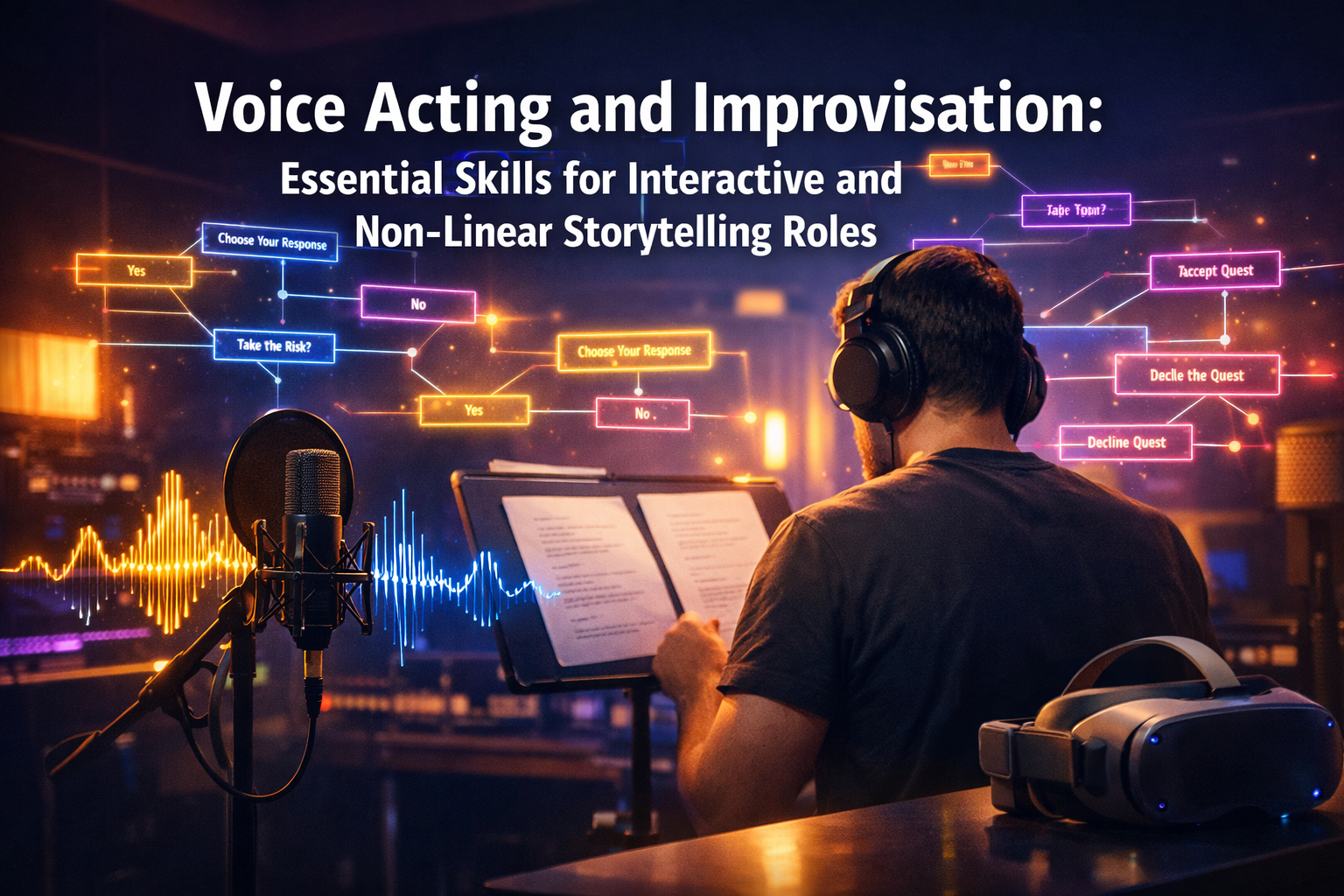
The recording booth lights dim, and the script in front of you suddenly branches into six different dialogue options. The player might choose empathy, aggression, humor, or complete silence. Your character needs to respond authentically to each possibility—and you have just one session to capture them all. Welcome to the new frontier of voice acting in 2026, where Voice Acting and Improvisation: Essential Skills for Interactive and Non-Linear Storytelling Roles have become non-negotiable requirements for professional success.
Gone are the days when voice actors could rely solely on reading scripts with perfect diction and emotional delivery. Today’s interactive media—from sprawling video games with hundreds of branching narratives to virtual reality training simulations and choose-your-own-adventure podcasts—demands performers who can think on their feet, adapt instantly to directorial changes, and maintain character consistency across dozens of potential story paths. The voice actors who thrive in this landscape are those who embrace improvisation not as an occasional skill but as a fundamental pillar of their craft.
Key Takeaways
- Improvisation has become a critical competitive differentiator for voice actors in 2026, with interactive formats like VR, AR, and branching narrative games requiring spontaneous, nuanced performance adaptability
- Interactive storytelling projects demand actors deliver varied responses across multiple pathways while maintaining character continuity, empathy, and emotional authenticity—skills that AI-generated voices cannot replicate
- Technical proficiency in home studio recording and spatial audio delivery is now a baseline expectation, complementing improvisational performance skills
- VR and AR expansion beyond gaming into education, healthcare, and corporate training creates substantial new opportunities for voice actors skilled in guiding users through non-linear virtual experiences
- AI-human collaboration workflows position improvisation and nuanced performance as key differentiators in the final production stage, protecting human talent value in hybrid productions
Understanding Interactive and Non-Linear Storytelling in Voice Acting
What Makes Storytelling “Non-Linear”?
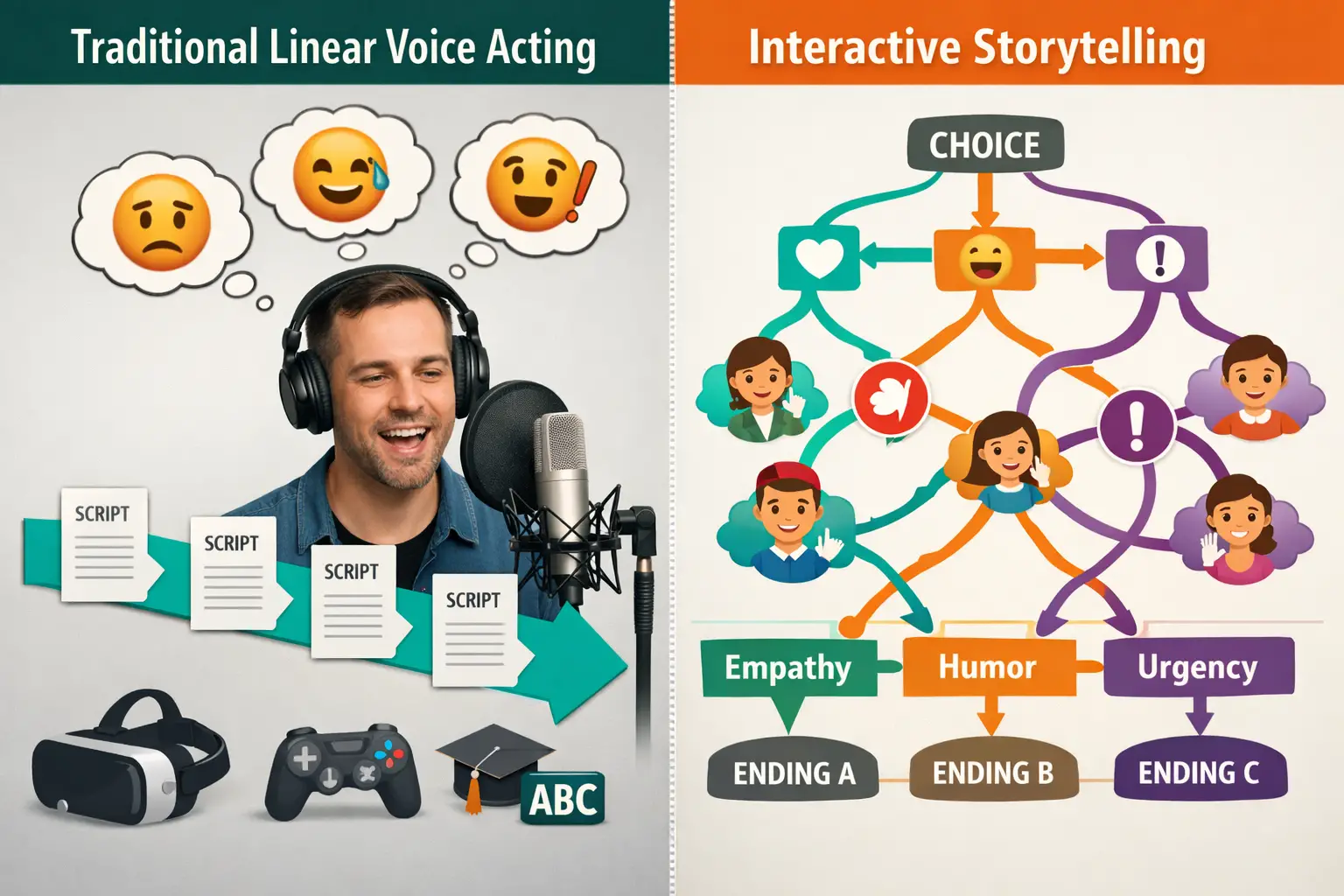
Traditional voice acting follows a linear path: the actor receives a script, performs it sequentially from beginning to end, and the audience experiences the story in that exact order. Non-linear storytelling shatters this model. In video games, educational simulations, and interactive experiences, the narrative branches based on user choices, environmental factors, or randomized events.
Consider a virtual reality healthcare training module where medical students practice patient consultations. The voice actor playing the patient might need to respond differently depending on whether the student:
- Shows empathy and active listening 🎭
- Rushes through the examination
- Asks specific diagnostic questions
- Makes a medical error
- Demonstrates cultural sensitivity
Each pathway requires the voice actor to deliver authentic, contextually appropriate responses that maintain the character’s medical history, personality, and emotional state. This isn’t simply reading different lines—it’s inhabiting a character across multiple potential realities simultaneously.
Why Improvisation Matters More Than Ever
Voice actors “comfortable with improvisation and non-linear storytelling will lead the way” in emerging content formats[1]. This shift reflects fundamental changes in how audiences consume media. Interactive experiences prioritize player agency and personalization, meaning no two users may experience the same story in the same way.
Projects with “multiple pathways require actors to deliver varied responses that maintain nuance, empathy and character continuity”[1]. An improvisation-skilled voice actor can:
✅ Adjust emotional intensity based on directorial feedback in real-time
✅ Generate alternative line readings without additional script revisions
✅ Maintain character voice consistency across recording sessions months apart
✅ Collaborate with writers to develop more authentic dialogue
✅ Recover gracefully from technical issues or script errors during recording
“Human emotion outperforms AI for brand trust and conversion, with audiences preferring peer-to-peer conversational reads that sound like a trusted friend or advisor.”[1]
This authenticity becomes even more critical in interactive formats where users expect responsive, believable characters rather than robotic, pre-programmed responses.
The Expanding Landscape: Where Voice Acting and Improvisation Skills Are Essential
Virtual Reality and Augmented Reality Applications
As “VR and AR applications expand beyond gaming into education, healthcare and corporate training, voice acting talent will be integral to guiding users through these virtual worlds”[1]. These immersive environments create unprecedented demands for voice actors.
In VR, users don’t passively watch a story unfold—they participate in it. A voice actor might portray:
- A virtual museum guide who responds to visitor questions with historically accurate information delivered conversationally
- A corporate training instructor who adapts explanations based on learner performance and engagement
- A therapeutic companion in mental health applications who provides supportive dialogue across various emotional scenarios
- An adventure game companion who reacts dynamically to player decisions and environmental changes
Each role requires the ability to deliver performances that feel spontaneous and responsive, even when working from prepared material. The improvisation skill set allows actors to suggest alternative phrasings, emotional approaches, and character choices that enhance the interactive experience.
Spatial Audio and Technical Requirements
Professional voice actors must now deliver “high-fidelity source audio required for Spatial Audio mixing, ensuring the voice sits perfectly in a 3D soundscape”[3]. AI-generated alternatives often produce “flat” mono output unsuitable for immersive environments.
Spatial audio positions sound in three-dimensional space, creating the illusion that a character’s voice comes from a specific location relative to the listener. This technology requires:
| Technical Requirement | Why It Matters for Improvisation |
|---|---|
| Consistent microphone positioning | Maintains spatial consistency across multiple takes and improvised variations |
| Controlled room acoustics | Ensures all performance variations match sonically |
| Dynamic range management | Allows emotional improvisation without clipping or distortion |
| Multiple take variations | Provides editors options for different narrative branches |
Voice actors skilled in improvisation can deliver these technical requirements while maintaining performance quality, offering directors numerous usable takes that fit different narrative contexts.
Brand Voice Systems and Long-Term Consistency
More brands are building “one consistent sound across everything: ads, explainers, podcasts, apps and even their IVR or telephone messaging”[4]. This creates sustained work for actors who can maintain character and emotional consistency across diverse content formats.
A brand voice system might require a voice actor to portray the same character across:
- 📱 Mobile app tutorials with branching help pathways
- 🎙️ Podcast advertisements in various tones (informative, humorous, inspirational)
- 📞 Interactive voice response (IVR) systems with hundreds of menu options
- 🎬 Video explainers for different product features
- 🎮 Gamified learning experiences with multiple difficulty levels
Improvisation skills enable voice actors to generate new content within established brand parameters without extensive script development, reducing production time and costs while maintaining authenticity.
Developing Voice Acting and Improvisation: Essential Skills for Interactive and Non-Linear Storytelling Roles
Foundational Improvisation Techniques for Voice Actors
Building improvisational competency requires dedicated practice beyond traditional voice acting training. Here are essential techniques:
1. “Yes, And” Principle
The cornerstone of improvisation, this technique involves accepting what’s offered (the “yes”) and building upon it (the “and”). In voice acting contexts:
- Accept the emotional tone established by previous dialogue
- Build character development across multiple recording sessions
- Embrace directorial adjustments without resistance
- Expand on character backstory to inform performance choices
2. Character Consistency Exercises
Interactive projects often record dialogue non-sequentially over weeks or months. Practice maintaining character voice by:
- Creating detailed character profiles including speech patterns, vocabulary preferences, and emotional triggers
- Recording reference takes at the start of each session
- Developing physical anchors (posture, gestures) that trigger character voice
- Maintaining character journals between recording sessions
3. Emotional Range Mapping
Non-linear storytelling requires delivering the same information with different emotional colorings. Practice by:
- Taking a single line and delivering it with ten different emotional intentions
- Creating emotional transition exercises (moving smoothly from anger to compassion)
- Developing “emotional muscle memory” for rapid shifts during recording
- Building libraries of emotional reference recordings
4. Contextual Adaptation
Interactive narratives change based on prior user choices. Develop this skill by:
- Practicing dialogue with different assumed backstories
- Delivering lines as if different events preceded them
- Adjusting formality levels mid-performance
- Responding to imagined but unscripted prompts
Technical Skills That Complement Improvisation
The ability to deliver “polished audio from your own studio is now a baseline expectation”[1]. Voice actors who understand “professional digital audio workstations (DAWs)” and can “coordinate multilingual projects” can “elevate your professional profile”[1].
Essential technical competencies include:
🎛️ Home Studio Recording Proficiency
- Acoustic treatment and noise reduction
- Microphone selection and positioning for different character types
- Real-time monitoring and self-direction
- File organization for projects with hundreds of takes
🔊 DAW (Digital Audio Workstation) Skills
- Basic editing and cleanup
- Punch-and-roll recording for efficiency
- Marking and labeling multiple takes
- Exporting files to client specifications
🎚️ Audio Quality Control
- Identifying and correcting mouth noise, plosives, and sibilance
- Maintaining consistent levels across recording sessions
- Understanding frequency response and EQ basics
- Delivering broadcast-quality audio without extensive post-production
These technical skills free voice actors to focus on performance during recording, knowing they can quickly correct minor issues without requiring engineer intervention. This independence is particularly valuable for improvisation-heavy projects where multiple rapid takes generate the best results.
Training Resources and Practice Methods
Building Voice Acting and Improvisation: Essential Skills for Interactive and Non-Linear Storytelling Roles requires structured practice:
Improvisation Classes
- Theater-based improv courses (Second City, Upright Citizens Brigade, local theater groups)
- Voice-specific improv workshops focusing on character development
- Online improv communities and practice groups
- Cross-training with comedic and dramatic improvisation
Interactive Script Practice
- Video game script databases for practice material
- Creating your own branching dialogue trees
- Partner exercises with fellow voice actors
- Recording and analyzing your improvisational choices
Character Development Workshops
- Method acting techniques adapted for voice
- Psychological profiling for character creation
- Accent and dialect coaching for range expansion
- Movement and physicality classes (even for voice-only work, physical embodiment enhances vocal authenticity)
Technical Training
- DAW-specific tutorials (Pro Tools, Adobe Audition, Reaper)
- Home studio setup courses
- Audio engineering fundamentals
- Spatial audio and immersive sound design basics
Navigating the AI-Human Collaboration Landscape
Understanding the Hybrid Workflow
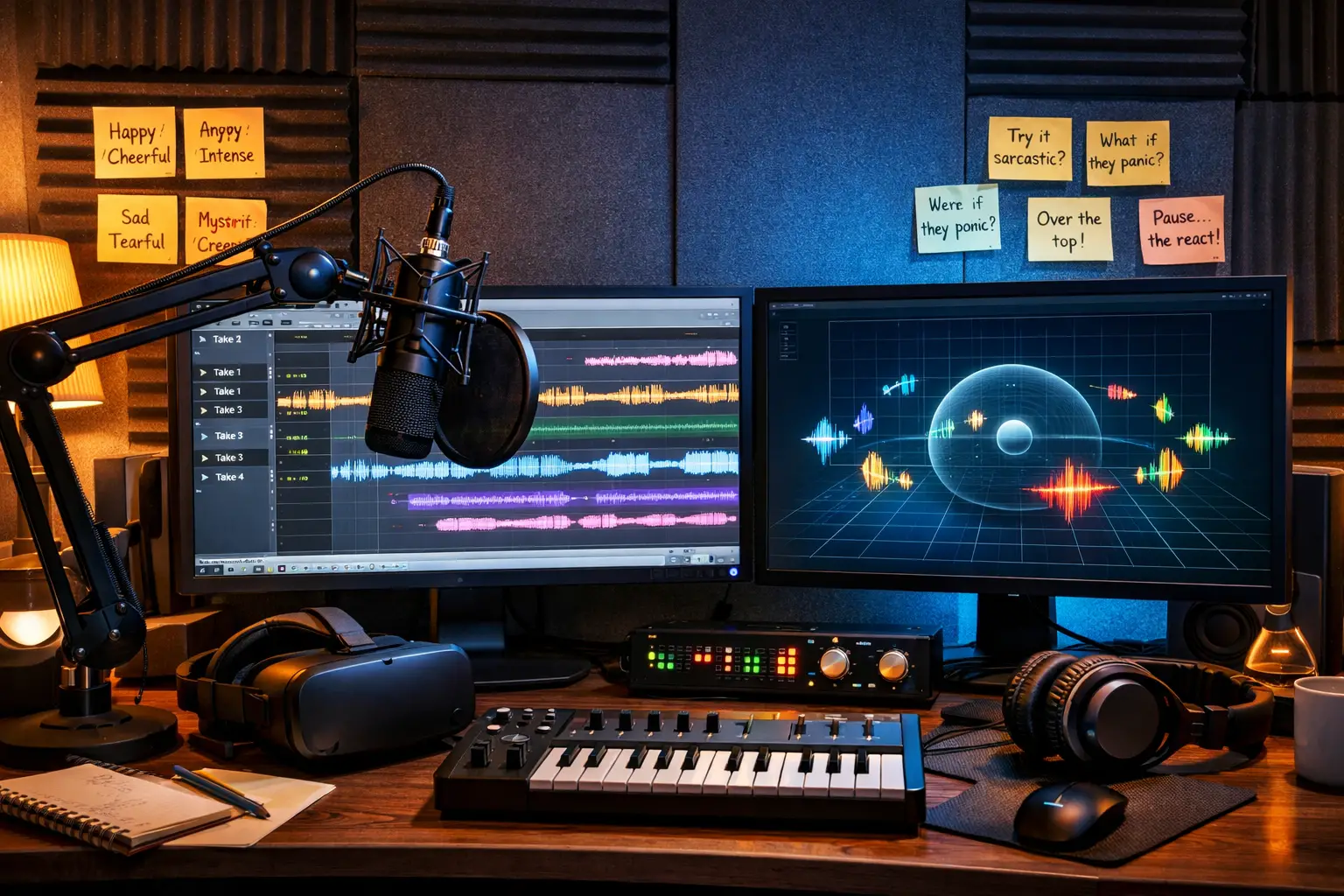
Synthetic voices are increasingly used “in collaboration with professional voice actors, handling low-stakes tasks, or used to create rough drafts, and human voice talent then took over, finessed, and finished”[2]. This AI-human collaboration model establishes hybrid workflows where improvisation and nuanced performance become differentiators in the final production stage.
Rather than viewing AI as a threat, skilled voice actors can position themselves as the essential “finishing touch” that transforms adequate synthetic voice into compelling, emotionally resonant performance. This requires:
- Understanding AI voice capabilities and limitations to identify where human performance adds irreplaceable value
- Developing signature performance styles that are distinctly human and difficult to replicate
- Emphasizing emotional nuance and improvisation in marketing materials and demos
- Specializing in complex interactive scenarios that require genuine adaptability
Contract Protections and Professional Standards
“More contracts and platforms are adding clearer rules around digital voices: when they can be made, how they can be used and what the performer gets in return”[4]. Voice actors should:
✅ Negotiate clear terms regarding AI voice cloning and usage rights
✅ Specify compensation models for AI-generated derivatives
✅ Maintain control over voice model training permissions
✅ Establish usage limitations and expiration terms
✅ Require human review and approval for AI-generated content using their voice characteristics
These protections ensure that voice actors’ improvisational and performance skills remain valued and compensated fairly in hybrid production environments.
Specialized Applications: Localization and Cultural Adaptation
“Businesses and studios are increasingly putting calls out to native speakers who not only have a more natural delivery but also understand local idioms and cultural nuances in tone, pace, and delivery”[2]. This trend creates opportunities for voice actors with multilingual improvisation skills that adapt to cultural and linguistic contexts.
Cultural Improvisation Competencies
Localization in interactive media goes far beyond translation. It requires cultural adaptation where:
- Humor translates appropriately (what’s funny in one culture may be offensive in another)
- Formality levels adjust to cultural communication norms
- Emotional expression matches cultural display rules
- References and idioms resonate with local audiences
- Character relationships reflect cultural family and social structures
Voice actors who can improvise within these cultural parameters become invaluable for international interactive projects, particularly in:
- 🌍 Global video game releases with region-specific dialogue variations
- 📚 Educational content adapted for different cultural contexts
- 🏥 Healthcare simulations addressing culture-specific patient communication
- 💼 Corporate training for multinational organizations
Building Multilingual Improvisation Skills
For voice actors interested in localization work:
- Develop cultural competency beyond language proficiency through immersion, study, and consultation with cultural advisors
- Practice code-switching between languages and cultural communication styles
- Build reference libraries of cultural-specific expressions, humor, and emotional displays
- Collaborate with localization teams to understand adaptation priorities
- Maintain authenticity while adapting content to new cultural contexts
Long-Form Immersive Content and Extended Narratives
“Longer, immersive storytelling, like YouTube documentaries” is expanding, with “compelling voices” helping channels reach millions of views[3]. This suggests sustained demand for voice actors in extended interactive narratives.
Stamina and Consistency for Extended Projects
Long-form interactive content presents unique challenges:
Physical Stamina
- Maintaining vocal health across multi-hour recording sessions
- Preventing fatigue that affects character consistency
- Managing breath support for extended dialogue sequences
- Protecting voice quality across project timelines spanning months
Character Consistency
- Maintaining character voice across 20+ hours of gameplay
- Remembering character development and emotional arcs
- Ensuring early and late recordings match sonically and performatively
- Managing character evolution across narrative branches
Improvisational Endurance
- Generating fresh takes after dozens of repetitions
- Maintaining creative energy throughout extended sessions
- Avoiding performance patterns that become repetitive
- Staying emotionally connected to character across hundreds of lines
Strategies for Long-Form Success
🎯 Detailed Character Documentation Create comprehensive character bibles including vocal characteristics, emotional patterns, speech quirks, and relationship dynamics.
🎯 Regular Vocal Maintenance Invest in vocal coaching, proper hydration, rest protocols, and warm-up/cool-down routines.
🎯 Strategic Session Planning Work with directors to schedule emotionally demanding scenes appropriately and avoid vocal strain.
🎯 Reference Recording Libraries Maintain organized collections of previous takes for consistency checking.
🎯 Continuous Character Engagement Stay connected to character between sessions through journaling, visualization, or other actor preparation techniques.
Building Your Professional Profile: Marketing Voice Acting and Improvisation Skills
Demo Reel Strategies for Interactive Content
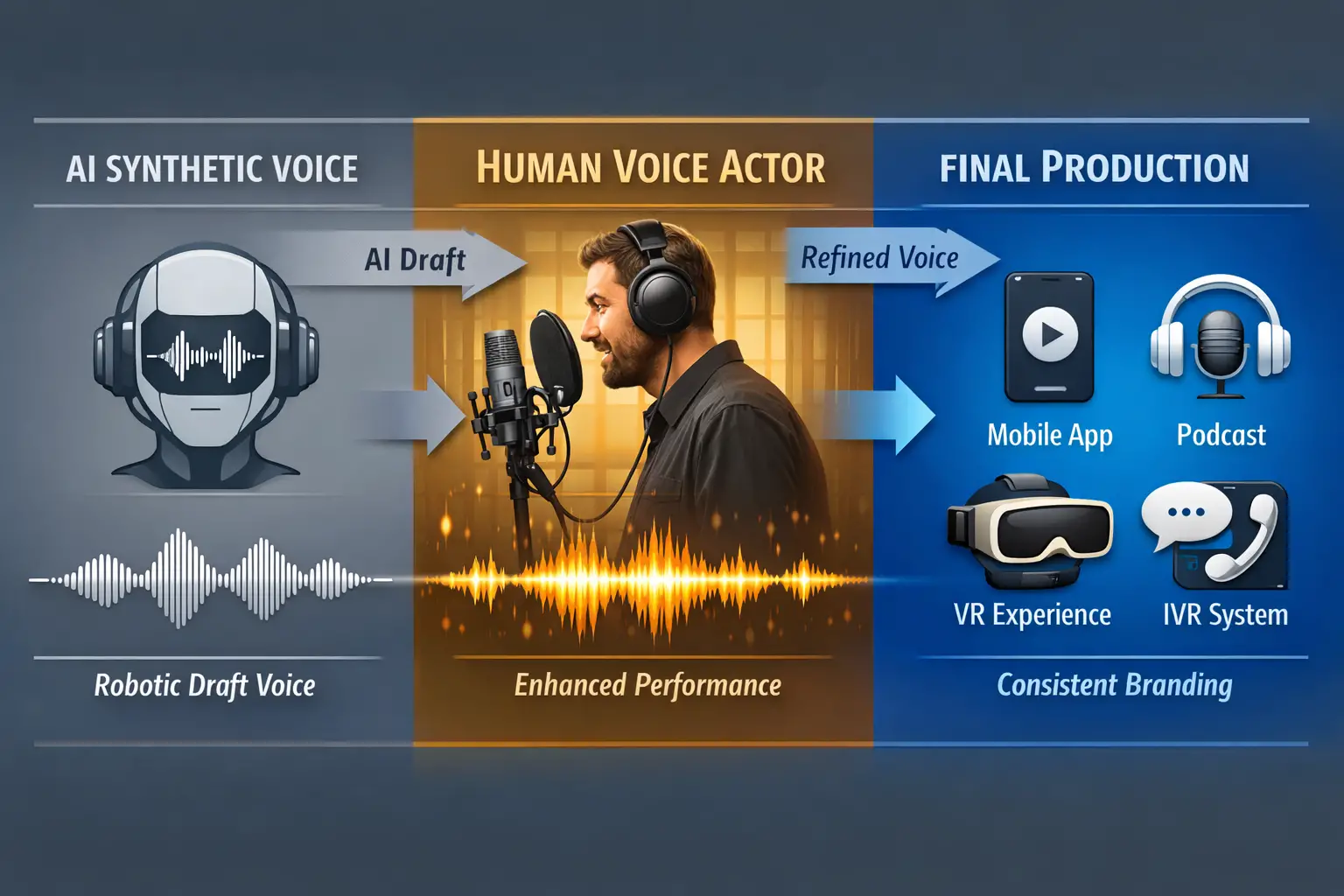
Traditional voice acting demos showcase range across commercial, narration, and character categories. For interactive and non-linear storytelling work, demos should additionally feature:
- Branching dialogue examples showing the same character responding to different player choices
- Emotional variation sequences demonstrating rapid tonal shifts
- Improvised content (clearly labeled) showing spontaneous character development
- Interactive scenario samples from VR, gaming, or educational projects
- Technical quality demonstrating home studio capabilities and spatial audio readiness
Positioning Yourself in the Market
Voice actors with strong improvisation skills should emphasize:
✨ Interactive media specialization in marketing materials and professional profiles
✨ VR/AR experience and understanding of immersive storytelling
✨ Technical self-sufficiency with home studio capabilities
✨ Collaborative flexibility and ability to work with minimal direction
✨ Character consistency across extended projects and multiple recording sessions
✨ Cultural adaptability for localization and international projects
Networking and Industry Connections
Building relationships in the interactive content space requires targeted networking:
- Game developers and studios producing narrative-driven games
- VR/AR production companies creating immersive experiences
- Educational technology companies developing interactive learning platforms
- Healthcare simulation developers creating training and therapeutic applications
- Corporate training producers building interactive employee development content
- Interactive podcast and audio drama creators experimenting with choose-your-own-adventure formats
Attend industry events like Game Developers Conference (GDC), VR/AR conferences, and voice acting conventions with interactive media tracks. Participate in online communities focused on game audio, interactive storytelling, and immersive media production.
Future-Proofing Your Voice Acting Career
Emerging Trends to Watch
The interactive storytelling landscape continues to evolve rapidly. Voice actors should monitor:
📈 AI-assisted writing tools that generate branching dialogue trees (creating more interactive content that needs human performance)
📈 Metaverse development requiring persistent virtual world characters with extensive dialogue needs
📈 Interactive streaming platforms experimenting with viewer-influenced narratives
📈 Procedural dialogue systems that combine scripted and improvised elements
📈 Biometric-responsive narratives that adapt to user emotional states
📈 Social VR experiences requiring real-time voice performance and improvisation
Continuous Skill Development
Maintaining competitive edge requires ongoing learning:
- Regular improvisation practice through classes, workshops, or peer groups
- Technical skill updates as recording technology and delivery formats evolve
- Industry trend monitoring through professional publications and conferences
- Cross-training in related fields like motion capture, real-time performance, and interactive writing
- Business skill development including contract negotiation, marketing, and financial management
Building Resilience and Adaptability
The most successful voice actors in the interactive storytelling space share common traits:
💪 Comfort with ambiguity and evolving project requirements
💪 Collaborative mindset that values director and writer input
💪 Technical curiosity driving continuous learning
💪 Creative flexibility enabling rapid performance adjustments
💪 Professional reliability in meeting technical and performance standards
💪 Business acumen for navigating complex contracts and pricing models
Conclusion: Embracing the Interactive Future
Voice Acting and Improvisation: Essential Skills for Interactive and Non-Linear Storytelling Roles represent far more than a passing trend—they define the future of the voice acting profession. As VR, AR, gaming, educational technology, and interactive media continue expanding, the demand for voice actors who can think on their feet, maintain character consistency across branching narratives, and deliver technically excellent performances from home studios will only increase.
The voice actors who thrive in this landscape are those who view improvisation not as an occasional skill but as a fundamental aspect of their craft. They invest in continuous training, maintain technical proficiency, understand the AI-human collaboration model, and position themselves as essential creative partners in interactive content production.
Actionable Next Steps
Ready to develop your Voice Acting and Improvisation: Essential Skills for Interactive and Non-Linear Storytelling Roles? Start with these concrete actions:
- Enroll in an improvisation class this month—theater-based or voice-specific—to build foundational skills
- Upgrade your home studio to meet current technical standards for spatial audio and high-fidelity recording
- Create a specialized demo reel featuring interactive content, branching dialogue, and emotional variation sequences
- Practice with video game scripts to understand non-linear dialogue structure and character consistency requirements
- Join online communities focused on game audio, interactive storytelling, and immersive media production
- Research and understand current contract standards around AI voice usage and digital rights
- Develop a signature character with extensive backstory and emotional range that showcases your improvisational abilities
- Network strategically with game developers, VR producers, and educational technology companies
- Invest in continuous learning through workshops, conferences, and cross-training opportunities
- Build your technical knowledge of DAWs, spatial audio, and immersive sound design
The future of voice acting belongs to performers who embrace change, develop versatility, and master the art of spontaneous, authentic performance within interactive frameworks. By building strong improvisation skills alongside technical proficiency and professional business practices, voice actors can position themselves at the forefront of this exciting, expanding field.
The recording booth of 2026 looks different from its predecessors—and the opportunities it offers are more diverse, creative, and technically sophisticated than ever before. Voice actors who develop Voice Acting and Improvisation: Essential Skills for Interactive and Non-Linear Storytelling Roles won’t just survive this transformation—they’ll lead it.
References
[1] Voice Acting In 2025 2026 Trends Insights And The Future – https://www.gravyforthebrain.com/voice-acting-in-2025-2026-trends-insights-and-the-future/
[2] Voice Over Trends For 2026 – https://www.voicecrafters.com/blog/voice-over-trends-for-2026/
[3] Commercial Voiceover Trends – https://www.provoiceactor.co.uk/blog/commercial-voiceover-trends/
[4] My Top 5 Voiceover Industry Trends For 2026 – https://www.melvinvermeer.nl/blog-3/2026/1/5/my-top-5-voiceover-industry-trends-for-2026