
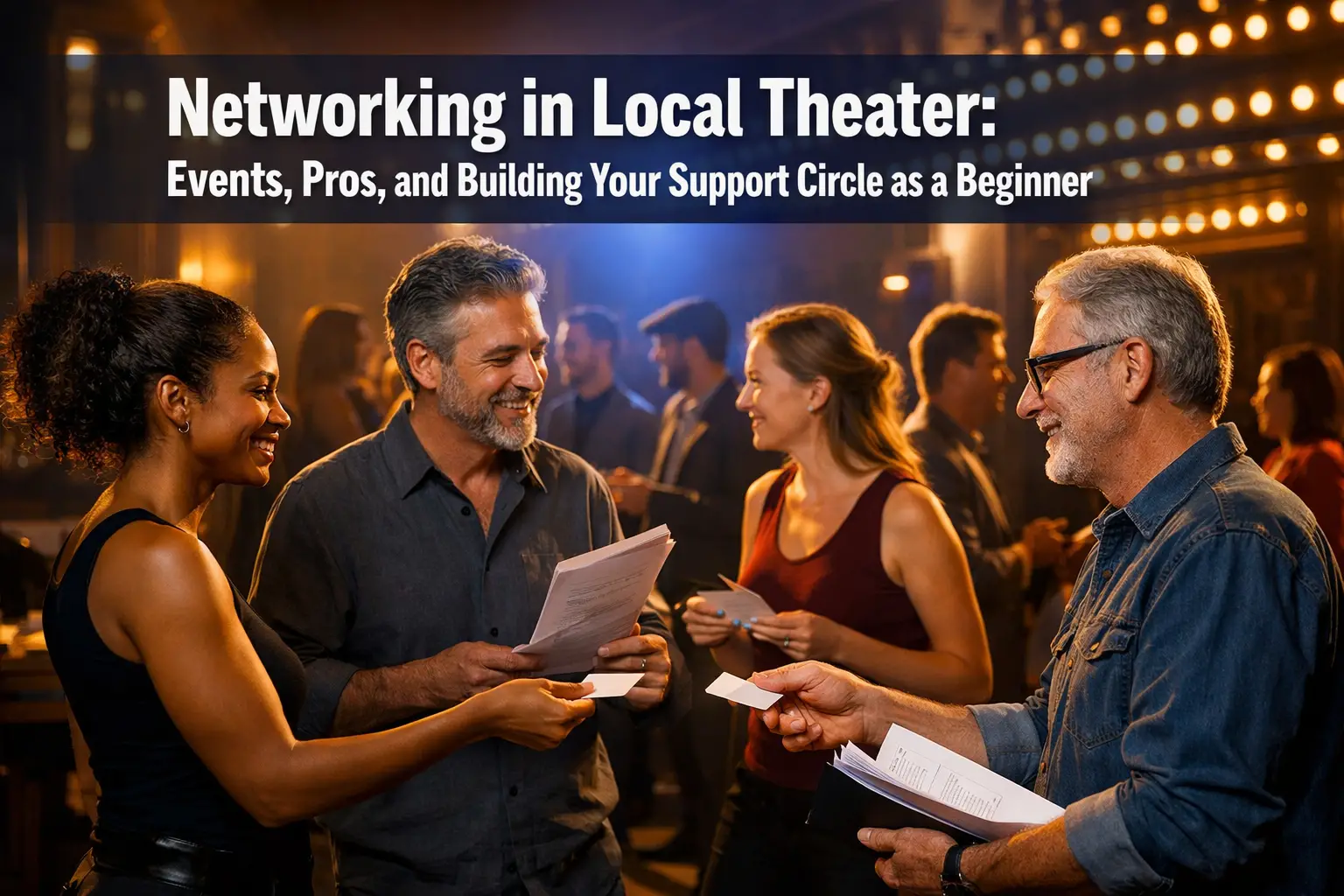
Breaking into the world of local theater can feel like stepping onto a stage without knowing your lines. The spotlight is bright, the audience is waiting, and you’re not quite sure where to stand. For aspiring actors, directors, designers, and theater enthusiasts in 2026, networking in local theater isn’t just about collecting business cards—it’s about building genuine relationships that open doors to auditions, production roles, and creative collaborations. Whether attending open auditions, participating in workshops, or mingling after performances, understanding how to navigate networking in local theater: events, pros, and building your support circle as a beginner can transform your theatrical journey from solitary ambition to collaborative success.
The theater community thrives on connections. Unlike many industries where networking feels transactional, theater networking centers on shared passion, creative energy, and mutual support. This guide provides practical steps for attending the right events, connecting with directors and actors, and leveraging both traditional and virtual networking opportunities available in 2026.
Key Takeaways
- Theater networking events in 2026 blend in-person gatherings with virtual components, offering flexible opportunities for beginners to connect with industry professionals
- Strategic attendance at open auditions, workshops, and post-show mingles creates natural conversation opportunities with directors, actors, and production teams
- Building a support circle requires consistent participation, genuine interest in others’ work, and offering value before asking for opportunities
- Established networking groups like Acting Connections Network provide structured environments for meeting casting directors, agents, and fellow performers[2]
- Multi-vertical events such as the Acting, Production & Business Networking mixer scheduled for March 4, 2026, connect theater professionals with broader creative and business communities[3]
Understanding the Theater Networking Landscape in 2026
The Evolution of Theater Networking Post-Pandemic
The theater world has fundamentally changed how professionals connect. While traditional face-to-face interactions remain invaluable, hybrid networking models have become standard practice. Virtual auditions, online workshops, and digital networking platforms now complement in-person events, creating more accessible entry points for beginners.
In 2026, successful theater networking requires comfort with both formats. A director might host an initial meet-and-greet via Zoom before inviting promising candidates to in-person callbacks. Production teams collaborate across cities using shared digital platforms. Understanding this dual landscape is essential for anyone serious about networking in local theater: events, pros, and building your support circle as a beginner.
Why Networking Matters More Than Talent Alone
🎭 Reality check: Even the most talented performer needs connections to find opportunities. Theater operates largely through referrals, word-of-mouth recommendations, and established relationships. Directors often cast actors they’ve worked with before or who come recommended by trusted colleagues.
Consider these networking advantages:
- Early audition notifications before public announcements
- Insider knowledge about upcoming productions and casting needs
- Mentorship opportunities from experienced professionals
- Collaborativeprojects that build your portfolio
- Emotional support during the inevitable rejections and setbacks
“Theater is a collaborative art form. The relationships you build backstage are just as important as the performances you deliver onstage.”
Finding the Right Networking Events for Beginners
Local Theater Productions as Networking Goldmines
The most accessible networking opportunity sits right in your local theater’s performance schedule. Productions like those featured in the Adrienne Arsht Center’s Theater Up Close 2025-26 season, including “How to Break in a Glove” (February 5-22, 2026) and “Merrily We Roll Along” (March 12 – April 5, 2026), offer multiple networking touchpoints[5].
Before the show:
- Arrive early and observe the pre-show energy
- Read the program thoroughly to identify cast and crew members
- Note the production company and creative team
After the show:
- Attend post-show discussions when offered
- Linger in the lobby where cast members often greet audiences
- Prepare genuine, specific compliments about performances
Pro tip: Purchase tickets to smaller, local productions rather than only attending major touring shows. Community theaters and black box venues create more intimate networking environments where you’re more likely to interact directly with performers and directors.
Dedicated Networking Events and Mixers
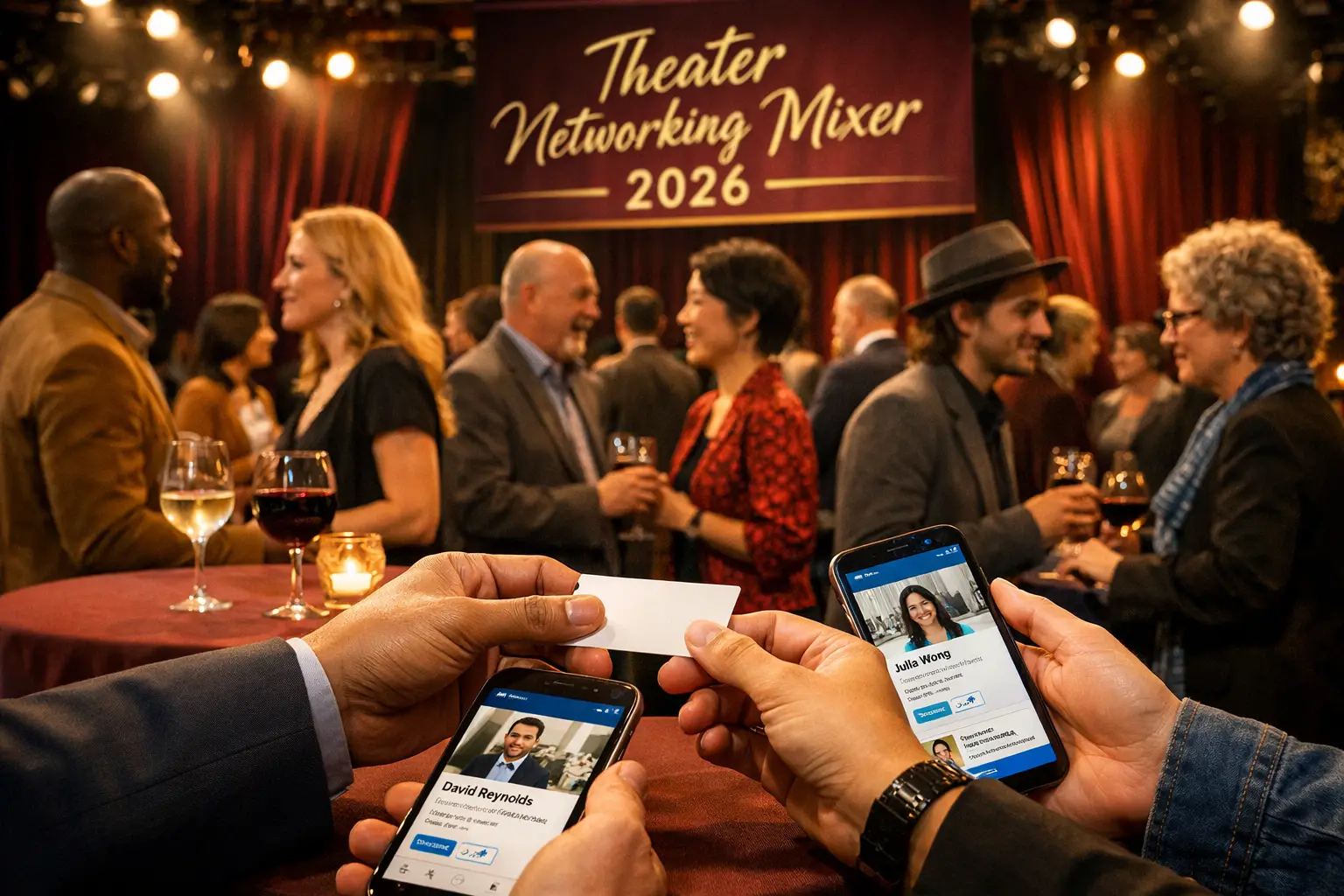
Structured networking events remove the awkwardness of approaching strangers by creating environments specifically designed for professional connections. The Acting, Production & Business Networking | Elevating Your Potential event scheduled for Wednesday, March 4, 2026, at Candela Bar Brickell in Miami (6:00 PM – 8:00 PM) exemplifies this approach[3][6].
This multi-vertical event connects actors, producers, designers, and videographers with professionals from finance, tech, real estate, and healthcare[3]. Why does this matter? Theater increasingly intersects with other industries through:
- Corporate sponsorships requiring business connections
- Video production for promotional materials
- Technology integration in modern productions
- Healthcare partnerships for wellness programs
What to expect at networking mixers:
| Event Component | Purpose | Beginner Strategy |
|---|---|---|
| Check-in/Registration | Collect attendee information | Arrive within first 30 minutes for maximum mingling time |
| Structured Introductions | Break the ice | Prepare 30-second introduction highlighting your interests |
| Open Networking | Free-form conversations | Set goal of 5 meaningful conversations, not 20 superficial ones |
| Speaker/Panel | Industry insights | Take notes, prepare questions |
| Follow-up Period | Exchange contact information | Connect within 24 hours while you’re fresh in their memory |
Established Networking Groups and Meetups
Organizations like Acting Connections Network provide ongoing networking opportunities through regular meetups focused on castings, auditions, agents, producers, and creative opportunities[2]. These groups offer several advantages for beginners:
✅ Regular schedule creates consistency and familiarity
✅ Shared purpose ensures everyone attends for similar reasons
✅ Lower pressure than one-time events
✅ Community building over time
✅ Information sharing about local opportunities
Joining established groups demonstrates commitment to the craft and provides repeated exposure to the same professionals, allowing relationships to develop naturally.
Practical Strategies for Networking in Local Theater: Events, Pros, and Building Your Support Circle as a Beginner
Mastering Open Auditions as Networking Opportunities
Open auditions serve dual purposes: showcasing your talent and meeting decision-makers. Even if you don’t land the role, you’ve introduced yourself to the director, casting team, and fellow auditioners who might remember you for future projects.
Before the audition:
- Research the production team through theater websites and social media
- Prepare thoroughly so you can focus on connection, not just performance
- Arrive early to observe the environment and other auditioners
- Dress appropriately to show you understand the production’s tone
During the audition:
- Make genuine eye contact with everyone in the room
- Be gracious and professional regardless of how it goes
- Listen carefully to directions and adjust accordingly
- Thank everyone by name if possible
After the audition:
- Stay for callbacks if invited, even if you’re uncertain
- Connect on social media with appropriate boundaries
- Send brief thank-you emails to the director or casting coordinator
- Attend the production even if you weren’t cast
🎯 Key insight: Directors remember actors who handle rejection gracefully and show genuine interest in the production’s success, not just their own advancement.
Leveraging Workshops and Classes
Theater workshops serve as extended networking sessions disguised as educational opportunities. Unlike brief networking events, workshops allow professionals to observe your:
- Work ethic and professionalism
- Ability to take direction and collaborate
- Creative problem-solving skills
- Personality in low-pressure settings
Types of workshops for networking:
- Acting technique classes (Meisner, Stanislavski, etc.)
- Voice and movement workshops
- Audition technique seminars
- Stage combat or specialized skills
- Directing or playwriting workshops
- Technical theater training (lighting, sound, set design)
Networking during workshops:
- Participate actively without dominating
- Support fellow participants generously
- Ask thoughtful questions that demonstrate engagement
- Volunteer for demonstrations when appropriate
- Exchange contact information naturally during breaks
Maximizing Post-Show Mingles and Receptions
The period immediately following a performance creates unique networking magic. Emotions run high, creative energy fills the space, and everyone shares the communal experience of the production just witnessed.
Strategic approach to post-show networking:
Step 1: Prepare specific observations
Generic praise like “great show” gets forgotten immediately. Instead, mention specific moments: “The lighting transition during the confrontation scene perfectly captured the emotional shift” or “Your delivery of that monologue in Act Two gave me chills.”
Step 2: Identify your targets
You can’t meaningfully connect with everyone. Prioritize:
- The director or assistant director
- One or two cast members whose work particularly resonated
- The stage manager or production coordinator
- Fellow audience members who might be industry professionals
Step 3: Create natural conversation openings
- “I’m curious about the rehearsal process for such a complex production…”
- “I noticed the program mentioned this is a new adaptation. How did that come about?”
- “I’m relatively new to the local theater scene. What other productions would you recommend?”
Step 4: Offer value before asking for anything
- Share relevant information about upcoming events
- Offer to volunteer for future productions
- Connect people who might benefit from knowing each other
- Promote their work on social media (with permission)
Embracing Virtual Networking Hybrids in 2026
The theater community has embraced virtual networking components that complement in-person events. These hybrid approaches offer particular advantages for beginners who might feel intimidated by large gatherings.
Virtual networking opportunities:
📱 Social media engagement
- Follow local theaters, directors, and actors on Instagram and Twitter
- Comment thoughtfully on posts (not just emojis)
- Share theater-related content with your own insights
- Use relevant hashtags like #LocalTheater #CommunityTheater #TheatreLife
💻 Online workshops and webinars
- Participate in virtual Q&A sessions
- Engage in chat discussions during presentations
- Connect with other attendees through platform messaging
- Follow up with speakers via email or LinkedIn
🎥 Virtual auditions and callbacks
- Treat virtual auditions as professionally as in-person
- Test technology beforehand
- Create appropriate background and lighting
- Follow up with thank-you messages
Hybrid event strategies: Many 2026 events offer both in-person and virtual attendance options. Consider:
- Starting virtually to reduce initial anxiety
- Transitioning to in-person once you’ve made initial connections
- Attending both components when possible for maximum exposure
- Using virtual tools to prepare for in-person interactions
Building Your Theater Support Circle: From Contacts to Community

The Difference Between Networking and Relationship Building
Networking is the initial connection—the business card exchange, the brief conversation, the LinkedIn request.
Relationship building is what transforms those contacts into a genuine support circle that sustains your theater career.
Moving from networking to relationships:
| Networking Behavior | Relationship-Building Behavior |
|---|---|
| Collecting contacts | Nurturing specific connections |
| Asking for opportunities | Offering help and support |
| Talking about yourself | Showing genuine interest in others |
| One-time interactions | Consistent, meaningful engagement |
| Transactional mindset | Collaborative mindset |
Creating Your Inner Circle Strategy
Not every connection needs to become a close relationship. Strategic relationship building focuses energy where it matters most.
Tier 1: Core Support Circle (3-5 people) These are your closest theater allies who:
- Provide honest feedback on performances and auditions
- Share opportunities and insider information
- Offer emotional support during setbacks
- Celebrate your successes genuinely
- Collaborate on projects
Tier 2: Active Network (15-25 people) These professional connections:
- Remember you and your work
- Might recommend you for opportunities
- Engage with your social media content
- Attend events you invite them to
- Respond to occasional outreach
Tier 3: Broader Community (unlimited) These acquaintances:
- Recognize your name and face
- Follow you on social media
- Might become closer connections over time
- Represent potential future opportunities
Focus 80% of relationship-building energy on Tier 1 and 2.
Maintaining Connections Over Time
The biggest networking mistake beginners make is failing to maintain connections after initial meetings. Relationships require consistent, genuine engagement.
Maintenance strategies that work:
🎭 Regular, low-pressure touchpoints:
- Share articles or opportunities relevant to their interests
- Congratulate them on new roles or productions
- Invite them to performances you’re attending
- Comment on their social media posts thoughtfully
- Send brief check-in messages quarterly
🎭 Offer value consistently:
- Volunteer for productions they’re involved in
- Promote their work to your network
- Introduce them to people who might help their career
- Share your skills (photography, graphic design, social media)
- Provide honest feedback when requested
🎭 Create collaboration opportunities:
- Propose small creative projects together
- Form reading groups for new plays
- Organize informal scene study sessions
- Start a theater-focused podcast or blog
- Create showcase opportunities
Navigating Theater Politics and Etiquette
Every theater community has unwritten rules and social dynamics. Understanding these helps avoid career-limiting mistakes.
Essential theater networking etiquette:
✅ Do:
- Respect the hierarchy during rehearsals and productions
- Give credit generously to collaborators
- Maintain professionalism even in casual settings
- Honor confidentiality about productions in development
- Show up on time (early) and prepared
- Support others’ work by attending their performances
❌ Don’t:
- Gossip about directors, actors, or productions
- Complain publicly about roles you didn’t get
- Monopolize conversations with industry veterans
- Ask for favors before establishing relationships
- Burn bridges by leaving productions unprofessionally
- Criticize others’ performances publicly
“Your reputation in theater is everything. Communities are smaller than they appear, and word travels fast about both exceptional collaborators and difficult personalities.”
Overcoming Common Networking Challenges for Beginners
Managing Social Anxiety and Introversion
Many theater professionals are natural performers onstage but struggle with social interaction offstage. This is completely normal and manageable.
Strategies for anxious networkers:
- Set modest goals: Aim for 2-3 meaningful conversations instead of working the entire room
- Prepare conversation starters: Write them down beforehand if helpful
- Bring a supportive friend to initial events (but separate to meet new people)
- Arrive early when crowds are smaller and less overwhelming
- Take breaks by stepping outside or to the restroom
- Focus on listening rather than performing or impressing
- Follow up virtually where you may feel more comfortable
Remember: Quality matters far more than quantity in networking relationships.
Dealing with Rejection and Setbacks
Rejection is inevitable in theater. The key is maintaining networking relationships despite disappointments.
When you don’t get the role:
- Thank the director for the opportunity
- Ask for feedback if appropriate timing allows
- Attend the production and congratulate who was cast
- Stay connected for future opportunities
- Don’t take it personally or burn bridges
When networking attempts fall flat:
- Not every connection will develop into a relationship
- Some people won’t respond to follow-ups
- Timing matters—they might be overwhelmed currently
- Move forward without dwelling on non-responses
- Focus energy on responsive, engaged connections
Building Confidence as a Complete Beginner
Starting from zero can feel overwhelming, but everyone in theater began exactly where you are now.
Confidence-building steps:
📍 Start small: Volunteer for community theater before approaching professional companies
📍 Develop expertise: Take classes to build competence and confidence
📍 Document progress: Keep records of connections made and opportunities gained
📍 Find mentors: Identify experienced professionals willing to guide beginners
📍 Celebrate wins: Acknowledge every successful connection and opportunity
📍 Practice consistently: Networking skills improve with repetition
Taking Action: Your 90-Day Networking Plan
Month 1: Foundation Building
Week 1-2:
- Research local theater companies and upcoming productions
- Join one established networking group like Acting Connections Network[2]
- Create or update professional social media profiles
- Purchase tickets to 2-3 local productions
Week 3-4:
- Attend your first networking event or post-show mingle
- Make 3-5 initial connections
- Follow up with everyone you met within 48 hours
- Volunteer for one upcoming production in any capacity
Month 2: Expanding Connections
Week 5-6:
- Attend a dedicated networking mixer (like the March 4, 2026 event if timing works)[3]
- Register for a workshop or class
- Engage consistently on social media with local theater community
- Attend 2 more productions and post-show events
Week 7-8:
- Follow up with Month 1 connections
- Identify 3-5 people for your core support circle
- Schedule coffee or lunch with 2 new connections
- Audition for a production (for networking, not just casting)
Month 3: Deepening Relationships
Week 9-10:
- Host or organize a small gathering (reading, discussion, social)
- Offer specific help to 3 people in your network
- Attend advanced workshop or specialized training
- Document your progress and evaluate what’s working
Week 11-12:
- Reassess your networking strategy and adjust
- Strengthen core support circle relationships
- Plan next quarter’s networking activities
- Celebrate your progress and connections made
Measuring Networking Success Beyond Job Offers
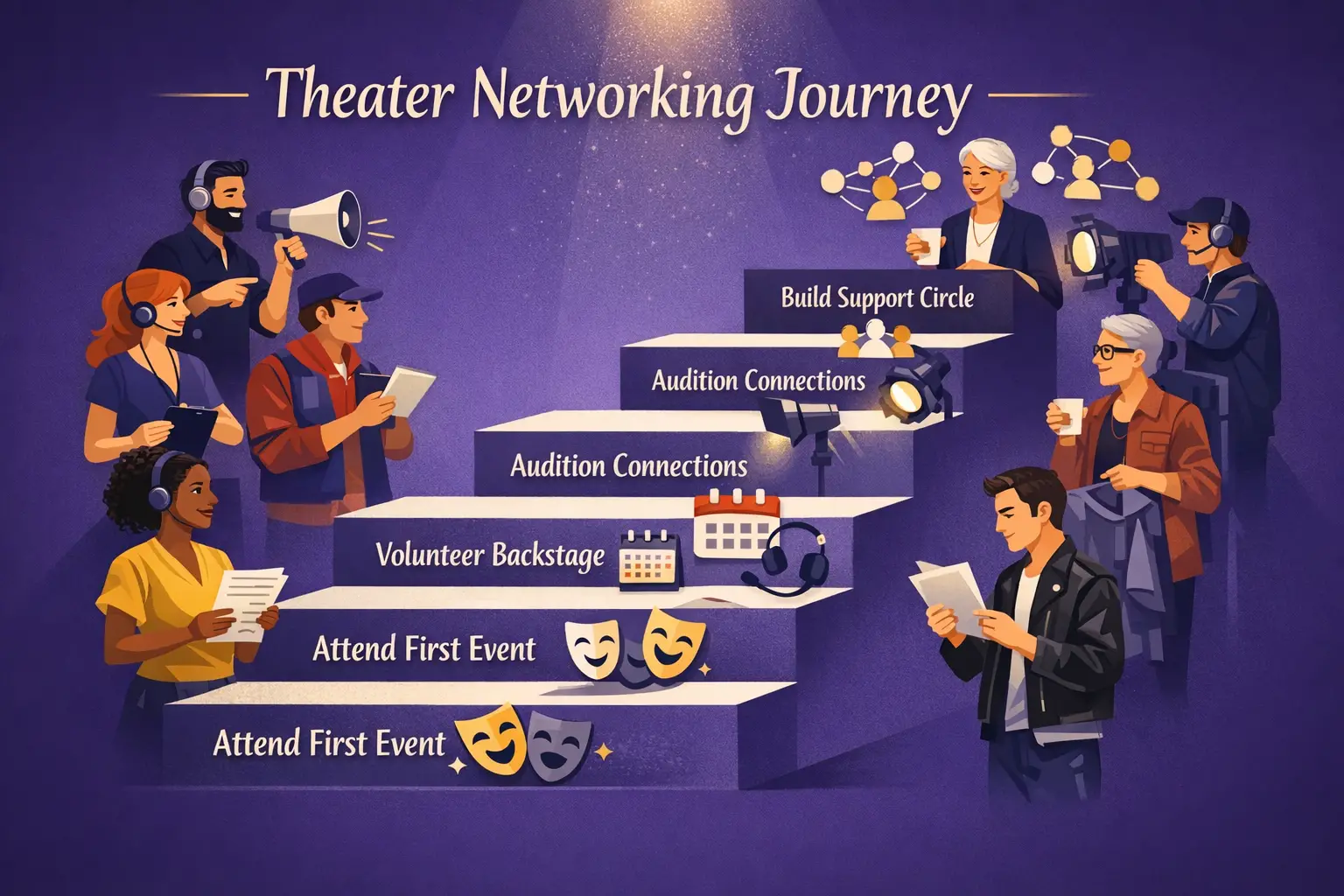
Success in networking in local theater: events, pros, and building your support circle as a beginner isn’t just about landing roles. Track these meaningful metrics:
Relationship indicators:
- Number of genuine friendships formed
- People who remember you at subsequent events
- Unsolicited opportunities offered
- Invitations to collaborate on projects
- Feeling of belonging in the community
Professional growth:
- Knowledge gained about local theater landscape
- Confidence increase in social situations
- Understanding of audition and production processes
- Mentorship relationships established
- Skills developed through volunteering
Tangible outcomes:
- Auditions attended
- Roles earned (any size)
- Productions volunteered for
- Workshops and classes completed
- Professional connections made
Conclusion
Networking in local theater: events, pros, and building your support circle as a beginner represents one of the most rewarding investments in your theatrical journey. The connections formed at networking events, open auditions, workshops, and post-show mingles become the foundation of a sustainable theater career and a source of creative fulfillment that extends far beyond individual performances.
The theater community in 2026 offers unprecedented access through hybrid virtual and in-person opportunities. Events like the Acting, Production & Business Networking mixer on March 4, 2026[3], established groups like Acting Connections Network[2], and the continuous stream of productions at venues like the Adrienne Arsht Center[5] provide multiple entry points for beginners ready to take action.
Your Next Steps
This week:
- Research and join one local theater networking group
- Purchase tickets to an upcoming production
- Create or update your professional social media presence
- Identify one networking event to attend in the next 30 days
This month:
- Attend your first networking event or post-show mingle
- Make 5 genuine connections
- Follow up with everyone you meet within 48 hours
- Volunteer for a local production in any capacity
This quarter:
- Attend at least one event monthly
- Develop 3-5 core support circle relationships
- Audition for at least one production
- Take one workshop or class
Remember that networking is not a one-time activity but an ongoing practice of building genuine relationships within a community that shares your passion. Every conversation, every audition, every volunteer shift, and every post-show interaction contributes to the support circle that will sustain your theater journey for years to come.
The curtain is rising on your networking journey. The stage is set, the community is welcoming, and your support circle is waiting to be built. Take that first step, attend that first event, and discover that the theater community is eager to welcome new members who approach with genuine enthusiasm, consistent effort, and collaborative spirit.
Break a leg! 🎭
References
[1] Entertainment Networking – https://www.eventbrite.com/d/fl–miami/entertainment-networking/
[2] Acting Connections Network – https://www.meetup.com/acting-connections-network/
[3] Acting Production Business Networking Elevating Your Potential Miami Tickets 1976497833225 – https://www.eventbrite.com/e/acting-production-business-networking-elevating-your-potential-miami-tickets-1976497833225
[5] Theater Up Close 2025 26 – https://www.arshtcenter.org/subscription-series/theater-up-close/theater-up-close-2025-26/
[6] Acting Production And Business Networking Elevating Your Potential Miami 62743861 – https://www.unation.com/event/acting-production-and-business-networking-elevating-your-potential-miami-62743861/