
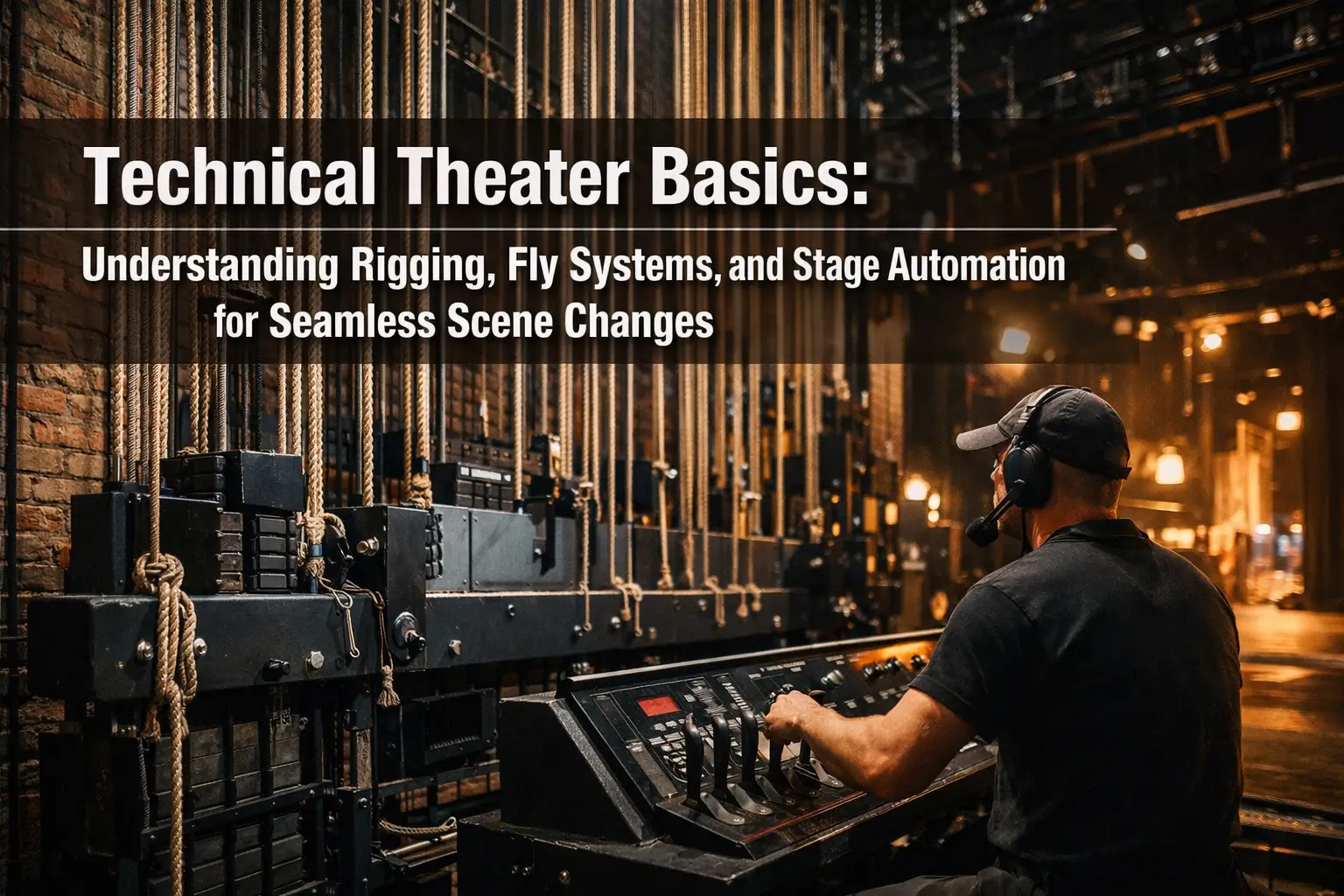
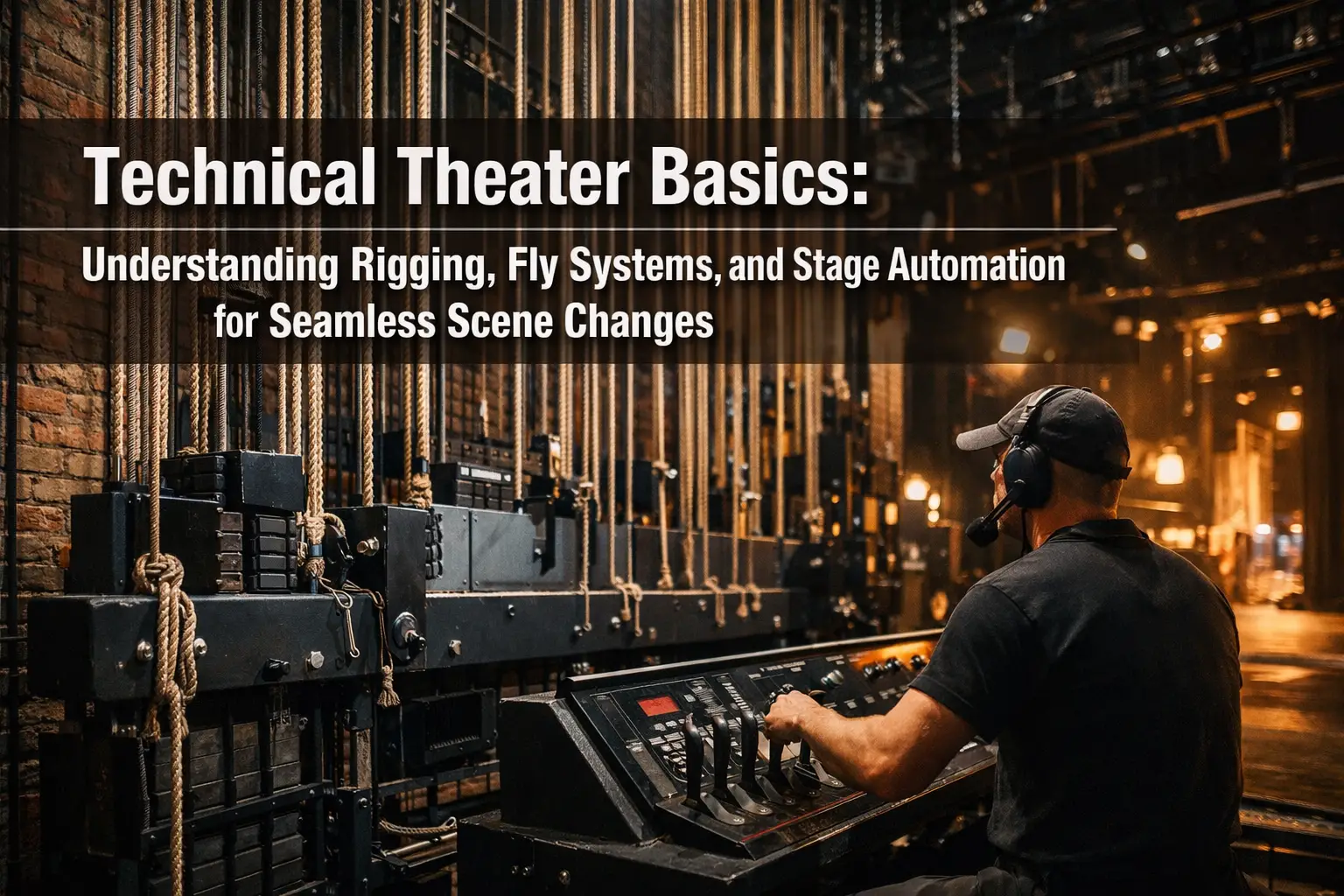
Listen, after three decades of working in theater, I’ve learned one undeniable truth: the magic audiences see on stage doesn’t happen by accident. Behind every breathtaking scene change, every prop that appears at exactly the right moment, and every backdrop that silently glides into place, there’s a whole world of technical wizardry at work. And here’s the thing—whether you’re an actor just starting out or a seasoned performer looking to understand your craft more deeply, knowing the basics of Technical Theater Basics: Understanding Rigging, Fly Systems, and Stage Automation for Seamless Scene Changes isn’t just helpful—it’s essential.
I remember my first professional show where I nearly walked into a descending batten because I didn’t understand the fly system cues. That near-miss taught me a valuable lesson: actors who understand the technical side of theater are safer, more professional, and frankly, more employable. In 2026, as the industry evolves with new technologies and expanded career opportunities[4], this knowledge has become even more critical.
Key Takeaways
- Safety first, always: Understanding rigging and fly systems protects you and your fellow performers from serious injury
- Technical knowledge enhances performance: Knowing how scene changes work allows you to time your exits, entrances, and stage positions perfectly
- Career opportunities are expanding: The theater industry now includes “Creative Technologist” positions that blend artistic and technical skills[4]
- Communication is crucial: Learning technical theater terminology helps you collaborate effectively with stage crews and technical directors
- Modern automation requires new skills: Today’s productions increasingly rely on computerized systems that demand basic technical literacy
Why Actors Need to Understand Technical Theater Basics
Let me paint you a picture. You’re in the middle of a dramatic monologue, pouring your heart out, when suddenly you hear a loud mechanical whir behind you. If you understand stage automation, you know that sound means a wagon is about to move, and you can subtly adjust your blocking without breaking character. If you don’t? You might jump out of your skin and ruin the moment.
Understanding the technical side makes you a better collaborator. When a stage manager says “clear the deck, we’re flying in the chandelier,” you need to know exactly what that means and where to position yourself. When a technical director mentions that a scene change requires a 45-second blackout, you can adjust your pacing accordingly.
Beyond safety and professionalism, there’s a practical career angle here. The industry is actively seeking people who understand both the artistic and technical sides of production. Training programs are expanding[6], and events like the Junior Theater Festival’s “Tech Olympics” competition[3] demonstrate how valued these skills have become.
The Foundation: Understanding Theater Rigging Systems
What Is Theater Rigging?
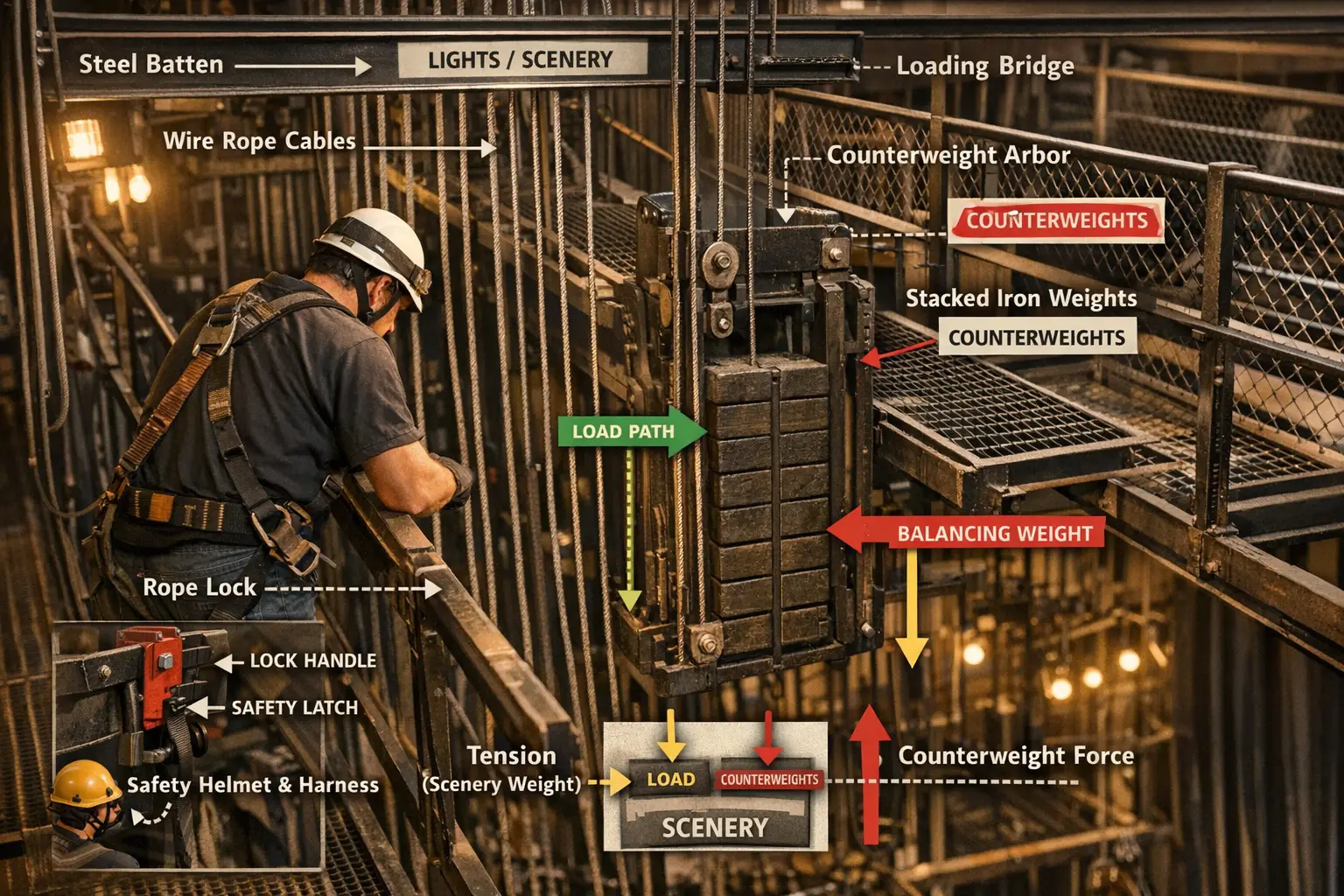
Think of rigging as the skeleton of your production—it’s the system of ropes, cables, pulleys, and hardware that allows scenery, lights, and other equipment to be suspended above the stage and moved safely. It’s literally what holds everything up.
In traditional theater rigging, you’ll encounter two main types:
Hemp rigging (the old-school method):
- Uses natural fiber ropes
- Requires significant manual labor
- Still found in some historic theaters
- Demands constant maintenance and inspection
Counterweight rigging (the modern standard):
- Uses steel cables and iron weights
- Balances loads for easier operation
- More precise and reliable
- Industry standard in professional theaters
Key Rigging Components You Should Know
Here’s where terminology becomes your friend. When you understand these components, you can follow safety briefings and technical discussions:
| Component | Function | Why Actors Should Care |
|---|---|---|
| Batten | Horizontal pipe that holds scenery or lights | Know where battens will descend to avoid being hit |
| Arbor | Counterweight carriage that balances the load | Understanding arbor movement helps predict timing |
| Loft Block | Pulley at the top of the theater | Shows the path cables travel |
| Head Block | Main pulley system | Indicates where forces concentrate |
| Loading Bridge | Platform for adding/removing weights | Stay clear when crew is loading |
| Rope Lock | Device that secures the batten position | When you hear “lock it off,” the element is secure |
Safety Protocols Every Actor Must Follow
I can’t stress this enough: rigging safety is non-negotiable. I’ve seen careers end and lives change because someone didn’t respect the weight and power of these systems.
Essential safety rules:
✅ Never stand directly under a moving batten—always give it a wide berth
✅ Respect the “hot deck” calls—when stage management announces rigging operations, clear the area immediately
✅ Don’t touch rigging equipment unless you’re trained and authorized
✅ Report any frayed cables, damaged hardware, or unusual sounds to the technical director immediately
✅ Understand the theater’s communication system—headset calls, light cues, and verbal warnings all keep you safe
✅ Know your escape routes—in case of rigging failure, you need to know where to go
One analogy I love: treat the fly system like you’d treat a construction site. You wouldn’t walk under a crane carrying steel beams, right? Same principle applies backstage.
Mastering Fly Systems for Smooth Scene Transitions
How Fly Systems Work in Modern Productions
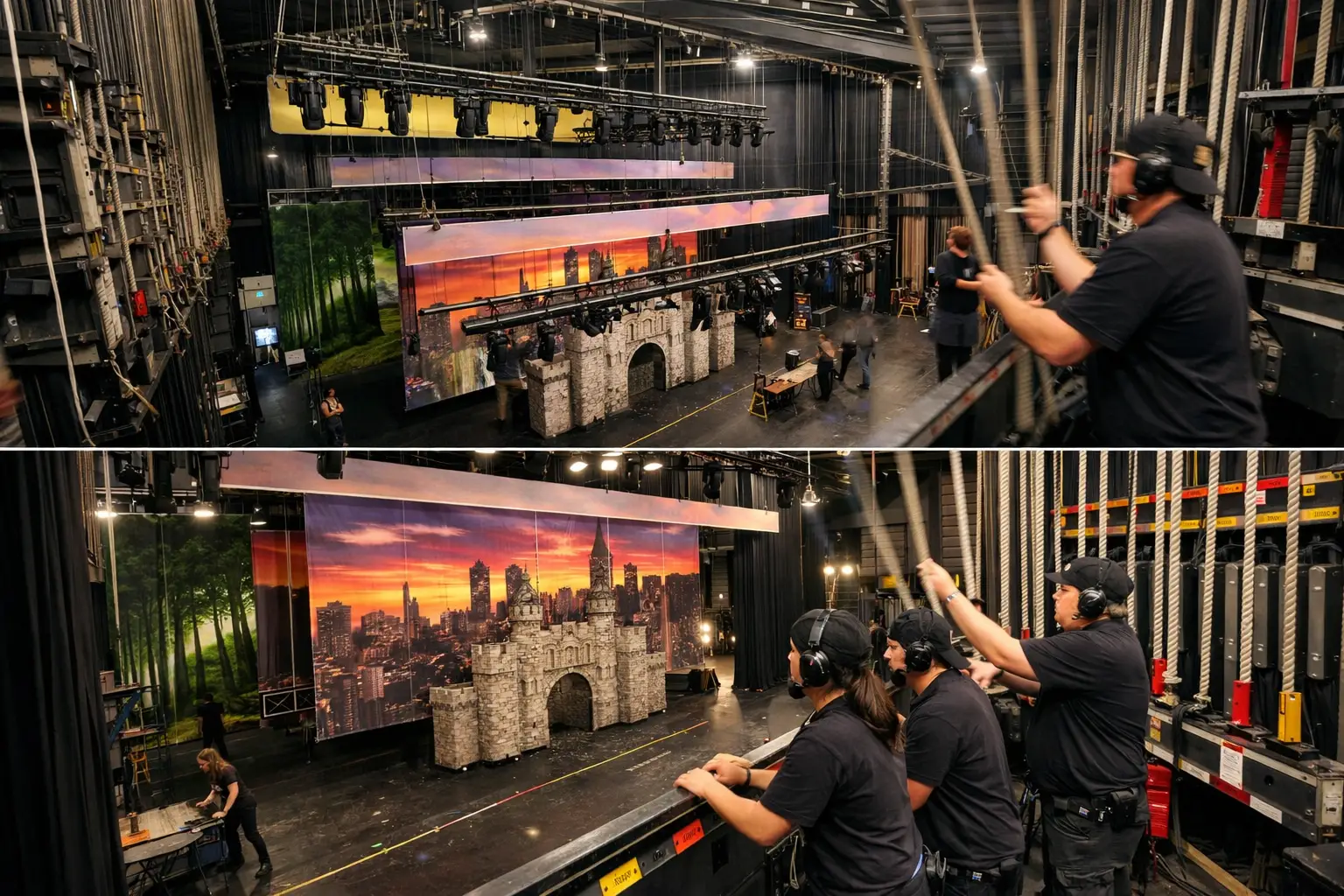
A fly system is essentially a rigging system specifically designed to raise and lower scenery, curtains, and equipment. The term “flying” comes from the way elements seem to magically appear and disappear, as if they’re flying.
In a typical counterweight fly system, here’s what happens:
- Scenery or equipment is attached to a batten
- Counterweights are loaded into the arbor to balance the load
- A stage crew member (the flyman) operates the system from the fly rail
- The batten moves up or down smoothly and safely when the rope lock is released
The beauty of a well-operated fly system is its silence and precision. When done right, a massive backdrop can descend during a blackout, and the audience never hears a sound.
Types of Fly Systems You’ll Encounter
Single-purchase counterweight system:
- Most common in smaller theaters
- One foot of rope movement equals one foot of batten movement
- Requires less vertical space
- Good for standard scenery and lighting
Double-purchase counterweight system:
- Found in larger venues with high fly towers
- Two feet of rope movement equals one foot of batten movement
- Allows operation from lower levels
- Provides mechanical advantage for heavier loads
Motorized/automated fly systems:
- Increasingly common in professional theaters
- Computer-controlled for precise timing
- Can coordinate multiple elements simultaneously
- Requires specialized training to operate
Working With Fly Systems: An Actor’s Perspective
Here’s where understanding Technical Theater Basics: Understanding Rigging, Fly Systems, and Stage Automation for Seamless Scene Changes directly improves your performance.
Timing your entrances and exits:
When a scene change involves flying elements, you need to understand the rhythm. A heavy backdrop might take 8-10 seconds to fly in completely. If your entrance cue is “when the forest drops in,” you need to know whether that means when it starts moving or when it’s fully in place.
Spatial awareness:
Different theaters have different fly systems with varying capacities. A regional theater might have 20 line sets (individual fly lines), while a Broadway house might have 50 or more. Understanding the layout helps you navigate backstage safely and efficiently.
Communication protocols:
🎭 “Flying in” = lowering an element from the fly loft
🎭 “Flying out” = raising an element into the fly loft
🎭 “Trim” = the specific height at which an element is set
🎭 “Dead hang” = a fixed element that doesn’t move
🎭 “Traveler” = a curtain that moves horizontally
When you hear these terms over headset or in technical rehearsals, you’ll know exactly what’s happening and how it affects your blocking.
Scene Change Choreography
Think of scene changes as choreographed dance numbers where you’re one of the dancers. The best scene changes I’ve been part of felt like precision ballet—everyone knew their role, their timing, and their spatial relationship to moving elements.
Pro tips for seamless transitions:
- Count your steps during tech rehearsals so you can repeat them in the dark
- Listen for audio cues—motors, rope movement, deck crew footsteps
- Use glow tape to mark your path and positions
- Rehearse in costume—that flowing cape might catch on a wagon
- Communicate with stage management if timing feels unsafe or rushed
Stage Automation: The Future of Technical Theater
What Is Stage Automation?
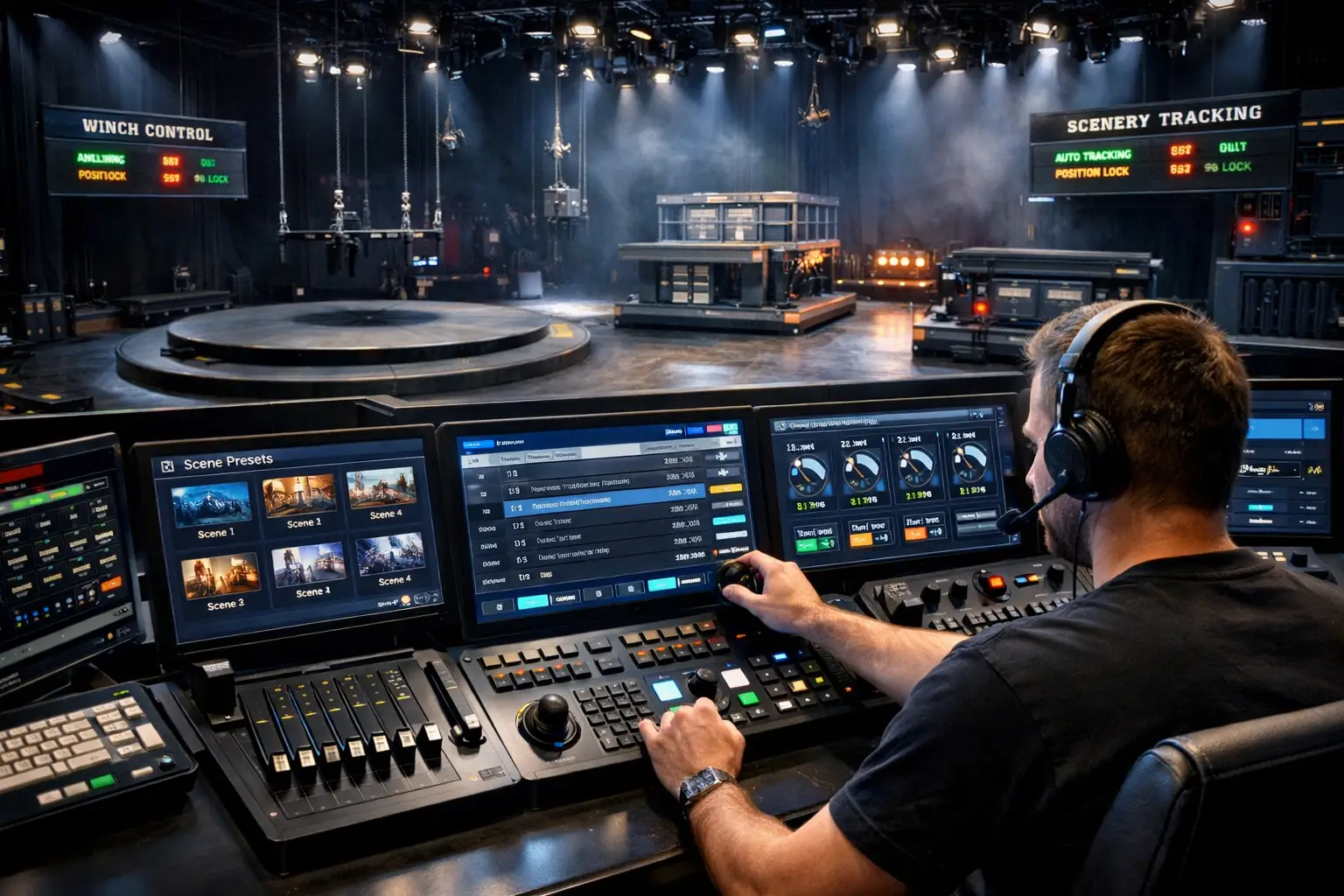
If fly systems are the heart of traditional theater tech, stage automation is the brain of modern productions. Automation uses computerized systems to control movement—not just vertical (like fly systems) but horizontal, rotational, and even diagonal.
In 2026, the industry is seeing a significant shift toward what’s being called “Creative Technologist” roles[4]—positions that blend artistic vision with technical innovation. Understanding automation basics positions you to collaborate with these specialists effectively.
Types of Automated Stage Elements
Turntables (Revolves):
- Rotating platforms that allow quick scene changes
- Can be manually operated or motorized
- Require careful blocking to avoid dizziness or falls
- Think Les Misérables or The Lion King
Wagons (Platforms on wheels):
- Move scenery horizontally across the stage
- Can be pushed manually or driven by motors
- Often travel on tracks for precision
- Essential for shows with multiple locations
Elevators (Lifts):
- Raise and lower performers or scenery through the stage floor
- Create dramatic entrances and exits
- Require strict safety protocols
- Famous examples: Phantom of the Opera chandelier sequence
Tracking systems:
- Move elements along predetermined paths
- Can coordinate multiple pieces simultaneously
- Computer-controlled for repeatability
- Increasingly common in high-budget productions
How Automation Enhances Storytelling
Here’s where the magic happens. When Technical Theater Basics: Understanding Rigging, Fly Systems, and Stage Automation for Seamless Scene Changes all come together, you get those jaw-dropping moments that audiences remember forever.
I worked on a production where a character’s emotional breakdown was underscored by the stage literally fragmenting around them—platforms moving in different directions, creating visual chaos that matched the internal turmoil. That only worked because:
- The automation was precisely programmed
- The actor understood the timing and trusted the system
- The technical and artistic teams collaborated closely
- Safety protocols were rigorously followed
Operating Automation Systems Safely
Modern automation control systems look like something out of a sci-fi movie—touchscreens, multiple monitors, complex interfaces. But the principles remain simple: safety, precision, communication.
Safety features in modern systems:
- Emergency stop buttons (E-stops) that immediately halt all movement
- Redundant safety systems that prevent catastrophic failures
- Load monitoring that alerts operators to weight issues
- Speed governors that prevent dangerous acceleration
- Limit switches that stop movement at predetermined points
Actor responsibilities:
Even though you’re not operating these systems, you play a crucial role in safety:
- Attend all technical rehearsals without exception
- Report any unusual sounds, vibrations, or movements immediately
- Never override safety protocols to “save time”
- Maintain awareness of automated elements during every performance
- Trust but verify—if something feels wrong, speak up
The Human Element in Automation
Here’s something I’ve learned over 30 years: the fanciest automation system in the world still requires skilled humans to operate it safely. The operators running these systems during your show are highly trained professionals who deserve the same respect you’d give the director or stage manager.
Building relationships with your technical crew makes everyone’s job easier. When they trust you to hit your marks consistently, they can focus on the complex choreography of moving scenery. When you trust them to operate safely, you can perform with confidence.
Integrating Technical Knowledge Into Your Performance
Why Technical Theater Basics Matter for Character Development
This might seem like a stretch, but hear me out. Understanding the technical limitations and possibilities of your production space can actually inform your character choices.
If you know a scene change requires 30 seconds, you might use that time for a slow, contemplative exit that adds emotional weight. If you understand that a turntable will rotate during your scene, you can use that movement to create dynamic blocking that serves the story.
Example: I once played a character who was supposed to be disoriented and confused. The director and I worked with the automation team to have the platform I was standing on rotate slowly during my monologue. Because I understood how the turntable worked, I could adjust my balance naturally, making the disorientation look organic rather than like an actor trying not to fall down.
Technical Rehearsals: Your Secret Weapon
Tech rehearsals often feel tedious—lots of stopping, starting, and repeating. But these rehearsals are where you learn the rhythm of Technical Theater Basics: Understanding Rigging, Fly Systems, and Stage Automation for Seamless Scene Changes in your specific production.
How to maximize tech rehearsals:
📝 Take notes on timing, sounds, and visual cues
📝 Ask questions when you don’t understand something
📝 Practice in the dark if your scene changes happen in blackouts
📝 Build relationships with crew members who’ll be keeping you safe
📝 Stay focused even during long waits—your attention matters
📝 Offer feedback if something feels unsafe or unclear
Troubleshooting Common Issues
Even with perfect planning, things go wrong. Automation fails, fly systems stick, and scene changes occasionally become scene disasters. How you respond defines your professionalism.
Common problems and solutions:
| Problem | Actor Response | Don’t Do This |
|---|---|---|
| Automated element doesn’t move | Stay in character, improvise timing | Stop performing and stare at the malfunction |
| Fly element gets stuck | Adjust blocking to work around it | Try to “help” by touching rigging |
| Scene change takes longer than expected | Extend your moment, slow your exit | Rush off stage awkwardly |
| Unexpected noise from automation | Incorporate it naturally if possible | Break character and react |
The best actors I’ve worked with treat technical problems like improv exercises—they adapt, stay present, and trust their training.
The Expanding World of Technical Theater Careers
New Opportunities in 2026
The landscape of technical theater is evolving rapidly. What once was a clear division between “actors” and “technicians” is becoming more fluid. The emergence of “Creative Technologist” positions[4] reflects this shift—roles that require both artistic sensibility and technical expertise.
Growing career paths:
- Automation programmers who create movement sequences
- Rigging specialists who design and install complex systems
- Technical directors who oversee all backstage operations
- Production managers who coordinate technical and artistic elements
- Safety supervisors who ensure compliance with regulations
Organizations like USITT (United States Institute for Theatre Technology) are actively supporting workforce development through fellowships and training programs[8], making this an excellent time to develop technical skills.
Training and Education Resources
If you’re interested in deepening your understanding of Technical Theater Basics: Understanding Rigging, Fly Systems, and Stage Automation for Seamless Scene Changes, numerous resources are available:
Formal training:
- Technical theater degree programs at universities
- Certification courses in rigging and automation
- Workshops offered by industry organizations
- Apprenticeship programs at professional theaters
Self-education:
- Industry publications covering new technologies[7]
- Online tutorials and video demonstrations
- Theater technology conferences and trade shows
- Mentorship from experienced technicians
The DeLong Foundation’s search for technical theater instructors[6] indicates growing demand for qualified professionals who can teach these skills.
Competitions and Skill Development
Events like the Junior Theater Festival’s “Tech Olympics”[3] demonstrate how the industry is gamifying technical skills development. These competitions test participants on:
- Speed and accuracy in rigging setups
- Problem-solving under pressure
- Safety protocol knowledge
- Team coordination skills
- Technical creativity in designing solutions
Even if you don’t compete, understanding what these events test can guide your own skill development.
Building Collaborative Relationships With Technical Teams
The Power of Mutual Respect
Here’s some hard-earned wisdom: the fastest way to become a director’s favorite actor is to be the crew’s favorite actor. When you show respect for technical staff and demonstrate understanding of their work, word spreads.
How to build strong relationships:
🤝 Learn names—not just the technical director, but the flymen, automation operators, and deck crew
🤝 Say thank you—acknowledge the work that makes your performance possible
🤝 Be consistent—hit your marks, respect timing, make their jobs easier
🤝 Ask to learn—most technicians love sharing their knowledge with genuinely interested performers
🤝 Respect the space—don’t touch equipment, stay out of work areas, follow rules
Communication Best Practices
Technical theater has its own language, and learning it shows professionalism. When you can speak the vocabulary of rigging, fly systems, and automation, you become a more valuable collaborator.
Essential communication skills:
- Use correct terminology rather than vague descriptions
- Be specific about problems or concerns
- Listen actively during technical briefings
- Confirm understanding rather than assuming
- Respect the chain of command—technical questions go to stage management or technical directors
“The best performances happen when technical and artistic teams function as one organism, each part supporting the whole.” – A lesson I learned from a brilliant stage manager early in my career
Practical Exercises to Improve Your Technical Understanding
Hands-On Learning Opportunities
The best way to understand Technical Theater Basics: Understanding Rigging, Fly Systems, and Stage Automation for Seamless Scene Changes is through direct experience.
Try these activities:
- Shadow a technician during load-in or strike
- Volunteer for technical crew on a small production
- Attend a rigging safety workshop in your area
- Visit different theaters and observe their technical systems
- Watch technical rehearsals for shows you’re not in
- Read technical theater publications[7] to stay current
Developing Spatial Awareness
One skill that separates good actors from great ones is exceptional spatial awareness—knowing exactly where you are in relation to set pieces, other actors, and technical elements.
Practice exercises:
- Blindfold navigation—learn to move through a space without sight
- Counting steps—develop muscle memory for distances
- Peripheral vision training—maintain awareness while staying in character
- Timing drills—practice hitting marks at specific counts
- Balance exercises—prepare for moving platforms and turntables
Safety Drill Participation
Take every safety drill seriously. Whether it’s a fire evacuation, rigging emergency, or automation malfunction scenario, these drills prepare you for real emergencies.
The few minutes you spend in a drill could save your life or someone else’s during an actual emergency.
Looking Ahead: The Future of Technical Theater
Emerging Technologies
The technical theater world is experiencing rapid innovation. Technologies that seemed futuristic just a few years ago are becoming standard:
- Real-time rendering for virtual scenery
- Motion tracking for interactive elements
- Wireless control systems for greater flexibility
- AI-assisted programming for complex automation sequences
- Augmented reality integration for rehearsals
Understanding these trends positions you to work in cutting-edge productions and potentially transition into technical roles if your career evolves in that direction.
Sustainability and Efficiency
The industry is also focusing on sustainable practices—lighter materials, energy-efficient systems, and reusable components. This shift affects how rigging and automation systems are designed and operated.
Being aware of sustainability considerations makes you a more informed collaborator and demonstrates your commitment to the industry’s future.
Continuous Learning Mindset
Here’s my final piece of wisdom on this topic: never stop learning. The technical theater I encountered 30 years ago barely resembles what we’re working with in 2026. The actors who thrive are those who remain curious, adaptable, and eager to understand new systems and technologies.
Whether you’re just starting out or you’ve been performing for decades, there’s always more to learn about Technical Theater Basics: Understanding Rigging, Fly Systems, and Stage Automation for Seamless Scene Changes.
Conclusion: Bringing It All Together
Understanding the technical side of theater doesn’t make you less of an artist—it makes you a more complete one. When you know how rigging systems work, you perform with confidence. When you understand fly systems, you can time your moments perfectly. When you grasp automation principles, you become a true collaborator in creating theatrical magic.
The knowledge you’ve gained from this guide serves multiple purposes:
✨ Safety: You can protect yourself and others from injury
✨ Professionalism: You can communicate effectively with technical teams
✨ Performance: You can use technical elements to enhance your artistry
✨ Career development: You can explore new opportunities in the expanding field[4]
✨ Collaboration: You can contribute meaningfully to the entire production process
Your next steps:
- Attend a technical rehearsal for your next production with fresh eyes
- Introduce yourself to the technical director and ask questions
- Volunteer to help with a load-in or strike
- Research local training opportunities in rigging or automation
- Practice the spatial awareness exercises mentioned above
- Stay current with industry developments and new technologies
Remember, every great production is a collaboration between artists and technicians, between those who create the magic and those who make the magic possible. By understanding both sides, you become an invaluable member of any production team.
The curtain is rising on an exciting era in technical theater. With organizations expanding training programs[6], new career paths emerging[4], and technology advancing rapidly, there’s never been a better time to deepen your understanding of these essential systems.
Now get out there, respect the rigging, master the timing, and create some theatrical magic. Break a leg—but watch out for those flying battens! 🎭
References
[3] JTF Brochure 26 – https://juniortheaterfestival.com/wp-content/uploads/2025/03/JTF_Brochure_26.pdf
[4] Industry Spotlights Evolving Skills And Careers Across Stage Screen And Live Events – https://www.tpimagazine.com/industry-spotlights-evolving-skills-and-careers-across-stage-screen-and-live-events/
[6] Theater News – https://plsn.com/category/stage-directions/theater-news/
[7] PLSN – https://plsn.com
[8] 2026 USITT Fellows Announced – https://www.usitt.org/news/2026-usitt-fellows-announced