
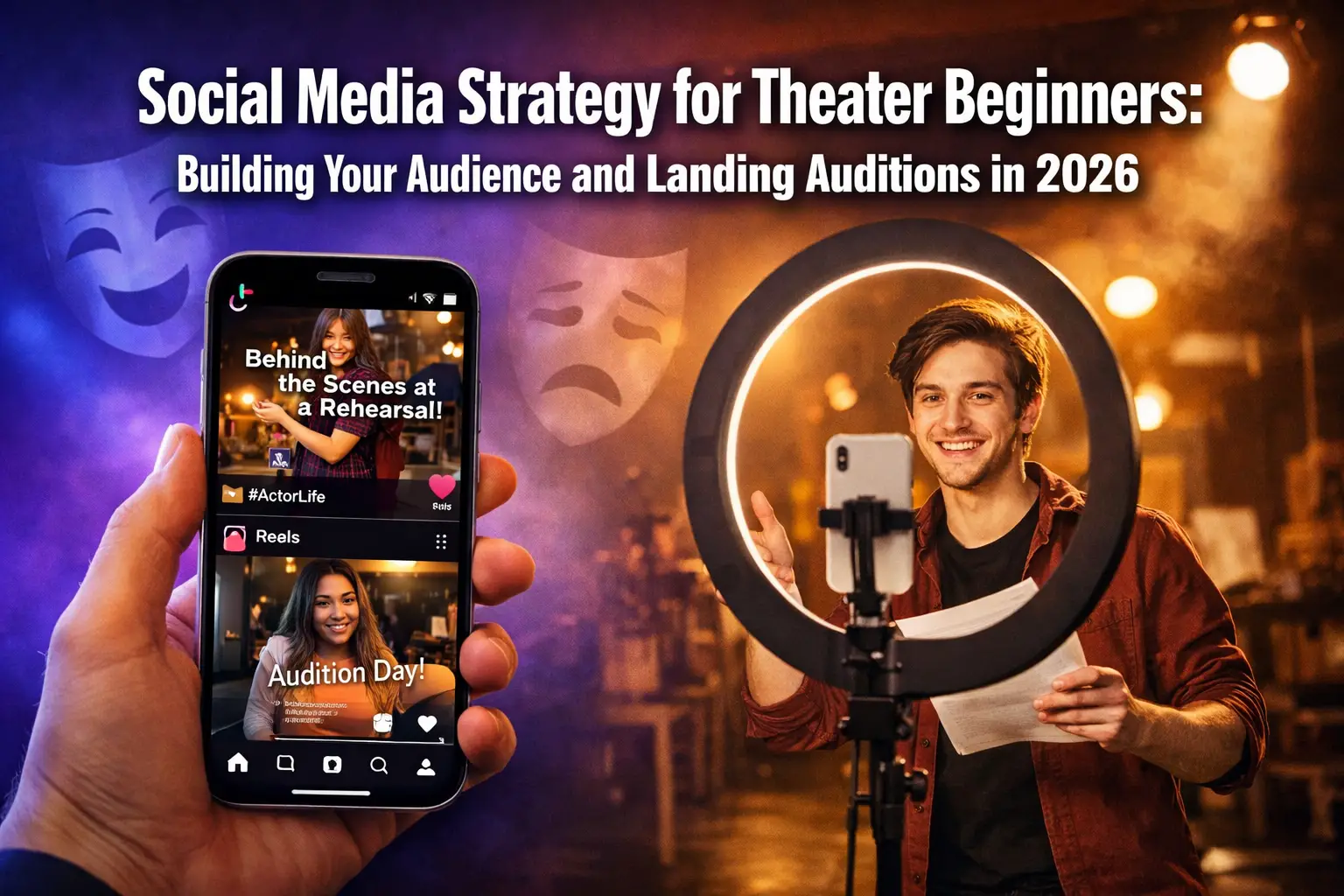
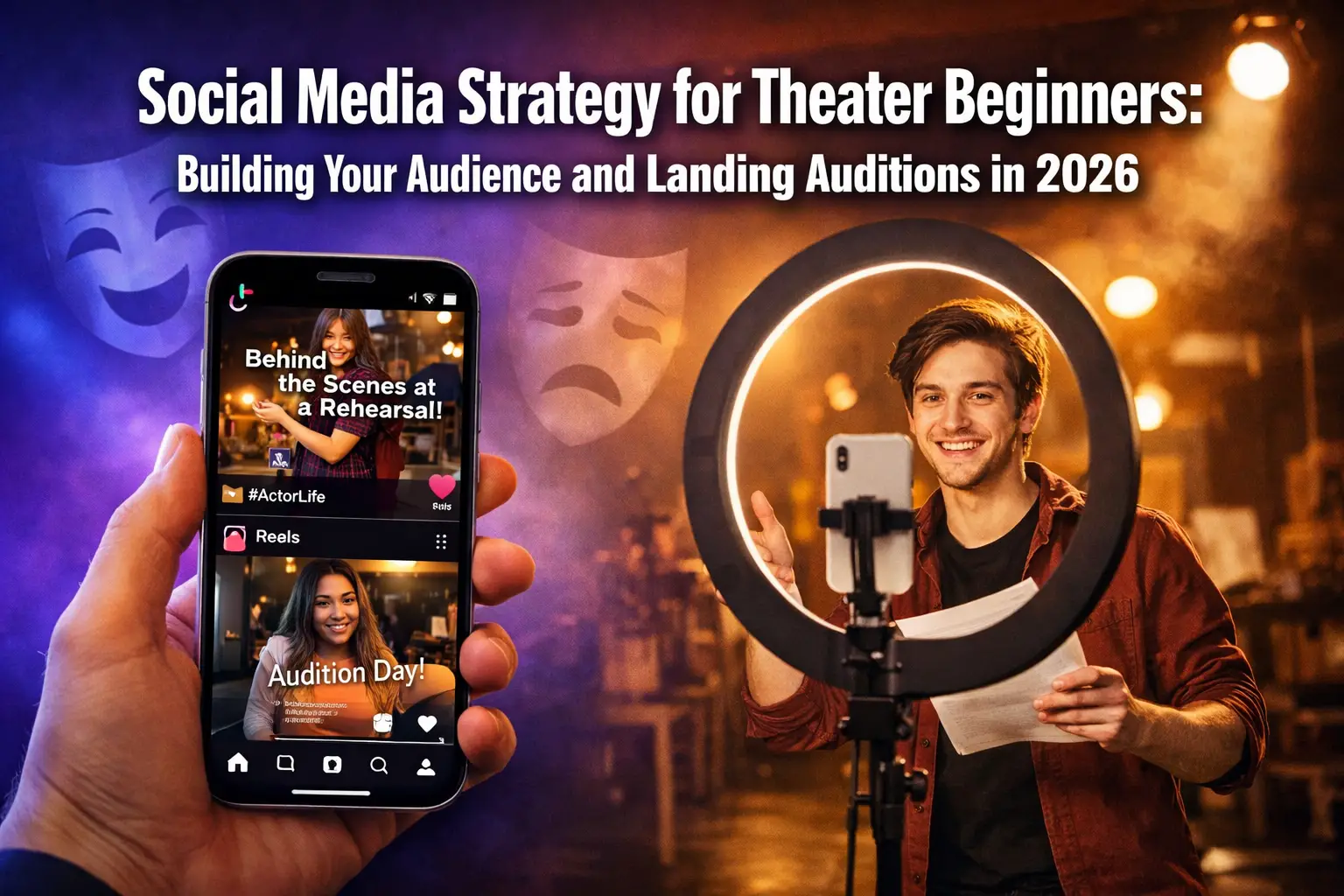
Look, I’ve been in this business for three decades, and if someone had told me back in the ’90s that I’d be advising actors to become content creators to land auditions, I would’ve laughed them right off the stage. But here we are in 2026, and the game has completely changed. Social Media Strategy for Theater Beginners: Building Your Audience and Landing Auditions in 2026 isn’t just a fancy buzzword—it’s your new survival toolkit in an industry that’s evolved faster than a quick costume change between scenes.
The truth is, theater productions aren’t just using social media to promote shows anymore; they’re actively scouting talent through these platforms. Casting directors are checking your Instagram before they check your resume. Directors are discovering performers through TikTok videos that showcase personality and range in ways a traditional headshot never could. And if you’re not in that digital space, you’re essentially performing in an empty theater with the house lights off.
But here’s the good news: you don’t need to be a tech wizard or have thousands of followers to make social media work for your theater career. What you need is strategy, authenticity, and a willingness to show the world what makes you special—both on stage and behind the scenes.
Key Takeaways
- TikTok leads engagement with a 3.70% rate and remains the most powerful platform for actors to showcase personality and talent through short-form video content[2]
- Behind-the-scenes content builds authentic connections with audiences and casting professionals, creating opportunities that traditional marketing cannot
- Platform-specific strategies matter more than ever as Meta’s 2026 targeting changes eliminate granular audience options, making organic reach and first-party data essential[1]
- Influencer marketing outperforms traditional methods with 94% of organizations reporting 2-3x better returns, opening doors for actors who build engaged followings[2]
- Mobile-first content creation is non-negotiable as 82.9% of social media ad spending will be mobile-generated by 2030[2]
Understanding the 2026 Social Media Landscape for Theater
The Platforms That Matter Most for Actors
Let me break this down like I’m explaining blocking to a first-year drama student. Not all social media platforms are created equal, and trying to maintain a presence on every single one is like trying to play every role in a production—you’ll exhaust yourself and deliver mediocre performances across the board.
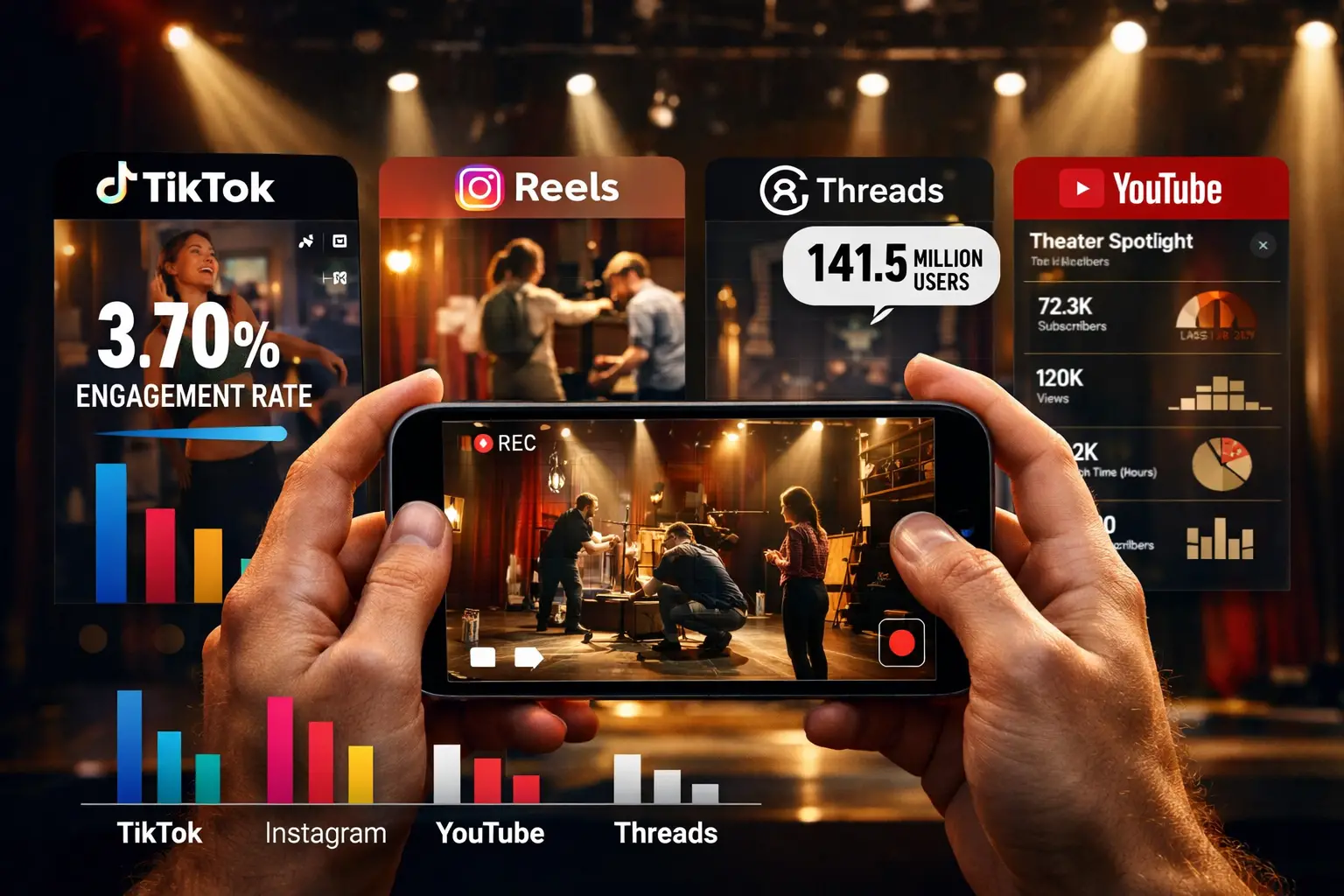
TikTok is your leading player right now. With an engagement rate of 3.70% and 49% year-over-year growth, it’s where the magic happens[2]. More importantly, 55% of Gen Z users—your future audience members and fellow collaborators—engage with content on this platform daily, multiple times[2]. Think of TikTok as your audition tape that never stops running.
Instagram Reels generate the most impressions among content formats, making them essential for visibility[2]. Instagram is like your professional portfolio—it’s where you showcase your range, your professional shots, and those perfectly curated moments that demonstrate you’re a serious artist who also happens to be interesting.
Threads is the dark horse here. It reached 141.5 million daily active users in January 2026, actually surpassing X, but only 12% of marketers are using it[2]. Translation? Less competition, more opportunity. It’s like showing up to an open call where everyone else went to the wrong address.
YouTube delivers the highest engagement rates for longer-form video content[2]. This is your platform for monologues, full performance clips, and deeper dives into your process.
The Meta Targeting Shake-Up: What It Means for You
Here’s where things get interesting—and by interesting, I mean challenging in that “the show must go on even though half the set just fell over” kind of way.
As of January 15, 2026, Meta eliminated detailed targeting options for Broadway shows, specific theaters like Roundabout Theatre Company and Lincoln Center Theater, and even celebrity fan bases[1]. The granular interest targeting that let productions find their exact audience? Gone. Vanished like a prop that wasn’t set properly.
What does this mean for you as an actor building your audience? You can’t rely on paid advertising to find your people anymore. The only broad “Broadway theater” targeting remains, which is about as useful as a script with half the pages missing[1].
Instead, Meta is pushing everyone toward Advantage+ AI tools—automated, AI-driven campaign management[1]. But here’s the silver lining: this levels the playing field. The big productions with massive advertising budgets don’t have as much advantage as they used to. Your organic content, your authentic voice, and your ability to build a genuine following matter more than ever.
Building Your Social Media Strategy for Theater Beginners: Content That Connects
Behind-the-Scenes Content: Your Secret Weapon
I learned this lesson the hard way during a regional production of “A Streetcar Named Desire” about fifteen years ago. A young actor in the cast started posting rehearsal snippets, warm-up routines, and honest reflections about tackling challenging material. By closing night, she had built a following that led directly to her next three auditions. Directors were reaching out to her.
Behind-the-scenes content works because it does something traditional theater marketing can’t: it creates intimacy and authenticity. Your audience—and yes, casting directors are part of your audience now—wants to see the human behind the performance.
Here’s what works:
- Rehearsal snippets showing your process (always get permission from your director and fellow cast members first)
- Warm-up routines that showcase your dedication and technique
- Script analysis where you break down character choices
- Costume fittings and makeup transformations that reveal the magic of theater
- Opening night nerves and post-show reflections that show vulnerability and growth
Think of it like this: if your performance is the finished meal, behind-the-scenes content is inviting people into the kitchen to watch you cook. It’s messy, it’s real, and it’s absolutely captivating.
Platform-Specific Content Strategies
Remember when I said not all platforms are equal? Here’s how to tailor your content for maximum impact:
TikTok Strategy 🎭
- 15-60 second performance clips that showcase range and personality
- Trending audio adapted to theatrical contexts (singing trends, monologue trends)
- Day-in-the-life content showing what being a theater actor really looks like
- Educational content teaching acting techniques or theater history
- Duets and stitches with other theater creators to expand reach
Pro tip: Post at least 3-5 times per week. Consistency beats perfection every single time.
Instagram Strategy 📸
- Reels similar to TikTok content (yes, you can repurpose, but optimize for each platform)
- Grid posts with professional production photos and headshots
- Stories for daily engagement, polls, Q&As, and real-time updates
- Highlights organized by production, technique, audition tips, etc.
- Carousel posts showing transformation (rehearsal to performance, character development)
Pro tip: Use all features. Instagram rewards accounts that utilize the full suite of tools.
Threads Strategy 💬
- Industry insights and thoughtful commentary on theater trends
- Networking with other actors, directors, and theater professionals
- Quick updates about auditions, callbacks, and bookings (when appropriate)
- Conversations that showcase your personality and professionalism
Pro tip: Be early. With only 12% of marketers using Threads, you can establish yourself as a voice in the theater community before it gets crowded[2].
YouTube Strategy 🎥
- Full monologues that demonstrate your range
- Performance reels updated quarterly
- Acting tutorials sharing what you’ve learned
- Production vlogs documenting your journey through a show
- Audition tips based on your experiences
Pro tip: YouTube is a search engine. Optimize titles, descriptions, and tags with keywords casting directors might use.
Social Media Strategy for Theater Beginners: Landing Auditions Through Strategic Visibility
Building Your First-Party Audience Data
With Meta’s targeting changes, the name of the game is building your own audience list[1]. Think of this as creating your own mailing list, except it’s way more dynamic and engaging.
Here’s how to do it:
| Strategy | Platform | Implementation |
|---|---|---|
| Email List Building | All Platforms | Link in bio to newsletter signup with exclusive content |
| Engagement Pods | Instagram/Threads | Create groups with fellow actors to boost initial engagement |
| Follower Incentives | TikTok/Instagram | Offer free acting tips, monologue breakdowns, or Q&A sessions |
| Collaboration | All Platforms | Partner with other theater creators to cross-pollinate audiences |
| Live Sessions | Instagram/TikTok | Weekly or monthly live rehearsals, warm-ups, or discussions |
The first two weeks of building any new audience are critical—just like the first two weeks of ticket sales for a show[1]. Put in the work early, and you’ll reap the benefits for years.
Leveraging Industry-Specific Platforms
While social media is crucial, don’t ignore industry-specific vendors like BroadwayWorld.com[1]. These platforms still offer first-party data access and can help you reach theater audiences despite broader targeting restrictions.
Create profiles on:
- BroadwayWorld.com
- Playbill.com
- Backstage.com
- Actors Access
- Casting Networks
Then, drive your social media followers to these professional platforms. It’s like having both your performance reel and your resume ready—you need both.
The Influencer Marketing Advantage
Here’s a stat that should make your ears perk up: 49% of consumers make purchase decisions based on influencer content at least monthly, and 94% of organizations report that influencer marketing delivers 2-3x returns compared to traditional digital advertising[2].
Now, you might be thinking, “But I’m not an influencer, I’m an actor!” Let me stop you right there. In 2026, if you’re building an engaged social media following around your theater work, you are an influencer. And that has real value.
When you build an authentic following:
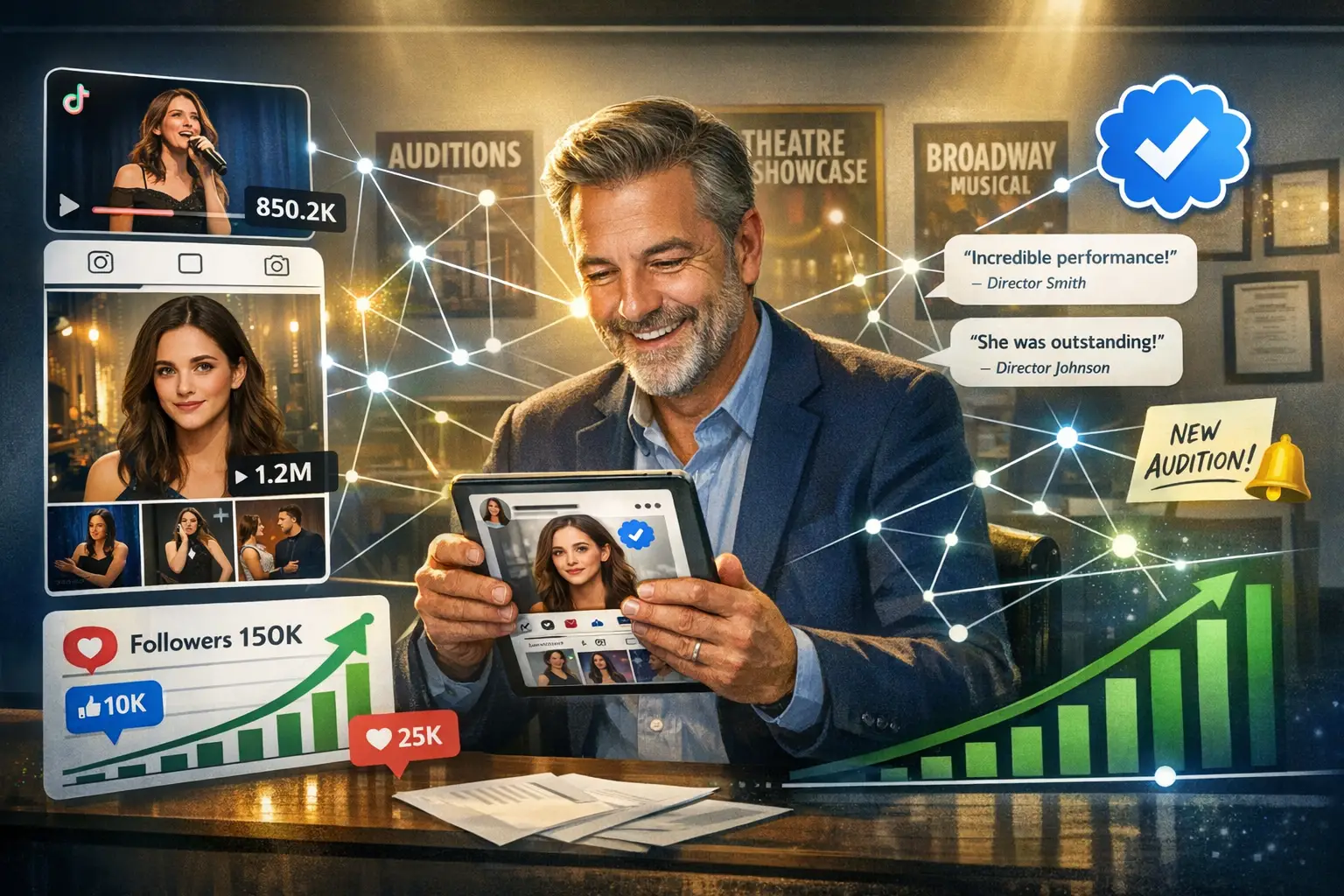
- Casting directors notice because you bring a built-in audience to productions
- Theaters see marketing value in casting actors with social media presence
- Collaborators want to work with you because you elevate the entire production’s visibility
- Opportunities find you instead of you constantly chasing them
I’ve seen actors with as few as 2,000 engaged followers land roles specifically because the production wanted someone who could help promote the show. That’s the reality of theater in 2026.
Creating a Sustainable Content Calendar
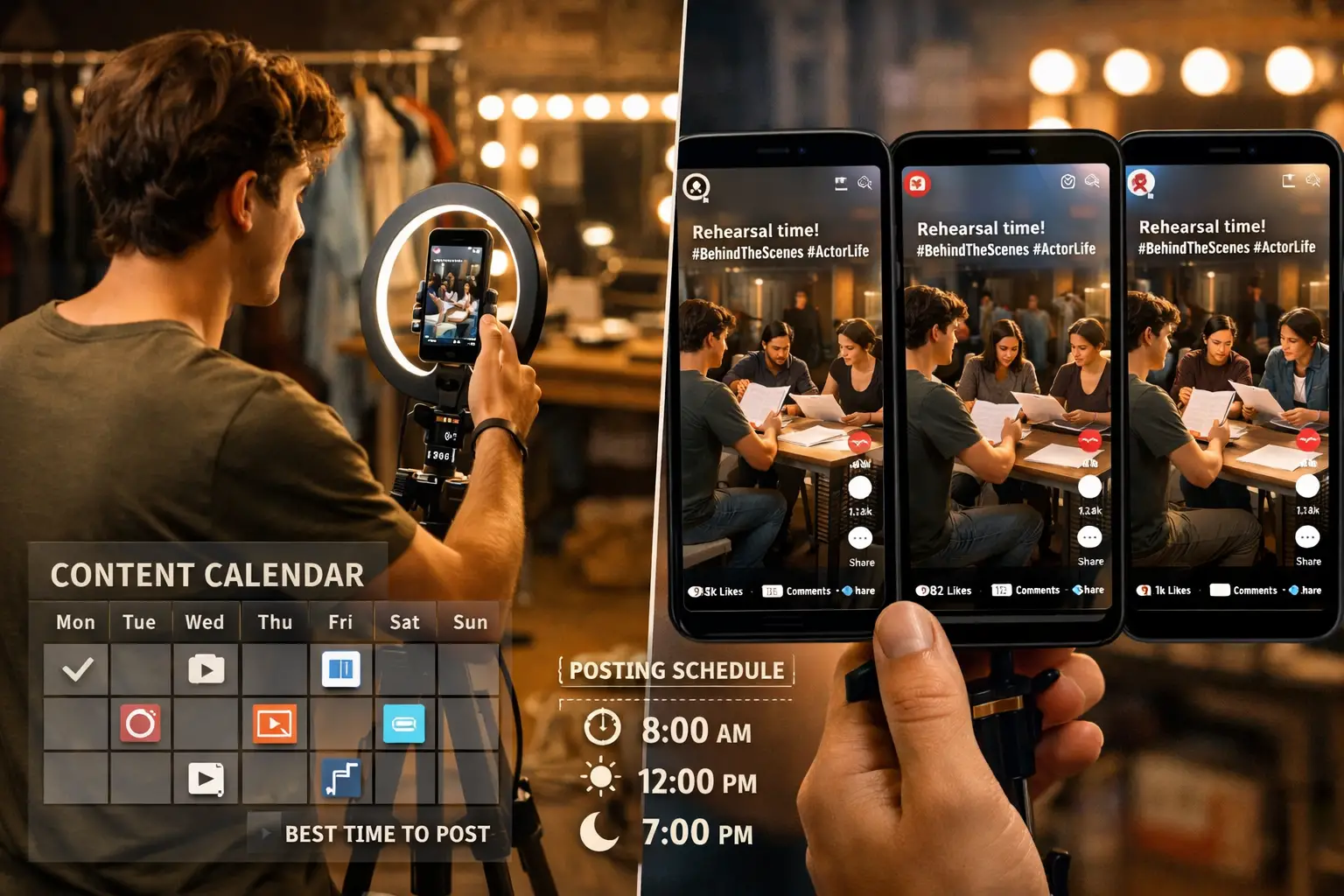
The Weekly Framework
Let me give you a framework that won’t burn you out. Burnout is real, folks—I’ve seen talented actors flame out trying to maintain impossible posting schedules while also, you know, actually acting.
Monday: Motivation/Inspiration (quote from a role, lesson learned, industry insight)
Tuesday: Tutorial Tuesday (acting tip, vocal warm-up, movement exercise)
Wednesday: Behind-the-scenes (rehearsal clip, process video)
Thursday: Throwback Thursday (past performances, growth journey)
Friday: Performance clip (monologue, scene work, singing)
Saturday: Personal/Fun (you as a human, not just an actor)
Sunday: Community engagement (respond to comments, collaborate, share others’ work)
This is a guideline, not a prison sentence. Adjust based on what you’re working on and what your audience responds to.
Batch Creating Content
Here’s a professional secret: batch creation saves your sanity. When you’re in rehearsal for a show, film everything you’re allowed to film. Then, you’ve got content for weeks.
Spend one afternoon per month:
- Recording multiple TikToks/Reels
- Writing captions for the next few weeks
- Planning your content themes
- Scheduling posts using free tools like Meta Business Suite
Think of it like meal prep, but for your social media presence.
Measuring What Matters
Don’t get caught up in vanity metrics. Follower count is nice, but engagement rate is what actually matters. Would you rather have 10,000 followers who never interact with your content, or 1,000 followers who comment, share, and show up to your performances?
Track these metrics:
- Engagement rate (likes, comments, shares divided by followers)
- Reach (how many unique people see your content)
- Saves (especially on Instagram—this signals valuable content)
- Profile visits (are people interested enough to learn more?)
- Link clicks (are people taking action?)
Use platform analytics (all free) to see what content performs best, then make more of that.
Social Media Strategy for Theater Beginners: Overcoming Common Obstacles
“I’m Not Comfortable on Camera”
I hear this all the time, and I get it. Stage acting and camera acting are different beasts. But here’s the thing: you don’t have to be perfect. In fact, authenticity outperforms polish on social media every single time.
Start small:
- Post to Stories first (they disappear in 24 hours—low stakes)
- Film yourself talking about something you’re passionate about
- Remember that everyone feels awkward at first
- Watch your early content back and notice how you improve
I was terrible on camera when I started. Absolutely wooden. But like any skill, you get better with practice. And unlike stage performances, you can do as many takes as you need.
“I Don’t Have Time”
Fair point. You’re auditioning, training, working survival jobs, and trying to have something resembling a life. Adding social media management feels like one more plate to spin.
But consider this: social media is your marketing. It’s how you stay visible between gigs. It’s how you build relationships with industry professionals. It’s how you create opportunities.
You don’t need hours. You need 15-30 minutes per day. That’s less time than your vocal warm-up. And with batch creation, you can reduce that even further.
“What If I Post Something That Hurts My Career?”
Valid concern. The internet is forever, and casting directors are watching. Here are the rules:
DO:
- Show your process and professionalism
- Celebrate others’ successes
- Share industry insights and knowledge
- Display your personality and interests
- Post performance content you’re proud of
DON’T:
- Badmouth directors, theaters, or fellow actors (ever)
- Post content that contradicts the professional image you want
- Share confidential information about productions
- Engage in online drama or controversial debates
- Post anything you wouldn’t want a casting director to see
When in doubt, ask yourself: “Would I be comfortable if this was projected on a screen during an audition?” If the answer is no, don’t post it.
Advanced Strategies: Taking Your Social Media to the Next Level
Collaborating for Growth
The theater community thrives on collaboration, and social media is no different. Partner with:
- Fellow actors for duets, scene work, and cross-promotion
- Directors to showcase their vision and your interpretation
- Designers to highlight the full creative team
- Theater companies to build relationships and visibility
- Acting coaches to provide value to your audience
Every collaboration exposes you to a new audience. It’s networking that scales.
Using Hashtags Strategically
Hashtags are your discoverability tool. Use a mix of:
Broad hashtags (high volume, high competition):
- #Actor
- #Theater
- #Musical
- #ActorsLife
Medium hashtags (moderate volume, moderate competition):
- #TheaterActor
- #RegionalTheater
- #ActingTips
- #TheaterLife
Niche hashtags (low volume, low competition):
- #ChicagoTheater
- #ShakespeareActor
- #MusicalTheaterAudition
- #ActorTraining2026
Use 10-15 hashtags on Instagram, 3-5 on TikTok, and 1-3 on Threads. Research what’s working in your niche.
Engaging Authentically
Here’s something that separates the actors who succeed on social media from those who don’t: genuine engagement.
Respond to every comment in your first hour of posting. Ask questions in your captions. Comment meaningfully on other creators’ content. Join conversations in your niche.
Social media rewards social behavior. The algorithm literally prioritizes content from accounts that engage with their community.
Staying Current with Trends
With social platforms now driving over 60% of product discovery, surpassing even Google at 34.5%[2], staying current with trends isn’t optional—it’s essential.
But here’s the key: adapt trends to your niche. Don’t just copy what everyone else is doing. Put a theatrical spin on it. Make it relevant to acting. Show your unique perspective.
Follow trend accounts, watch what’s working for other theater creators, and move quickly. Trends have a short shelf life.
The Long Game: Building a Career Through Social Media
Patience and Persistence
I’ve been doing this for 30 years, and I can tell you that overnight success is a myth. Whether it’s building your acting career or your social media presence, consistency over time is what wins.
Don’t expect to post for a month and land your dream role. Expect to show up consistently for six months, a year, five years. Document your journey. Let people watch you grow.
Some of the most successful actors on social media have been posting consistently for years. They built trust, demonstrated their craft, and created opportunities through sustained effort.
Adapting to Platform Changes
The only constant in social media is change. Remember when Instagram was just photos? When TikTok didn’t exist? When Meta had granular targeting?
The platforms will keep evolving. AI tools will become more sophisticated. New platforms will emerge (and some will disappear). Your job is to stay adaptable.
Don’t build your entire strategy on one platform. Diversify. Own your email list. Maintain your website. Build relationships that exist beyond social media.
Balancing Digital and Live Performance
Here’s the most important thing I can tell you: social media is a tool, not a replacement for actual theater work.
Don’t get so caught up in creating content that you forget to hone your craft. Take classes. Audition. Perform. Do the work that makes you a better actor.
Your social media should enhance your theater career, not consume it. It should open doors to more stage time, not replace it.
The goal is simple: use social media to get more opportunities to do what you love—perform live, in front of real audiences, telling stories that matter.
Conclusion: Your Action Plan for Social Media Success
Alright, let’s bring this home. Social Media Strategy for Theater Beginners: Building Your Audience and Landing Auditions in 2026 isn’t about becoming internet famous. It’s about taking control of your career in an industry that’s fundamentally changed.
The old model—headshot, resume, audition, wait—still exists, but it’s no longer enough. The actors who thrive in 2026 are the ones who build genuine connections with their audience, showcase their process authentically, and use these platforms to demonstrate not just their talent, but their professionalism and personality.
Your Next Steps (Start Today):
Choose your primary platform based on where you’re most comfortable (TikTok for short-form video, Instagram for visual storytelling, Threads for conversation)
Optimize your profiles with professional photos, clear bios, and links to your professional materials
Create your first piece of content this week—a behind-the-scenes moment, a performance clip, or an introduction to who you are as an artist
Set a sustainable posting schedule that you can maintain long-term (3-5 times per week is a good starting point)
Engage authentically with other theater creators and your growing audience
Track your metrics monthly and adjust your strategy based on what’s working
Be patient and persistent—this is a marathon, not a sprint
Remember, every major actor you admire started exactly where you are now. The difference is, they kept showing up. They kept improving. They kept putting themselves out there.
Social media gives you a stage that’s always available, an audience that’s always growing, and opportunities that didn’t exist even five years ago. The question isn’t whether you should use it—it’s how quickly you can start using it effectively.
Now get out there and show the world what you can do. Break a leg! 🎭
References
[1] When Ai Replaces Targeting What Metas 2026 Update Means For Theater Marketing 20250929 – https://www.broadwayworld.com/article/When-AI-Replaces-Targeting-What-Metas-2026-Update-Means-for-Theater-Marketing-20250929
[2] Social Media Statistics – https://sproutsocial.com/insights/social-media-statistics/