
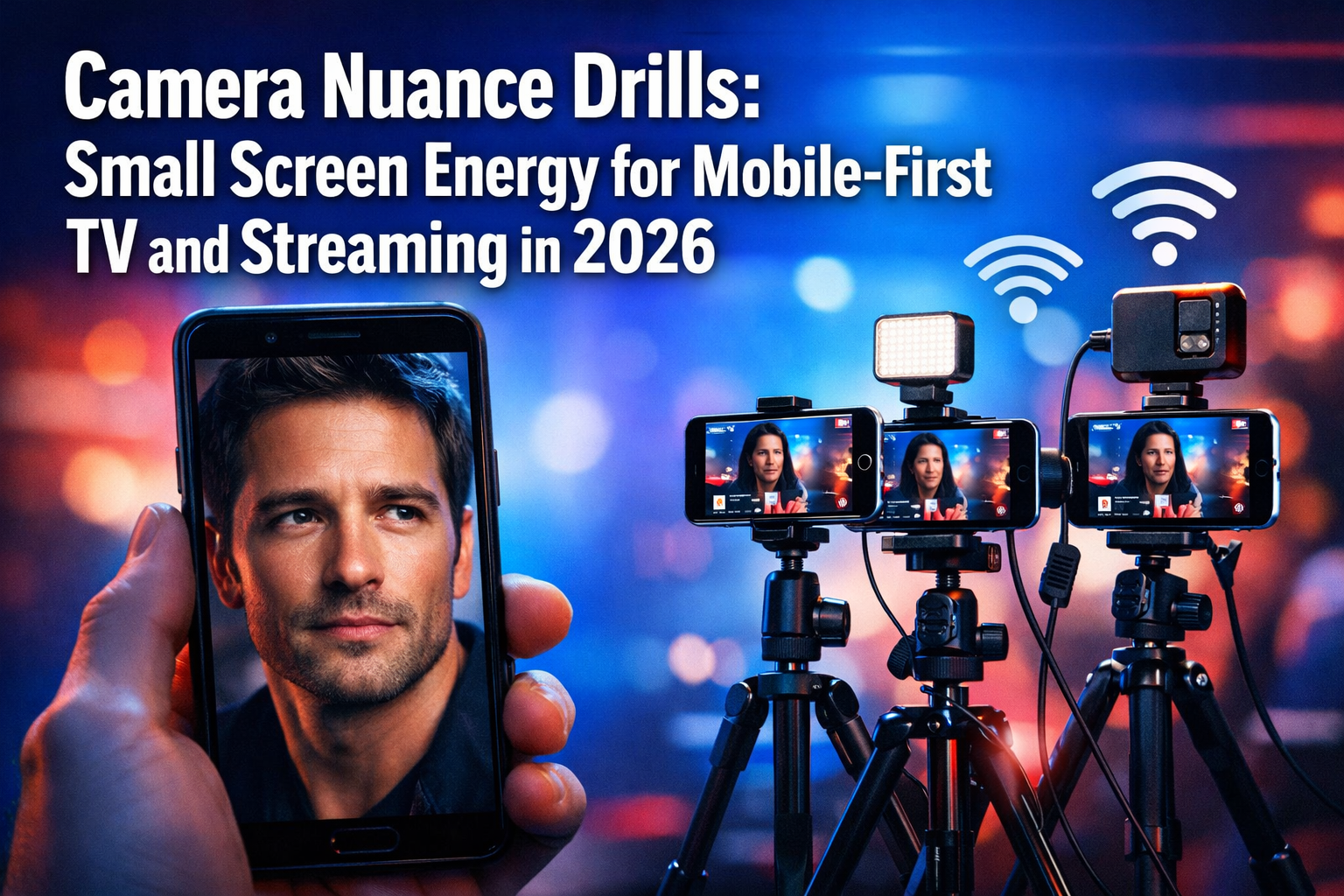

Look, I’m going to level with you: the game has changed, and it happened while some of us were still perfecting our “TV face” for traditional broadcasts. In 2026, your audience isn’t just watching you on a 55-inch flatscreen anymore—they’re catching your performance on a phone screen while waiting for their latte, on a tablet during their commute, or yes, sometimes on that big TV, but probably while scrolling through three other apps. Camera Nuance Drills: Small Screen Energy for Mobile-First TV and Streaming in 2026 isn’t just another acting technique—it’s survival skills for the modern performer who needs to project authenticity and energy through a screen the size of a playing card.
After three decades of standing on stages, squinting into camera lights, and yes, making plenty of mistakes along the way, I’ve learned this truth: what works for the back row of a theater doesn’t work for a smartphone screen, and what worked for traditional TV doesn’t quite cut it for the TikTok-to-streaming pipeline that’s dominating content creation today. The performers who are booking work right now? They’ve figured out how to make every micro-expression count, how to be simultaneously intimate and dynamic, and how to deliver “big” energy in the smallest possible frame.
Key Takeaways
- 📱 Mobile-first performance requires frame psychology mastery: Understanding how your expressions, eye contact, and energy read on small screens is now essential for booking streaming and digital content work in 2026
- 🎥 Multi-camera mobile streaming is the new production standard: With up to 9 smartphones functioning as wireless cameras, performers must deliver consistent energy across multiple simultaneous angles[3]
- ⚡ Authentic spontaneity beats polished perfection: The TikTok-to-TV pipeline values genuine, immediate connection over traditional “camera-ready” performance styles
- 🎯 Subtlety scales better than broad choices: Micro-expressions and nuanced reactions translate more effectively to mobile screens than theatrical gestures
- 💡 Practice with your actual audience’s viewing experience: Regular drills using smartphone playback reveal exactly how your performance translates to the screens where most viewers will see your work
Understanding the Mobile-First Streaming Revolution
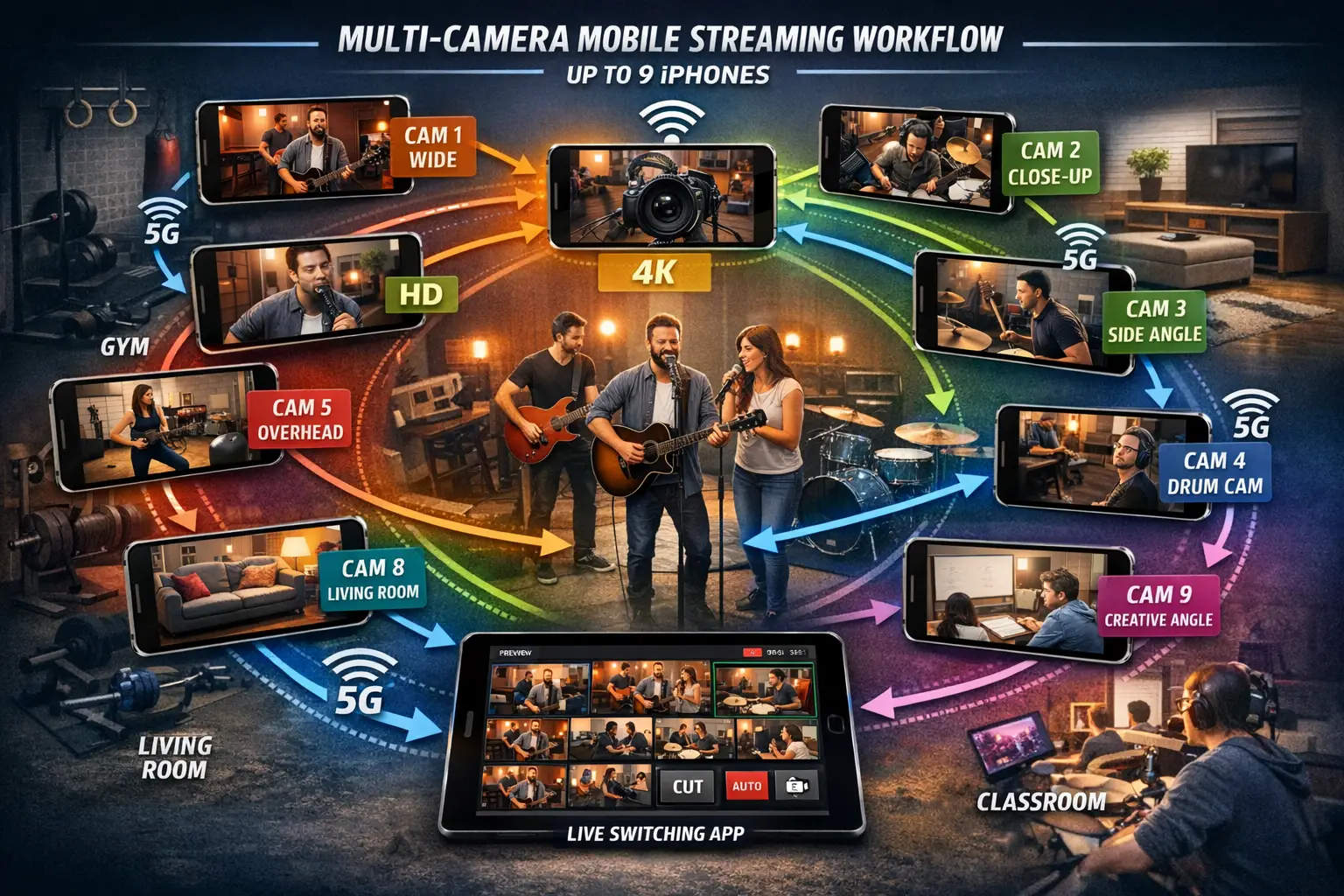
Here’s what’s happening in 2026 that you absolutely need to understand: multicamera mobile streaming has become the production baseline[3]. What used to require a control room, thousands of dollars in equipment, and a crew of technicians now happens through smartphones and tablets connected to live-switching apps. Production companies are running broadcasts with up to 9 iPhones or iPads functioning as wireless cameras[3], and they’re doing it from gyms, churches, classrooms, living rooms—anywhere except traditional studios.
Why does this matter to you as a performer? Because the technical democratization of production means more opportunities, but also means you’re competing with literally everyone who owns a smartphone and thinks they can act. The barrier to entry has dropped, but the audience’s expectations? Those have skyrocketed.
Dynamic, multi-angle video isn’t just preferred anymore—it’s expected[3]. Single locked-off cameras feel flat and amateurish to modern audiences. They want energy, they want context, they want the intentionality that comes from seeing you from multiple perspectives simultaneously. Think about it like this: if you’ve ever watched a TikTok creator seamlessly switch between angles mid-sentence, you’ve seen what audiences now consider baseline production value.
“Single locked-off cameras are increasingly perceived as flat, while multiple angles add energy, context, and intentionality to broadcasts.”[3]
And thanks to 5G and advanced mobile networks, we’re seeing higher-resolution broadcasts and lower latency from outdoor locations[3]. Those previous bitrate constraints that made mobile streaming look choppy and pixelated? Gone. The technical excuses for poor quality have evaporated, which means your performance better be sharp.
The Connected TV Advertising Boom
Let’s talk about where the money is, because that’s where your opportunities live. Connected TV (CTV) has consolidated as a primary advertising channel, with three-quarters of American CTV owners actually preferring targeted ads[2]. More importantly for working actors, more than one in five viewers are completing purchases after seeing CTV ads[2].
Translation? Brands are pouring money into streaming content, which means commercial work, branded content, and streaming series opportunities are exploding. But here’s the catch: you need to understand how to perform for audiences who are watching on devices ranging from 6-inch phones to 75-inch TVs, often within the same campaign.
Mastering Camera Nuance Drills for Small Screen Performance
Alright, let’s get practical. Camera Nuance Drills: Small Screen Energy for Mobile-First TV and Streaming in 2026 is about training your instrument—your face, your voice, your energy—to work effectively in this new landscape. Think of it like learning a new dialect of your craft.
The Frame Psychology Fundamentals
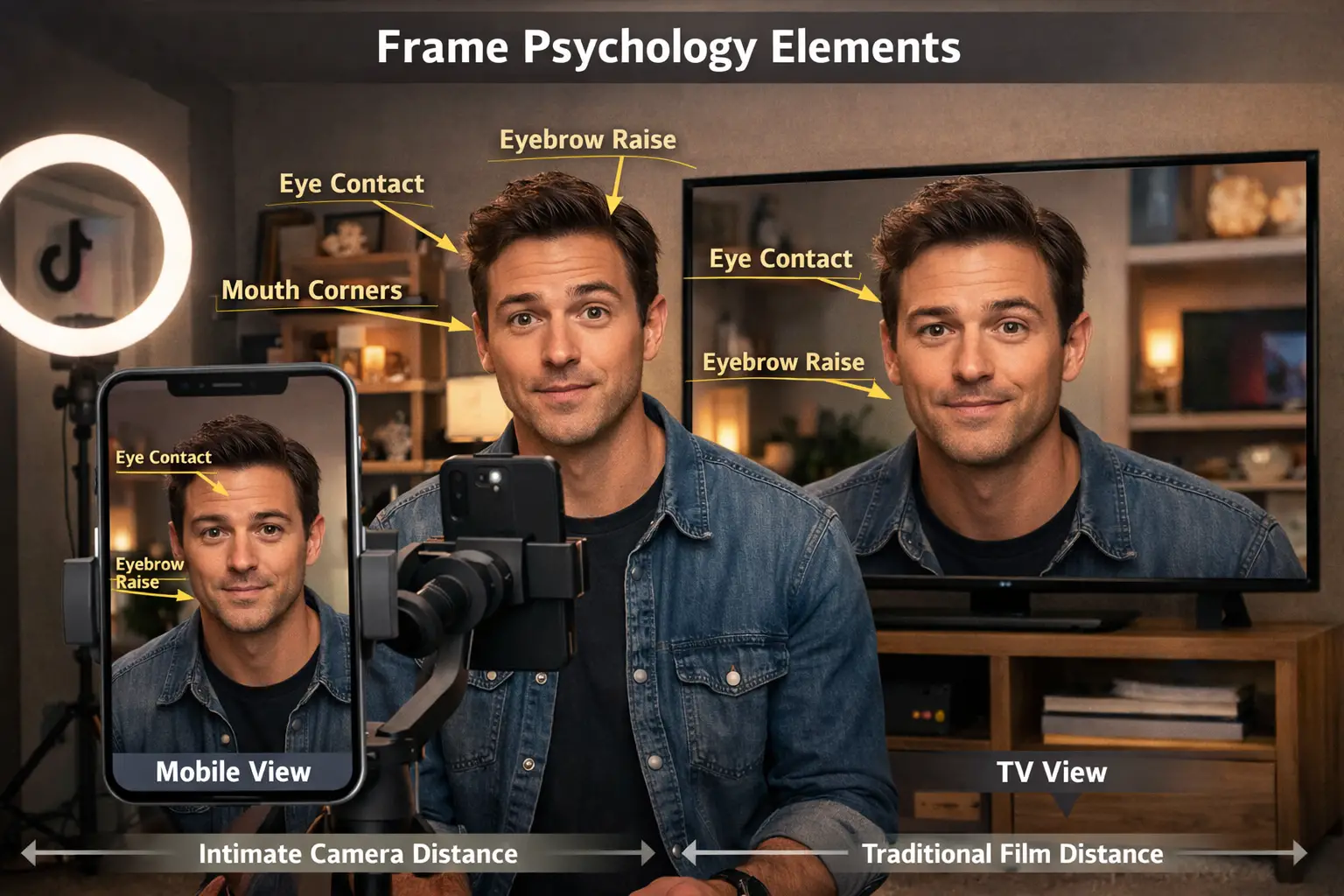
First, understand frame psychology: how your performance reads within the literal frame of a mobile screen. On a smartphone, your face might occupy 2-3 inches of screen real estate. Every element of your performance needs to be visible and impactful within that constraint.
Key frame psychology principles:
- Eye contact is currency: On a small screen, where you look matters exponentially more than on stage. Looking directly at the camera creates intimacy; looking slightly off-camera can feel like you’re ignoring your audience entirely
- The eyebrow economy: Subtle eyebrow movements read clearly on mobile screens and convey volumes about your character’s thoughts and reactions
- Mouth corner micro-expressions: The tiniest upturn or downturn of your mouth corners communicates emotional shifts that would require full facial expressions on stage
- Head tilt and angle awareness: A slight head tilt toward the camera creates engagement; tilting away can signal distance or deception
Here’s a drill I wish someone had taught me twenty years ago: The Smartphone Mirror Exercise
- Set up your smartphone on a tripod or stable surface at typical selfie distance (arm’s length)
- Record yourself having a conversation with the camera about something you’re genuinely passionate about
- Watch the playback on your phone (not a larger screen—this is crucial)
- Note every moment where your energy drops, where your eyes wander, where your expressions feel too big or too small
- Repeat the same conversation, adjusting for what you learned
- Compare the two recordings side-by-side
The difference between take one and take two will be revelatory. Most actors discover they’re either over-performing (theater habits) or under-performing (film habits) for the mobile-first medium.
Authentic Spontaneity vs. Polished Performance
Here’s where the TikTok-to-TV pipeline gets interesting. Traditional acting training emphasizes control, repeatability, and polish. You learn to hit your marks, deliver consistent performances, and eliminate “mistakes.” But the content that’s dominating streaming platforms in 2026? It values authentic spontaneity.
This doesn’t mean being unprepared or sloppy. It means training yourself to deliver performances that feel spontaneous and genuine while still being technically proficient. It’s actually harder than traditional acting because you’re creating the illusion of non-performance.
Authenticity Drill: The One-Take Challenge
- Choose a short monologue or commercial copy (30-60 seconds)
- Set up your smartphone camera
- Give yourself exactly one take—no do-overs
- Whatever happens—stumbles, pauses, unexpected reactions—stay in it
- Review the footage looking specifically for moments of genuine reaction
- Practice recreating that “genuine” quality intentionally
The paradox is real: you’re learning to authentically recreate spontaneity. It’s like jazz improvisation—you practice so much that your spontaneous choices become skilled and intentional.
Multi-Angle Energy Consistency
Remember how I mentioned productions are now using up to 9 mobile cameras simultaneously?[3] That means you might be captured from multiple angles at once, and your performance needs to read consistently across all of them.
This is different from traditional multi-camera sitcom work. In classic sitcom shooting, cameras are positioned at predictable angles and distances. In mobile-first streaming, cameras might be at wildly different distances and heights—one phone on a gimbal circling you, another locked off wide, a third capturing close-up details, a fourth getting an overhead angle.
Multi-Angle Consistency Drill:
Set up 3-4 smartphones at different angles and distances (borrow from friends if needed, or do this exercise in multiple sessions):
- Camera A: Close-up, eye level
- Camera B: Medium shot, slightly off-angle
- Camera C: Wide shot, capturing full body
- Camera D: Unusual angle (high, low, or side profile)
Record a performance simultaneously on all cameras. Review each angle separately, then watch them in quick succession. Your energy, your focus, your character choices should feel consistent even though each camera is telling a slightly different visual story.
Practical Drills for Camera Nuance Drills: Small Screen Energy for Mobile-First TV and Streaming in 2026
Let’s get into the specific exercises that will transform your mobile-screen presence. These aren’t theory—these are the drills I use and teach to actors who are actually booking streaming work.
The Micro-Expression Workout
Small screens amplify subtle facial movements while making broad expressions look cartoonish. Train your face like an athlete trains their body.
Daily 10-Minute Routine:
Eyebrow isolation (2 minutes): Practice raising one eyebrow, then the other, then both together. Do this while watching yourself on your phone’s front camera. Aim for the smallest possible movement that still reads clearly.
Eye focus shifts (2 minutes): Practice shifting your focus between the camera lens and points just off-camera. On a small screen, these shifts are incredibly visible and communicate volumes about your character’s attention and thoughts.
Smile gradations (2 minutes): Practice five levels of smile intensity, from the barely-there hint of amusement (think Mona Lisa) to full genuine joy. Record each level and verify they’re distinct when viewed on your phone.
Thought-to-expression (2 minutes): Think of specific emotions or memories and let them naturally affect your face without forcing expressions. Record this and identify which genuine thoughts create the most compelling micro-expressions.
Stillness practice (2 minutes): Practice absolute stillness while keeping your eyes alive and engaged. On small screens, unnecessary movement is distracting, but dead eyes are deadly.
The Energy Calibration Exercise
Energy is tricky in mobile-first content. Too much, and you look manic or desperate. Too little, and you disappear into the scroll. You need to find your optimal energy level for different content types.
Energy Level Chart:
| Content Type | Energy Level | Key Characteristics |
|---|---|---|
| TikTok/Reels | 7-8/10 | High engagement, quick pacing, dynamic |
| Streaming Drama | 4-6/10 | Naturalistic, intimate, nuanced |
| Streaming Comedy | 6-8/10 | Elevated but grounded, reactive |
| Commercial/Branded | 6-7/10 | Approachable, authentic enthusiasm |
| Educational/Tutorial | 5-6/10 | Authoritative but friendly |
Calibration Drill:
Record the same 30-second piece of content at three different energy levels: your instinctive choice, one level higher, and one level lower. Watch all three on your phone. Which one actually holds your attention? Which one would you scroll past? Be brutally honest.
The Proximity Performance Shift
Distance from camera dramatically affects how your performance should be calibrated. A close-up selfie-style shot requires different choices than a medium shot, which requires different choices than a wide shot.
Three-Distance Drill:
Using the same piece of material:
- Close-up (phone at arm’s length): Minimize physical movement, maximize facial nuance, lower vocal energy slightly, create intimacy through eye contact
- Medium shot (phone 6-8 feet away): Incorporate upper body movement, slightly broader facial expressions, conversational vocal energy
- Wide shot (phone 12+ feet away): Full body engagement, clearer gestures, project voice without shouting
Practice transitioning between these distances smoothly. In multi-camera mobile streaming, all three might be capturing you simultaneously[6], so you need to find choices that work across distances.
The Authenticity Audit
This is the drill that separates performers who “get” the mobile-first era from those who don’t. It’s uncomfortable, but it’s essential.
The Audit Process:
- Record yourself delivering a commercial or monologue in your most “professional” acting mode
- Then record yourself explaining to a friend why you love your favorite movie, TV show, or hobby—something you genuinely care about
- Watch both recordings on your phone
- Identify the specific differences in your energy, facial expressions, vocal patterns, and body language
- Now record the commercial/monologue again, but incorporate the authentic qualities from your passionate explanation
The goal isn’t to be unprofessional or sloppy. It’s to bring genuine human connection into your professional work. Audiences in 2026, especially on mobile platforms, have incredibly sensitive BS detectors. They can spot “acting” from a mile away, and they scroll right past it.
Adapting to Production Realities in 2026
Understanding Camera Nuance Drills: Small Screen Energy for Mobile-First TV and Streaming in 2026 also means understanding the production environments you’ll be working in. The landscape has shifted dramatically.
Non-Traditional Shooting Locations
Mobile production workflows are expanding beyond traditional studios into everyday spaces[3]. You might be shooting a streaming series in someone’s living room, a branded content piece in a gym, or a commercial in a classroom.
Environmental Adaptation Skills:
- Acoustic awareness: These spaces aren’t acoustically treated. Learn to modulate your voice for clarity without projection that causes echo
- Lighting flexibility: Natural light and practical fixtures replace professional lighting. Understand how to find your light and adjust your positioning
- Spatial intimacy: Smaller spaces mean cameras are closer. Adjust your performance scale accordingly
- Background consciousness: In non-studio spaces, what’s behind you matters. Develop awareness of your full frame, not just your performance
Working with Minimal Crew
When production runs on smartphones and tablets, you might be working with a skeleton crew or even self-taping for streaming auditions with no crew at all. This requires self-sufficiency that wasn’t expected of performers a decade ago.
Essential Self-Direction Skills:
✅ Technical competency: Understand basic smartphone camera settings, lighting, and audio
✅ Self-monitoring: Develop the ability to evaluate your own performance objectively
✅ Efficient workflow: Learn to get usable takes quickly without endless repetition
✅ Problem-solving: When technical issues arise, troubleshoot rather than waiting for help
✅ Professional communication: Clearly articulate your needs and constraints to remote directors or producers
The Data Quality Challenge
Here’s something most actors don’t think about but absolutely should: the streaming industry’s effectiveness is limited by data quality issues[4]. Genre mislabeling, inconsistent metadata, and opaque supply chains mean your brilliant performance might not reach its ideal audience because the content is poorly categorized or distributed.
What can you do about this? Build your own data trail. Maintain a strong, searchable online presence with accurate information about your type, skills, and previous work. Make it easy for casting directors and algorithms to find you and understand what you do well.
Advanced Techniques for TikTok-to-TV Pipeline Success
The performers who are thriving in 2026 understand that content often originates on short-form platforms like TikTok and Instagram Reels, then migrates to longer-form streaming content. This pipeline requires specific skills.
The Hook-and-Hold Technique
Short-form content has trained audiences to make viewing decisions in the first 1-3 seconds. Even in longer streaming content, that habit persists.
Hook Development Drill:
- Take any scene or commercial
- Identify the single most compelling moment, image, or line
- Restructure your performance to deliver that hook element within the first 3 seconds
- Ensure your energy and engagement remain high for the subsequent 7 seconds (the critical first 10 seconds)
- Then settle into the natural rhythm of the piece
This isn’t about gimmicks. It’s about understanding attention economics in the mobile-first era.
Vertical Video Fluency
While landscape format still dominates streaming platforms, vertical video (9:16 aspect ratio) is increasingly common, especially for content that originates on mobile platforms or is designed for mobile viewing.
Vertical Performance Adjustments:
- Your full body fits in frame at closer distances—adjust spatial awareness accordingly
- Vertical framing emphasizes height and facial expressions over width and gestures
- Background elements above and below you become more prominent
- Eye-line and head position matter more than horizontal movement
Practice the same material in both landscape and vertical formats. The performance adjustments are subtle but significant.
The Scroll-Stop Factor
Be honest: what makes you stop scrolling? That’s what you need to deliver.
Scroll-Stop Analysis:
- Spend 15 minutes scrolling through TikTok, Instagram Reels, or YouTube Shorts
- Note every video that makes you stop and watch
- Identify the specific elements that caught your attention (facial expression, movement, sound, text, concept, energy)
- Categorize these elements into patterns
- Integrate the most authentic-to-you patterns into your performance toolkit
This isn’t about copying trends. It’s about understanding what creates genuine engagement in the mobile-first environment and finding ways to authentically incorporate those elements into your work.
Building Your Mobile-First Practice Routine
Knowledge without practice is just trivia. Here’s how to build a sustainable practice routine for Camera Nuance Drills: Small Screen Energy for Mobile-First TV and Streaming in 2026.
The Daily 20-Minute Workout
Week 1-2: Foundation Building
- 5 min: Micro-expression workout
- 5 min: Energy calibration with different content types
- 5 min: Proximity performance shifts
- 5 min: Review and self-critique on phone screen
Week 3-4: Integration
- 5 min: Warm-up (micro-expressions + energy)
- 10 min: Full performance practice with multiple angles
- 5 min: Authenticity audit and adjustment
Week 5+: Advanced Application
- 5 min: Targeted work on your weakest area
- 10 min: New material with immediate mobile-first choices
- 5 min: Experimentation with hooks, vertical format, or scroll-stop elements
The Monthly Progress Check
Once a month, record yourself performing the same piece of material you used in month one. Watch the progression. You should see:
📈 More nuanced facial expressions
📈 Better energy calibration for the format
📈 Increased comfort with camera proximity
📈 More authentic, less “performed” quality
📈 Stronger hooks and engagement in opening moments
If you’re not seeing progress, adjust your practice focus. Maybe you need more work on authenticity, or perhaps your technical setup needs improvement.
Peer Feedback Sessions
Find other actors who understand this mobile-first landscape and establish regular feedback sessions. Share your practice recordings and get honest input. Questions to ask:
- Would you stop scrolling for this?
- Does my energy feel authentic or performed?
- Are my expressions reading clearly on your phone screen?
- Where does your attention wander, and why?
- What’s the strongest moment, and how can I emphasize it?
Common Pitfalls and How to Avoid Them

After three decades in this business and plenty of faceplants along the way, let me save you from some common mistakes actors make when adapting to mobile-first content.
❌ Pitfall #1: Over-Correcting to Minimalism
Some actors, when they learn that subtle expressions read better on small screens, go too far and become flat and lifeless. The fix: Remember that “nuanced” doesn’t mean “absent.” Your performance should be rich with inner life; it’s just expressed through smaller physical choices.
❌ Pitfall #2: Ignoring Audio Quality
You’re so focused on how you look on that small screen that you forget viewers are often wearing earbuds with excellent audio quality. Poor audio will kill a mobile-first performance faster than mediocre visuals. The fix: Invest in a decent lavalier mic for self-tapes and practice sessions. Learn basic audio principles.
❌ Pitfall #3: Practicing Only on Large Screens
You record on your phone but review your work on your laptop or TV. This completely defeats the purpose. The fix: Always do your primary review on the device your audience will use—a smartphone.
❌ Pitfall #4: Chasing Trends Instead of Authenticity
You see what’s working for other performers and try to copy it, but it feels false coming from you. The fix: Use trend analysis to understand principles, then apply those principles in ways that align with your authentic self and type.
❌ Pitfall #5: Neglecting Traditional Skills
You get so focused on mobile-first techniques that you lose your foundation in basic acting craft. The fix: These drills enhance your existing skills; they don’t replace them. Continue your scene study, voice work, and movement training.
The Business Side: Marketing Yourself for Mobile-First Opportunities
Understanding Camera Nuance Drills: Small Screen Energy for Mobile-First TV and Streaming in 2026 is only half the battle. You also need to position yourself for these opportunities.
Building Your Mobile-First Reel
Your demo reel needs to reflect the current landscape:
- Lead with mobile-optimized content: Show work that was designed for streaming and mobile viewing
- Include vertical format samples: Demonstrate you understand multiple aspect ratios
- Showcase range within the format: Different energy levels, different content types, all optimized for small screens
- Keep it short: 60-90 seconds maximum. If casting directors are viewing on mobile devices, they won’t watch a 5-minute reel
- Ensure it plays well on phones: Test your reel on multiple devices before sending it out
Social Media as Proof of Concept
Your social media presence isn’t just marketing anymore—it’s your audition. Casting directors and producers are checking whether you understand mobile-first content creation.
Strategic Content Creation:
🎯 Post regular content that demonstrates your camera nuance skills
🎯 Show your range while maintaining consistent quality
🎯 Engage authentically with your audience
🎯 Use platform-specific features (TikTok trends, Instagram Reels, YouTube Shorts)
🎯 Include behind-the-scenes content showing your process
You’re not trying to go viral (though that’s nice when it happens). You’re demonstrating professional competency in the mobile-first medium.
Targeting the Right Opportunities
Not all streaming content is created equal. Some productions have budgets and crews; others are scrappy mobile-first operations. Both are valid, but they require different approaches.
Questions to ask about opportunities:
- What’s the intended platform and primary viewing device?
- What’s the production setup (traditional vs. mobile-first)?
- Who’s the target audience, and how do they consume content?
- What’s the content’s purpose (entertainment, education, commercial, branded)?
- How will success be measured (views, engagement, conversions)?
Understanding these factors helps you calibrate your performance appropriately and demonstrate that you’re a savvy collaborator, not just a performer.
Conclusion: Your Next Steps in Mastering Camera Nuance for 2026
Look, the mobile-first streaming revolution isn’t coming—it’s here. Productions are running multi-camera broadcasts from living rooms and gyms using smartphones[3]. Audiences are making viewing decisions in seconds on screens the size of their palm. The Connected TV market is booming with advertising dollars[2], which means opportunities for performers who understand this landscape.
Camera Nuance Drills: Small Screen Energy for Mobile-First TV and Streaming in 2026 isn’t about abandoning everything you’ve learned as an actor. It’s about adapting your considerable skills to the medium where most content is now consumed. It’s about understanding that the TikTok-to-TV pipeline values authentic spontaneity, that frame psychology matters more than ever, and that technical self-sufficiency is now part of your job description.
Here’s what I want you to do this week:
Immediate Action Steps:
Set up your practice space: Designate a spot with good natural light where you can easily record on your smartphone. Make this your mobile-first training ground.
Establish your baseline: Record yourself performing a 60-second monologue or commercial. Watch it only on your phone. Note three specific things you want to improve.
Start the Daily 20: Commit to the 20-minute daily workout for the next two weeks. Put it in your calendar like any other professional commitment.
Audit your current materials: Look at your reel, headshots, and social media presence. Do they reflect mobile-first competency? If not, plan updates.
Find your feedback partners: Identify 2-3 other actors who are serious about mastering this medium. Set up your first peer feedback session.
The performers who are booking streaming work in 2026 aren’t necessarily more talented than you. They’ve just adapted faster to the new reality. They understand that every micro-expression matters when you’re performing in a 6-inch frame. They’ve trained themselves to deliver authentic spontaneity on demand. They’ve made peace with the fact that their work might be viewed on a phone screen while someone’s waiting for a bus, and they’ve optimized for that reality rather than resenting it.
You’ve got the foundation. You’ve got the training. Now you need the specific skills for this specific moment. Camera Nuance Drills: Small Screen Energy for Mobile-First TV and Streaming in 2026 is your roadmap.
The camera’s rolling. The screen is small. Your opportunity is huge.
Now get to work. 🎬
References
[1] Webcams For Streaming – https://www.bestbuy.com/site/shop/webcams-for-streaming
[2] 6 Things To Know About The Streaming Tv Landscape In 2026 – https://basis.com/blog/6-things-to-know-about-the-streaming-tv-landscape-in-2026
[3] Future Of Livestreaming – https://www.switcherstudio.com/blog/future-of-livestreaming
[4] Ad Tech And Ctv Experts Forecast 2026s Biggest Trends – https://www.tvtechnology.com/insights/ad-tech-and-ctv-experts-forecast-2026s-biggest-trends
[5] I Found The Invisible Syndrome Killing My Ai Productivity Here Is The 10 Second Fix – https://www.tomsguide.com/ai/i-found-the-invisible-syndrome-killing-my-ai-productivity-here-is-the-10-second-fix
[6] Single Vs Multi Camera Productions – https://ikancorp.com/single-vs-multi-camera-productions/
[7] Low Latency – https://www.harmonicinc.com/insights/blog/low-latency/