

The theater world can feel like an impossible dream for newcomers. Aspiring actors, directors, and stage professionals often face a harsh reality: countless auditions, frequent rejections, and long periods of uncertainty. Yet, the difference between those who eventually succeed and those who give up often comes down to two critical factors—setting realistic goals and staying resilient through the inevitable challenges. This comprehensive guide on Setting Realistic Goals and Staying Resilient: A Beginner’s Roadmap to Theater Success will provide practical strategies, milestone frameworks, and mindset tools to help beginners navigate their theatrical journey with confidence and persistence.
The theater industry in 2026 continues to evolve, presenting both challenges and opportunities for emerging talent. According to recent industry analysis, the entertainment landscape is experiencing significant shifts in how performances are produced and consumed [1]. For beginners entering this dynamic field, understanding how to set achievable milestones while building mental fortitude becomes essential for long-term success.
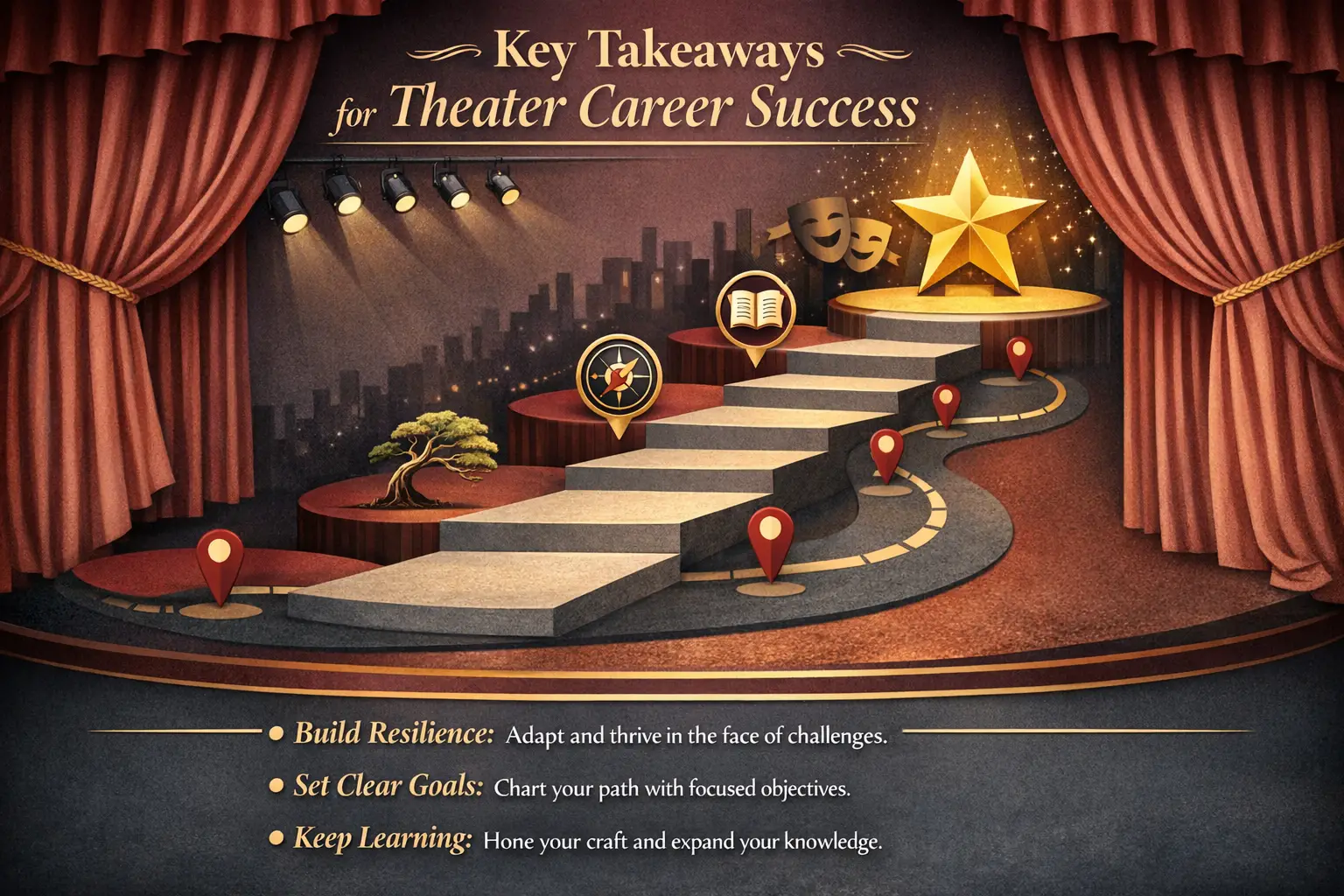
Key Takeaways
- Marathon mindset matters: Theater success requires persistent effort over years, not months—embrace the long-term journey rather than seeking overnight success
- Milestone progression works: Breaking your theater career into short-term (3-6 months) and long-term (1-5 years) goals creates measurable progress and maintains motivation
- Rejection builds resilience: Every “no” in community theater provides valuable learning opportunities and strengthens your ability to persevere
- Community engagement accelerates growth: Active participation in local theater communities creates networking opportunities, skill development, and potential pathways to roles
- Adaptability ensures survival: The theater industry constantly changes, and professionals who adjust their goals while maintaining core values find sustainable success
Understanding the Theater Landscape in 2026
Before diving into goal-setting strategies, beginners must understand the current theater environment. The industry has undergone substantial transformation, with traditional stage performances adapting to new audience expectations and technological innovations.
The Current State of Theater
The entertainment sector in 2026 shows promising signs of growth and adaptation. Industry experts note that while streaming platforms continue to dominate certain segments, live theater maintains its unique appeal and cultural significance [3]. This creates opportunities for newcomers willing to understand both traditional theatrical values and modern audience preferences.
Key industry trends affecting beginners:
- 🎭 Hybrid performances: Many theaters now blend live and digital elements
- 🌐 Expanded accessibility: Virtual auditions have opened doors for geographically diverse talent
- 🤝 Community focus: Local theater groups remain vital training grounds
- 📱 Social media presence: Personal branding has become increasingly important
- 💡 Diverse storytelling: Theaters actively seek fresh perspectives and inclusive narratives
The theater community in 2026 values persistence, adaptability, and continuous learning—qualities that align perfectly with realistic goal-setting and resilience-building approaches.
Setting Realistic Goals: Building Your Theater Milestone Framework
Setting Realistic Goals and Staying Resilient: A Beginner’s Roadmap to Theater Success begins with creating a structured approach to your theatrical aspirations. Many beginners make the mistake of setting vague goals like “become a famous actor” without defining the incremental steps required to reach that destination.
Short-Term Milestones (3-6 Months)
Short-term goals provide immediate direction and create momentum. These achievable targets help beginners build confidence while developing fundamental skills.
Essential first-stage milestones:
| Milestone | Specific Action | Success Indicator |
|---|---|---|
| First Audition | Attend at least 3 community theater auditions | Complete the audition process regardless of outcome |
| Skill Assessment | Take 1-2 acting classes or workshops | Identify specific areas for improvement |
| Network Building | Introduce yourself to 10 theater professionals | Exchange contact information and follow up |
| Script Familiarity | Read and analyze 5 complete plays | Understand different theatrical styles |
| Backstage Experience | Volunteer for 1 production in any capacity | Learn production process from inside |
“Success in theater isn’t about landing every role—it’s about showing up consistently, learning from each experience, and building relationships that last a lifetime.”
These short-term goals focus on participation and learning rather than immediate success. The objective is to immerse yourself in the theater community and develop foundational knowledge.
Medium-Term Milestones (6-18 Months)
Once you’ve established basic familiarity with the theater world, medium-term goals should focus on skill refinement and securing meaningful opportunities.
Progressive development targets:
- First Callback Achievement: Receive at least one callback from auditions (indicating your skills are improving)
- Ensemble Role Acquisition: Land a small role in a community theater production
- Technical Skill Development: Complete training in specific areas (voice, movement, improvisation)
- Portfolio Creation: Develop headshots, resume, and demo reel materials
- Consistent Audition Practice: Attend 1-2 auditions monthly to build comfort and experience
The medium-term phase represents the transition from complete beginner to emerging theater participant. Expect this period to include numerous rejections—they’re normal and necessary for growth.
Long-Term Milestones (1-5 Years)
Long-term goals provide direction without creating unrealistic pressure. These milestones acknowledge that building a sustainable theater career takes years of dedicated effort.
Sustainable career-building objectives:
- 🎯 Featured Role: Secure a named character or significant supporting role in productions
- 📚 Specialized Training: Complete advanced coursework or certification in your chosen area
- 🌟 Professional Network: Develop relationships with directors, casting agents, and fellow performers
- 💼 Income Generation: Begin earning partial or full income from theater-related work
- 🎭 Artistic Identity: Develop a clear understanding of your unique strengths and theatrical niche
Remember that these timelines are guidelines, not rigid requirements. Some individuals progress faster, while others take longer—both paths are valid. The theater industry values quality and authenticity over speed.
Staying Resilient: Building Mental Fortitude for Theater Success
Understanding how to set goals is only half of the equation for Setting Realistic Goals and Staying Resilient: A Beginner’s Roadmap to Theater Success. The other critical component involves developing the psychological resilience to persist through inevitable challenges.
The Reality of Rejection in Community Theater
Rejection is not a possibility in theater—it’s a certainty. Even established professionals face far more rejections than acceptances throughout their careers. For beginners, understanding this reality helps normalize the experience and reduce its emotional impact.
Common rejection scenarios:
- Not receiving callbacks after initial auditions
- Being passed over for roles you felt perfect for
- Watching less experienced performers get opportunities
- Receiving critical feedback on performances
- Dealing with production cancellations or role recastings
Mindset reframe strategies:
Each rejection provides valuable information and growth opportunities when approached with the right perspective:
- Rejection as redirection: Perhaps that role wasn’t the right fit for your development at this stage
- Rejection as data: What specific skills can you improve based on feedback or observations?
- Rejection as connection: Did you make new contacts or learn about future opportunities?
- Rejection as practice: Did the audition process itself improve your comfort and technique?
“The actors you admire have been rejected hundreds, if not thousands, of times. The difference is they kept showing up.”
Developing a Marathon Mindset
The entertainment industry requires understanding that success comes from sustained effort over time rather than quick wins. This marathon perspective fundamentally changes how beginners approach their theater journey.
Sprint thinking (problematic):
- “I need to land a lead role within six months”
- “If I don’t get this part, I’m not talented enough”
- “Other people are succeeding faster than me”
- “I should be making money from theater by now”
Marathon thinking (productive):
- “Each audition improves my skills and confidence”
- “This rejection frees me up for an even better opportunity”
- “Everyone’s path is different; I’ll focus on my own progress”
- “Building a sustainable career takes years of consistent effort”
The marathon mindset acknowledges that theater careers develop through accumulated experience, relationships, and skill refinement over extended periods. Industry observations suggest that entertainment professionals who maintain long-term perspectives navigate industry changes more successfully [5].
Practical Resilience-Building Techniques
Beyond mindset shifts, specific practices help theater beginners maintain emotional resilience during challenging periods.
Daily resilience practices:
✅ Gratitude journaling: Write three theater-related things you’re grateful for each day (a helpful director, a moment of breakthrough in rehearsal, a supportive fellow actor)
✅ Progress tracking: Maintain a record of all auditions, classes, and experiences—celebrate participation, not just outcomes
✅ Skill diversification: Develop multiple theater-related abilities (acting, directing, stage management, technical skills) to create various pathways to involvement
✅ Community connection: Build friendships within theater communities for mutual support and encouragement
✅ Outside interests: Maintain hobbies and relationships beyond theater to prevent identity over-attachment
✅ Physical wellness: Prioritize sleep, nutrition, and exercise to support mental resilience
✅ Mentorship seeking: Connect with experienced theater professionals who can provide perspective during difficult moments
Learning from Setbacks
Resilient theater professionals don’t just endure setbacks—they actively extract lessons from them. This learning orientation transforms obstacles into stepping stones.
Post-rejection reflection questions:
- What went well during the audition process?
- What specific areas could improve for next time?
- Did I receive any direct feedback worth implementing?
- What did I learn about this theater company or director?
- How did this experience build my comfort with the audition process?
- What networking opportunities emerged from this experience?
This structured reflection prevents rumination while encouraging constructive analysis and continuous improvement.
Community Theater: Your Essential Training Ground

For beginners following the roadmap of Setting Realistic Goals and Staying Resilient: A Beginner’s Roadmap to Theater Success, community theater serves as the ideal environment for skill development, networking, and practical experience.
Why Community Theater Matters
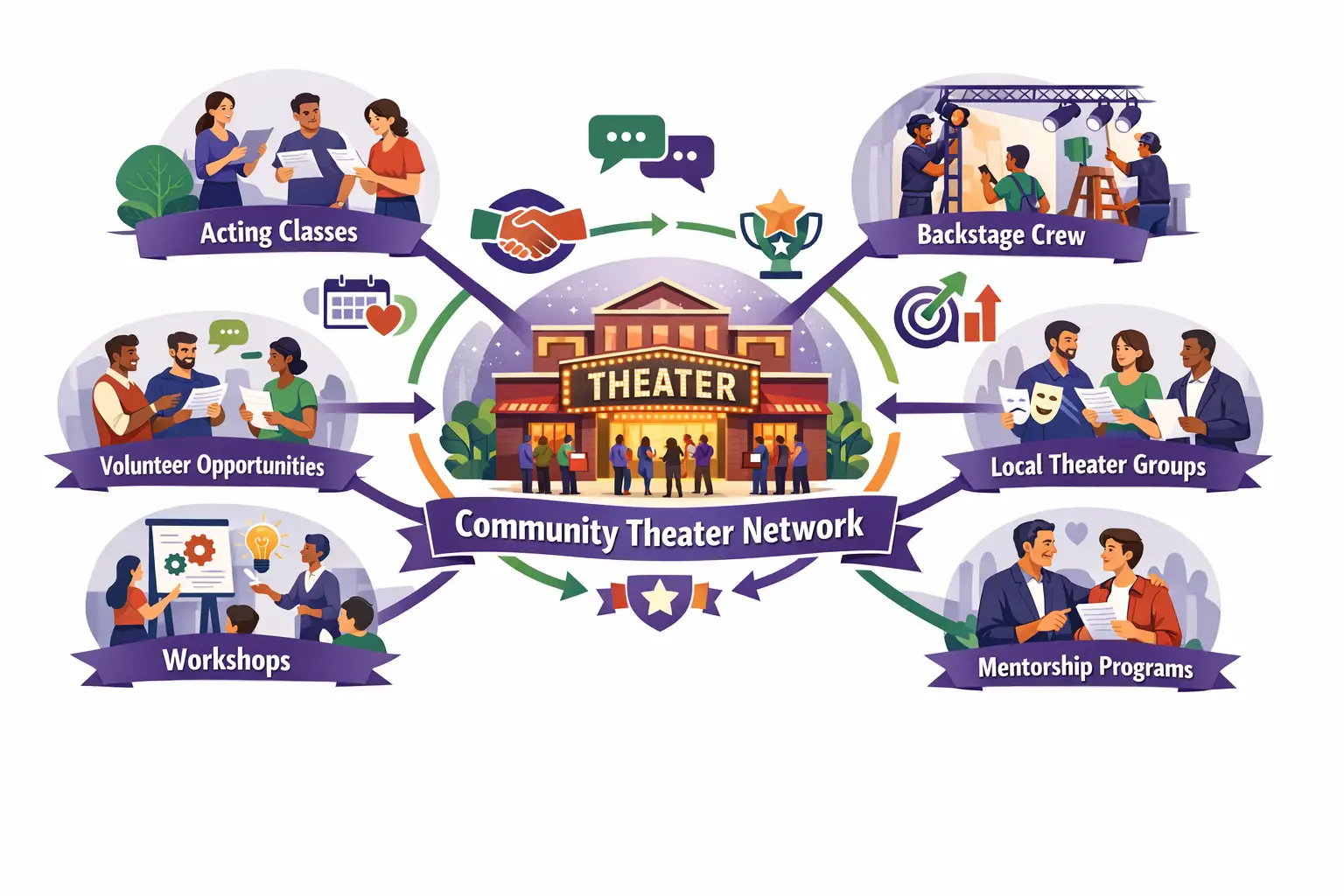
Community theater organizations provide accessible entry points for beginners without requiring extensive credentials or professional experience. These venues offer:
- Low-pressure learning environments where mistakes become teaching moments
- Diverse role opportunities from onstage performances to backstage technical work
- Mentorship access through experienced community members willing to guide newcomers
- Networking foundations that often lead to professional opportunities
- Portfolio building through actual production experience and performance footage
Many successful theater professionals began their journeys in community theater settings, using these experiences to develop skills, confidence, and industry connections.
Maximizing Community Theater Opportunities
Simply participating in community theater isn’t enough—strategic engagement accelerates growth and opportunity creation.
Strategic participation approaches:
🎭 Volunteer broadly: Offer to help with various production aspects (set building, costume assistance, prop management) to understand the full theatrical process
🎭 Attend consistently: Show up to every rehearsal, performance, and company event to build relationships and demonstrate reliability
🎭 Seek feedback actively: Ask directors and experienced performers for specific, constructive criticism
🎭 Support others’ productions: Attend shows you’re not involved in to learn, network, and show community support
🎭 Take initiative: Propose new ideas, volunteer for challenging roles, and demonstrate enthusiasm
🎭 Document experiences: Photograph, record (with permission), and catalog your work for future portfolio use
Building Your Theater Network
The theater community operates significantly through relationships and referrals. Building genuine connections creates opportunities that formal applications alone cannot provide.
Networking strategies for beginners:
- Quality over quantity: Develop deeper relationships with a smaller group rather than superficial connections with many
- Offer value first: Help others before asking for favors or opportunities
- Follow up consistently: Maintain contact with people you meet through periodic, non-demanding communication
- Attend industry events: Participate in workshops, panel discussions, and theater community gatherings
- Social media engagement: Thoughtfully engage with local theater companies and professionals online
- Express genuine interest: Ask about others’ work and experiences with authentic curiosity
Remember that networking isn’t manipulation—it’s building authentic relationships within a community you genuinely care about.
Adapting Goals While Maintaining Resilience
The theater industry’s evolving nature requires flexibility in goal-setting while maintaining core resilience principles. The entertainment landscape continues shifting, with professionals needing to balance traditional theatrical values with emerging opportunities [1].
When to Adjust Your Goals
Rigid adherence to outdated goals can create unnecessary frustration. Successful theater professionals regularly reassess and adjust their objectives based on new information and changing circumstances.
Indicators that goal adjustment may be needed:
- Consistent feedback suggesting your strengths lie in different areas than originally planned
- Industry changes creating new opportunities you hadn’t previously considered
- Personal circumstances requiring timeline or commitment modifications
- Discovery of new passions within theater (directing instead of acting, for example)
- Repeated obstacles suggesting a different pathway might prove more effective
Adjustment doesn’t mean abandonment. The core commitment to theater success remains constant while the specific pathway evolves based on experience and insight.
Maintaining Resilience During Transitions
Goal adjustments can feel like failure if not properly framed. Maintaining resilience during these transitions requires intentional perspective management.
Reframing goal evolution:
| Instead of thinking… | Try thinking… |
|---|---|
| “I failed at my original plan” | “I gained valuable information that refined my direction” |
| “I’m starting over from scratch” | “I’m building on everything I’ve already learned” |
| “I wasted time on the wrong path” | “Every experience contributed to my current understanding” |
| “I should have known better initially” | “Growth requires exploration and course correction” |
This reframing acknowledges that career development is inherently non-linear, with apparent detours often providing essential skills and insights.
Measuring Progress Beyond Traditional Success Markers
Setting Realistic Goals and Staying Resilient: A Beginner’s Roadmap to Theater Success requires redefining success beyond conventional markers like lead roles or professional contracts.
Alternative Success Indicators
Meaningful progress measures for beginners:
- Skill improvement: Can you perform techniques today that were impossible six months ago?
- Comfort expansion: Do auditions feel less terrifying than when you started?
- Relationship depth: Have you developed genuine friendships within the theater community?
- Artistic understanding: Has your appreciation for theatrical craft deepened?
- Consistency maintenance: Are you still actively participating despite challenges?
- Joy preservation: Do you still find genuine pleasure in the theatrical process?
These indicators reflect sustainable development rather than external validation alone.
Creating Personal Success Definitions
Each theater professional’s journey is unique, requiring personalized success definitions that align with individual values and circumstances.
Reflection questions for personal success definition:
- What aspects of theater bring you the most fulfillment?
- What would a satisfying theater involvement look like in 5 years?
- How much of your identity do you want tied to theater success?
- What sacrifices are you willing and unwilling to make?
- What does “making it” actually mean to you personally?
Answering these questions honestly creates authentic goals that sustain motivation through difficult periods.
Practical Action Plan: Your First 90 Days
For beginners ready to implement Setting Realistic Goals and Staying Resilient: A Beginner’s Roadmap to Theater Success, this 90-day action plan provides concrete next steps.
Month 1: Foundation Building
Week 1-2:
- Research 5-10 community theater organizations in your area
- Attend at least 2 live theater performances
- Create basic theater resume (even if mostly blank initially)
- Join 2-3 online theater communities or local groups
Week 3-4:
- Register for one beginner acting class or workshop
- Volunteer for backstage work on an upcoming production
- Read 2 complete plays in different genres
- Introduce yourself to 3 theater professionals
Month 2: Active Participation
Week 5-6:
- Attend your first audition (community theater, workshop showcase, or student production)
- Continue classes and volunteer commitments
- Practice monologue or scene work daily (even 15 minutes)
- Document experiences in a theater journal
Week 7-8:
- Attend 2-3 additional auditions
- Seek feedback from instructors or experienced performers
- Expand network by attending theater-related social events
- Research additional training opportunities for future enrollment
Month 3: Reflection and Adjustment
Week 9-10:
- Assess which activities brought the most growth and enjoyment
- Adjust goals based on first two months’ experiences
- Deepen commitment to most promising opportunities
- Celebrate all participation regardless of outcomes
Week 11-12:
- Create 6-month goal plan based on learnings
- Identify specific skills needing development
- Schedule next round of classes, auditions, or volunteer work
- Reflect on resilience growth and mindset improvements
This structured approach provides clear direction while allowing flexibility based on individual experiences and discoveries.
Conclusion: Embracing the Journey
Setting Realistic Goals and Staying Resilient: A Beginner’s Roadmap to Theater Success ultimately comes down to embracing theater as a lifelong journey rather than a destination. The beginners who thrive in this challenging industry are those who find genuine joy in the process itself—the rehearsals, the community, the continuous learning, and the artistic exploration.
The theater world needs fresh voices, diverse perspectives, and passionate participants willing to contribute their unique talents. By setting achievable milestones, building mental resilience, engaging authentically with community theater, and maintaining a marathon mindset, beginners create sustainable pathways to meaningful involvement and eventual success.
Remember that every accomplished theater professional was once exactly where you are now—uncertain, inexperienced, and wondering if they had what it takes. The difference between those who eventually succeeded and those who gave up wasn’t necessarily talent, connections, or luck. It was the willingness to persist through rejection, learn from every experience, and continue showing up even when progress felt impossibly slow.
Your Next Steps
Ready to begin your theater journey with realistic goals and resilient mindset? Take these immediate actions:
- Identify one community theater organization in your area and attend their next production
- Set three specific short-term goals using the milestone framework from this guide
- Register for one beginner-friendly class or workshop happening within the next month
- Create a simple tracking system to document auditions, classes, and experiences
- Connect with one experienced theater professional and ask about their journey
- Commit to the marathon mindset by writing your personal definition of theater success
The stage is waiting, not for perfection, but for your authentic participation and persistent effort. Your theater journey begins with a single audition, a single class, a single volunteer shift—and continues through countless experiences that gradually transform you into the theater professional you aspire to become.
The curtain rises on those who show up. Will you be there?
References
[1] Acting Theater In 2026 How The Stage And Screen Are Evolving – https://www.hotbot.com/articles/acting-theater-in-2026-how-the-stage-and-screen-are-evolving/
[3] Good News For 2026 – https://entertainmentstrategyguy.com/2026/01/29/good-news-for-2026/
[5] Outlook For Entertainment And Media Leaders In 2026 – https://www.ghjadvisors.com/ghj-insights/outlook-for-entertainment-and-media-leaders-in-2026