

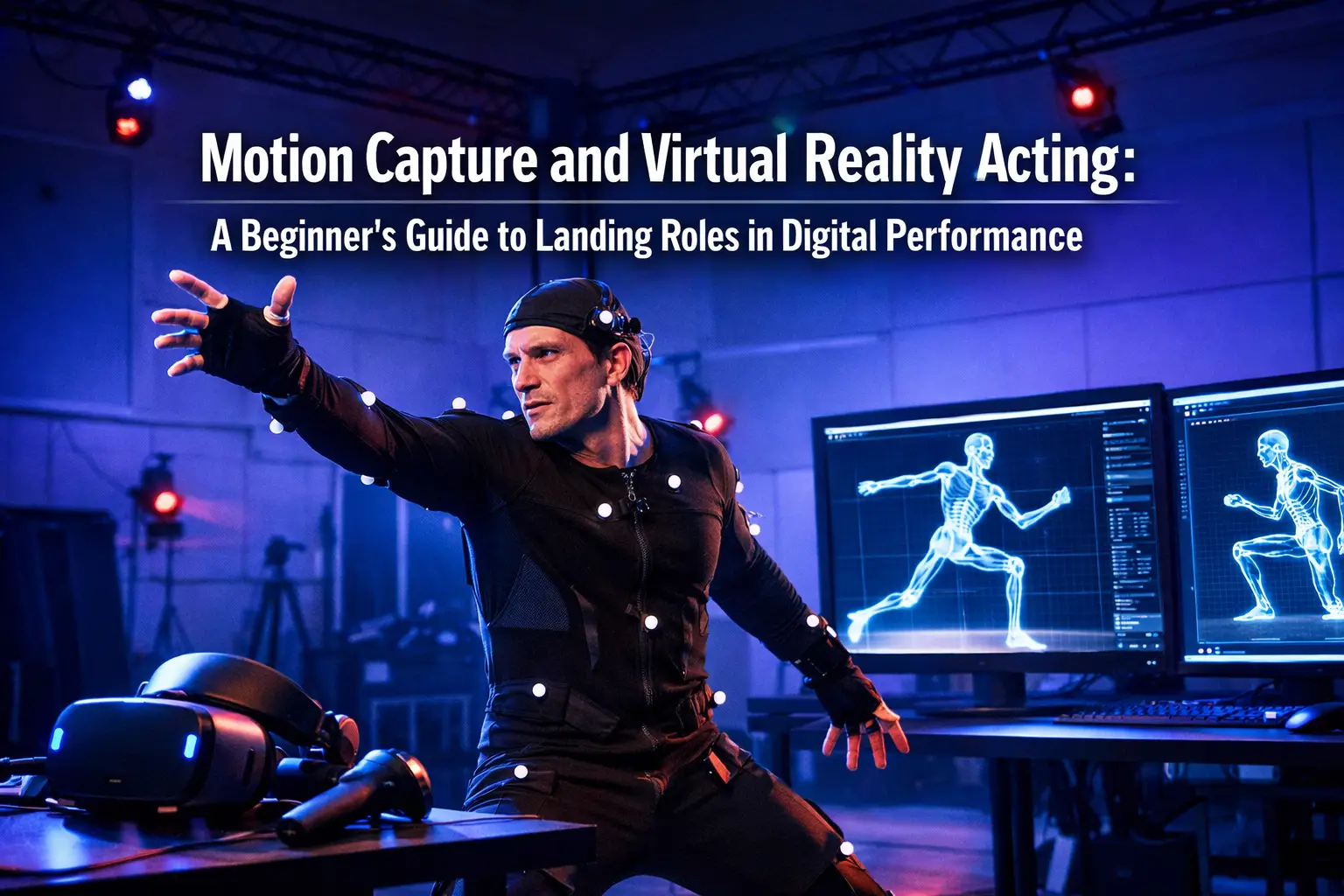
The entertainment industry has reached a pivotal moment in 2026. With blockbuster productions like Avatar: Fire and Ash and Mortal Kombat II relying heavily on motion capture technology, and approximately 30% of professional productions now incorporating AI-enhanced performance tools, aspiring actors face an exciting new frontier. Motion Capture and Virtual Reality Acting: A Beginner’s Guide to Landing Roles in Digital Performance has become essential knowledge for performers who want to translate human emotion through digital sensors and thrive in an industry where virtual characters demand the same authenticity as traditional on-camera roles.
The barrier between physical and digital performance continues to dissolve. Today’s actors must understand how to convey subtle emotional nuances through sensor-tracked movements, maintain authentic presence in virtual environments, and adapt their craft to interactive storytelling formats that respond to audience behavior. This comprehensive guide explores everything beginners need to know about breaking into motion capture and VR acting—from understanding the technology to building specialized skills, creating compelling demo reels, and landing those crucial first roles in digital performance.
Key Takeaways
- Technology is becoming more accessible: AI advancements and wireless systems are reducing costs and barriers to entry for motion capture performers in 2026[6]
- Specialized skills matter: VR performance requires understanding spatial thinking, real-time interaction design, and maintaining authentic micro-movements for immersive presence[2]
- The market is expanding rapidly: The Global Virtual Reality Motion Capture System market is growing at a considerable rate in 2026, creating more opportunities for digital performers[4]
- Hybrid workflows are the future: Performers now augment their work with AI tools rather than being replaced, creating new collaborative performance roles[1]
- Remote opportunities are increasing: Cloud-based collaboration enables motion capture actors to work with international production teams from anywhere[6]
Understanding Motion Capture and Virtual Reality Acting in 2026
What Is Motion Capture Technology?
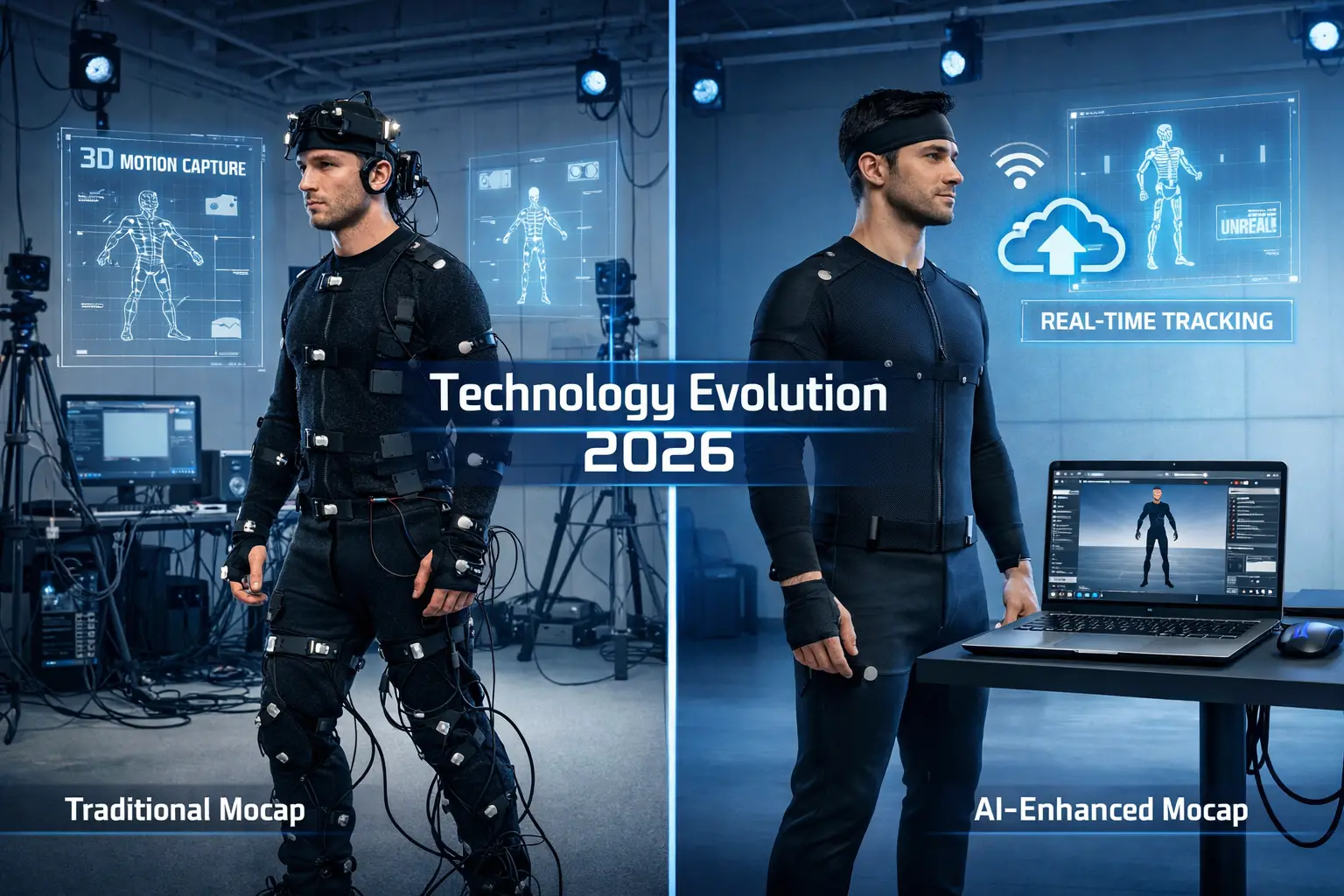
Motion capture (mocap) is the process of recording human movement and translating it into digital data that animates virtual characters. Actors wear specialized suits equipped with reflective markers or sensors that cameras track in three-dimensional space. This data creates a digital skeleton that drives character animation in video games, films, virtual reality experiences, and other digital media.
The technology has evolved dramatically. Traditional systems required dozens of markers, extensive calibration, and expensive studio setups. In 2026, AI advancements now enable more precise tracking with fewer markers, reducing costs and increasing efficiency in production pipelines[6]. This technological shift has expanded entry points for performers working with motion capture systems, making it more feasible for beginners to access training and opportunities.
The VR Performance Revolution
Virtual Reality acting takes motion capture further by placing performers in fully immersive environments. Unlike traditional film or theater where audiences observe from a fixed perspective, VR experiences surround viewers with 360-degree environments where they can interact with characters and influence narratives.
This creates unique performance demands. As industry experts note, characters in VR need “constant gentle movement – breathing, micro-movements, lazy movements to sustain presence at close view ranges”[2]. A VR character standing perfectly still appears lifeless and breaks immersion, requiring performers to maintain subtle, continuous animation even during quiet moments.
How Digital Performance Differs from Traditional Acting
| Aspect | Traditional Acting | Motion Capture/VR Acting |
|---|---|---|
| Costume | Period-appropriate wardrobe | Sensor suits with markers |
| Environment | Physical sets | Green screen or virtual spaces |
| Audience Perspective | Fixed camera angles | 360-degree, interactive viewing |
| Performance Style | Subtle, camera-appropriate | Often exaggerated for sensor clarity |
| Storytelling | Linear narrative | Interactive, user-responsive stories[2] |
| Collaboration | On-set with cast/crew | Often remote, cloud-based teams[6] |
The fundamental difference lies in interactivity. In immersive media, stories are interactive and react to user behavior, requiring performers to work differently than in traditional linear productions[2]. Actors might record multiple variations of scenes, emotional responses, and dialogue options that activate based on player choices.
Essential Skills for Motion Capture and Virtual Reality Acting: A Beginner’s Guide to Landing Roles in Digital Performance
Physical Performance Fundamentals
Motion capture amplifies physical performance. Small gestures become magnified, and every movement contributes to the final digital character. Beginners should develop:
✅ Body awareness and control: Understanding how each body part moves independently and together
✅ Exaggerated expression: Facial and physical gestures often need amplification for sensors to capture nuance
✅ Sustained movement: Maintaining the subtle “breathing” quality VR characters require
✅ Spatial coordination: Navigating virtual environments while wearing headsets that limit natural vision
✅ Physical stamina: Mocap suits and extended performance sessions demand physical endurance
Technical Literacy Requirements
Modern digital performers must understand the technology driving their craft. Artists and performers who “think spatially, work in real time, and practice interaction design” are positioned to lead in immersive media careers[2].
Key technical competencies include:
- Game engine basics: Familiarity with Unreal Engine and Unity, which now deliver visual quality comparable to film at VR frame rates[2]
- Real-time rendering concepts: Understanding how performance translates immediately to digital characters
- Volumetric capture awareness: Knowledge of how photogrammetry and volumetric systems deliver photorealistic performances[2]
- Sensor technology: Basic understanding of marker placement, tracking systems, and calibration processes
- Cloud collaboration tools: Proficiency with platforms enabling remote mocap work[6]
Emotional Range and Authenticity
Despite the technological mediation, authentic emotional performance remains paramount. Digital audiences can detect inauthentic performances just as easily as traditional viewers. The challenge lies in maintaining emotional truth while adapting to technical constraints.
“The industry is blending traditional performance techniques with AI-generated enhancements, meaning performers are increasingly ‘augmenting’ rather than being replaced by AI tools.”[1]
This hybrid approach means actors must:
- Deliver emotionally grounded performances that AI can enhance rather than replace
- Understand how digital characters interpret and display human emotions
- Adapt performances when seeing real-time feedback on monitors
- Maintain character consistency across multiple recording sessions
- Work collaboratively with animation teams to achieve desired emotional effects
Improvisation and Adaptability
Interactive storytelling demands exceptional improvisational skills. Unlike scripted performances with predetermined blocking, VR experiences may require actors to:
- 🎭 Respond to unexpected user interactions
- 🎭 Perform multiple emotional variations of the same scene
- 🎭 Adapt to technical challenges or equipment malfunctions mid-performance
- 🎭 Collaborate with directors and animators to problem-solve creative challenges
- 🎭 Work with incomplete visual information (performing in green screen environments)
Training and Education Pathways for Digital Performance
Formal Education Programs
The growing demand for skilled digital performers has prompted educational institutions to develop specialized training programs. Universities like University of Iowa have received substantial grants (half million dollars) to create professional MOCAP/VR studios[3], demonstrating institutional commitment to preparing students for these careers.
VanArts and similar institutions are increasingly training students in these specialized tools[2], offering programs that combine traditional acting fundamentals with cutting-edge technology training. These programs typically cover:
- Motion capture performance techniques
- VR-specific acting methods
- Game engine operation and real-time rendering
- Collaboration with animation and technical teams
- Portfolio and demo reel development
Self-Directed Learning Resources
Aspiring digital performers can also pursue independent training through:
Online Courses and Tutorials
Platforms like Udemy, Coursera, and specialized VFX schools offer courses in motion capture acting, game engine basics, and virtual production workflows.
Practice with Consumer Technology
Affordable VR headsets (Meta Quest, PlayStation VR) allow beginners to experience immersive environments and understand user perspectives. New VR hardware is lighter, wireless, and more comfortable, while real-time engines and cloud rendering are reducing local hardware constraints[2], making practice more accessible.
Community Workshops and Meetups
Many cities host VR development communities, game developer meetups, and digital arts collectives where performers can network and gain hands-on experience.
Building Foundational Acting Skills
Digital performance builds on traditional acting fundamentals. Before specializing in mocap and VR, develop strong foundations in:
- Scene study and character development
- Voice acting and vocal control
- Movement and physical theater
- Improvisation techniques
- Script analysis and storytelling
These traditional skills provide the artistic foundation that technology enhances rather than replaces.
Creating Your Digital Performance Portfolio
Demo Reel Essentials
A compelling demo reel is crucial for landing digital performance roles. Unlike traditional acting reels that show finished productions, mocap demo reels should demonstrate:
Technical Proficiency
Show yourself performing in motion capture equipment, demonstrating comfort with the technology and awareness of sensor requirements.
Range of Movement
Include sequences showing athletic movement, subtle gestures, combat choreography, and emotional stillness—all essential for different types of digital roles.
Emotional Versatility
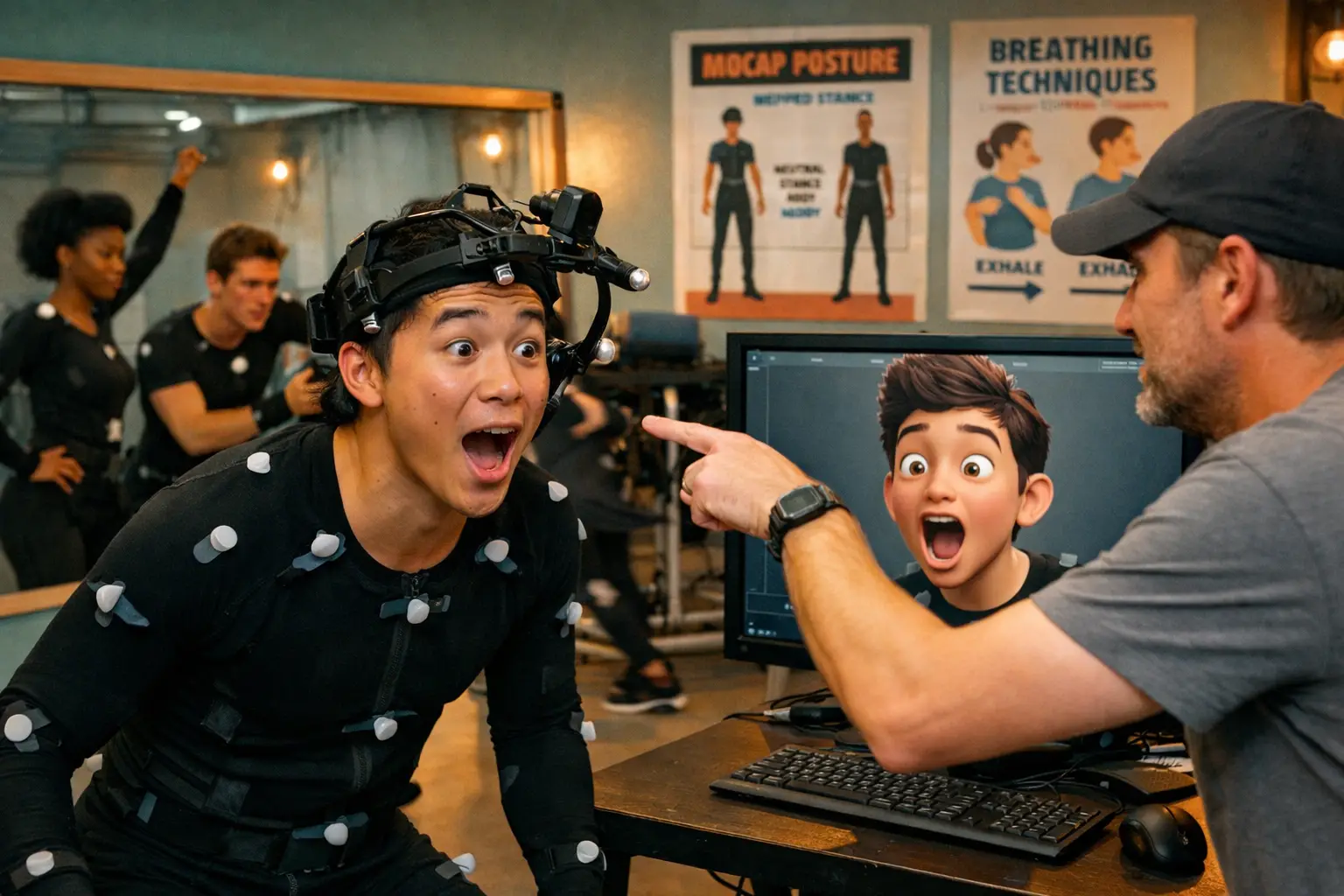
Display your ability to convey complex emotions through physical performance, with side-by-side footage of your mocap performance and the resulting digital character when possible.
Real-Time Capture Examples
If available, include footage showing real-time character animation responding to your movements, demonstrating your understanding of the immediate translation process.
Building Experience Without Professional Credits
Breaking into any performance field requires initial experience. For digital performance, consider:
📹 Student Film Collaborations: Partner with game design or animation students who need performers for projects
📹 Independent VR Projects: Join indie game developers creating VR experiences
📹 Volunteer for Research: Universities with mocap facilities often need performers for research studies
📹 Create Original Content: Develop your own VR performance pieces using accessible technology
📹 Participate in Game Jams: Join game development events that create projects in compressed timeframes
Professional Presentation Materials
Beyond your demo reel, prepare:
- Digital resume highlighting relevant training, physical skills, and technical competencies
- Professional headshots and full-body movement shots
- Online portfolio website showcasing demo reels, behind-the-scenes footage, and technical skills
- Social media presence demonstrating engagement with VR/gaming communities
- References from instructors, collaborators, or industry professionals
Landing Your First Motion Capture and Virtual Reality Acting Roles
Where to Find Digital Performance Opportunities
The global talent pool is expanding as cloud-based collaboration tools enable teams in different countries to work seamlessly together, opening remote opportunities for motion capture performers and digital actors[6]. This geographic flexibility creates diverse pathways to finding work:
Specialized Casting Platforms
Websites like Backstage, Casting Networks, and Mandy now include categories for motion capture and VR performance. Create profiles highlighting your digital performance skills and technical capabilities.
Game Development Studios
Research studios in your region or those offering remote work. Many studios hire performers on a project basis for specific games or VR experiences.
VFX and Animation Houses
Companies specializing in visual effects often need motion capture performers for film, television, and commercial projects.
VR Experience Developers
Location-based VR entertainment venues, educational VR content creators, and enterprise training developers all require performers.
Networking Events
Attend game developer conferences (GDC, PAX), VR industry events, and local digital arts gatherings to meet potential collaborators and employers.
Understanding the Audition Process
Digital performance auditions differ from traditional casting:
Technical Assessments
Expect to demonstrate comfort with mocap equipment, ability to follow technical direction, and understanding of sensor requirements.
Movement Auditions
You may be asked to perform specific actions (combat sequences, athletic movements, creature performances) to assess physical range and control.
Improvisation Challenges
Interactive storytelling roles often require improvised responses to hypothetical user interactions or scenario variations.
Remote Auditions
Many auditions occur via self-tape submissions showing mocap performance or through video conference demonstrations.
Industry Growth and Career Prospects
The market fundamentals support career expansion in this field. The Global Virtual Reality Motion Capture System market is anticipated to rise at a considerable rate between 2026 and 2033, with steady growth in 2026 and increasing adoption by key industry players[4].
This growth translates to:
- More production opportunities across games, film, VR experiences, and emerging platforms
- Increased demand for specialized performers who understand both traditional acting and technical requirements
- Higher production budgets as immersive media gains mainstream acceptance
- Professional recognition, as demonstrated by award recognition like the 2026 Lumiere Award (won by Immotion for “Dolphins of the Reef”) validating that immersive storytelling is gaining prestige in entertainment[8]
Compensation and Professional Standards
Digital performance compensation varies widely based on:
- Project type (AAA game vs. indie VR experience)
- Role scope (lead character vs. background performer)
- Session length (hourly, daily, or project-based rates)
- Usage rights (one-time use vs. perpetual licensing)
- Union status (SAG-AFTRA has specific agreements for interactive media)
Research industry standards, consider union membership when eligible, and negotiate contracts that fairly compensate your specialized skills.
Navigating the Evolving Digital Performance Landscape
The Role of AI in Motion Capture Workflows
Understanding AI’s impact on digital performance is essential for career planning. Rather than viewing AI as competition, successful performers recognize it as a collaborative tool. The industry is blending traditional performance techniques with AI-generated enhancements, meaning performers are increasingly “augmenting” rather than being replaced by AI tools[1].
AI applications in mocap workflows include:
- Enhanced tracking accuracy: AI algorithms improve marker recognition and skeletal reconstruction
- Automated cleanup: Reducing post-production time for performance data processing
- Facial performance capture: AI-enhanced systems capture subtle expressions with greater fidelity
- Performance synthesis: Blending multiple takes or creating variations based on recorded performances
Performers who understand these tools and can collaborate effectively with technical teams position themselves as valuable hybrid artists rather than technicians to be automated.
Staying Current with Technology Trends
The rapid pace of technological evolution requires continuous learning. Real-time rendering is mainstreaming VR performance as game engines like Unreal Engine and Unity now deliver visual quality comparable to film at VR frame rates, making real-time performance capture increasingly viable for professional productions[2].
Stay current by:
- Following industry publications (VFX Voice, Animation Magazine, VR-focused media)
- Participating in online communities (Reddit’s r/virtualreality, specialized Discord servers)
- Attending technology demonstrations and workshops
- Experimenting with new tools as they become accessible
- Networking with technical artists and developers to understand emerging workflows
Building a Sustainable Career
Long-term success in digital performance requires:
Diversification
Develop skills across multiple platforms—motion capture, VR performance, voice acting, traditional on-camera work—to maximize opportunities.
Continuous Skill Development
Invest in ongoing training as technology and techniques evolve. The skills relevant in 2026 will expand and change by 2028.
Professional Relationships
Build genuine connections with directors, animators, technical artists, and fellow performers. Many opportunities arise through referrals and collaborative relationships.
Business Acumen
Understand contracts, negotiate fairly, manage finances, and treat your performance career as a professional business.
Artistic Integrity
Maintain focus on storytelling and authentic performance even as technology becomes more sophisticated. The human element remains irreplaceable.
Common Challenges and How to Overcome Them

Physical Demands and Health Considerations
Motion capture work can be physically taxing. Performers may spend hours in sensor suits, performing repetitive movements, or maintaining uncomfortable positions.
Solutions:
- Develop a consistent fitness routine emphasizing flexibility, strength, and endurance
- Practice proper warm-up and cool-down techniques
- Communicate with production teams about physical limitations
- Take breaks when needed to prevent injury
- Consider working with movement coaches or physical therapists familiar with performance demands
Technical Frustrations
Technology doesn’t always cooperate. Sensors malfunction, tracking glitches occur, and equipment failures can disrupt performances.
Solutions:
- Develop patience and adaptability
- Learn basic troubleshooting to assist technical teams
- Maintain professional composure during technical delays
- Use downtime productively for character preparation or relationship building
- Understand that technical challenges are normal, not personal failures
Limited Visibility and Recognition
Digital performers often receive less public recognition than on-camera actors, even when delivering award-worthy performances.
Solutions:
- Find satisfaction in the craft itself rather than external validation
- Document your work through behind-the-scenes content
- Build professional reputation within industry circles
- Advocate for proper crediting in productions
- Celebrate the unique artistic challenges digital performance offers
Geographic Limitations
While remote work is expanding, many opportunities still concentrate in major production hubs (Los Angeles, Vancouver, London, Montreal).
Solutions:
- Leverage remote collaboration technologies to access distant opportunities[6]
- Consider relocation to production centers if career goals justify it
- Build local communities and create opportunities in your region
- Develop skills that enable remote work (self-directed mocap, voice performance)
- Stay connected to industry developments regardless of location
Future Trends Shaping Digital Performance Careers
Volumetric Capture and Photorealistic Performance
Volumetric capture and photogrammetry are increasingly delivering lifelike humans in immersive spaces, becoming central to professional VR production workflows[2]. This technology creates three-dimensional recordings of performers, capturing not just movement but complete physical presence.
For performers, this means:
- Opportunities for photorealistic digital doubles
- New performance capture methods beyond traditional mocap
- Potential for “immortalizing” performances in digital archives
- Ethical considerations around digital likeness rights and usage
Expanded Applications Beyond Entertainment
Motion capture and VR performance extend beyond games and films into:
- Medicaltraining simulations requiring realistic patient interactions
- Corporate training programs using VR for soft skills development
- Educational experiences bringing historical figures or scientific concepts to life
- Therapeutic applications where digital characters guide mental health interventions
- Virtual events and performances creating new entertainment formats
These diverse applications multiply career opportunities for skilled digital performers.
The Metaverse and Persistent Virtual Worlds
As persistent virtual environments develop, new performance opportunities emerge:
- Live performance in virtual venues
- Character portrayal in ongoing virtual experiences
- Interactive storytelling in social VR platforms
- Virtual influencer and brand representation work
These emerging formats will require performers who understand both traditional craft and digital native platforms.
Conclusion: Your Path Forward in Digital Performance
Motion Capture and Virtual Reality Acting: A Beginner’s Guide to Landing Roles in Digital Performance represents more than just learning new technology—it’s about expanding the fundamental craft of storytelling into immersive, interactive dimensions. As the industry continues its rapid evolution in 2026, with AI-enhanced workflows, real-time rendering capabilities, and expanding market opportunities, the door remains open for dedicated beginners willing to develop specialized skills.
Success in this field requires balancing traditional performance excellence with technical literacy, maintaining artistic authenticity while embracing technological augmentation, and building both craft mastery and professional networks. The performers who thrive will be those who view sensors and virtual environments not as obstacles to overcome but as new instruments for expressing human truth.
Actionable Next Steps
Ready to begin your digital performance journey? Take these concrete actions:
- Assess your current skills: Identify gaps between your existing abilities and digital performance requirements
- Invest in foundational training: Enroll in a motion capture or VR performance workshop within the next three months
- Experience VR as a user: Spend time in quality VR experiences to understand the medium from an audience perspective
- Create initial demo content: Film yourself performing with whatever technology you can access, even if just smartphone video
- Connect with the community: Join one online forum or local meetup focused on VR development or digital performance
- Research opportunities: Identify three production companies, studios, or projects that align with your interests and skills
- Develop a 6-month plan: Set specific, measurable goals for skill development, networking, and portfolio creation
The future of performance is digital, interactive, and immersive. The question isn’t whether these technologies will transform entertainment—they already have. The question is whether you’ll be among the performers shaping that transformation, translating human emotion through digital sensors, and bringing authentic presence to virtual worlds.
The stage is set. The cameras are tracking. Your digital performance career awaits. 🎭
References
[1] Entering 2026 Vfx Animation Industry Balances Uncertainty And Opportunity – https://vfxvoice.com/entering-2026-vfx-animation-industry-balances-uncertainty-and-opportunity/
[2] Immersive Media In 2026 How Ar Vr Is Changing Games Animation And Vfx Careers – https://www.vanarts.com/news-article/immersive-media-in-2026-how-ar-vr-is-changing-games-animation-and-vfx-careers/
[3] Motion Capture And Virtual Reality Studio – https://theatre.uiowa.edu/motion-capture-and-virtual-reality-studio
[4] Virtual Reality Vr Motion Capture System Market Is Going – https://www.openpr.com/news/4373342/virtual-reality-vr-motion-capture-system-market-is-going
[6] Under Hood Virtual Production – https://www.iseurope.org/news/under-hood-virtual-production
[8] Immotion Wins Lumiere Award Dolphins Reef – https://thevrcollective.com/immotion-wins-lumiere-award-dolphins-reef/