
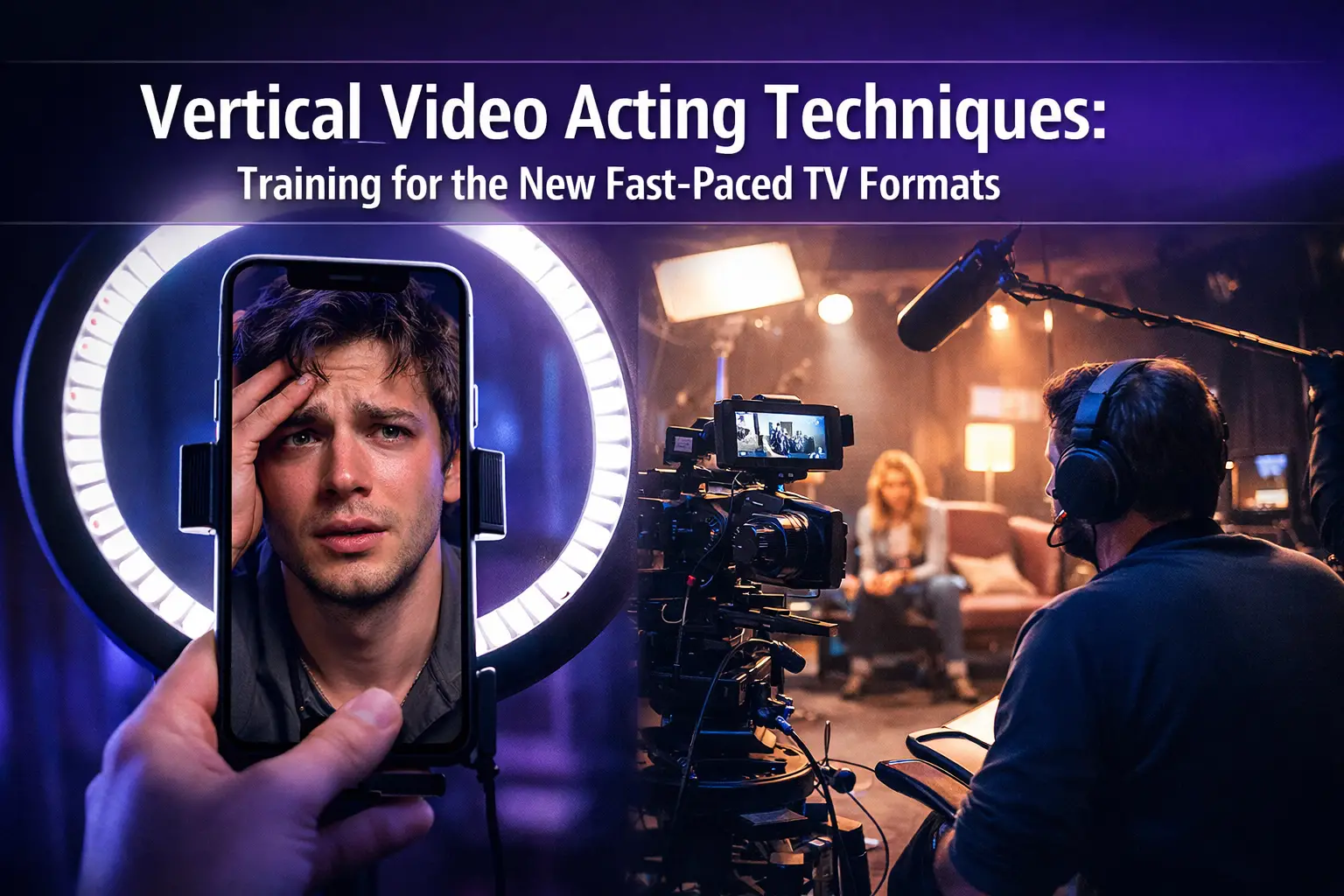
The entertainment industry has witnessed a seismic shift in 2026. Soap-opera-style dramas, once confined to daytime television, now thrive on smartphones in bite-sized vertical episodes. Actors who once trained for wide-angle cinematic shots must now master the art of conveying emotion within a narrow 9:16 frame. Vertical Video Acting Techniques: Training for the New Fast-Paced TV Formats represents more than just a technical adjustment—it’s a fundamental reimagining of performance craft for the mobile-first generation.
This transformation isn’t happening in isolation. Vertical content has evolved from social media novelty to a fully recognized professional media category, with casting directors, studios, and branded content agencies producing high-quality short-form work through traditional casting platforms[1]. The actors who embrace these new storytelling methods gain a competitive edge in a landscape increasingly shaped by mobile consumption patterns.
Key Takeaways
- 📱 Vertical video is now a professional standard: Casting directors actively request vertical reels because they load instantly, mirror final media formats, and play natively in casting systems[1]
- 🎭 Close-up performance dominates: Vertical frames emphasize facial expressions, gestures, and subtle mood shifts rather than full-body movement, requiring actors to master micro-expressions[2]
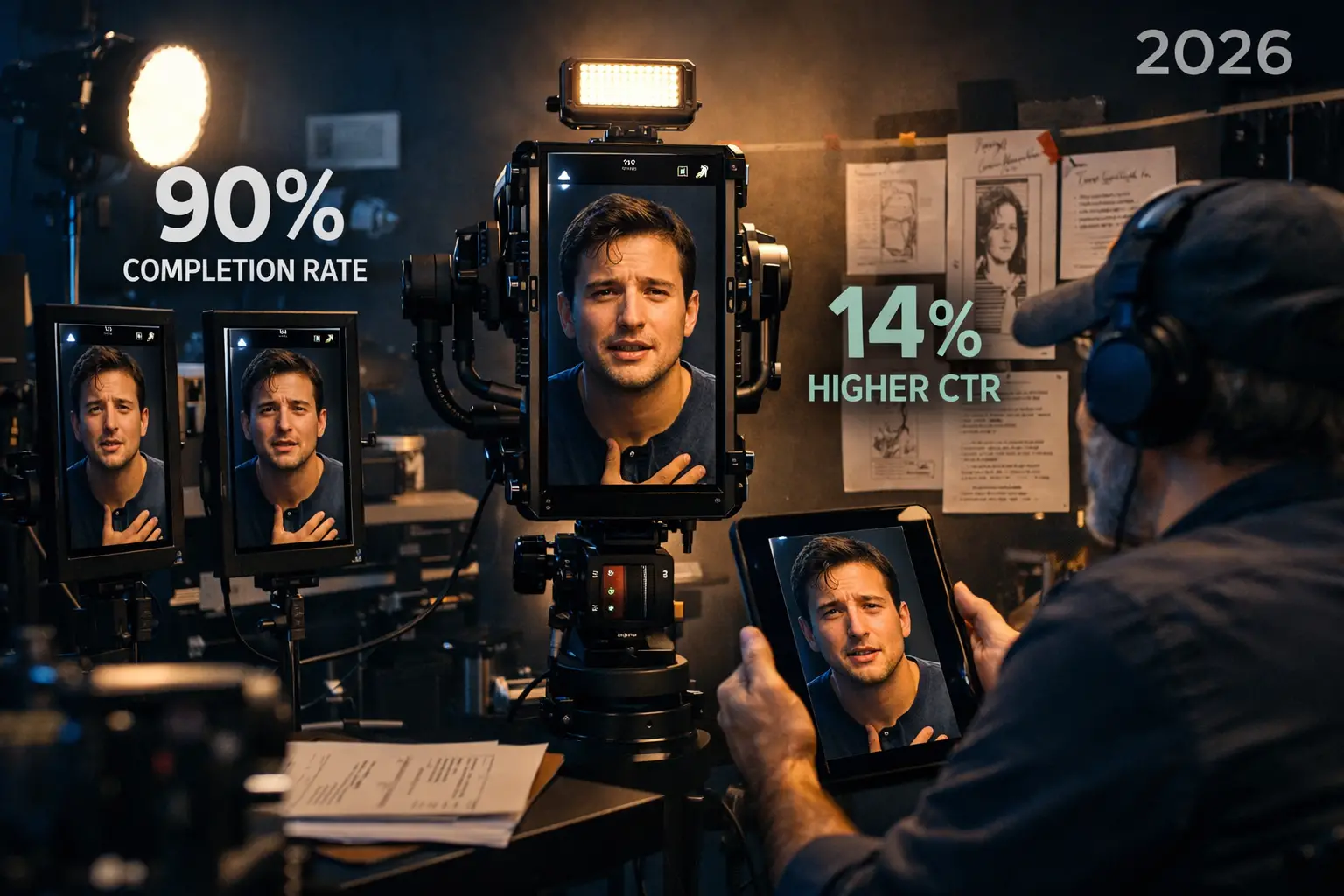
- 📊 Engagement metrics prove effectiveness: Vertical video ads achieve 90% completion rates, while Instagram Stories vertical videos achieve 14% higher click-through rates compared to horizontal formats[4]
- 🎬 Technical specifications matter: Standard vertical reels use 9:16 portrait orientation with 30 seconds to 1 minute maximum length, shot vertically in-camera for optimal composition[1][4]
- ⚡ Quick emotional transitions are essential: Fast-paced vertical formats require actors to shift between emotional states rapidly, similar to soap opera techniques but compressed into seconds
Understanding the Vertical Video Revolution in 2026
The Rise of Mobile-First Entertainment
The entertainment landscape of 2026 looks dramatically different from just five years ago. Viewers no longer passively consume content on television screens—they actively engage with stories on their smartphones during commute breaks, lunch hours, and brief moments throughout the day. This behavioral shift has created an entirely new ecosystem of vertical dramas and short-form narrative content.
Vertical content achieves remarkable engagement metrics that traditional horizontal formats struggle to match. Research shows that viewers engage more intensely with vertical content due to the narrower frame reducing visual noise and increasing emotional engagement[3]. The immersive nature of vertical video—filling the entire mobile screen without requiring device rotation—creates an intimate viewing experience that feels personal and immediate.
Why Casting Directors Demand Vertical Reels
Casting directors have adapted their evaluation processes to match industry trends. They now actively request vertical versions of actor reels for several practical reasons[1]:
- Instant loading: Vertical clips load faster on mobile devices used during casting sessions
- Format mirroring: The reel matches the final media format, allowing accurate assessment
- Native playback: Content plays seamlessly in casting systems without technical issues
- Easy sharing: Vertical videos are simpler to share with producers and creative teams via mobile messaging
Casting professionals use vertical clips to assess specific performance qualities that matter in mobile-first content: immediate type and personality, naturalistic camera presence, comedic timing, authentic reactions, and how actors present on the mobile screens where audiences actually watch content[1].
Mastering Vertical Video Acting Techniques: Training for the New Fast-Paced TV Formats
The Art of Close-Up Performance
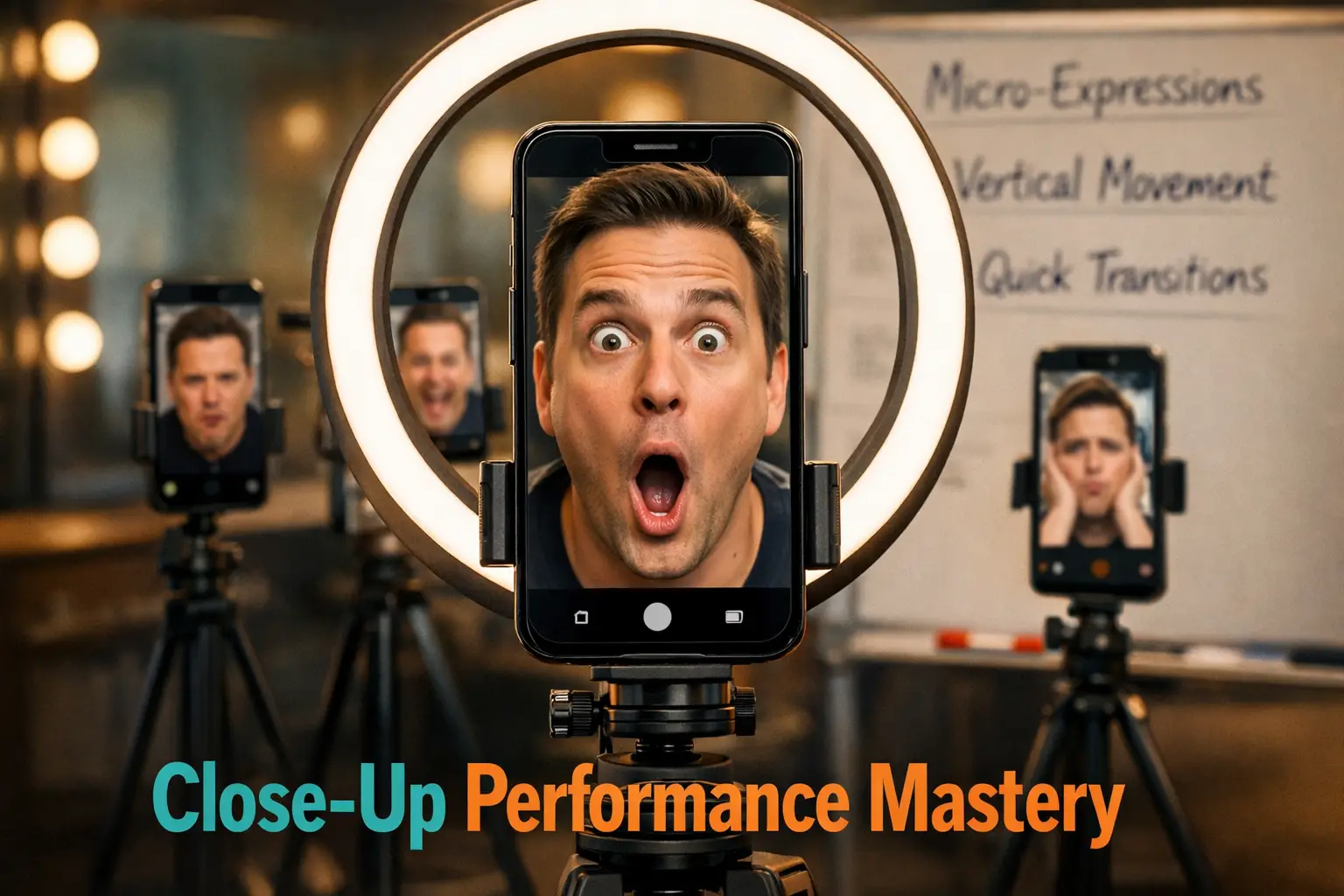
Traditional film acting training emphasizes body language, spatial relationships, and movement across a wide frame. Vertical video flips this paradigm entirely. Close-upperformance becomes critical because vertical frames emphasize facial expressions, gestures, and subtle mood shifts rather than full-body movement[2].
Actors must develop heightened awareness of:
- Micro-expressions: Tiny facial movements that convey complex emotions
- Eye contact intensity: Direct gaze into the camera creates intimacy with mobile viewers
- Gesture economy: Hand movements must stay within the narrow frame without appearing cramped
- Vocal nuance: Audio quality and emotional vocal delivery carry significant weight
- Eyebrow and mouth precision: Small movements read clearly on mobile screens
Training Drills for Quick Emotional Shifts
Soap operas have long mastered the art of rapid emotional transitions—a skill now essential for vertical video formats. Actors need training exercises that build agility in emotional switching:
The 10-Second Emotion Ladder 🎭 Practice transitioning through five distinct emotions in 10 seconds:
- Neutral (2 seconds)
- Curiosity (2 seconds)
- Concern (2 seconds)
- Fear (2 seconds)
- Relief (2 seconds)
The Reaction Shot Series Record yourself reacting to imaginary scenarios with only facial expressions:
- Receiving unexpected good news
- Discovering a betrayal
- Experiencing sudden recognition
- Processing shocking information
- Showing subtle suspicion
The Vertical Monologue Challenge Perform a 30-second monologue that includes three emotional beats, ensuring all gestures remain within the vertical frame boundary.
Understanding Vertical Movement Dynamics
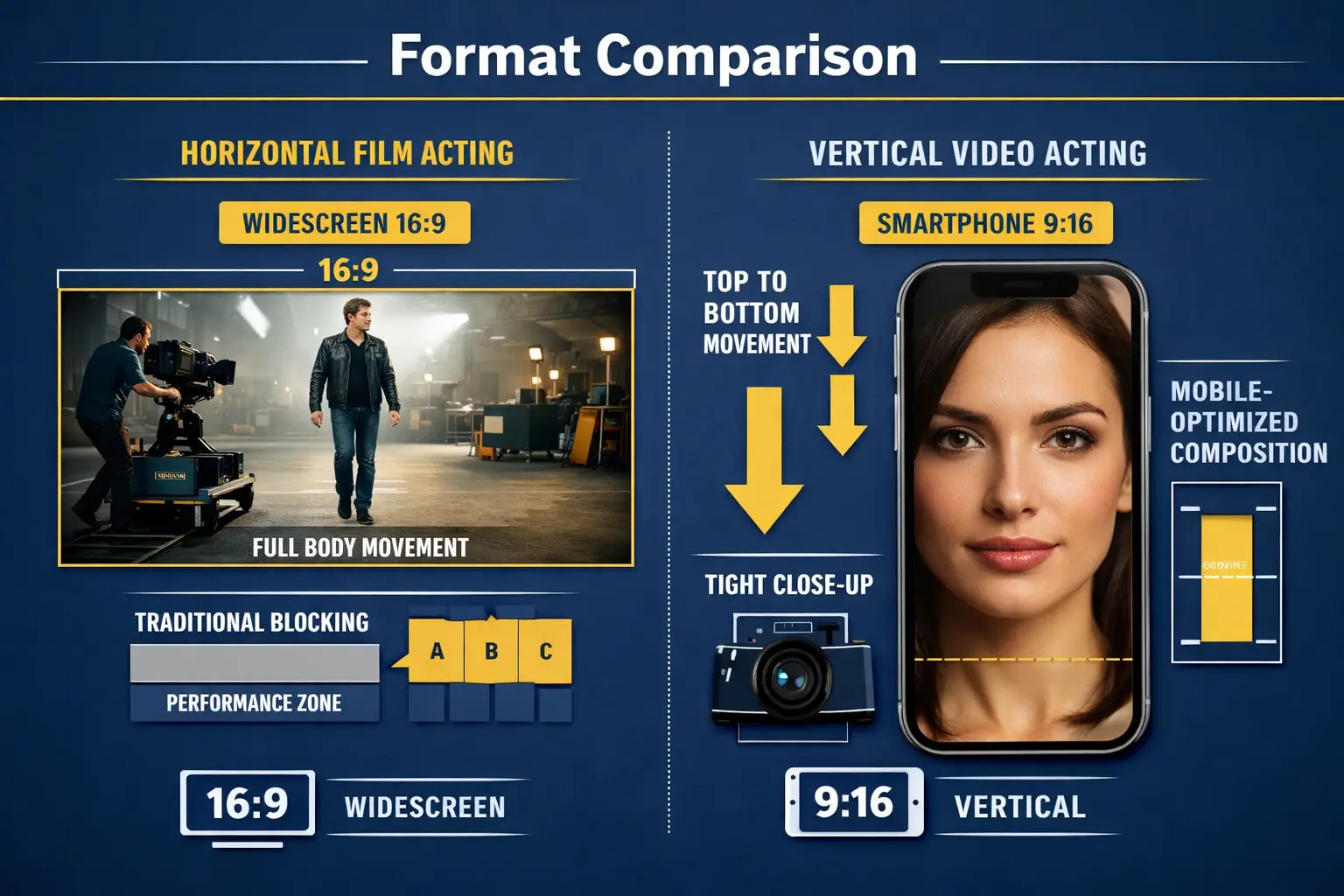
Vertical movement (up-and-down motion) is more natural to the 9:16 format than side-to-side panning. Actors should compose movement entering or exiting from the top or bottom of the frame[2]. This creates a unique choreography challenge that differs fundamentally from traditional blocking.
Consider these vertical movement strategies:
| Traditional Horizontal | Vertical Adaptation |
|---|---|
| Walking across frame left-to-right | Rising from seated to standing position |
| Two-person side-by-side conversation | Stacked composition with one person higher |
| Wide establishing shots | Close-up revealing details top-to-bottom |
| Lateral chase sequences | Climbing stairs or descending into frame |
| Panoramic landscape reveals | Vertical architecture or nature elements |
Comparing Traditional Film Acting to Vertical Video Acting Techniques
Frame Composition and Actor Positioning
Traditional film acting allows actors to use the full width of a 16:9 or wider frame. Performers can move laterally, interact with multiple scene partners simultaneously, and use environmental elements across a broad visual field. The horizontal canvas provides spatial context and relationship dynamics.
Vertical video acting compresses this spatial luxury into a narrow portrait orientation. The 9:16 aspect ratio creates an entirely different performance environment:
- Limited horizontal space: Actors must keep movements centered
- Vertical emphasis: Height differences and top-to-bottom composition matter more
- Isolation effect: Typically features one person prominently, creating intimacy
- Background simplification: Less environmental context visible
- Face-forward orientation: Profile shots and side angles lose impact
Pacing and Narrative Compression
Traditional film and television allow time for establishing shots, character development, and gradual emotional builds. A scene might unfold over several minutes with multiple camera angles and careful pacing.
Vertical formats demand narrative compression. Actors must convey character, emotion, and story beats in 15 to 60 seconds. This requires:
✅ Immediate characterization: Establish who you are within the first 3 seconds
✅ Accelerated emotional arcs: Complete emotional journeys in condensed timeframes
✅ Clear vocal delivery: Every word must land with precision
✅ Decisive physical choices: No wasted movements or unclear gestures
✅ Strong opening and closing beats: Hook viewers immediately and leave them wanting more
Technical Performance Adjustments
The technical requirements of vertical video performance differ significantly from traditional formats:
Energy Level: Vertical videos often require slightly heightened energy to compensate for the compressed frame and mobile viewing context. However, this doesn’t mean overacting—it means precise, intentional choices that read clearly on small screens.
Vocal Projection: While traditional film acting often uses subtle, naturalistic vocal delivery, vertical video benefits from clear articulation and varied vocal tone. Remember that viewers might watch with partial audio or in noisy environments.
Continuity Awareness: Fast-paced editing in vertical formats means actors must maintain consistent energy and emotional state across multiple takes that will be cut together rapidly.
Creating Effective Vertical Reels: Practical Production Techniques
Standard Vertical Reel Format Specifications
Professional vertical reels follow specific technical standards in 2026. Understanding these specifications ensures your content meets industry expectations:
Technical Requirements:
- Aspect Ratio: 9:16 portrait orientation (1080×1920 pixels minimum)
- Duration: 30 seconds to 1 minute maximum[1]
- Frame Rate: 24fps or 30fps for natural motion
- Audio Quality: Professional-grade sound with minimal background noise
- File Format: MP4 or MOV for maximum compatibility
Essential Content Elements
Effective vertical reels include several key components that casting directors specifically look for[1]:
- Strong type-forward moments: Showcase your casting type clearly and immediately
- Clean fast cuts: Multiple scenes demonstrating range without jarring transitions
- Immediate personality: Your unique qualities should be evident within 5 seconds
- High-quality audio: Professional sound quality is non-negotiable
- Optional captions: Text overlays for accessibility and silent viewing
“Actors who embrace vertical storytelling gain a competitive edge in a landscape increasingly shaped by short-form narrative content.” [1]
Best Practices for Phone-Based Filming
The democratization of vertical video production means actors can create professional-quality content using smartphones. However, shooting vertically in-camera (iPhone, DSLR, or mirrorless camera in vertical orientation) produces superior results compared to cropping from horizontal footage[4].
Phone-Based Filming Checklist 📱:
- ✅ Use a smartphone tripod or stabilizer for steady footage
- ✅ Position camera at eye level or slightly above for flattering angles
- ✅ Ensure adequate lighting (ring lights work exceptionally well for vertical close-ups)
- ✅ Record in the highest quality setting available on your device
- ✅ Use external microphones for professional audio quality
- ✅ Compose for the vertical frame—don’t crop horizontal footage
- ✅ Test different backgrounds that aren’t visually cluttered
- ✅ Review footage on a mobile device before finalizing
Lighting for Vertical Frames
Lighting vertical video requires different approaches than traditional cinematography. The narrow frame and emphasis on facial features mean lighting must be precise and flattering:
Three-Point Lighting Adaptation:
- Key light: Position slightly above and to one side, creating dimension on the face
- Fill light: Soften shadows without eliminating them completely
- Back light: Separate subject from background, creating depth in the narrow frame
Ring Light Advantage: Ring lights have become the standard for vertical video because they provide even, flattering illumination perfect for close-up facial work. Position the ring light directly in front of the subject, with the camera shooting through the center.
Training Programs and Resources for Vertical Video Acting Techniques
Adapting Acting Training for Mobile Formats
Traditional acting conservatories and training programs are rapidly incorporating vertical video techniques into their curricula. However, actors can also pursue self-directed training using specific exercises:
Daily Practice Routine (15 minutes):
- Warm-up (3 minutes): Facial exercises focusing on expression range
- Vertical framing practice (5 minutes): Record yourself speaking to camera in vertical orientation, reviewing for frame awareness
- Emotional transition drills (4 minutes): Practice the 10-Second Emotion Ladder exercise
- Scene work (3 minutes): Perform a brief vertical scene with clear beginning, middle, and end
Building Your Vertical Content Portfolio
Creating a diverse portfolio of vertical content demonstrates versatility and format fluency to casting directors. Consider developing content across multiple genres:
- Dramatic monologues: Showcase emotional depth and range
- Comedic bits: Display timing and personality
- Character work: Demonstrate transformation abilities
- Reaction videos: Show authentic, spontaneous responses
- Slice-of-life moments: Reveal naturalistic performance quality
Collaboration and Feedback Loops
The iterative nature of vertical content creation benefits from regular feedback. Establish practice partnerships with other actors, directors, or coaches who understand the format. Share vertical reels, provide constructive criticism, and continuously refine your technique.
Feedback Focus Areas:
- Frame composition and movement within vertical boundaries
- Emotional clarity and transition smoothness
- Audio quality and vocal delivery
- Lighting and visual presentation
- Opening hook effectiveness
- Overall engagement and watchability
The Business Case for Mastering Vertical Video Acting Techniques: Training for the New Fast-Paced TV Formats
Market Demand and Career Opportunities
The professional opportunities for actors skilled in vertical video performance have expanded dramatically in 2026. Beyond traditional casting calls, vertical content creates opportunities in:
- Branded content: Companies produce vertical narrative ads requiring skilled actors
- Social media series: Platforms commission original vertical dramas and comedies
- Streaming platform shorts: Major services develop vertical content libraries
- Educational content: Training and instructional videos use vertical formats
- Corporate communications: Internal company content increasingly uses vertical video
The completion rate data tells a compelling story: vertical video ads achieve 90% completion rates, compared to significantly lower completion on horizontal formats[4]. This engagement metric drives advertiser demand, which in turn creates more opportunities for actors who excel in the format.
Competitive Advantage in Casting
Actors who provide professional vertical reels demonstrate several valuable qualities to casting directors:
- Technical adaptability: Understanding of contemporary media formats
- Self-direction capability: Ability to produce quality content independently
- Format awareness: Knowledge of how audiences consume content in 2026
- Professional preparation: Investment in career development and current trends
Instagram Stories vertical videos achieve a 14% higher click-through rate compared to horizontal videos[4], proving that vertical content isn’t just a trend—it’s a fundamental shift in how audiences engage with visual storytelling.
Future-Proofing Your Acting Career
The trajectory of entertainment consumption suggests vertical and mobile-first content will only grow in prominence. Actors who develop these skills now position themselves for sustained career success as the industry continues evolving.
Consider vertical video proficiency as essential as other foundational acting skills:
- Scene study and text analysis
- Voice and speech training
- Movement and physicality
- Camera technique
- Vertical video performance ⭐
Advanced Techniques for Vertical Video Acting Mastery
Layering Subtlety in Compressed Timeframes
The challenge of vertical video acting lies in conveying nuanced, layered performances within extremely limited timeframes. Advanced practitioners develop the ability to suggest complex inner lives through economical choices.
Subtext Strategies:
- Use micro-pauses that suggest internal processing
- Layer conflicting emotions (saying one thing while feeling another)
- Employ subtle physical contradictions (nervous hands while maintaining confident posture)
- Vary vocal tone mid-sentence to reveal shifting thoughts
- Use eye direction to suggest off-screen relationships or concerns
Multi-Take Strategy for Vertical Content
Professional vertical content often involves shooting multiple takes with different emotional approaches, then selecting the strongest version in editing. Develop the discipline to:
- Perform the same content with three distinct emotional interpretations
- Maintain consistent framing and positioning across takes
- Vary intensity levels while keeping the core performance truthful
- Offer alternative line readings for editorial flexibility
- Stay fresh and spontaneous across multiple repetitions
Working with Vertical Directors and Content Creators
As vertical content production becomes more sophisticated, actors increasingly work with directors and content creators who specialize in the format. Understanding their perspective and workflow improves collaboration:
Director Communication:
- Ask about the intended platform and viewing context
- Clarify the emotional journey within the compressed timeline
- Discuss frame composition and movement boundaries
- Understand the edit rhythm and pacing intentions
- Request feedback on energy levels and performance scale
Conclusion: Embracing the Vertical Future
Vertical Video Acting Techniques: Training for the New Fast-Paced TV Formats represents far more than a technical skill—it embodies the evolution of storytelling itself. As audiences increasingly consume content on mobile devices, actors who master the intimate, immediate, and emotionally compressed nature of vertical performance will thrive in the entertainment landscape of 2026 and beyond.
The data is clear: vertical content achieves higher completion rates, better engagement metrics, and stronger emotional connections with viewers. Casting directors actively seek actors who understand the format, and professional opportunities continue expanding across branded content, streaming platforms, and social media series.
Actionable Next Steps
Ready to develop your vertical video acting skills? Take these concrete actions:
- Create your first vertical reel this week: Use your smartphone to record a 30-second vertical performance showcasing your type and personality
- Practice daily emotional transitions: Spend 10 minutes each day working on the exercises outlined in this article
- Study successful vertical content: Watch vertical dramas and short-form content critically, analyzing performance choices
- Invest in basic equipment: Acquire a smartphone tripod and ring light for professional-quality self-taping
- Share and iterate: Post your vertical content, gather feedback, and continuously refine your technique
- Update your materials: Ensure casting directors can access your vertical reel through your primary actor profiles
The transition from traditional horizontal performance to vertical video acting doesn’t diminish the craft—it expands it. The fundamental skills of truthful emotion, clear intention, and compelling storytelling remain constant. The frame may be narrower, the timeline compressed, and the viewing context different, but the actor’s essential task endures: to move audiences through authentic, engaging performance.
Embrace the vertical revolution. Master the techniques. Build the skills. The future of acting is here, and it fits perfectly in the palm of your hand. 📱🎬
References
[1] What Is A Vertical And How Should Actors Use Them In 2026 – https://uptodateactor.com/blogs/post/what-is-a-vertical-and-how-should-actors-use-them-in-2026/
[2] Verticals Part 1 Writing Them – https://www.scriptgodsmustdie.com/2025/01/verticals-part-1-writing-them/
[3] Will Vertical Dramas Be The Big Thing In 2026 – https://www.mediadoghire.com/will-vertical-dramas-be-the-big-thing-in-2026/
[4] Vertical Video Explained 78419 – https://www.backstage.com/magazine/article/vertical-video-explained-78419/
[5] Vertical Dramas An Emerging Trend In The Entertainment Industry – https://www.creativescreenwriting.com/vertical-dramas-an-emerging-trend-in-the-entertainment-industry/