
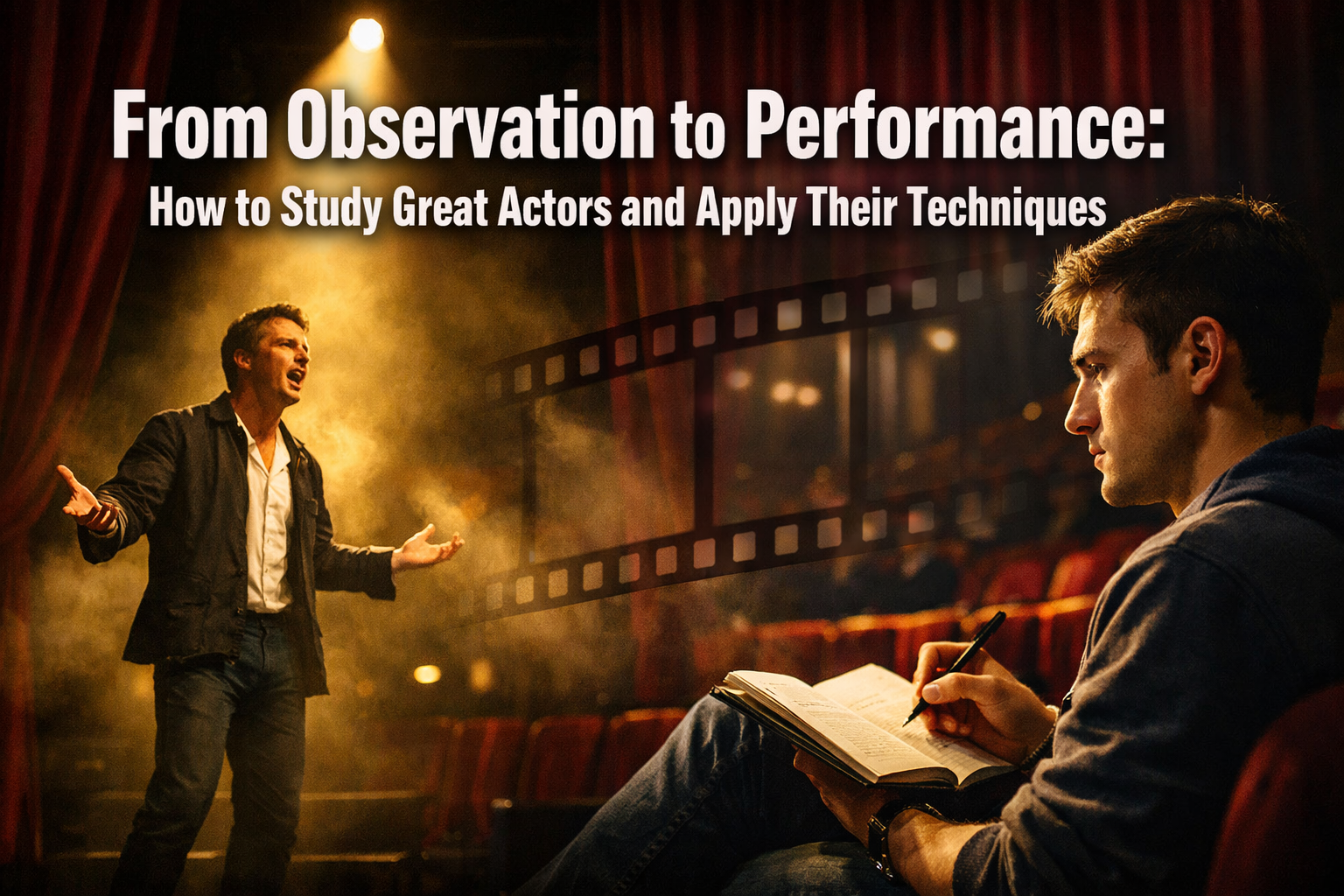
Every legendary actor started as a beginner, watching others and wondering, “How do they make it look so real?” The gap between watching a masterful performance and delivering one yourself might seem vast, but there’s a proven bridge: active observation. In 2026, aspiring actors have unprecedented access to performances across theater, film, streaming platforms, and commercials, creating an endless library of learning opportunities. Understanding “From Observation to Performance: How to Study Great Actors and Apply Their Techniques” transforms passive viewing into a powerful training tool that accelerates skill development and deepens craft understanding.
The secret lies not in simply watching great actors, but in deconstructing their choices, analyzing their techniques, and systematically applying those discoveries to personal practice. This approach mirrors how master painters study the works of Renaissance artists or how musicians analyze legendary performances—learning through careful observation has always been fundamental to artistic growth.
Key Takeaways
- 🎭 Active observation transforms watching performances into structured learning by systematically analyzing vocal choices, physical movements, and emotional authenticity
- 📝 Documentation and note-taking during performance viewing creates a personal technique library that can be referenced and applied to future roles
- 🔄 Immediate application of observed techniques through practice exercises solidifies learning and builds muscle memory faster than passive viewing alone
- 🎬 Cross-platform study (theater, film, commercials, streaming content) exposes actors to diverse styles and techniques that expand versatility
- 💡 Pattern recognition across multiple performances reveals fundamental principles that transcend individual roles and genres
Why Observation Is the Foundation of Actor Training
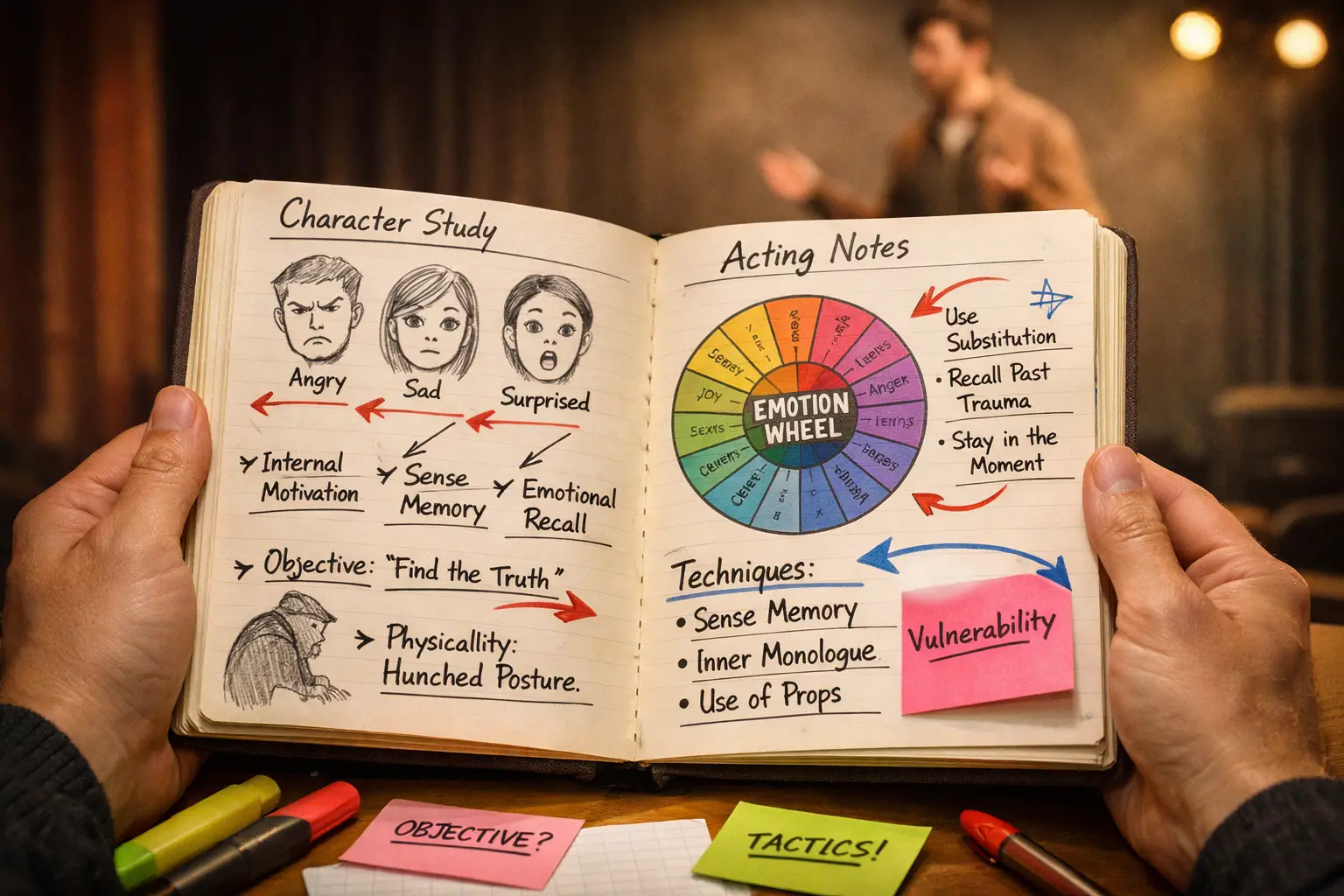
Social learning theory demonstrates that humans acquire new behaviors and skills primarily through observation and imitation [2]. For actors, this principle becomes even more critical because performance craft cannot be learned solely from textbooks or lectures. The nuances of timing, the subtlety of emotional expression, and the authenticity of character embodiment must be witnessed in action to be fully understood.
Great actors serve as living textbooks, demonstrating techniques in real-time application. When Meryl Streep transforms her voice for a character, when Denzel Washington commands a scene with minimal movement, or when Viola Davis conveys complex emotions through micro-expressions, they’re providing masterclasses in technique. The challenge for beginners is learning how to decode these performances rather than simply enjoying them.
The Difference Between Watching and Studying
Most people watch performances for entertainment. Actors must learn to study them for education. This distinction involves:
- Intentionality: Approaching performances with specific learning objectives
- Repetition: Watching scenes multiple times to catch different layers
- Analysis: Breaking down what makes a moment effective
- Documentation: Recording observations for future reference
- Application: Testing observed techniques in personal practice
This systematic approach to “From Observation to Performance: How to Study Great Actors and Apply Their Techniques” creates a structured learning path that builds competency progressively.
Building Your Observation Framework: What to Watch For
Effective observation requires a framework—a systematic approach to analyzing performances. Without structure, beginners often notice only surface-level elements while missing the technical choices that create powerful performances.
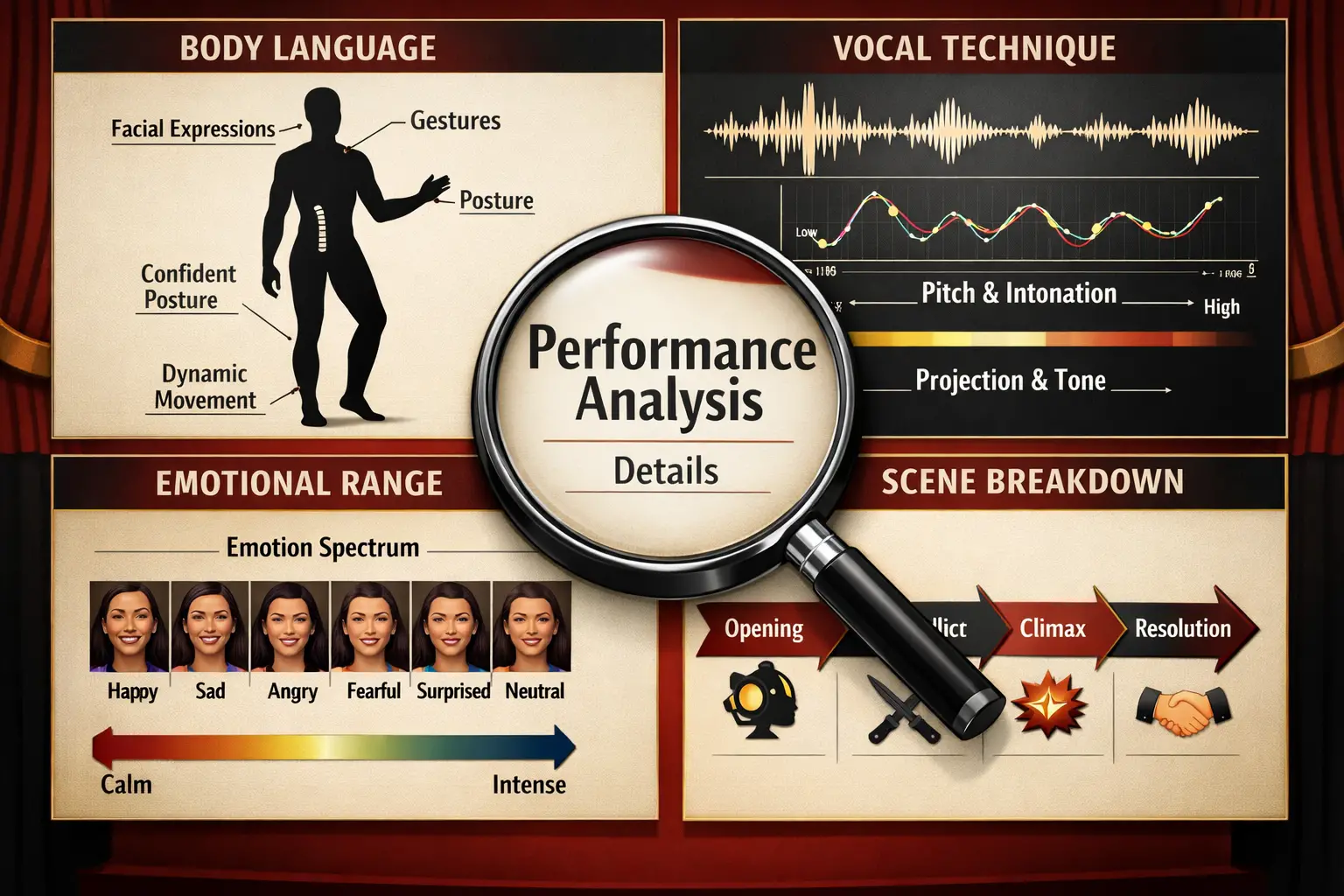
The Five Pillars of Performance Analysis
1. Vocal Technique and Delivery 🎤
Listen beyond the words themselves to identify:
- Pace and rhythm: How does the actor control speaking speed for emotional impact?
- Pitch variation: When do they raise or lower their voice, and why?
- Volume modulation: How do they use loudness and softness strategically?
- Articulation choices: Where do they emphasize certain words or syllables?
- Breath control: How do pauses and breathing patterns affect meaning?
- Accent and dialect: How authentic and consistent is their vocal transformation?
Practice Exercise: Watch a dramatic monologue three times—first with eyes closed focusing only on vocal choices, second with sound off watching physicality, third with both elements together.
2. Physical Expression and Movement 💃
The body tells stories words cannot. Observe:
- Posture and alignment: How does body position reflect character status or emotional state?
- Gesture patterns: What do hand movements reveal about intention or nervousness?
- Facial expressions: Which micro-expressions precede or follow dialogue?
- Spatial awareness: How does the actor use physical distance from other characters?
- Movement quality: Is their physicality sharp, fluid, hesitant, or confident?
- Stillness: When do they choose NOT to move, and what does that communicate?
3. Emotional Authenticity and Range ❤️
Genuine emotion separates compelling performances from mechanical ones:
- Emotional preparation: How do actors transition into intense emotional states?
- Vulnerability: What choices create believable openness or defensiveness?
- Emotional progression: How do feelings build, shift, or release throughout a scene?
- Subtext: What emotions exist beneath the spoken words?
- Recovery moments: How do actors return to neutral or transition between emotions?
4. Character Choices and Interpretation 🎭
Every actor makes unique choices about their character:
- Backstory influence: What invented history seems to inform their choices?
- Objectives and obstacles: What does the character want, and what blocks them?
- Relationship dynamics: How do they adjust behavior with different scene partners?
- Physicality signature: What unique physical traits define this character?
- Vocal signature: What speech patterns make this character distinctive?
5. Technical Precision and Craft ⚙️
Professional actors demonstrate technical mastery:
- Timing and rhythm: How do they land comedic beats or dramatic moments?
- Listening and reacting: How present are they with scene partners?
- Camera awareness (film/TV): How do they adjust performance for close-ups versus wide shots?
- Continuity: How consistent are their choices across takes or performances?
- Energy management: How do they sustain intensity throughout long scenes?
Creating Your Performance Study System
Transforming observation into skill requires a systematic approach to documenting and practicing what you learn. This process bridges the gap in “From Observation to Performance: How to Study Great Actors and Apply Their Techniques” by creating actionable learning materials.
The Observation Journal Method
Maintain a dedicated performance journal with these sections:
| Section | Purpose | What to Record |
|---|---|---|
| Performance Details | Context tracking | Actor name, production, role, scene/timestamp |
| Technical Observations | Specific choices | Vocal patterns, physical choices, emotional beats |
| Effective Moments | Success analysis | What worked brilliantly and why |
| Questions Raised | Deeper inquiry | Techniques you don’t understand yet |
| Application Ideas | Personal practice | How to test these techniques yourself |
“The act of writing observations forces deeper processing than passive watching alone. Documentation transforms fleeting impressions into permanent learning resources.”
The Three-Watch Method
For particularly instructive performances, use this progressive approach:
First Watch – Immersive Experience: Watch the entire performance without stopping, experiencing it as an audience member. Note your overall impressions and emotional responses.
Second Watch – Technical Analysis: Pause frequently to examine specific choices. Rewind compelling moments. Take detailed notes on the five pillars of performance analysis.
Third Watch – Integration: Watch again with your notes, confirming observations and identifying patterns you missed initially. Focus on how individual choices create the complete performance.
Building Your Reference Library
Organize studied performances by category:
- Emotional range: Performances demonstrating anger, grief, joy, fear, etc.
- Genre: Comedy, drama, thriller, period pieces
- Technique showcases: Accent work, physical transformation, subtle realism
- Scene types: Auditions, monologues, two-person scenes, ensemble work
- Medium: Stage, film, television, commercial, streaming content
This categorization allows quick reference when preparing for specific roles or auditions.
From Observation to Application: Practice Exercises
Knowledge without practice remains theoretical. The critical step in “From Observation to Performance: How to Study Great Actors and Apply Their Techniques” involves immediate application of observed techniques through structured exercises.
Imitation Exercises (Not Mimicry)
Important distinction: Imitation means understanding and reproducing the technique, not copying the performance. The goal is learning the method, not impersonating the actor.
Exercise 1: Vocal Pattern Adoption
- Select a 30-second clip where an actor uses distinctive vocal patterns
- Transcribe the dialogue
- Identify specific vocal choices (pace, pitch, emphasis)
- Practice delivering the same words using those technical choices
- Record yourself and compare
- Apply the same vocal technique to different text
Exercise 2: Physical Translation
- Watch a scene with distinctive physical choices
- Document the specific movements and gestures
- Reproduce those physical patterns in silence
- Apply the same physicality to a different scene or monologue
- Analyze how physical choices affect emotional expression
Exercise 3: Emotional Preparation Replication
- Identify how an actor prepares for an emotional moment
- Note physical indicators (breathing, tension, focus)
- Attempt the same preparation process
- Apply it to your own emotional scene work
- Adjust based on what works for your instrument
Comparative Analysis Exercises
Study how different actors approach similar material:
- Watch three actors perform the same monologue (Shakespeare is ideal for this)
- Document the unique choices each makes
- Identify which choices resonate most authentically
- Create your own interpretation incorporating learned elements
- Understand that multiple valid approaches exist for any role
Cross-Medium Translation
Practice adapting techniques across performance contexts:
- Take a theatrical performance choice and adapt it for film close-up
- Convert a subtle film performance for stage projection
- Transform a dramatic technique for commercial authenticity
- Apply character work depth to brief audition scenes
Selecting the Right Performances to Study
Not all performances offer equal learning value for beginners. Strategic selection accelerates skill development.
Criteria for Choosing Study Performances
For Beginners:
- ✅ Clear, accessible emotional work (avoid overly stylized performances initially)
- ✅ Contemporary, realistic material (before period pieces or heightened styles)
- ✅ Strong technical foundation visible in the work
- ✅ Performances with available behind-the-scenes or interview content
- ✅ Roles similar to your type and age range
Avoid Initially:
- ❌ Highly stylized or avant-garde work (until you understand fundamentals)
- ❌ Performances relying heavily on star charisma rather than technique
- ❌ Overly naturalistic mumblecore (hard to identify specific techniques)
- ❌ Roles far outside your current casting range
Recommended Study Categories for 2026
Theater Performances:
- Recorded stage productions (National Theatre Live, BroadwayHD)
- Regional theater productions available through streaming
- University and conservatory showcase performances
Film and Television:
- Award-winning performances with available actor interviews
- Character-driven independent films
- Limited series with extended character development
- Ensemble pieces showing varied acting styles
Commercial and Short-Form Content:
- High-quality commercials demonstrating authentic moments in brief formats
- Short films showcasing complete character arcs
- Web series with strong performance work
Educational Content:
- Masterclass sessions with professional actors
- Actor’s Studio interviews and performances
- Behind-the-scenes documentaries on acting processes
Avoiding Common Observation Pitfalls
Even dedicated students make predictable mistakes when learning “From Observation to Performance: How to Study Great Actors and Apply Their Techniques.”
Pitfall #1: Surface-Level Observation
The Problem: Noticing only obvious choices without understanding the technique creating them.
The Solution: Ask “how” and “why” constantly. Don’t just note that an actor seems angry—identify the specific vocal, physical, and facial choices creating that impression, and understand the character motivation driving it.
Pitfall #2: Copying Without Understanding
The Problem: Mimicking external behaviors without comprehending the internal process.
The Solution: Research the actor’s training background and process. Understand the why behind choices before attempting to reproduce them.
Pitfall #3: Studying Only One Style or Actor
The Problem: Developing a narrow range by observing limited approaches.
The Solution: Deliberately study diverse actors, genres, and mediums. Compare classical and contemporary, film and stage, subtle and bold performances.
Pitfall #4: Passive Watching Instead of Active Study
The Problem: Treating study sessions like entertainment, forgetting to analyze and document.
The Solution: Set specific learning objectives before each viewing session. Take notes actively. Pause and rewind liberally.
Pitfall #5: Observation Without Application
The Problem: Accumulating knowledge without testing it through practice.
The Solution: Immediately apply observed techniques in rehearsal or practice. Schedule application exercises within 24 hours of observation sessions.
Integrating Observation with Formal Training
Observation study complements but doesn’t replace formal training. The most effective approach combines both.
How Observation Enhances Class Work
- Preparation: Study performances related to upcoming class scenes
- Vocabulary building: Observation helps understand terminology instructors use
- Problem-solving: When stuck on a scene, observe how professionals handle similar material
- Inspiration: Watching great work motivates continued skill development
How Class Work Enhances Observation
- Framework: Training provides analytical tools for more sophisticated observation
- Feedback loop: Instructors help identify what to look for in performances
- Context: Understanding method, Meisner, or other techniques helps recognize them in performances
- Correction: Teachers can identify when observed techniques are misunderstood or misapplied
Questions to Bring from Observation to Class
Maximize learning by asking instructors about observed techniques:
- “I noticed [actor] did [specific choice] in [scene]. What technique might they be using?”
- “How would you approach this emotional transition I saw in [performance]?”
- “Can we work on the vocal control I observed in [specific example]?”
Leveraging Technology for Enhanced Observation
In 2026, technology offers unprecedented tools for performance study that previous generations couldn’t access.
Digital Tools for Actors
Video Analysis Software:
- Frame-by-frame playback for micro-expression study
- Side-by-side comparison of different performances
- Annotation tools for marking specific moments
- Slow-motion for detailed physical analysis
Note-Taking Apps:
- Digital performance journals with timestamp linking
- Cloud-based organization for cross-device access
- Search functionality for finding specific observations
- Tag systems for categorizing techniques
Recording and Self-Analysis:
- Smartphone recording of practice attempts
- Comparison of personal work with studied performances
- Progress tracking over time
- Sharing with coaches or study groups for feedback
Online Communities and Resources
Connect with other actors studying performances:
- Discussion forums analyzing specific performances
- Social media groups dedicated to technique study
- Virtual study groups watching and discussing together
- Online workshops focused on performance analysis
Measuring Progress and Adjusting Your Approach
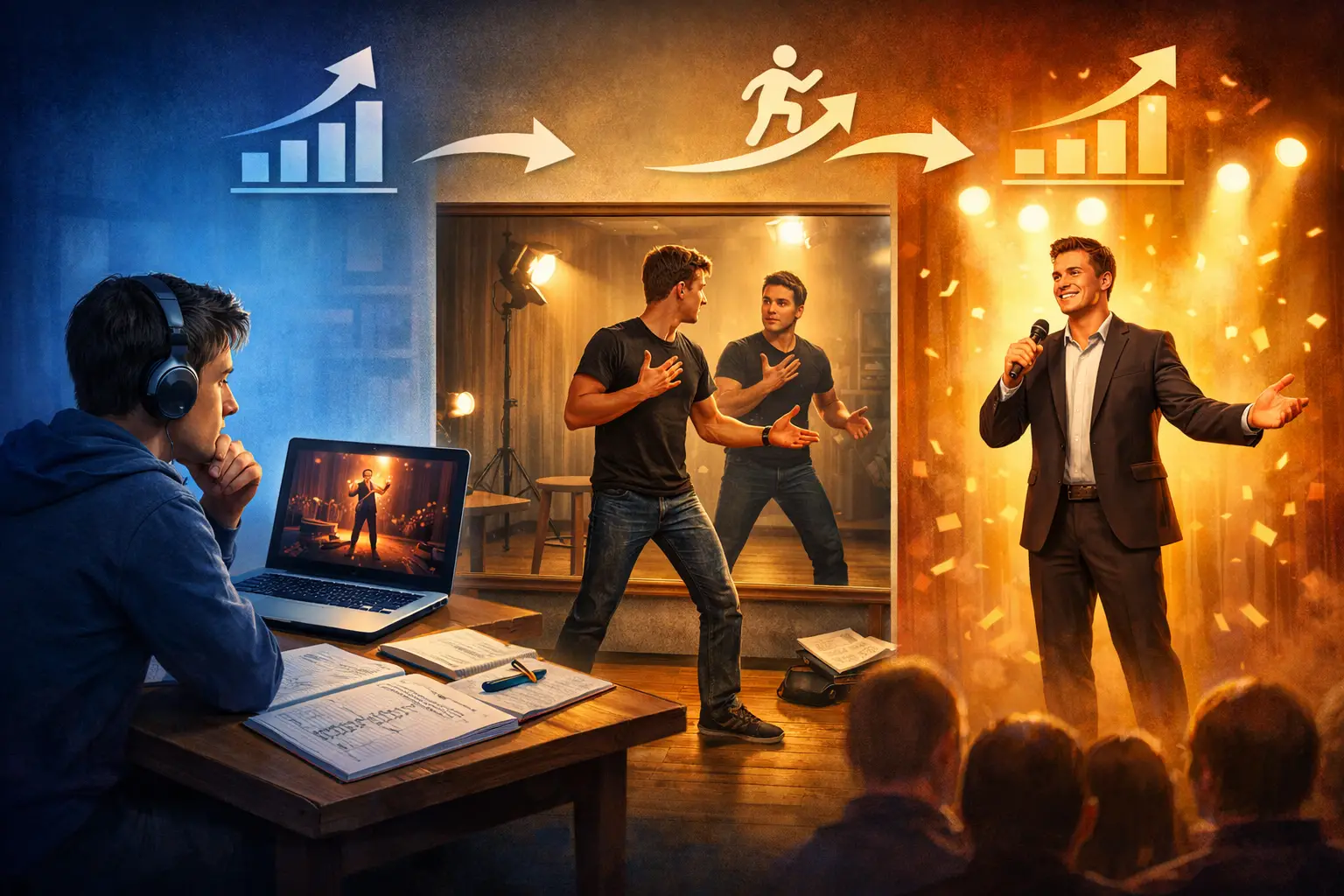
Effective study requires periodic assessment and adjustment of methods.
Progress Indicators
You’re successfully applying “From Observation to Performance: How to Study Great Actors and Apply Their Techniques” when:
- ✨ You notice specific technical choices automatically while watching performances
- ✨ Your performance range expands to include new emotional or physical territory
- ✨ Directors or coaches comment on improved technique
- ✨ You can articulate why a performance works, not just that it does
- ✨ Your auditions demonstrate greater variety and depth
- ✨ You feel more confident experimenting with bold choices
Adjustment Signals
Modify your observation approach if:
- 🔄 You’re watching many performances but not improving
- 🔄 You feel overwhelmed by too much information
- 🔄 Your performances feel imitative rather than authentic
- 🔄 You’re avoiding application exercises
- 🔄 Observation feels like procrastination rather than practice
Quarterly Review Process
Every three months, assess your observation practice:
- Review journal entries: What patterns emerge in your observations?
- Evaluate application: Which observed techniques have you successfully integrated?
- Identify gaps: What skills need more focused observation?
- Update study list: Add new performances addressing identified gaps
- Refine process: Adjust documentation or practice methods based on results
Advanced Observation Techniques
As observation skills develop, incorporate more sophisticated analysis methods.
Studying Performance Preparation
Beyond finished performances, study the process:
- Watch rehearsal footage when available
- Study actor interviews about preparation methods
- Observe table reads versus final performances
- Analyze how choices evolve from first reading to final take
Analyzing Scene Partnership
Focus on the interaction between actors:
- How do they listen and respond authentically?
- What creates chemistry or tension between performers?
- How do power dynamics shift through the scene?
- What non-verbal communication occurs?
Deconstructing Subtext
Advanced observation identifies layers beneath dialogue:
- What does the character want but won’t say?
- How do actors communicate hidden agendas?
- Where do words and intentions contradict?
- What physical or vocal choices reveal subtext?
Recognizing Directorial Influence
Understand that performances result from collaboration:
- How might directorial choices shape what you observe?
- What’s the actor’s contribution versus the director’s vision?
- How do editing and cinematography affect performance perception?
- What would change with different directorial interpretation?
Building a Sustainable Observation Practice
Long-term skill development requires sustainable habits rather than sporadic intense study.
Creating Your Weekly Observation Schedule
Recommended minimum commitment:
- 2-3 focused study sessions (45-60 minutes each) per week
- 1 application practice session (60-90 minutes) per week
- 1 casual viewing session (maintaining love for the craft)
- 15-30 minutes for journal review and planning
Balancing Observation with Other Training
Observation should complement, not replace:
- Scene work and rehearsal: 40-50% of training time
- Technique classes: 20-30% of training time
- Observation and study: 15-20% of training time
- Physical/vocal training: 10-15% of training time
Preventing Burnout
Maintain enthusiasm by:
- Varying the types of performances studied
- Balancing challenging analysis with enjoyable viewing
- Celebrating when observed techniques successfully integrate
- Connecting with other actors for shared study sessions
- Taking periodic breaks to simply enjoy performances as entertainment
Conclusion: Transforming Observation into Artistry
Understanding “From Observation to Performance: How to Study Great Actors and Apply Their Techniques” provides aspiring actors with a powerful, accessible training method that accelerates skill development and deepens craft understanding. The journey from watching performances to delivering them transforms when observation becomes active, analytical, and application-focused.
Great actors aren’t born—they’re developed through dedicated study, practice, and the wisdom to learn from those who came before. Every performance you watch with intention becomes a lesson. Every technique you observe and apply becomes part of your artistic toolkit. Every moment you invest in thoughtful analysis compounds into greater versatility, authenticity, and confidence.
Your Next Steps
This Week:
- Select three performances to study using the five pillars framework
- Set up your observation journal (digital or physical)
- Schedule your first focused study session
- Choose one observed technique to practice immediately
This Month:
- Complete detailed analysis of at least six diverse performances
- Apply three new techniques in scene work or class
- Join or create a study group with fellow actors
- Review and refine your observation process
This Quarter:
- Build a reference library of 20+ studied performances across genres and mediums
- Demonstrate measurable improvement in specific technique areas
- Develop your unique performance style informed by diverse influences
- Share your observation practice insights with the acting community
The gap between where you are and where you want to be as an actor closes with every intentional observation, every documented insight, and every courageous attempt to apply what you’ve learned. The performances that inspire you today become the foundation for the performances you’ll deliver tomorrow.
Start watching with purpose. Study with intention. Practice with courage. Your transformation from observer to performer begins now.
References
[2] Social Learning – https://cloudassess.com/blog/social-learning/