
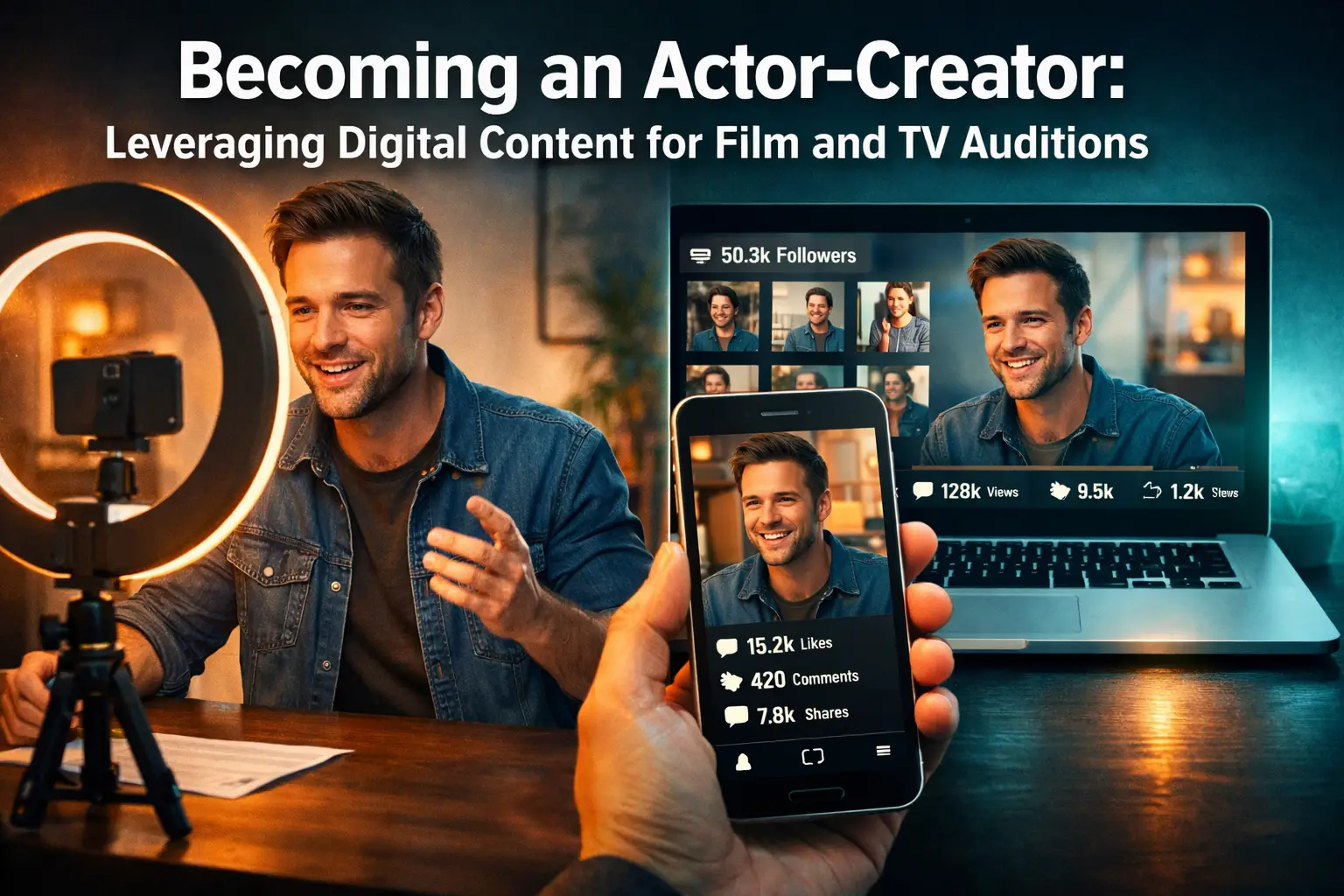
The entertainment industry is experiencing a seismic shift. In 2026, casting directors are no longer just reviewing headshots and resumes—they’re scrolling through Instagram reels, TikTok videos, and YouTube channels. Becoming an Actor-Creator: Leveraging Digital Content for Film and TV Auditions has transformed from an optional marketing strategy into an essential career requirement. Actors who build authentic digital footprints are landing roles that traditional performers can only dream about, and the numbers prove it: the creator economy is estimated to surpass $40 billion globally in 2026, with Hollywood actively embracing creators as A-list talent.[3][4]
This comprehensive guide explores how aspiring and established actors can harness digital content creation to attract casting directors, build industry relationships, and create opportunities that didn’t exist just five years ago.
Key Takeaways
✅ Hollywood is actively recruiting creators: Production companies and talent agencies are progressively collaborating with digital creators, with creator-led series expected to rival traditional studio productions in 2026.[3][6]
✅ Digital presence equals casting advantage: Actors with engaged online communities and authentic content demonstrate marketability that casting directors increasingly value alongside traditional acting skills.
✅ Multi-platform strategy is essential: Successful actor-creators diversify their content across multiple platforms, repurposing insights into different formats to minimize algorithmic risk and maximize industry visibility.[4]
✅ Niche expertise drives premium opportunities: The most successful actor-creators focus on specific niches and authentic storytelling rather than chasing viral trends or massive follower counts.[5]
✅ Community engagement matters more than numbers: Building small, engaged communities within specific niches creates more valuable opportunities than accumulating millions of passive followers.[4]
The Industry Shift: Why Casting Directors Care About Your Digital Footprint
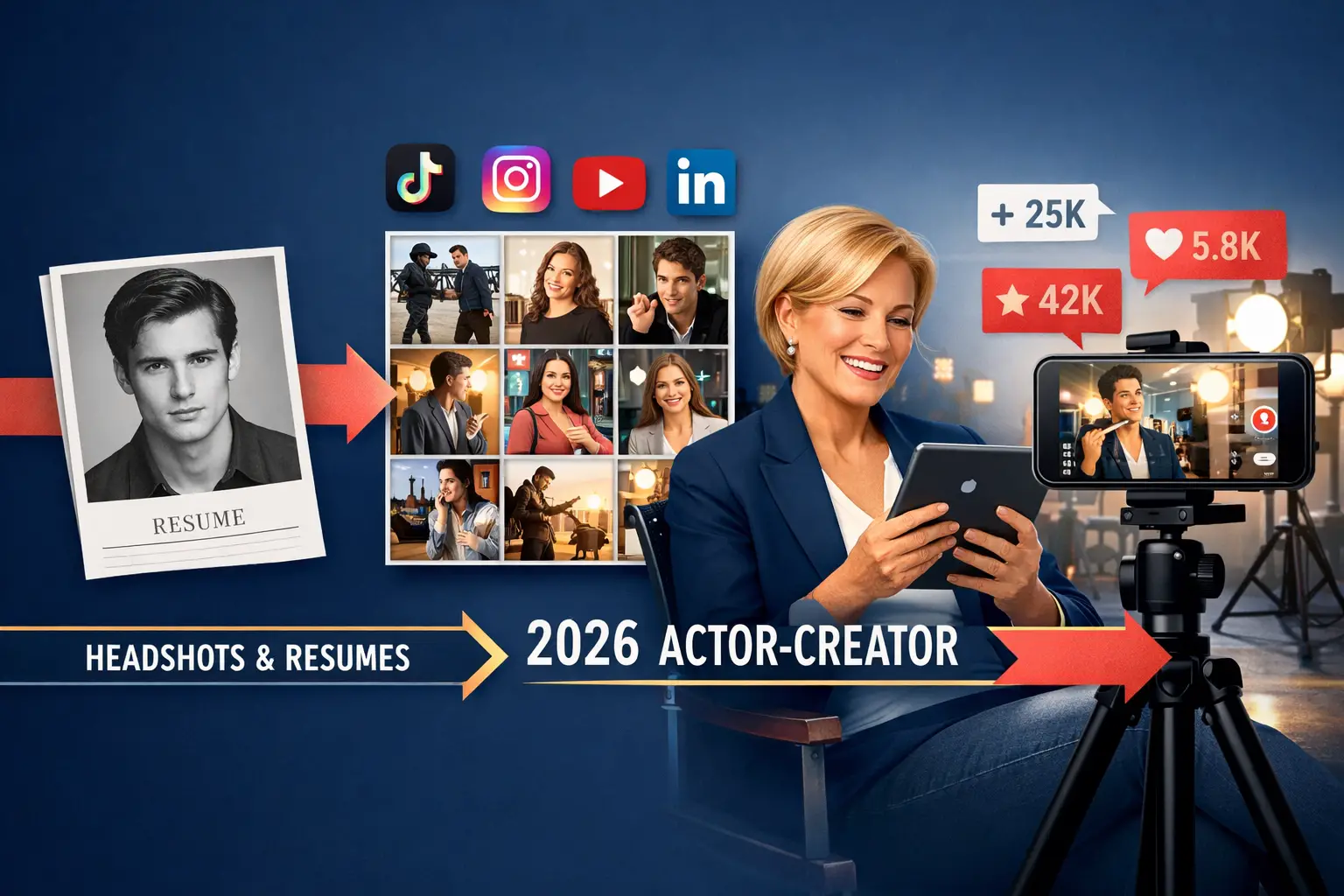
From Headshots to Hashtags
The entertainment industry’s relationship with digital creators has fundamentally changed. What began as skepticism has evolved into full embrace. Hollywood is actively treating creators as strategic partners, not just talent, with industry leaders expecting creators to “stand shoulder-to-shoulder with Hollywood as the new stars of television and streaming.”[6]
This shift isn’t superficial. Production companies recognize that actors with established digital audiences bring built-in marketing power to projects. When an actor-creator gets cast, they don’t just fill a role—they bring thousands or millions of engaged followers who will watch, share, and promote the content.
The Data Behind the Transformation
The numbers tell a compelling story:
| Metric | 2026 Reality | Impact on Actors |
|---|---|---|
| Creator Economy Value | $40+ billion globally[4] | Massive investment in creator talent |
| Brand Marketing Budgets | 50%+ allocated to creators[4] | More partnership opportunities |
| Creator-Led Series | Rivaling studio productions[6] | Direct path from digital to traditional media |
| Industry Recognition | Prestigious awards for creator content[6] | Legitimacy and career advancement |
What Casting Directors Actually Look For
Modern casting directors evaluate digital content through several lenses:
🎭 Performance range: Do your videos showcase different emotions, characters, and styles?
📊 Audience engagement: Are people commenting, sharing, and genuinely connecting with your content?
💡 Professionalism: Do you maintain consistent quality, posting schedules, and brand messaging?
🌟 Authenticity: Does your personality shine through in ways that feel genuine rather than manufactured?
Authenticity and long-form storytelling are increasingly valued, with audiences fatigued by airbrushed videos and scripted endorsements.[4] This creates opportunities for actors who can demonstrate real personality and honest perspectives through their digital content.
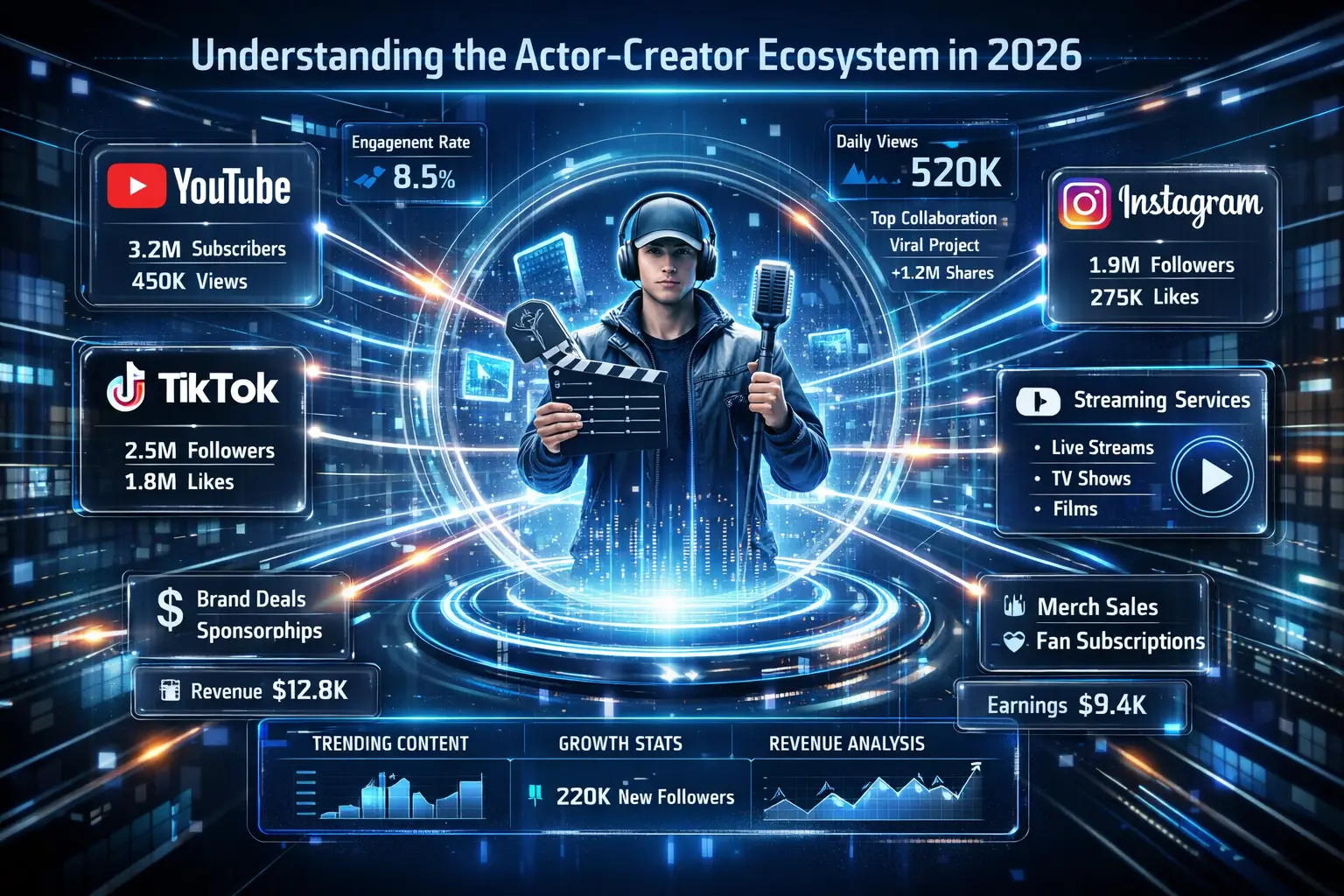
Understanding the Actor-Creator Ecosystem in 2026
Beyond Sponsored Posts: Building Entertainment Enterprises
Creators are evolving into full-fledged entertainment enterprises, no longer limited to sponsored posts.[5] The modern actor-creator builds entire ecosystems that include:
- Short-form videos (TikTok, Instagram Reels, YouTube Shorts)
- Long-form content (YouTube vlogs, IGTV series, podcasts)
- Written content (newsletters, blogs, social media captions)
- Live interactions (livestreams, Q&As, virtual events)
- Product lines (merchandise, courses, digital products)
This diversification serves multiple purposes. It demonstrates versatility to casting directors, creates multiple revenue streams, and builds resilience against platform algorithm changes.
The Blurred Lines Between Creator and Celebrity
The distinction between “influencer” and “actor” has become increasingly unclear. Creators are being treated as strategic partners, contributing to brand strategy and demanding equity rather than just accepting traditional brand deals.[6] This shift elevates the creator role from marketing tool to business partner.
For actors, this means digital content creation isn’t separate from their acting career—it’s an integral component that can accelerate traditional opportunities.
Platform Strategy: Where to Focus Your Energy
Multi-platform presence and content repurposing are essential risk mitigation strategies.[4] Smart actor-creators don’t put all their energy into a single platform. Instead, they:
- Identify a primary platform based on their content style and target audience
- Repurpose content across secondary platforms with format adjustments
- Maintain consistency without burning out through strategic batching
- Adapt to platform strengths rather than posting identical content everywhere
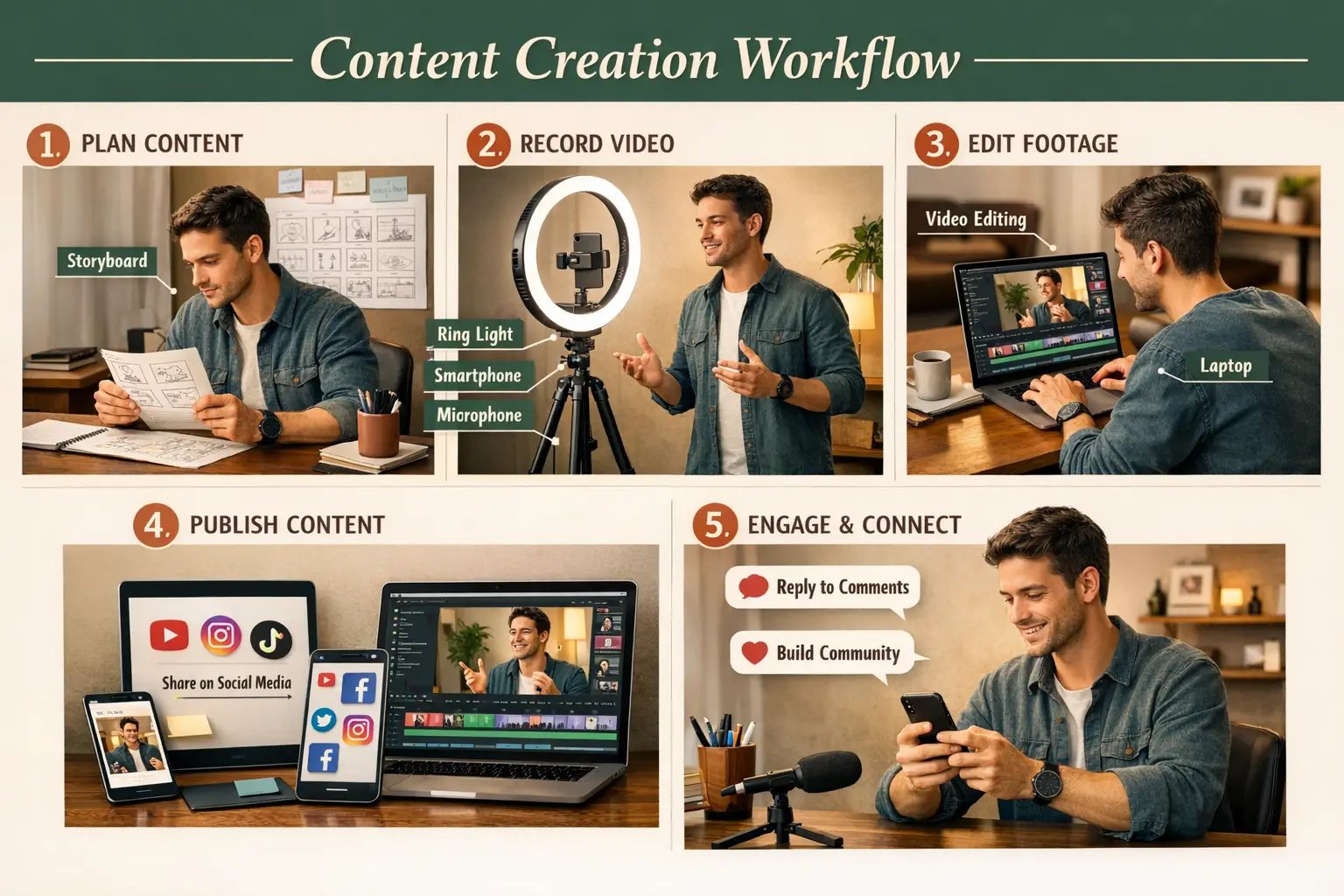
Example content repurposing workflow:
- Record a 10-minute acting technique tutorial
- Post full video on YouTube
- Extract 60-second tip for Instagram Reels and TikTok
- Create carousel post with key points for LinkedIn
- Write detailed newsletter expanding on the concept
- Host livestream Q&A answering questions about the technique
Becoming an Actor-Creator: Leveraging Digital Content for Film and TV Auditions – A Step-by-Step Guide
Step 1: Define Your Niche and Unique Perspective
The most successful creators are those with specific niche interest or expertise, offering unique perspectives rather than rehashing common knowledge.[5] For actor-creators, this might include:
- Genre specialization: Horror acting techniques, comedy timing, period drama preparation
- Behind-the-scenes insights: Audition preparation, self-tape strategies, on-set experiences
- Skill development: Accent coaching, emotional preparation, physical transformation
- Industry education: Breaking down famous performances, analyzing scripts, explaining industry processes
- Personal journey: Navigating rejection, balancing survival jobs, mental health in entertainment
The key is finding the intersection between your expertise, your passion, and what audiences genuinely want to learn.
Step 2: Set Up Your Content Creation Infrastructure
Professional-quality content doesn’t require a Hollywood budget, but it does need some essential equipment:
Basic Setup ($200-500):
- 📱 Smartphone with good camera (most modern phones work)
- 💡 Ring light or softbox lighting kit
- 🎙️ Lavalier microphone or USB microphone
- 📐 Smartphone tripod with adjustable height
- 🎬 Free editing software (CapCut, iMovie, DaVinci Resolve)
Intermediate Setup ($500-1500):
- 📷 DSLR or mirrorless camera
- 🎤 Shotgun microphone
- 💡 Three-point lighting system
- 🖥️ Computer capable of video editing
- 🎞️ Editing software (Adobe Premiere, Final Cut Pro)
Step 3: Create Behind-the-Scenes Content That Attracts Casting Directors
Behind-the-scenes content serves multiple purposes: it demonstrates your process, showcases your professionalism, and gives casting directors insight into how you work. Here’s how to create compelling BTS content:
Before the Audition:
- 🎯 Share how you break down a script
- 📖 Show your character research process
- 🎭 Demonstrate your preparation techniques
- 💭 Discuss your interpretation choices
During Self-Tape Recording:
- 🎥 Film your setup process (lighting, framing, technical choices)
- 🔄 Show multiple takes with different choices
- 🤔 Explain your decision-making between takes
- ✨ Highlight moments of discovery or breakthrough
After Submission:
- 📊 Share what you learned from the experience
- 🎓 Teach a technique you used
- 💪 Discuss handling rejection or success
- 🔮 Reflect on your growth
Critical rule: Never share actual audition material without permission. Focus on your process, not the specific content of confidential auditions.
Step 4: Develop Personality Posts That Build Connection
Casting directors want to know who you are as a person, not just as a performer. Community building matters more than follower counts, with successful creators focusing on small, engaged communities within specific niches.[4]
Personality content types:
Day-in-the-life vlogs: Show your routine, survival job, training, and how you balance life and career
Opinion pieces: Share thoughtful perspectives on industry trends, performances you admire, or craft discussions
Challenges and experiments: 30-day accent challenges, character study series, technique explorations
Community engagement: Respond to comments, host Q&As, feature follower questions
Authentic storytelling: Share genuine struggles, victories, and the reality of pursuing an acting career
Step 5: Master the Art of the Performance Reel
Digital performance reels differ from traditional demo reels. They’re shorter, platform-optimized, and designed for social media consumption:
15-30 Second Reels (Instagram/TikTok):
- Single emotion or character transformation
- Hook within first 3 seconds
- Clear, punchy ending
- Trending audio when appropriate
- Hashtag strategy for discoverability
60-90 Second Reels (Instagram/YouTube Shorts):
- Scene work or monologue excerpt
- Multiple emotional beats
- Professional audio and lighting
- Captions for accessibility
- Call-to-action in caption
Long-Form Content (YouTube/IGTV):
- Full monologues or scene work
- Acting technique breakdowns
- Character development deep dives
- Industry interviews or collaborations
Step 6: Implement a Sustainable Content Calendar
Consistency matters more than perfection. Livestreaming is emerging as a primary trust signal, indicating authentic creator engagement.[6] Build a realistic posting schedule:
Sample Weekly Schedule:
- Monday: Behind-the-scenes content or process video
- Wednesday: Educational content or technique tutorial
- Friday: Performance reel or character work
- Sunday: Community engagement or livestream Q&A
Batch-create content when possible. Film multiple videos in one session, then edit and schedule throughout the week.
Step 7: Engage Strategically with Industry Professionals
Your digital presence should facilitate industry connections, not replace them:
✅ Tag relevant industry professionals when appropriate (without spamming)
✅ Engage thoughtfully with casting directors’ and directors’ posts
✅ Participate in industry conversations with valuable insights
✅ Collaborate with other actor-creators to expand your network
✅ Share and celebrate others’ work to build genuine relationships
❌ Don’t: Beg for opportunities, spam with self-promotion, or be inauthentic
Monetization and Strategic Partnerships for Actor-Creators
Beyond Traditional Acting Income
Creators are being treated as strategic partners, demanding equity and strategic roles rather than just brand deals.[6] Actor-creators in 2026 have multiple revenue streams:
Direct monetization:
- Platform ad revenue (YouTube Partner Program, TikTok Creator Fund)
- Membership programs (Patreon, YouTube memberships)
- Digital products (acting courses, downloadable resources)
- Merchandise aligned with your brand
Brand partnerships:
- Sponsored content with relevant brands
- Affiliate marketing for acting resources
- Ambassador programs with industry-related companies
- Equity deals with startups targeting actors
Industry opportunities:
- Paid speaking engagements
- Workshop facilitation
- Coaching and consultation
- Content creation for production companies
Positioning for Premium Partnerships
2026 will likely see brand collaborations shift focus from traditional influencers to creators who’ve grown their accounts via credibility and craft.[4] To position yourself for premium opportunities:
- Build credibility first: Focus on valuable content before pursuing partnerships
- Demonstrate influence: Track engagement metrics, not just follower counts
- Maintain authenticity: Only partner with brands that align with your values
- Negotiate strategically: Request equity, creative control, and long-term partnerships
- Deliver measurable results: Provide partners with clear ROI data
Navigating the Challenges and Avoiding Common Pitfalls
The Creator Reckoning
Creators face increased stratification and higher competition, with those who can prove they influence real humans becoming premium inventory while others face significant challenges.[1] This reality requires strategic thinking:
Focus on quality over quantity: One deeply engaged follower is worth more than ten passive ones
Prove authentic influence: Demonstrate that your audience takes action based on your recommendations
Differentiate consistently: Offer perspectives and value that competitors don’t provide
Adapt to platform changes: Stay informed about algorithm updates and platform priorities
Balancing Creation with Auditions
The biggest challenge for actor-creators is time management. Content creation cannot replace audition preparation and training. Strategies for balance:
⏰ Time-block your schedule: Dedicate specific hours to creation versus audition prep
🎯 Align content with career goals: Create content that serves your acting development
🔄 Repurpose efficiently: Turn audition prep into content when appropriate
🚫 Set boundaries: Don’t let content creation consume time needed for actual acting work
Protecting Your Mental Health
The creator economy can be psychologically demanding. Audiences are fatigued with airbrushed videos and scripted endorsements, wanting to see real people and honest opinions.[4] While authenticity is valuable, protect your wellbeing:
- Set clear boundaries about what you share
- Take breaks from platforms when needed
- Don’t tie self-worth to metrics
- Seek support from fellow actor-creators
- Remember that content creation serves your acting career, not the reverse
Case Studies: Actor-Creators Who Successfully Leveraged Digital Content
The Comedy Specialist
An actor focused exclusively on comedy created daily 30-second character sketches on TikTok. Within 18 months, they built an audience of 500,000 engaged followers. A casting director discovered their content and invited them to audition for a streaming comedy series. Their digital presence demonstrated both their comedic timing and their ability to bring an existing audience to the project. They landed the role and negotiated a producer credit based on their creator status.
The Technique Teacher
A classically trained actor began creating educational content breaking down famous performances and teaching specific techniques. Their YouTube channel grew slowly but steadily, attracting 75,000 subscribers over two years. The quality and depth of their analysis caught the attention of a prestigious acting studio, which hired them to develop online courses. This led to teaching opportunities, which expanded their industry network and resulted in casting opportunities they wouldn’t have accessed otherwise.
The Behind-the-Scenes Documenter
An actor documented their entire journey from beginner to working professional, sharing audition preparation, rejections, small victories, and eventual bookings (when permitted). Their authentic storytelling resonated with aspiring actors, building a community of 200,000 followers across platforms. A production company developing a series about the entertainment industry hired them as both a consultant and cast member, specifically because of their demonstrated understanding of the actor experience and their engaged audience.
The Future of Actor-Creators: Trends to Watch in 2026 and Beyond
Creator-Led Series Becoming Mainstream
Creator-led series are expected to rival studio productions in audience hours and earn prestigious industry recognition.[6] This trend means actor-creators may increasingly develop their own projects rather than waiting to be cast in others’ visions.
Livestreaming as Industry Standard
Livestreaming is gaining prominence as a key indicator of authentic creator engagement and trustworthiness in brand partnerships.[6] Actor-creators who master live content will have advantages in both digital and traditional spaces.
Equity Over Endorsements
The shift from talent-for-hire to strategic partner continues accelerating. Actor-creators who understand business fundamentals and negotiate for equity positions will build wealth beyond traditional acting income.
Niche Specialization Premiums
Specific expertise and niche positioning drives premium value, with the most successful creators offering unique perspectives rather than general content.[5] Actor-creators who develop deep expertise in specific areas will command higher rates and better opportunities.
AI Integration and Authenticity Balance
As AI tools become more sophisticated, the value of genuine human connection and authentic performance increases. Actor-creators who leverage AI for efficiency while maintaining authentic connection will thrive.
Conclusion: Taking Action on Your Actor-Creator Journey
Becoming an Actor-Creator: Leveraging Digital Content for Film and TV Auditions isn’t just about following trends—it’s about adapting to fundamental industry changes that reward actors who can demonstrate both talent and marketability. The convergence of traditional entertainment and digital creation has created unprecedented opportunities for actors willing to embrace both worlds.
The path forward requires strategic thinking, consistent effort, and authentic engagement. Success won’t happen overnight, but the actors who begin building their digital presence today will have significant advantages over those who wait.
Your Next Steps
This week:
- ✅ Define your niche and unique perspective
- ✅ Audit your current digital presence across platforms
- ✅ Invest in basic content creation equipment
- ✅ Create your first piece of behind-the-scenes or educational content
This month:
- ✅ Establish a sustainable content calendar
- ✅ Post consistently for 30 days to build momentum
- ✅ Engage authentically with your growing community
- ✅ Analyze what content resonates and adjust strategy
This quarter:
- ✅ Develop signature content series that showcases your expertise
- ✅ Collaborate with other actor-creators to expand your network
- ✅ Track metrics to understand your influence and growth
- ✅ Reach out to industry professionals who engage with your content
This year:
- ✅ Build a multi-platform presence with repurposed content
- ✅ Explore monetization opportunities aligned with your brand
- ✅ Develop relationships with casting directors through authentic engagement
- ✅ Position yourself for premium partnerships and equity opportunities
The entertainment industry of 2026 rewards actors who can demonstrate talent, build communities, and create value beyond a single performance. By strategically leveraging digital content, you’re not just marketing yourself—you’re building a sustainable, multifaceted career that creates opportunities traditional actors never access.
The question isn’t whether to become an actor-creator, but how quickly you’ll embrace this new reality. The casting directors are already scrolling. Make sure they find something worth watching.
References
[1] How Creators Ai Search Social Strategy Converge 2026 – https://www.emarketer.com/content/how-creators–ai-search–social-strategy-converge-2026
[2] Digidays Extensive Guide To Whats In And Out For Creators In 2026 – https://digiday.com/media/digidays-extensive-guide-to-whats-in-and-out-for-creators-in-2026/
[3] Hollywood Creators – https://www.axios.com/media-trends-membership/2026/02/07/hollywood-creators
[4] 2026 Content Trends Every Creator Needs To Know – https://teleprompterpro.com/tips/2026-content-trends-every-creator-needs-to-know
[5] Unfiltered 2026 The Evolving Landscape Of Creator Marketing – https://www.wppmedia.com/news/unfiltered-2026-the-evolving-landscape-of-creator-marketing
[6] 100 Ad Leaders Predict 2026 Marketing Trends What S Next For Ai Agencies Creativity Media And More – https://tritondigital.com/news-item/January-05-2026/100-ad-leaders-predict-2026-marketing-trends-what-s-next-for-ai-agencies-creativity-media-and-more